
Planning Guides, Style Guide
Wedding Organizer Package: Complete Guide
Oct
What Actually Goes Into Wedding Organizer Packages
Okay so wedding organizer packages are basically tiered service offerings that planners create to give couples options without making every single proposal custom from scratch. I learned this the hard way back in spring 2023 when I was literally writing new proposals every single day and my cat knocked over my coffee onto three printed contracts and I just… lost it. That’s when I finally sat down and created my actual package structure.
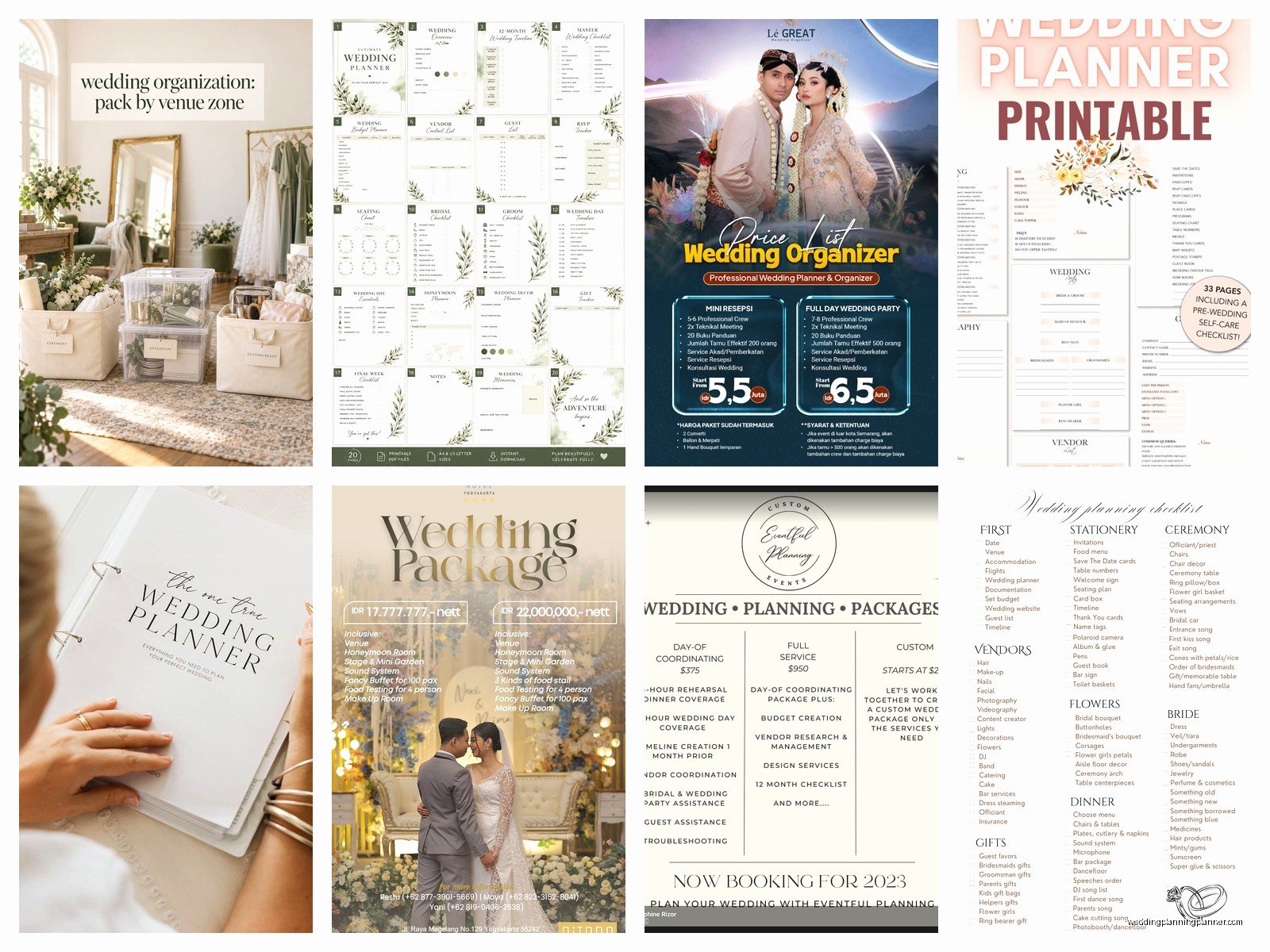
Most planners offer three main tiers but honestly you’ll see everything from two to like six different options. The standard setup is gonna be something like Full Planning, Partial Planning, and Day-of Coordination. Some people call that last one “Month-of” now because let’s be real, nobody can coordinate a wedding they’ve only seen once the week before.
Full Planning Packages
This is the everything-and-the-kitchen-sink option. When couples book full planning, you’re basically their wedding brain for 10-18 months depending on their timeline. I usually include unlimited meetings and communication, full vendor sourcing and contract negotiation, budget management with tracking spreadsheets, design concept development, and complete day-of coordination with an assistant.
The thing that annoyed me for YEARS about full planning packages is couples who book them and then ghost you for three months and suddenly panic that nothing’s done. Like, I can plan your wedding but I can’t read your mind about whether you want roses or peonies if you don’t respond to my emails.
You’re also doing timeline creation, guest list management, RSVP tracking, rehearsal coordination, and usually some family drama mediation that nobody warns you about in wedding planner school. For full planning I charge between 15-20% of the total wedding budget or a flat fee starting around $5,000 depending on the market. In bigger cities that number can easily be $8,000-$15,000 for full service.
What I include specifically: venue research and tours, vendor recommendations with at least 3 options per category, all contract reviews, design boards and mood concepts, invitation consultation (this is where my stationery background really helps), floor plan creation, complete wedding weekend timeline, vendor coordination and confirmations, rehearsal direction, and full day-of management with my team.
Partial Planning Is Tricky
Partial planning is harder to define because it’s kinda different for everyone. Some planners do it as “you book your venue and major vendors, then I come in and finish everything else” while others structure it as a set number of planning hours or meetings.
I do partial planning as a middle-ground where couples get maybe 6-8 meetings instead of unlimited, I help with remaining vendor selection but they’ve already booked venue and maybe catering, I create their timeline and manage day-of, but I’m not doing weekly check-ins or holding their hand through every decision. It usually starts around 4-6 months before the wedding, not right after engagement.
The hourly breakdown I offer is roughly 40-60 hours of planning time total spread across those months. This includes vendor recommendations, contract review for vendors they haven’t booked yet, three rounds of timeline revisions, design assistance but not full concept development, and complete day-of coordination. Pricing sits around $3,500-$6,000 in most markets.
Some planners include rehearsal coordination in partial, some don’t. I do because honestly the rehearsal is where you prevent 90% of ceremony disasters and it only takes an hour. Worth it.
Day-of Coordination Reality Check
Nobody calls it day-of anymore because that’s actually impossible to do well. I call mine “Month-of Management” and it starts 4-6 weeks before the wedding date. You need that lead time to contact all their vendors, create a master timeline, do a venue walkthrough, and understand what you’re walking into.
What’s included: initial meeting to download everything they’ve planned, vendor contact and confirmation about 3-4 weeks out, detailed timeline creation, one venue visit before the wedding, rehearsal coordination, and full wedding day management usually with an assistant for weddings over 100 people.
I charge $1,800-$2,500 for this depending on guest count and complexity. Destination weddings or multiple events cost more because duh, more work. The timeline piece is crucial because you’re taking everything they’ve planned and making sure it actually flows logically and doesn’t have the ceremony ending at 4pm and cocktail hour starting at 6pm or whatever chaos they’ve created.
Day-of coordination does NOT include fixing their bad vendor choices, redesigning their terrible color scheme, or managing family drama that’s been brewing for months. You’re there to execute their plan, not create a new one on the fly.
Add-on Services That Make Sense
Beyond the three main packages, smart planners offer add-ons that couples can purchase separately. This is where you make additional revenue without creating entirely new package structures or… wait, I should mention the actual add-ons.
Common add-ons include: rehearsal dinner planning and coordination, next-day brunch coordination, extra planning hours sold in blocks of 5 or 10, additional day-of assistants for large weddings, guest hotel room block management, welcome party planning, and my personal favorite which is invitation assembly and mailing service.
I also offer stationery design consultation as an add-on which makes sense given my background. Usually $500-$800 for complete paper suite guidance including save the dates, invitations, programs, menus, signage, and thank you cards. Not design, just consultation on what they need and where to order it.
Some planners include proposal planning or engagement party coordination. I don’t because that’s a totally different thing and honestly I don’t wanna work with couples before they’re actually engaged, that’s too much pressure.
How to Structure Your Actual Packages
When you’re building packages you gotta think about what makes sense to bundle together and what should stay separate. I use a framework that looks at time investment, complexity, and value to the client.
Start with your day-of package as the baseline because that’s your minimum viable service. Everything you include there is non-negotiable for any package level. Then build up from there adding services that require more advance time and touch points.
What Goes in Writing
Your package descriptions need to be specific enough that clients understand what they’re getting but not so detailed that you’ve written a novel. I learned this during a really stressful situation in summer 2021 when a bride insisted that “vendor management” meant I would drive to the florist’s shop and inspect every single rose three days before the wedding because that phrase wasn’t clearly defined in my contract.
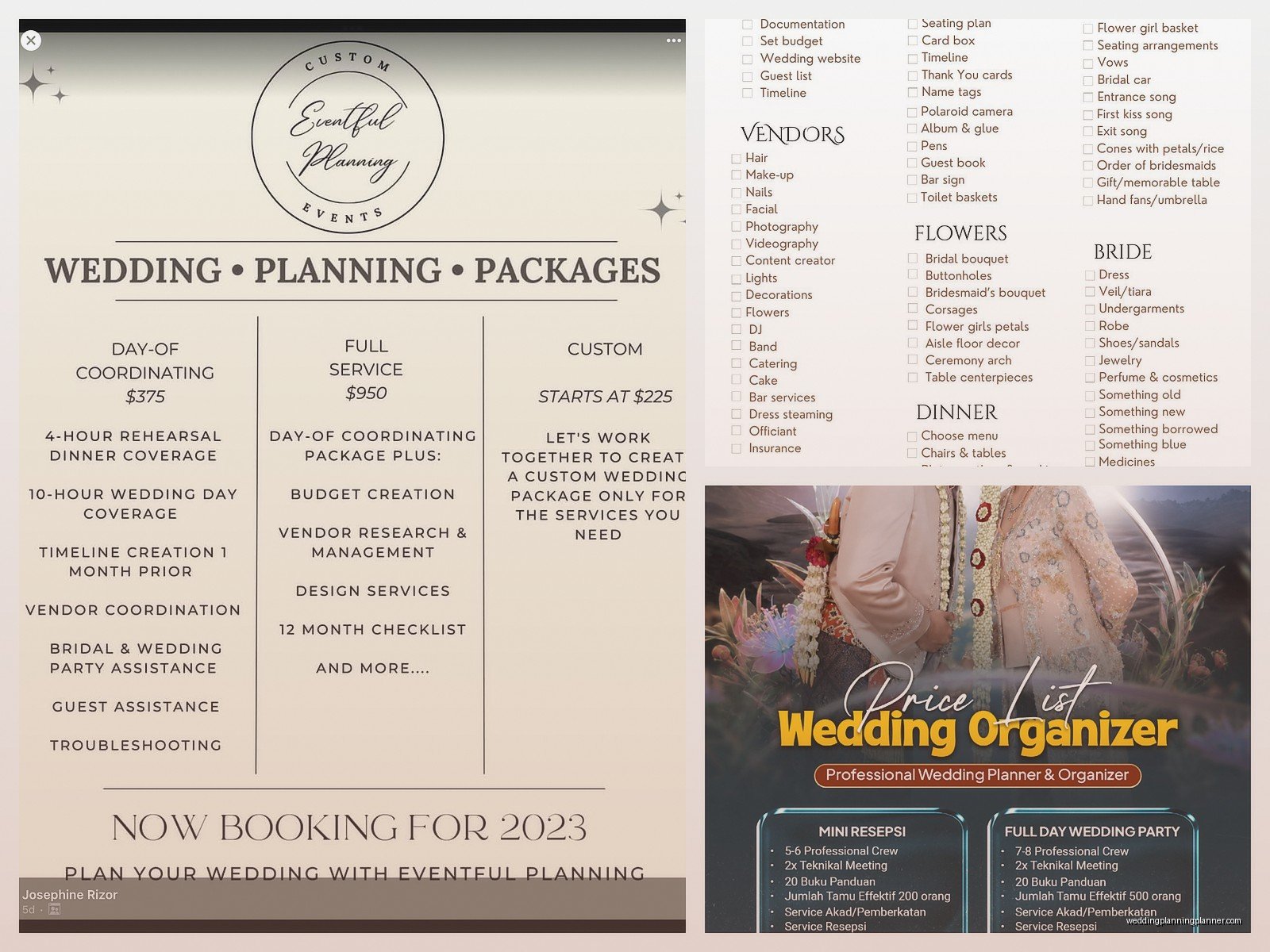
Break down each package with bullet points covering: planning timeline and when service begins, number of meetings or hours included, specific deliverables like timelines and floor plans, vendor-related services, design assistance level, what happens at the rehearsal, day-of coverage hours and team size, and what’s explicitly not included.
I always add a “not included” section because it prevents scope creep like crazy. Things I specifically exclude unless added on: guest transportation arrangements, hotel room block negotiation beyond initial introduction, postage and mailing services, decor rental or purchase, invitation printing costs, tips and gratuities for vendors, marriage license assistance, and anything related to the honeymoon.
Pricing Strategy That Actually Works
You can price packages as flat fees or percentages of wedding budget. I do flat fees for partial and day-of, percentage for full planning because wedding budgets vary so wildly that a couple spending $30,000 needs way less complex coordination than one spending $150,000.
The percentage model for full planning is typically 15-20% of total budget. So if someone’s planning a $75,000 wedding, you’re looking at $11,250-$15,000 for complete planning services. This scales naturally with the complexity and vendor count of the event.
For flat fee packages, research your market because pricing varies dramatically by region. A day-of coordinator in rural Montana is gonna charge differently than one in Manhattan. Look at what 5-7 established planners in your area charge and position yourself accordingly based on your experience level.
Payment schedules usually break down as: 25-30% deposit to book, remainder split across 2-4 installments leading up to the wedding, final payment due 2-4 weeks before the event. Never let final payment go past the week before because collecting money after you’ve already done the work is horrible.
Custom Packages vs Set Offerings
Some planners only do custom quotes, some only do set packages, most do a hybrid. I have my three standard packages but I’d say 30% of clients want something customized. Like they want full planning but without design services, or they want partial planning with extra meetings.
The way I handle customs is using my packages as a baseline and then literally adding or subtracting services with associated costs. If someone wants my partial package but needs 4 extra planning meetings, I add $200 per meeting. If they want full planning but are handling all their own design and decor, I subtract $1,000-$1,500 from the total.
This keeps me from reinventing the wheel every time while still giving couples flexibility. Just make sure your custom packages are actually profitable and you’re not discounting yourself into working for $12 an hour because you got excited about booking a client.
What Couples Actually Need Help Understanding
Most couples have no idea what wedding planners actually do, which is wild but true. They think we just show up on the day and tell people where to stand. You need to educate them about the value of each package level.
For full planning, emphasize the stress reduction and time savings. These couples are usually busy professionals who value their time highly and don’t wanna spend every evening for a year researching caterers. You’re buying back their nights and weekends.
Partial planning attracts couples who are kinda into planning and have some time but realize they’re in over their heads or getting close to the wedding and panicking. They’ve booked some stuff and now need expert help finishing strong and making sure nothing falls through the cracks.
Day-of coordination is for budget-conscious couples or control enthusiasts who enjoyed planning everything themselves but are smart enough to know they can’t manage their own wedding day. This is your “I did the work, just execute my vision” crowd.
Common Package Mistakes Planners Make
Including too much in lower-tier packages is the biggest mistake. If your day-of package includes unlimited email communication and vendor sourcing assistance and design help, why would anyone book your full planning package? You gotta have clear differentiation.
Another mistake is not accounting for travel time and administrative work in your pricing. Every client meeting includes travel, prep time, and follow-up. Every vendor call requires notes and documentation. Build that into your package pricing or you’ll resent every client.
Not having clear boundaries about communication is rough too. I specify that full planning gets unlimited email and scheduled calls, partial gets email responses within 48 hours and scheduled calls only, day-of gets email within 72 hours and one planning call. Otherwise you’re answering panicked texts at 11pm from every client regardless of what they paid.
Oh and not requiring a minimum spend or guest count for certain packages. I don’t offer full planning for weddings under $25,000 total budget because the math doesn’t work—there’s not enough complexity to justify the service level and my percentage fee would be too low. My day-of coordination requires at least 50 guests because smaller than that barely needs coordination honestly.
Actually Building Your Package Documents
You need clean, professional package descriptions for your website and detailed service agreements for contracts. These are different documents serving different purposes, which took me embarrassingly long to figure out.
Website packages should be aspirational and clear but not overwhelming. One page per package with an overview paragraph, bulleted list of main services, starting price, and a call-to-action to schedule a consultation. I also include a mini FAQ section under each package answering the top 3 questions I get about that level.
Contract agreements are way more detailed and include specific deliverables, timelines, responsibilities of both parties, cancellation policies, payment schedules, and all the legal protection stuff your lawyer helped you write. Nobody reads these thoroughly but you need them anyway for when things go sideways.
I keep a master package matrix spreadsheet that shows every single service I offer and which package levels include it. This makes it super easy to compare packages when talking to clients and quickly build custom quotes by adding or removing line items. Sounds nerdy but it saves so much time, you have no idea.
Seasonal Adjustments and Package Evolution
Your packages shouldn’t be static forever. I review mine every January and adjust based on what worked and what didn’t the previous year. Maybe I’m including something that clients never use, or maybe there’s a service I’m constantly adding on that should just be built into a tier.
Some planners do seasonal pricing with higher rates for peak wedding season and lower rates for off-season. I don’t personally do this because I think it complicates things, but if you’re in a market with extreme seasonality it might make sense. Just make sure you’re clear about it upfront.
I did add a micro-wedding package in 2022 after the pandemic because there’s real demand for professional planning for 20-person weddings that doesn’t require full-service pricing. It’s basically a scaled-down partial planning package with adjusted pricing starting at $2,000. Works well for intimate celebrations that still want professional polish.
The stationery piece keeps evolving too because print trends change and couples are doing more digital stuff now. I updated my full planning package to specify that invitation consultation covers both print and digital options including wedding websites, which wasn’t even a thing when I started doing this.
Anyway, packages are really just a framework for selling your time and expertise in a way that makes sense to clients and keeps you profitable. They’ll never be perfect and you’ll always have couples who want something slightly different, but having solid standard offerings makes everything smoother than custom quoting every single inquiry. Trust me on that one because I spent my first two years doing individual proposals for everyone and it was absolutely exhausting and I never wanna go back to that chaos again, like ever.
