
Planning Guides, Style Guide
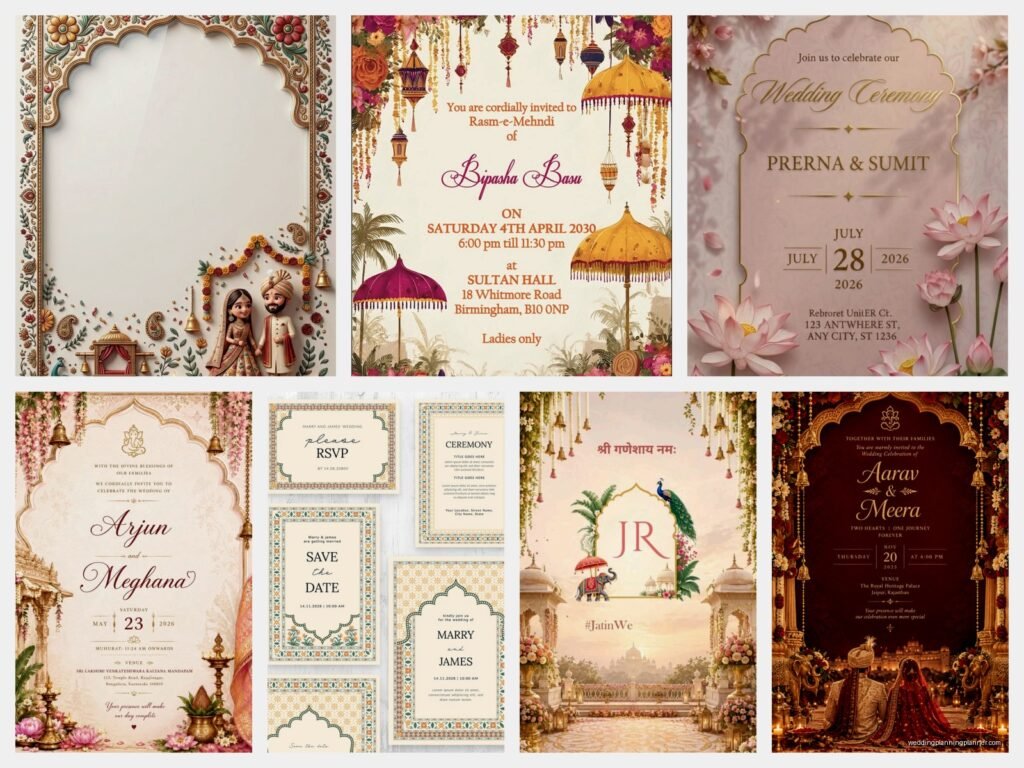
Indian Wedding Invitations: Traditional Cultural Designs
Nov
The Basics You Actually Need to Know
So Indian wedding invitations are probably the most intricate, detail-heavy stationery you’ll ever work with and honestly that’s what makes them so gorgeous. I had this client back in spring 2023 who wanted “simple Indian invitations” and I had to gently explain that those two words don’t really go together – even the most minimal Indian invitation has like three times more components than a traditional Western one.
First thing you gotta understand is that Indian wedding invitations aren’t just one card. They’re usually a whole package, sometimes 5-7 pieces tucked into a box or wrapped in fabric. You’ve got the main invitation, separate cards for different ceremonies (there are multiple events, not just one wedding day), RSVP cards, accommodation details, sometimes a program timeline, and often small gifts or religious symbols included right in the package.
The traditional color palette is where most people start. Red and gold are classic – red symbolizes prosperity and fertility, gold represents wealth and grandeur. But you’ll also see deep maroon, orange, pink, royal blue, emerald green, and purple. What really annoys me is when couples or their parents insist on sticking to red and gold just because “that’s what Indian weddings look like” when the bride actually wants sage green or something – like, traditional doesn’t mean you can’t have preferences.
Religious Symbols and What They Mean
Every Indian invitation I’ve worked on includes religious iconography, and you need to know what you’re putting on there. Ganesh is the most common – he’s the elephant-headed deity who removes obstacles, so obviously you want him blessing the start of a marriage. You’ll see his image on probably 80% of Hindu wedding invitations.
Then there’s the Om symbol, lotus flowers (purity and enlightenment), paisley patterns (which actually originated in Persia but became huge in Indian design), and peacocks (which represent beauty and romance). For Sikh weddings, you’ll see the Khanda symbol. Muslim weddings often feature bismillah calligraphy or intricate geometric patterns since figurative art isn’t traditional in Islamic design.
I remember this one time I was watching The Great British Baking Show while working on invitation mockups and my cat Miso knocked over my chai all over my sketches – but anyway, the point is you can’t just slap these symbols on randomly. They have meanings and there’s a kind of visual hierarchy to respect.
The Written Content Gets Complicated
Indian wedding invitations have a very specific wording structure. They usually start with a religious invocation – a few lines in Sanskrit or another language asking for blessings. Then comes the actual invitation, but here’s where it gets tricky: traditionally, the invitation comes from the parents, not the couple. You’ll see “Mr. and Mrs. [Father’s name]” inviting you to their daughter’s wedding.
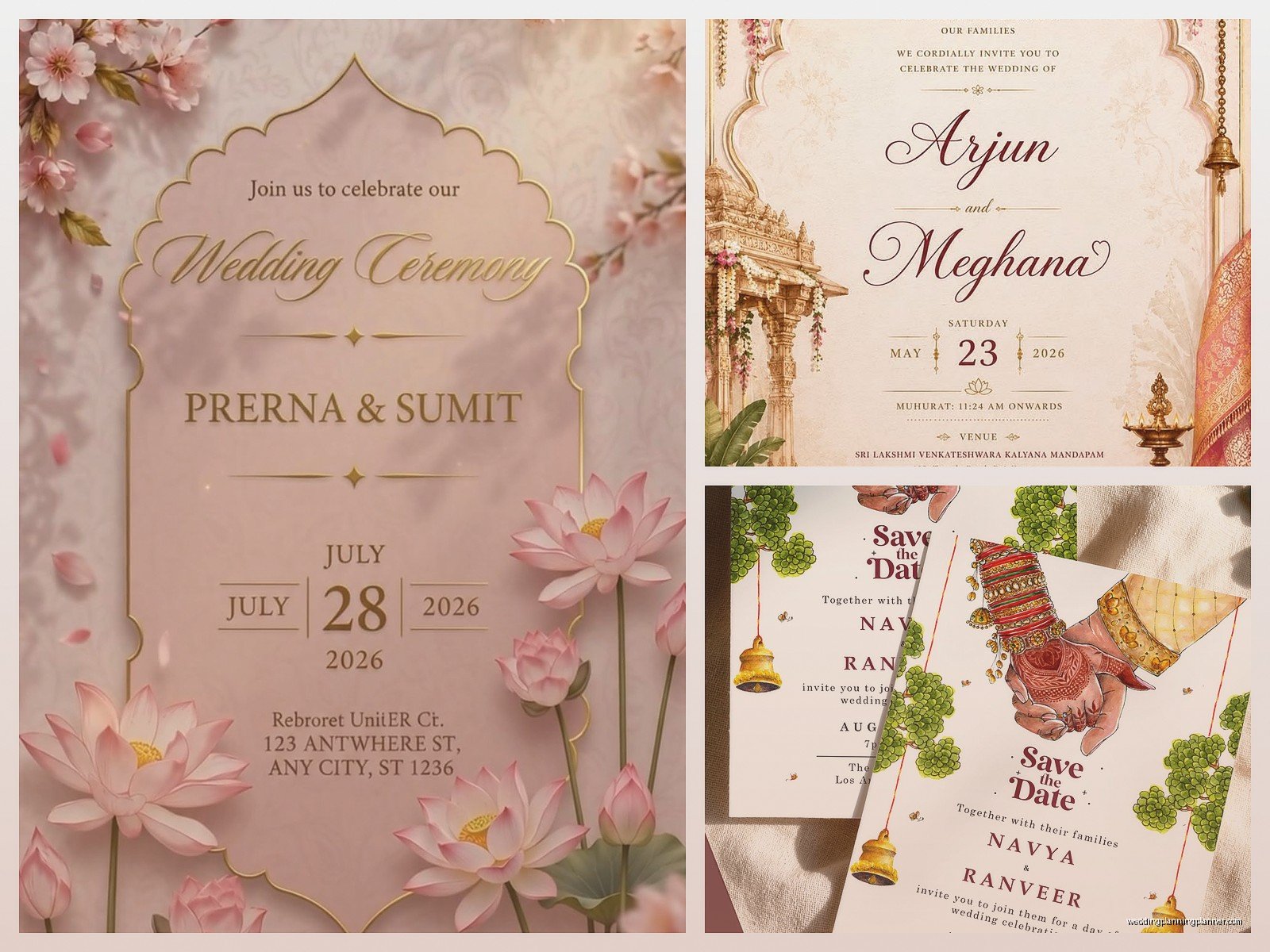
The bride and groom’s names are often preceded by their parents’ names and sometimes even grandparents. I’ve worked on invitations where we had to list three generations of family members before we even got to who was actually getting married. It’s a way of honoring the family lineage and showing respect.
Also, many invitations are bilingual or even trilingual. You might have English, Hindi, and Gujarati all on the same card. Or Tamil, Telugu, whatever regional language the family speaks. This makes layout design… let’s just say it’s not simple. You’re balancing multiple scripts with different visual weights and reading directions.
Design Elements That Make It Look Authentic
Borders and frames are huge. You’ll rarely see an Indian invitation without an ornate border. These can be inspired by mehendi (henna) patterns, architectural details from palaces and temples, or traditional textile designs. Intricate, symmetrical, often gold-foiled or embossed.
Blocking and paneling – Indian invitations often divide the card into sections with different patterns and colors. You might have a paisley border, then a solid panel, then a damask pattern, then the text area. It’s layered and rich, not minimalist at all.
Typography matters too. You want fonts that feel regal without being cheesy. I usually mix a decorative script for names with a clean serif for body text. Avoid anything too modern or sans-serif for traditional designs – it just looks wrong. And please, no Papyrus or Comic Sans, I’ve literally seen people suggest these and I died a little inside.
Embellishments You’ll Encounter
Foiling is standard, not fancy. Gold foil, rose gold, copper, even silver. It catches light and gives that luxurious feel. Embossing and debossing add texture. Laser cutting is super popular now – you can cut intricate Ganesh silhouettes or mandala patterns right into the card stock.
Fabric elements show up a lot. Invitations might be wrapped in silk ribbon, tucked into brocade pouches, or have fabric panels incorporated into the design. I’ve done invitations with actual sari fabric glued onto the cover. Tassel ties, velvet ribbons, decorative threads – it all adds to the tactile luxury.
Some families include small religious items: a tiny packet of kumkum (red powder), rice grains, or a coin. These are meant to bless the recipients. Boxed invitations can be pretty elaborate – I’ve seen wooden boxes, metal tins with enamel work, acrylic boxes with dried flowers inside.
Regional Variations You Should Know About
Indian culture isn’t monolithic and neither are the invitations. A Punjabi wedding invitation looks different from a Tamil one, which looks different from a Gujarati one.
North Indian invitations (Punjabi, Hindi-speaking regions) tend to be bolder with lots of red, gold, and royal colors. They often feature more figural imagery like Ganesh, peacocks, and palace architecture. The style is kinda more opulent and dramatic.
South Indian invitations are often more traditional in a different way – they might use more temple imagery, incorporate banana leaves or mango motifs (both auspicious symbols), and the text portions are usually longer with more Sanskrit verses. Colors can be more varied, with greens and yellows showing up alongside the reds.
Gujarati and Rajasthani invitations frequently use puppet or folk art motifs. You’ll see elephants, camels, traditional dancers, and architectural elements inspired by havelis (traditional mansions). The aesthetic is colorful and festive, sometimes almost whimsical.
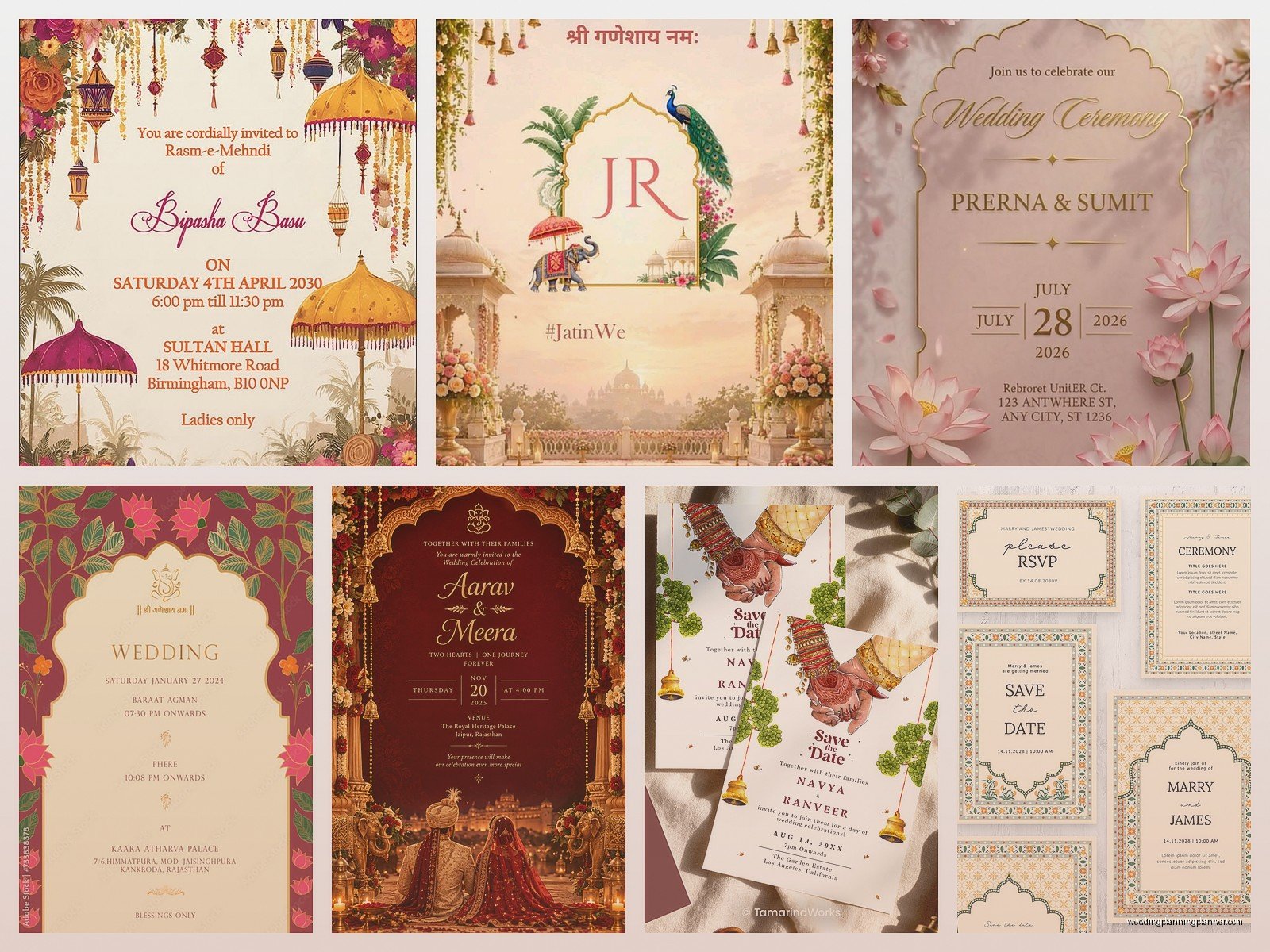
Bengali invitations often feature alpana patterns (traditional rice flour designs), or they might incorporate elements inspired by Tagore-era art and literature. There’s sometimes a more understated elegance compared to the heavy embellishment of some other regions.
Modern Twists on Traditional Designs
Okay so here’s where it gets interesting – couples now want traditional but also want it to feel like them. I’ve been doing more invitations that take traditional elements but execute them in contemporary ways.
Minimalist Indian invitations are actually becoming a thing. You take one element – say, a simple line drawing of Ganesh – and make that the focal point against lots of white space. Use traditional colors but just as accents. Keep the religious invocation but maybe in a modern font. It’s tricky because you’re walking a line between respecting tradition and not making it look like every other Indian invitation from the past 50 years.
Illustrated invitations are huge right now. Custom illustrations of the couple in traditional wedding attire, or illustrated versions of the wedding venues, or a visual timeline of all the events. These feel personal and contemporary while still incorporating all the traditional symbols and colors.
I worked with this couple who wanted their invitation to look like a Wes Anderson film poster but Indian and honestly? It was challenging but it turned out gorgeous. Symmetrical layout, pastel versions of traditional colors, whimsical illustrated elements alongside Ganesh imagery. Her parents were skeptical at first but…
The Multi-Event Problem
Indian weddings aren’t one day. There’s the sangeet (music night), mehendi (henna ceremony), haldi (turmeric ceremony), the actual wedding ceremony, and the reception. Sometimes these happen over 3-5 days. Sometimes they’re all crammed into one very long day.
This means your invitation suite needs to clearly communicate what’s happening when. I usually do separate insert cards for each event, with its own color coding or symbol. Mehendi cards might have henna patterns, sangeet cards might have musical notes or dancing figures, etc.
The main invitation typically announces the wedding ceremony itself. Then you have these supplementary cards explaining the other events. You also need to make clear which events are family-only versus open to all guests – this is culturally important and I’ve seen drama when it’s not communicated properly.
Working With Indian Printers and Vendors
If you’re gonna do this right, you’ll probably end up working with specialty printers who understand Indian weddings. There are vendors who do nothing but Indian wedding stationery and they have template libraries, connections to specific paper suppliers, and they understand the cultural requirements.
Paper weight matters more than you’d think. These invitations are heavy – literally. You’re using thick cardstock, multiple layers, embellishments. I usually go with 300-350 GSM minimum. Postage becomes a real consideration when your invitation weighs half a pound.
Proofing is critical because you’re dealing with multiple languages. I always have a family member who speaks the regional language review the text before printing. I learned this the hard way – had a batch printed with a Hindi spelling error and we had to reprint the whole thing. Expensive lesson.
Budget Real Talk
Indian wedding invitations are not cheap. A mid-range invitation with decent embellishments runs $8-15 per invite. High-end custom work with extensive foiling, laser cutting, and boxed presentation can easily hit $25-50 per invite. And Indian weddings often have 300-500 guests, so do the math.
You can save money by simplifying the enclosures – maybe do one comprehensive timeline card instead of separate cards for each event. Digital printing instead of letterpress. Less foiling. Simpler boxes or no boxes. But there’s a baseline of ornamentation that you kinda can’t go below without it not looking like an Indian wedding invitation anymore.
Common Mistakes to Avoid
Don’t use clip art versions of religious symbols. Just don’t. Invest in proper vector artwork or hire an illustrator. Clip art Ganesh looks tacky and disrespectful.
Don’t assume all Indian weddings are Hindu. I’ve had clients get really annoyed when vendors automatically include Ganesh on a Sikh or Muslim wedding invitation. Ask about religious affiliation first.
Don’t forget about timing. Indian weddings are often planned around auspicious dates determined by priests and astrology. The invitation needs to go out with enough time, but you also need to wait until the actual date is confirmed. This can make timeline planning stressful.
Don’t ignore the envelope. Indian invitation envelopes are often just as decorated as the invitation itself. Gold liner, printed patterns, wax seals, fabric wrapping. A plain white envelope feels wrong.
Digital Invitations Are Tricky Here
Some couples want to do digital invitations to save money or for environmental reasons, but this can be culturally complicated. Older generations often view physical invitations as a sign of respect – sending an email or PDF feels too casual for something as important as a wedding.
If you do go digital, make it really well-designed. Animated elements showing the different events, interactive elements where you can click to see venue details, video backgrounds with traditional music. Make it feel special and intentional, not like you just saved a Word doc as a PDF.
I’ve had success with a hybrid approach – physical invitations for close family and older relatives, digital for friends and extended network. Or sending a beautiful physical save-the-date with traditional elements, then digital detailed invitations later.

Canva
Wedding Memories Hardcover Template Canva Editable For Notebook, Journal, Novel, Hard Covers, Canva template For KDP Cover 6×9″ 120 pages
Canva
The Ultimate Wedding Planning Bundle, Canva Editable.
Canva
Customizable Wedding Video Invitations templates, Canva Editable Digital Wedding invitation Minimalist, Animated Custom Invitation
Digital Planning Templates
Wine Wedding Planner Bundle – 200-Page Printable PDF + 10 Editable Wedding Invitations | Instant Digital Download
Canva
Orange Wedding Planner Bundle – 200-Page Editable Canva Templates + 10 Editable Wedding Invitations | Instant Digital Download
Digital Planning Templates
Champagne Wedding Planner Bundle – 200-Page Printable PDF + 10 Editable Wedding Invitations | Instant Digital Download
Canva
Wedding Memories Hardcover Template Canva Editable For Notebook, Journal, Novel, Hard Covers, Canva template For KDP Cover 6×9″ 120 pages
Digital Planning Templates
Yellow Wedding Planner Bundle – 200-Page Printable PDF + 10 Editable Wedding Invitations | Instant Digital Download
Canva
Dusty Blue Wedding Planner Bundle – 200-Page Editable Canva Templates + 10 Editable Wedding Invitations | Instant Digital Download