
Planning Guides, Style Guide
Indian Wedding Cards: Hindu Traditional Designs
Nov
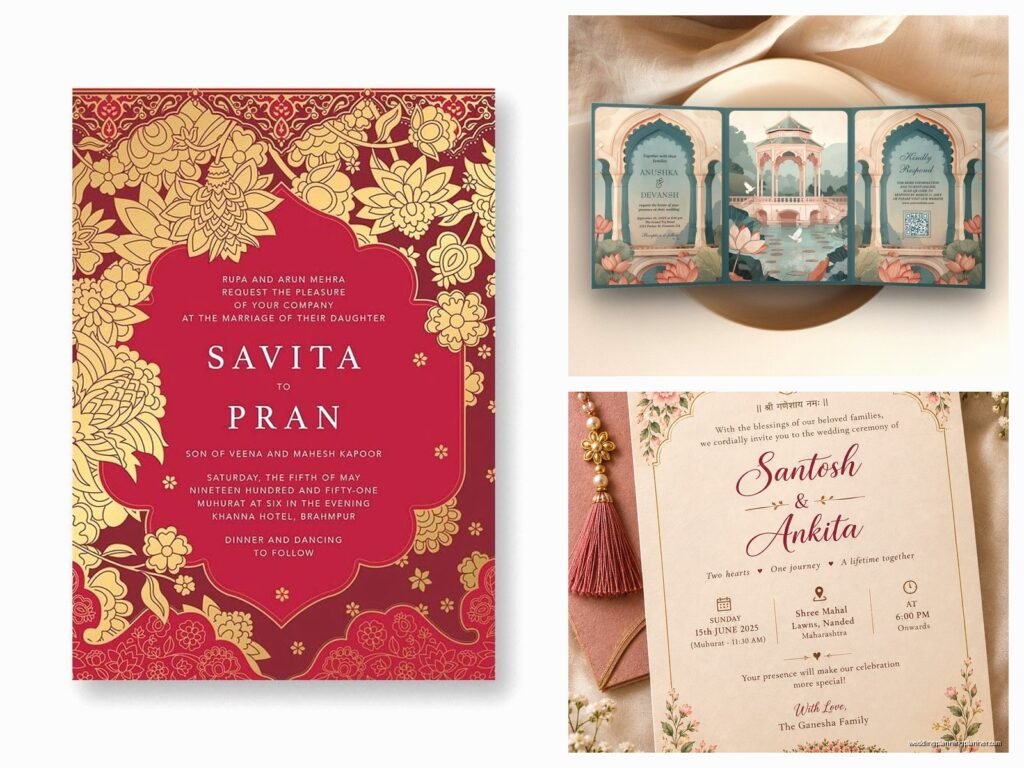
Hindu Wedding Card Designs Are Actually Way More Complex Than People Think
So you’re looking at Hindu wedding cards and honestly, there’s so much going on that most couples don’t even realize until they’re neck-deep in the process. I had this bride back in spring 2023 who came to me with a Pinterest board of “Indian wedding invitations” and like half of them were actually Muslim designs mixed with Sikh motifs and she had no idea. We spent three hours sorting through what actually made sense for her Hindu ceremony.
The thing about traditional Hindu wedding cards is they’re basically telling a story before your guests even RSVP. Every element means something, and I’m gonna walk you through this because it matters more than you think.
Ganesh Is Pretty Much Non-Negotiable
Lord Ganesh shows up on like 90% of Hindu wedding invitations and there’s a reason. He’s the remover of obstacles, so you want him blessing your marriage from the literal first impression. The image usually sits at the top of the card, sometimes embossed, sometimes printed in gold or red ink.
You’ll see different styles though. Some cards have a small Ganesh symbol, others have elaborate illustrations. I’ve worked with families who insisted on a specific Ganesh pose because different poses represent different blessings. The one with the trunk turning left is super common for weddings because it’s considered easier to please and more suitable for household worship.
What really annoyed me once was when a printer told a client that “any elephant image works” and tried to use a decorative elephant instead of actual Ganesh imagery. Nah, that’s not how this works. Ganesh has specific iconography – the broken tusk, the modak (sweet) in his hand, the mouse vehicle. Details matter.
Color Schemes That Actually Mean Something
Red and gold dominate Hindu wedding cards for obvious reasons – red represents prosperity and fertility, gold represents wealth and grandeur. But you’ll also see:
- Orange and yellow combos (sacred colors, connected to fire and purity)
- Deep maroon with gold (super traditional, very North Indian)
- Pink and gold (softer, more modern but still traditional)
- Purple and gold (becoming more popular, royal vibes)
I personally love when couples use saffron orange because it connects to the Hindu concept of… wait, I should mention that my cat literally just knocked over my coffee while I’m writing this, sorry. Anyway, saffron connects to the sacred fire and spiritual awakening, so it’s deeply meaningful even though it’s not as common as red.
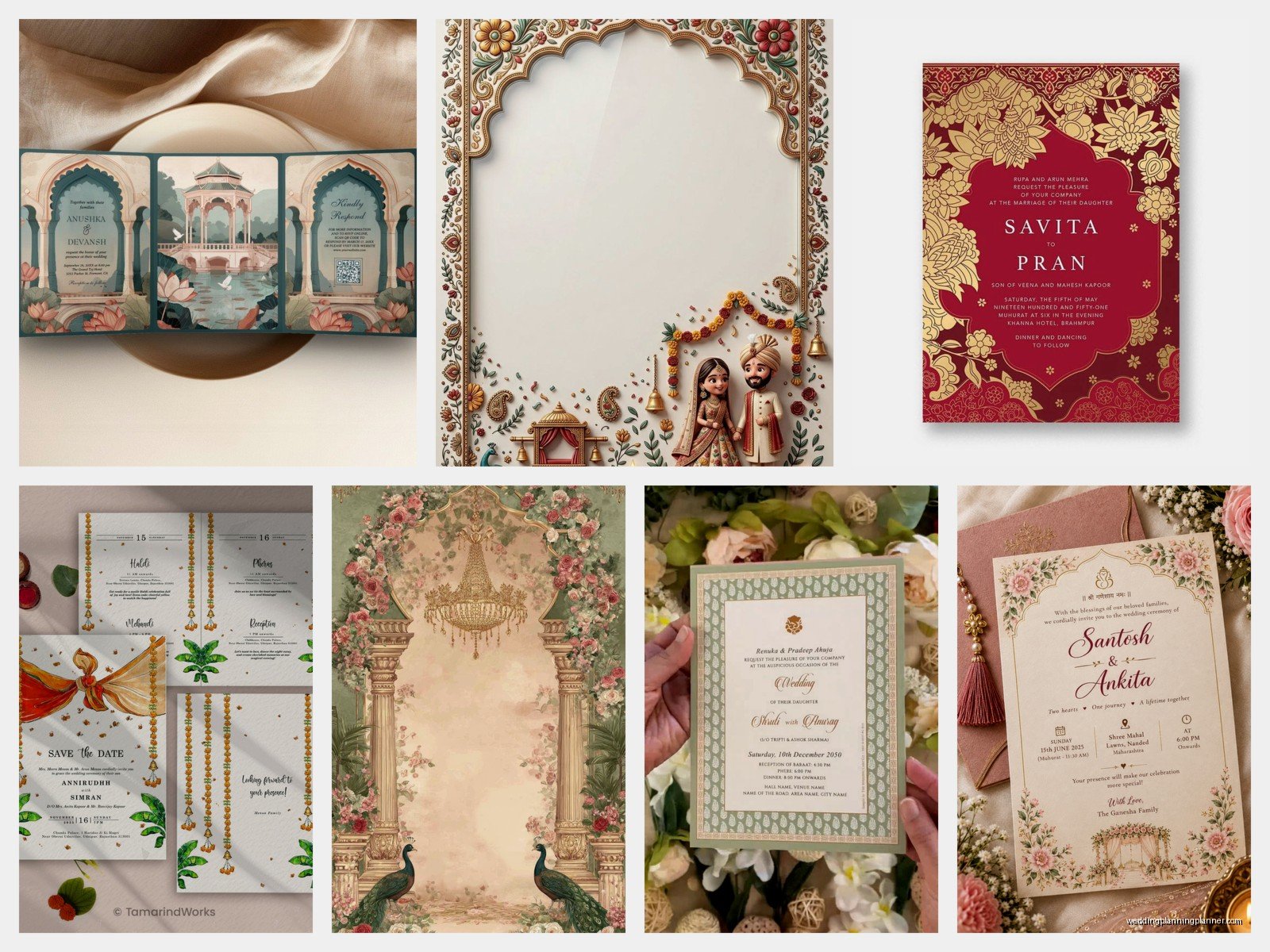
You can mix these colors but there’s an art to it. Too many colors and your card looks like a festival poster instead of a wedding invitation.
The Swastika Symbol (Yes, Really)
This is gonna be uncomfortable for Western audiences but the swastika is an ancient Hindu symbol of auspiciousness and good fortune. It shows up on traditional Hindu wedding cards and it has absolutely nothing to do with Nazi imagery – the Hindu swastika has been around for thousands of years and faces a different direction.
That said, if you’re inviting a lot of non-Indian guests or Western friends, you might want to either skip it or include a small note explaining its significance. I’ve seen this cause confusion at mail sorting facilities, which is just… the reality of using traditional symbols in modern contexts.
Motifs and Patterns You’ll See Everywhere
Paisley and Mango Designs
The paisley (or mango) motif is HUGE in Hindu wedding stationery. It represents fertility and life. You’ll see it as borders, corner decorations, or scattered throughout the design. Some cards have intricate paisley patterns that are basically works of art.
The mango design specifically is considered kinda sacred in Hindu culture because the mango tree is mentioned in Vedic texts and mango leaves are used in religious ceremonies. So when you see those teardrop-shaped patterns all over your wedding card, that’s what’s happening.
Lotus Flowers
The lotus shows up constantly because it represents purity, beauty, and spiritual awakening. Lakshmi (goddess of wealth) sits on a lotus, so it’s also connected to prosperity. You’ll see lotus designs as:
- Corner embellishments
- Central medallions
- Border patterns
- Watermarks or background elements
I worked with a couple who wanted their entire card designed around a blooming lotus and honestly it was stunning. The card opened like lotus petals to reveal the invitation text inside. Expensive as hell, but memorable.
Peacock Imagery
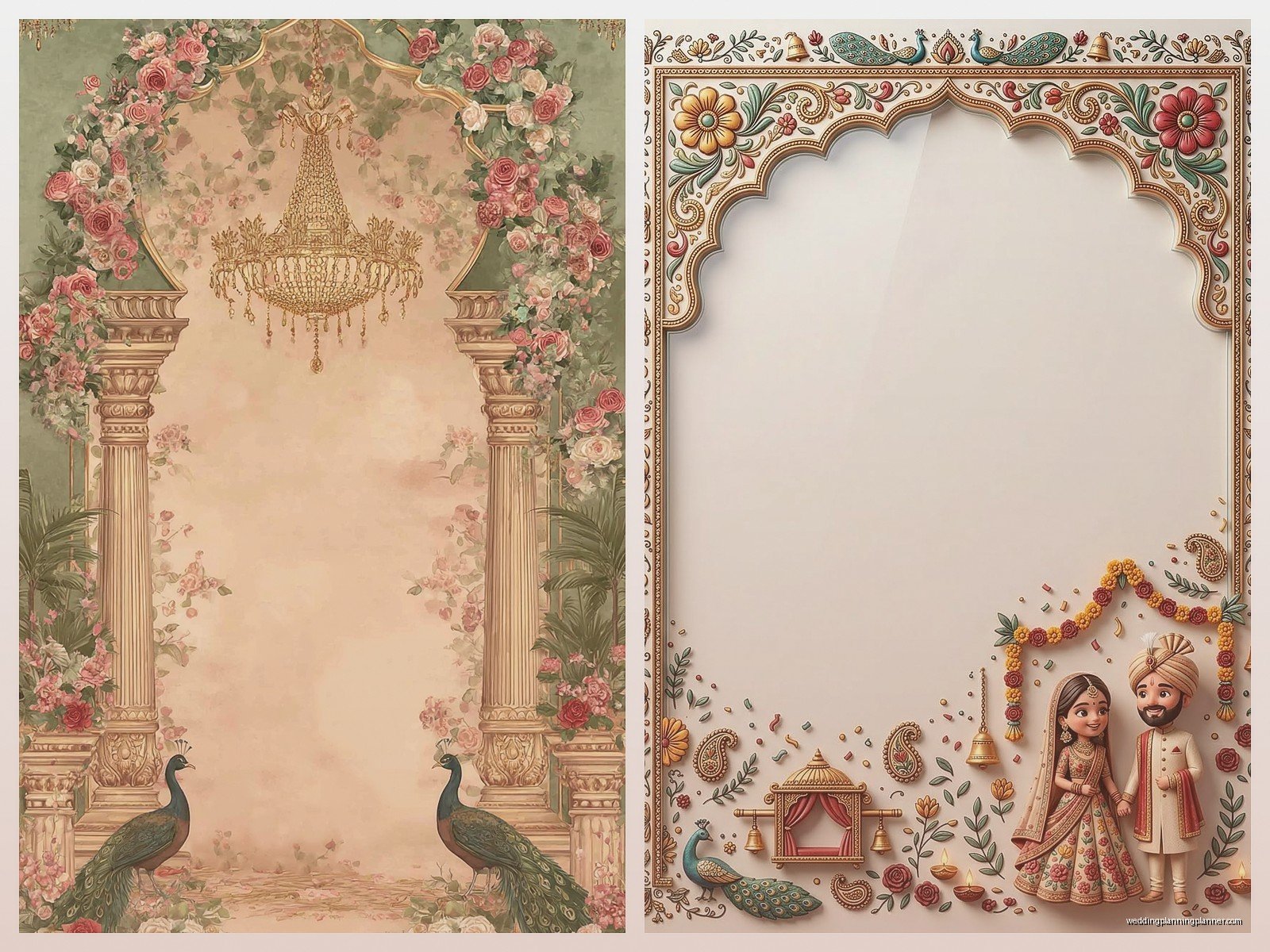
Peacocks represent beauty, grace, and they’re also the vehicle of Kartikeya (Hindu god). You see peacock feathers, full peacock illustrations, or abstract peacock patterns. They work especially well on cards that have a lot of green and blue in the color scheme.
The peacock thing is interesting because it’s also connected to monsoon and fertility since peacocks dance during rains. So there’s like layers of meaning happening.
Text and Language Choices
This is where things get really specific and also where I see couples struggle the most.
Sanskrit Shlokas and Mantras
Many traditional Hindu wedding cards open with a Sanskrit shloka (verse) or mantra. Common ones include:
Shubh Vivah (auspicious wedding) or Shubh Labh (auspicious profit/gain) at the top. You’ll also see verses from the Vedas about marriage being a sacred union. Some families have specific family mantras or prayers they always use.
If you’re including Sanskrit text, you gotta make sure it’s accurate. I had a printer once misspell a mantra and the family was horrified. Get someone who actually reads Sanskrit to proofread, not just someone who thinks they remember it from their wedding.
The Parents’ Names Come First
Unlike Western invitations where the couple might be the focus, traditional Hindu cards list the parents’ names prominently because they’re hosting and blessing the union. The format usually goes:
Parents’ names (sometimes with their late parents’ names mentioned too) request the honor of your presence at the marriage of their son/daughter [name] with [partner’s name], son/daughter of [partner’s parents’ names].
It’s formal, it’s structured, and it reflects the importance of family in Hindu culture.
Multiple Language Options
Depending on region, you might see cards in:
- Hindi (most common for North Indian weddings)
- Gujarati, Marathi, Bengali, Tamil, Telugu, Kannada, Malayalam (regional languages)
- English (for mixed audiences or NRI families)
- Combination of English and a regional language
Some families do bilingual cards with one language on the front panel and another inside. Others create separate card versions for different guest groups.
Design Styles By Region
Hindu wedding cards vary significantly based on which part of India the family’s from, and this is something people don’t always consider.
North Indian Designs
Think rich reds, golds, intricate borders, Mughal-inspired patterns (yeah, even though Mughal was Islamic, the artistic influence is there). You’ll see a lot of:
- Boxed invitations with multiple inserts
- Heavily embellished covers
- Velvet or silk fabric cards
- Laser-cut designs
- Scrolls (especially for Rajasthani families)
The North Indian aesthetic is generally more opulent and elaborate.
South Indian Designs
South Indian Hindu cards often feature:
- Temple architecture motifs
- Images of deities beyond just Ganesh (Tirupati Balaji is common)
- Brighter color combinations (yellow, orange, green)
- More religious text and mantras
- Traditional kolam patterns (geometric designs)
There’s often more emphasis on religious elements and the text tends to be more detailed about the ceremony timings and rituals.
Gujarati Style Cards
These are so distinctive. You’ll immediately recognize them by the emphasis on Labh and Shubh symbols, sometimes elaborate use of mirrors or reflective elements, and bright, cheerful color palettes. Gujarati families often include more events on the card – the garba night, the pithi ceremony, multiple pre-wedding functions.
Modern Takes on Traditional Elements
Okay so here’s where it gets interesting because younger couples want tradition but also want their cards to feel current.
Minimalist Hindu Cards
You can absolutely do a minimalist version. Simple Ganesh line art, single color palette (maybe just gold foil on cream), clean typography. The key is keeping the essential elements – Ganesh, appropriate colors, Sanskrit blessing – but stripping away the heavy ornamentation.
I designed a set in summer 2021 that was just a simple Om symbol in rose gold on handmade paper with one Sanskrit line and the ceremony details. The family was worried it was “too simple” but their guests loved it because it felt elegant and still respectful of tradition.
Illustrated Story Cards
Some couples are commissioning illustrated cards that tell their love story but incorporate traditional Hindu motifs throughout. Like, the couple meeting at a coffee shop but there are lotus patterns in the background, or their illustrated figures are dressed in traditional wear.
Eco-Friendly Traditional Designs
Seed paper cards with traditional designs printed using vegetable inks. The card can be planted and it’ll grow into flowers or herbs. You can still have your Ganesh, your paisley borders, your Sanskrit shlokas – just on sustainable material.
What Actually Goes In The Invitation Suite
A traditional Hindu wedding card isn’t just one piece of paper, it’s usually a whole collection:
- Main invitation card (the ceremony details)
- Reception card (separate event, separate card)
- RSVP card (though honestly many Indian families just expect people to call)
- Accommodation information
- Sangeet/Mehndi ceremony cards
- Program/timeline of events
Each piece should coordinate with the main design but doesn’t have to be identical. I’ve seen suites where each event has a different deity or motif but the color scheme ties everything together.
Embellishments That Make Cards Special
This is where you can really make your card stand out or… where you can go overboard and end up with something that won’t fit in a standard envelope.
Laser Cutting
Intricate laser-cut covers with traditional patterns – mandalas, paisleys, temple architecture. When done well, these are absolutely gorgeous. They create a shadow effect and add dimension.
Foiling and Embossing
Gold foil, silver foil, rose gold foil – you name it. Embossing the Ganesh image or the couple’s names adds a tactile element. Some cards combine both techniques for maximum impact.
Fabric and Texture
Silk wrapped cards, velvet panels, brocade borders. These feel luxurious and are very traditional. The downside is they’re heavy (postage costs) and delicate.
Actual Decoration Pieces
I’ve seen cards with tiny bells attached, cards with small kalash (pot) replicas as the closure, cards tied with sacred thread. These are beautiful but consider your budget and whether your guests will actually keep these or if they’ll end up in the trash which sorta defeats the purpose.
Timing and Astrology References
Hindu weddings are often scheduled based on astrological calculations, and this shows up on the invitations. You might see:
- The tithi (lunar day)
- The nakshatra (constellation)
- The muhurat (auspicious time) listed very specifically
- Planetary positions mentioned
This means your invitation text might say something like “on Monday, the 15th of June, 2024, during the auspicious muhurat of 10:37 AM to 11:42 AM” rather than just “10:30 AM.” Western guests find this confusing sometimes but it’s an important part of Hindu wedding tradition.
Wording Conventions You Should Know
The language on Hindu wedding cards is pretty formal and follows certain patterns. You’ll see phrases like:
“Request the honor of your benign presence and blessings” (not just “invite you”)
“Seek your blessings for” (emphasizing the importance of elder blessings)
“On the auspicious occasion of” (every wedding is auspicious)
There’s a reverence in the language that reflects how marriage is viewed as a sacred sacrament, not just a legal union or party. Even modern cards tend to keep this formal tone for the main invitation, even if the other inserts are more casual.
Common Mistakes People Make
Since I’ve been doing this for years, I’ve seen certain errors pop up repeatedly and they drive me crazy:
Mixing up regional elements. Don’t put a Bengali alpana design on a Gujarati-style card. Each region has its aesthetic and mixing them randomly looks confused rather than eclectic.
Using the wrong deity. Not every Hindu deity is appropriate for wedding cards. Ganesh, Lakshmi, Vishnu-Lakshmi together – yes. Random deity your family doesn’t worship – probably not.
Ignoring parents’ preferences entirely. Look, I get that it’s your wedding, but Hindu weddings are family affairs. If your parents are hosting and their names are on the card, their input on design matters. Find a compromise.
Forgetting to proofread non-English text. I cannot stress this enough. Get multiple people to check any Sanskrit, Hindi, or regional language text. Typos in sacred verses are really bad.
Ordering too late. Traditional Hindu wedding cards often take longer to produce, especially if they involve handwork, embellishments, or custom elements. Order at least 3-4 months before you need to mail them.
Budget Considerations
Hindu wedding cards can range from like $2 per card to $50+ per card depending on what you’re doing. The elaborate boxed invitations with multiple inserts, fabric, embellishments, and custom printing are gonna cost you. Simple printed cards with basic embossing are much more affordable.
If you’re working with a tight budget, spend money on the main ceremony invitation and keep the other inserts simpler. Or do digital invitations for some events and printed cards only for the main ceremony. Just make sure whatever you do still includes those key traditional elements so it doesn’t feel like you’re abandoning culture to save money.
Also factor in postage – those heavy, oversized cards cost way more to mail than standard invitations. I’ve had clients shocked by their postage bill because they didn’t realize their beautiful boxed invitation required extra postage.

Canva
Wedding Memories Hardcover Template Canva Editable For Notebook, Journal, Novel, Hard Covers, Canva template For KDP Cover 6×9″ 120 pages
Canva
The Ultimate Wedding Planning Bundle, Canva Editable.
Canva
Customizable Wedding Video Invitations templates, Canva Editable Digital Wedding invitation Minimalist, Animated Custom Invitation
Digital Planning Templates
Wine Wedding Planner Bundle – 200-Page Printable PDF + 10 Editable Wedding Invitations | Instant Digital Download
Canva
Orange Wedding Planner Bundle – 200-Page Editable Canva Templates + 10 Editable Wedding Invitations | Instant Digital Download
Digital Planning Templates
Champagne Wedding Planner Bundle – 200-Page Printable PDF + 10 Editable Wedding Invitations | Instant Digital Download
Canva
Wedding Memories Hardcover Template Canva Editable For Notebook, Journal, Novel, Hard Covers, Canva template For KDP Cover 6×9″ 120 pages
Digital Planning Templates
Yellow Wedding Planner Bundle – 200-Page Printable PDF + 10 Editable Wedding Invitations | Instant Digital Download
Canva
Dusty Blue Wedding Planner Bundle – 200-Page Editable Canva Templates + 10 Editable Wedding Invitations | Instant Digital Download