
Planning Guides, Style Guide
Casual Wedding Invitations: Relaxed Informal Designs
Nov
Okay So Casual Wedding Invitations Are Actually Not That Simple
The whole casual invitation thing trips people up constantly because they think casual means you can just throw anything together and call it a day. Nah. I had this couple back in spring 2023 who wanted “super chill beach vibes” for their invitations and showed up with a Pinterest board that was literally just photos of napkins with handwriting on them. Like… we need actual information on these things, you know?
Here’s what you gotta understand right away: casual doesn’t mean unprofessional or incomplete. It means the tone is relaxed, the design isn’t stuffy, and you’re not following every single traditional wedding rule. You still need all the actual information guests require to show up at the right place at the right time.
What Makes an Invitation Actually Casual
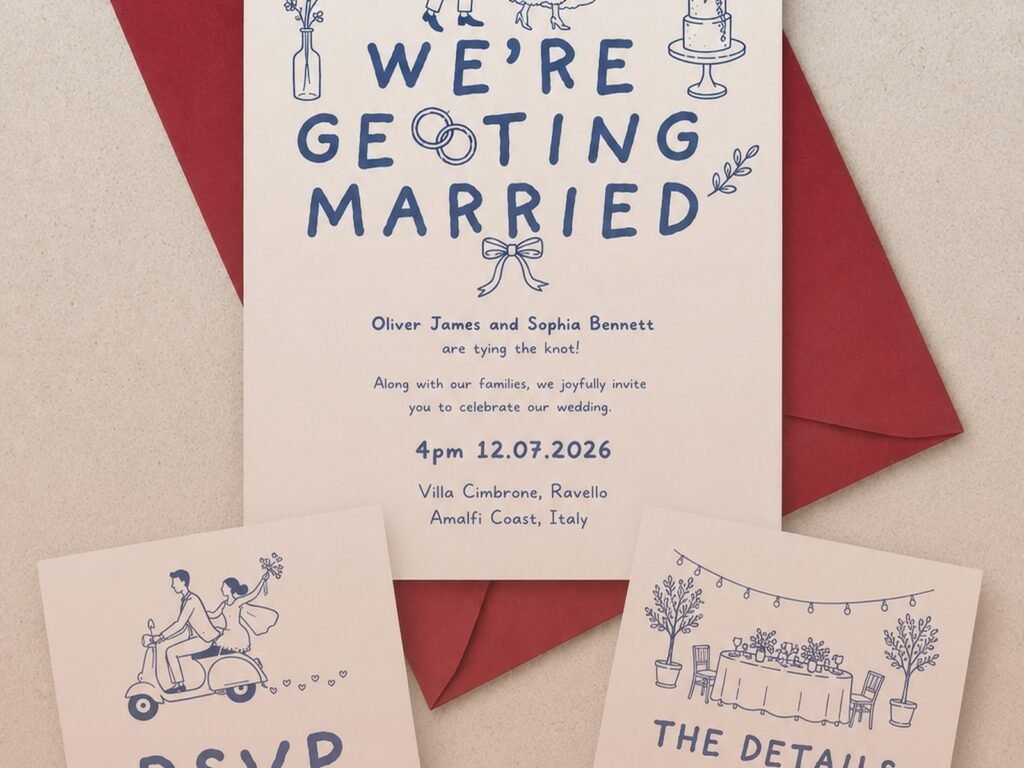
The vibe comes from a few specific things. Your font choices matter way more than you’d think. I’m talking about skipping the formal scripts and going with sans-serifs, hand-lettered styles, or even those fonts that look kinda like typewriter text. You want something that feels approachable, not like you’re announcing a royal decree.
Color is another big one. Traditional invitations stick to black ink on white or cream cardstock, maybe with some gold foil if people are feeling fancy. Casual invitations can use basically any color palette. Bright corals and turquoise for beach weddings, sage green and terracotta for boho vibes, even black backgrounds with white text if that’s your thing. One of my favorite sets I designed used this dusty blue with burnt orange accents and it was chef’s kiss for their backyard autumn wedding.
The wording is where you really set the tone though. Instead of “Mr. and Mrs. Jonathan Peterson request the honour of your presence” you can literally write “Come party with us” or “Let’s get married!” I’ve seen invitations that say “Join us for tacos and forever” and honestly it was perfect for that couple. You can use contractions, you can be funny, you can sound like actual humans wrote it.
Paper and Format Options
You don’t need the traditional folded card or the heavy cardstock with three layers and a belly band and… okay I’m getting worked up but you see what I mean. Casual invitations can be:
- Flat postcards (saves on postage too)
- Single-panel cards
- Folded cards but simple ones
- Booklet style if you have a lot of weekend events
- Even tri-fold designs that look kinda like brochures
The paper stock doesn’t have to be that super thick 120lb cover weight that costs a fortune. You can use lighter weights, textured papers, kraft paper, or even that handmade paper with the rough edges. My cat knocked over an entire box of handmade paper samples once and I’m still finding little paper fibers stuck to things in my office, but anyway, that texture really does make things feel more organic and relaxed.
Design Elements That Work
This is where I see people either nail it or completely miss. Casual doesn’t mean cluttered or chaotic. You still want clean design, just… looser? Less rigid?
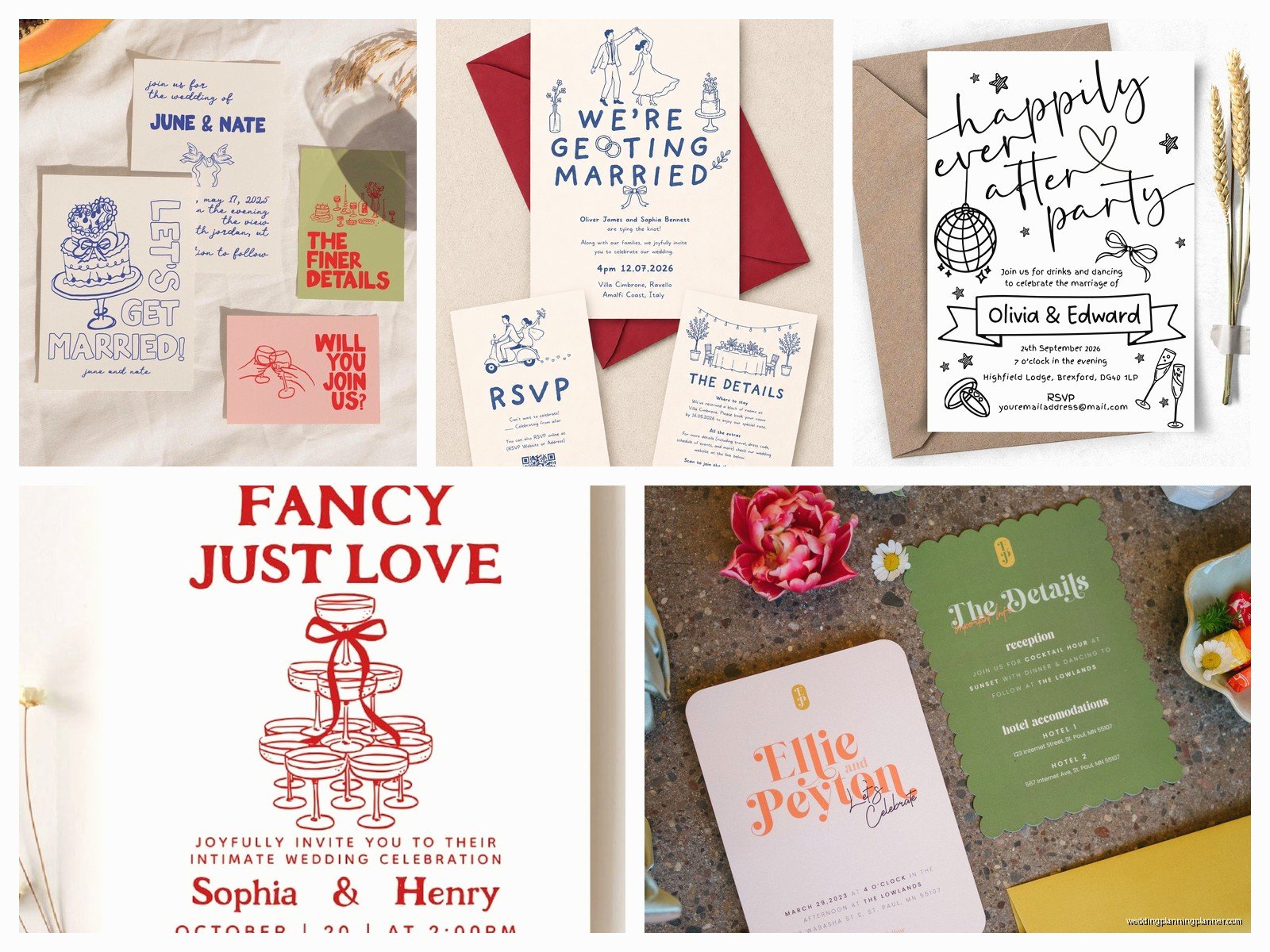
Illustrations and graphics can be more playful. Instead of formal monograms or classic flourishes, you can use:
- Watercolor elements
- Line drawings of your venue or meaningful locations
- Fun icons (like tiny tacos if you’re doing a taco wedding, or mountains if you’re getting married in the mountains)
- Hand-drawn borders instead of formal frames
- Your actual handwriting scanned in for headers or names
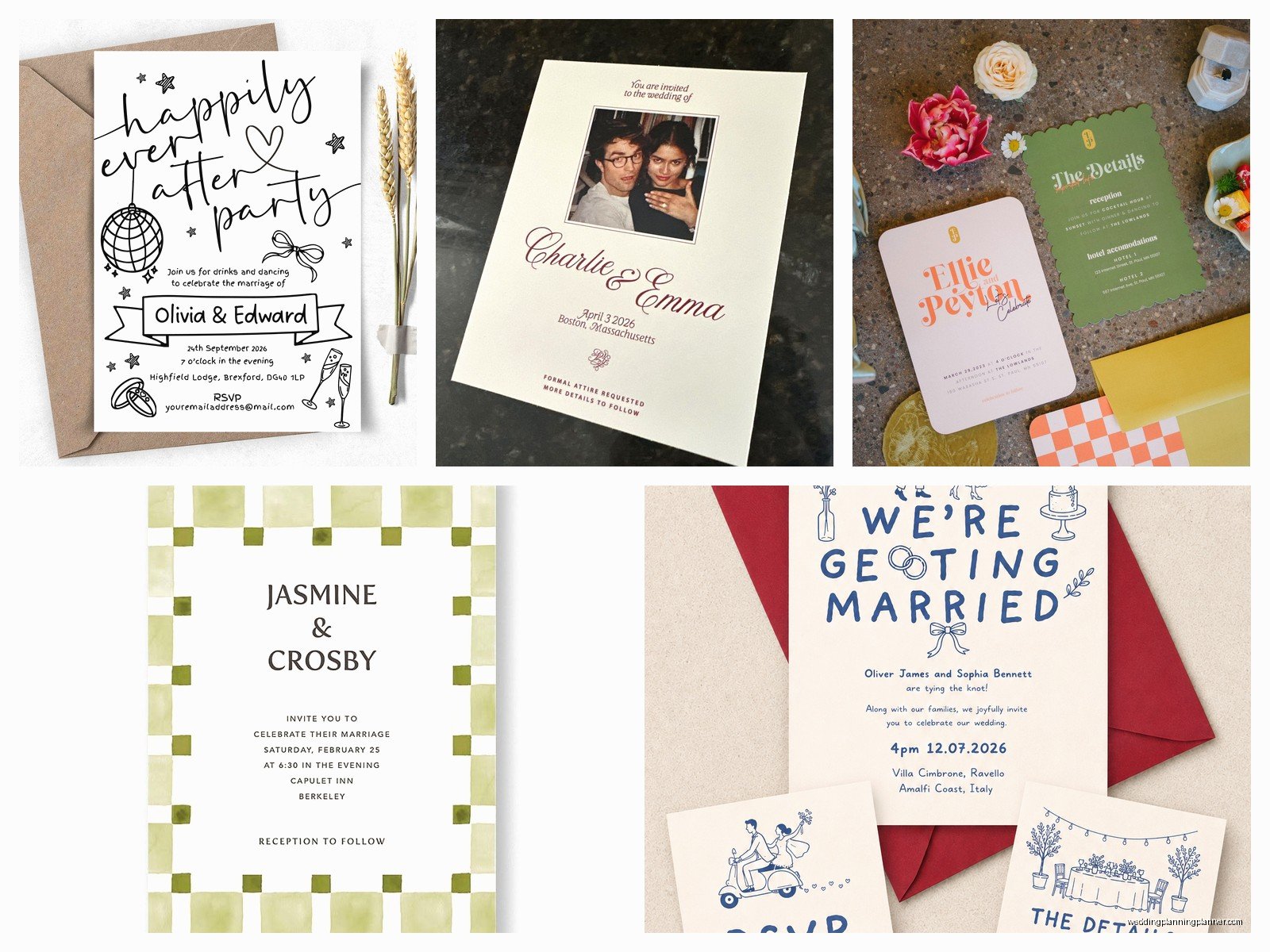
Photos are totally fair game for casual invitations. A nice engagement photo, a polaroid-style picture, or even a candid shot of you two laughing can set the whole tone immediately. Traditional invitations rarely include photos but for casual ones it works perfectly.
Layout and White Space
You want asymmetrical layouts instead of everything centered and balanced. Off-center text blocks, information clustered in corners, overlapping elements—this all reads as more relaxed. But and this is important, you still need enough white space so it doesn’t look crowded. I had a DIY bride once who wanted to fit literally everything including their entire love story onto one 5×7 card and it was just… we had to have a conversation about readability.
The information can be arranged more casually too. You don’t need “Reception to Follow” on its own line in formal script. You can write “Ceremony at 4pm, then we’re eating and dancing till late” in regular text as part of a paragraph. Works fine, gets the point across, sounds like you.
The Wording Thing I Keep Mentioning
Alright so this deserves its own section because it’s where personality really comes through. Traditional invitation wording has all these rules about whose name goes first (bride’s family if they’re hosting, otherwise bride then groom, unless it’s same-sex then alphabetical or however you want, and actually the rules are kinda outdated anyway…) but casual invitations let you throw most of that out.
You can:
- Use first names only
- Skip titles completely (no Mr., Ms., Dr., etc.)
- Say “we’re getting married” instead of “request the honour of your presence”
- Include both sets of parents casually like “The Smith Family and The Jones Family invite you”
- Or skip parent names entirely if you’re hosting yourselves
Be specific about what kind of event this is. “Backyard BBQ Wedding,” “Beachside Celebration,” “Casual Ceremony and Pizza Party”—this helps guests understand the vibe and dress code without you having to spell everything out. Though honestly you should probably still include some dress code guidance because I’ve seen guests show up in suits to events where everyone else was in sundresses and shorts.
What Information You Actually Need
Okay gonna list this out because even casual invitations need the basics:
- Who’s getting married (your names, obviously)
- What’s happening (wedding ceremony, reception, or both)
- When (date and time, and maybe end time if it’s not an all-evening thing)
- Where (venue name and city at minimum, full address is helpful)
- RSVP details (deadline and how to respond)
- Dress code or attire suggestion
- Website if you have one
You can present this information in paragraph form, in a list, in separate sections, whatever flows well with your design. Just make sure it’s all there and readable.
RSVP Cards and Inserts
Traditional wedding suites have like seventeen pieces: invitation, reception card, RSVP card, RSVP envelope, directions card, accommodation card, registry card (actually don’t include registry cards that’s tacky even for casual weddings), maybe a weekend events card… it gets excessive.
For casual invitations, you can simplify. Put everything on one card if possible. Or have the invitation plus one insert that covers all the extra details. Your RSVP can be online-only through your wedding website—this is super common now and saves paper and postage. If you do want physical RSVP cards, they can be postcards instead of cards with return envelopes.
I kinda love when couples use online RSVPs because then I can actually track responses in real-time instead of waiting for cards to trickle back through the mail. Plus you can ask specific questions like meal choices or song requests easily.
Details Cards
If you need to include extra information—accommodations, directions, weekend events schedule, transportation details—you can do a separate details card. Keep the same design style but this doesn’t have to be fancy. Literally just the information in an easy-to-read format works fine.
Some couples do a wedding weekend schedule as a fun timeline graphic. Others just bullet-point the information. Both work for casual styles.
Printing Methods
This affects your budget and your timeline so think about it early. Digital printing is the most affordable and works great for casual invitations. You get full color, any design you want, and reasonable prices. Letterpress can look amazing for casual weddings too—that impression in the paper adds texture and interest—but it’s pricier and usually limited to one or two colors.
Foil stamping feels fancy but you can use it selectively on casual invitations for just your names or a small design element. Adds a little special something without going full formal. What really annoys me is when couples want the expensive printing methods but also want to DIY everything to save money and then get frustrated when… yeah, those two things don’t go together. Pick your priority.
Home printing is totally an option for casual invitations if you’re actually crafty and have a good printer. You’ll need quality cardstock and you gotta do test prints to make sure colors look right. It’s time-consuming but doable. I’ve seen beautiful DIY invitations and I’ve seen disasters, so be honest with yourself about your skills and available time.
Envelopes
You don’t need lined envelopes or fancy envelope addressing. Regular envelopes work fine—maybe in a color that coordinates with your invitation instead of just white. Kraft envelopes look great with rustic or boho casual weddings. Colored envelopes can be really fun.
For addressing, you can handwrite them (or recruit friends), use a nice printed label, or do digital calligraphy printing. That super formal hand calligraphy isn’t necessary for casual vibes. Your handwriting or a casual font printed directly on the envelope is perfectly appropriate.
Timing and Etiquette Stuff
Even casual weddings should send invitations 6-8 weeks before the wedding at minimum. If you have a lot of out-of-town guests or you’re getting married during busy travel season, send them earlier like 10-12 weeks out. Save-the-dates are still a good idea for casual weddings if you want people to block off the date—you can make these super simple, like a postcard with just the date and location.
You still need to include all your guest’s names properly on the envelope. “The Johnson Family” if you’re inviting kids, specific names if you’re not. Don’t write “and guest” if you can avoid it—try to get actual names of plus-ones. This part isn’t really different from formal invitations, it’s just respectful.
Real Examples That Worked
Let me tell you about a few that really nailed the casual vibe. Had a couple doing a brewery wedding who designed their invitation to look like a beer label—it folded out to reveal all the information. Printed on this slightly textured cream paper, used their wedding colors of burgundy and gold, and it was just fun and totally them.
Another couple getting married at a summer camp (they met as camp counselors) did postcards with a vintage camp postcard design. The front had an illustrated “Greetings from Camp Pinewood” design and the back had all their wedding details. Cost-effective, super cute, and immediately communicated the vibe.
Beach wedding in summer 2021—they used a flat card with watercolor waves in blues and greens, casual script font for their names, and really simple clean text for details. Came in a pale blue envelope with a starfish wax seal. Not expensive, not complicated, just nice.
Things That Don’t Work
Trying too hard to be quirky usually backfires. I’ve seen invitations with so many “unique” elements that you couldn’t actually figure out what the event was or when it was happening. The information needs to be clear even if the design is playful.
Using too many different fonts or design elements makes it look messy rather than casual. Stick to 2-3 fonts maximum and a cohesive design concept. Casual doesn’t mean throwing everything at the wall.
Being too casual with the information—like forgetting to include the year (yes this happens) or not giving a full address. Your guests need complete information even if you present it casually.
Working With a Designer vs DIY
Look, I’m biased because this is literally my job, but there’s a middle ground here. You can buy templates from Etsy or other sites and customize them yourself—this gives you a professional design structure that you can personalize. Costs like $15-40 usually and you can edit everything in Canva or Templett or whatever platform the template uses.
Full custom design with a stationer will cost more but you get exactly what you want and someone else handles all the technical stuff like print-ready files and color matching. Worth it if you’re not confident in your design skills or don’t have time.
Completely DIY from scratch works if you’re actually good at design. Most people aren’t, and that’s fine, but be realistic. A poorly designed casual invitation still looks poorly designed.
Budget Considerations
Casual invitations can definitely be more affordable than traditional ones. Simpler printing methods, fewer pieces in your suite, lighter paper stock, postcard format—all these save money. You can do really nice casual invitations for $2-4 per invite including envelopes and printing.
If you want to splurge somewhere, spend it on one nice element like good paper quality or one spot of foil. You don’t need everything to be expensive for it to look good.
Online RSVPs save you the cost of reply cards and return envelopes plus postage for those, which adds up with 100+ guests. That’s an easy place to cut costs without sacrificing anything important.
When to Order or Start
If you’re ordering from a stationer or online company, you need at least 4-6 weeks for design, proofing, printing, and delivery. More if you want custom design work. If you’re DIYing, give yourself more time than you think you’ll need because something will go wrong—your printer will jam, you’ll run out of ink, the paper won’t feed properly, whatever.
Start thinking about invitation design and wording like 4-5 months before your wedding so you’re not rushed. I mean, I’ve done rush orders in two weeks before but it’s stressful and limits your options.
The key thing with casual wedding invitations is that they should feel authentic to you as a couple and match the actual vibe of your wedding. If your wedding is gonna be a formal sit-down dinner in a ballroom, don’t send super casual invitations because that’s confusing for guests. But if you’re really having a laid-back celebration, let your invitations reflect that from the start. Your invitations are the first impression of your wedding, so make sure they’re setting the right expectations while still including all the information people actually need to show up and have a good time.
