Planning Guides, Style Guide
Seating Chart Wording: Complete Guide
Mar
Okay So Seating Chart Wording Is Actually Way More Complicated Than You’d Think
The first thing you gotta know is that seating chart wording isn’t just about slapping names on a board. There’s actually a whole system to this and honestly in spring 2023 I had a bride lose her mind because her chart said “Mr. and Mrs. John Smith” and her aunt called her crying because it was “antiquated and offensive” so yeah, this stuff matters more than you’d think.
Let me just jump right into the formats because that’s what everyone gets stuck on.
The Basic Format Options
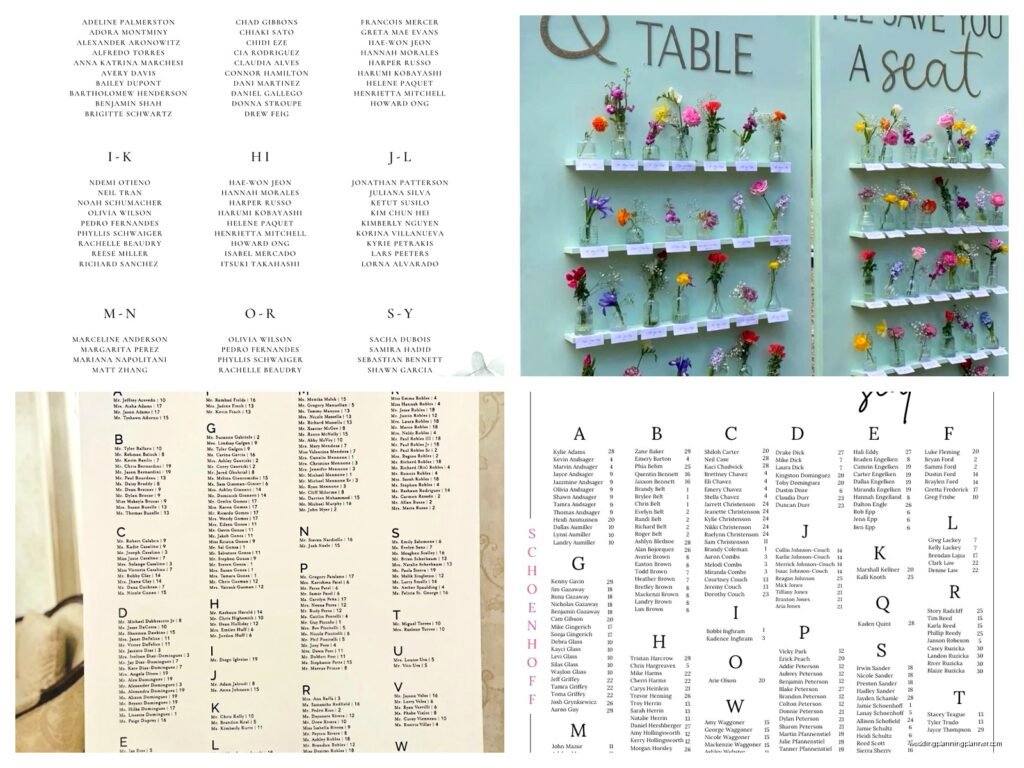
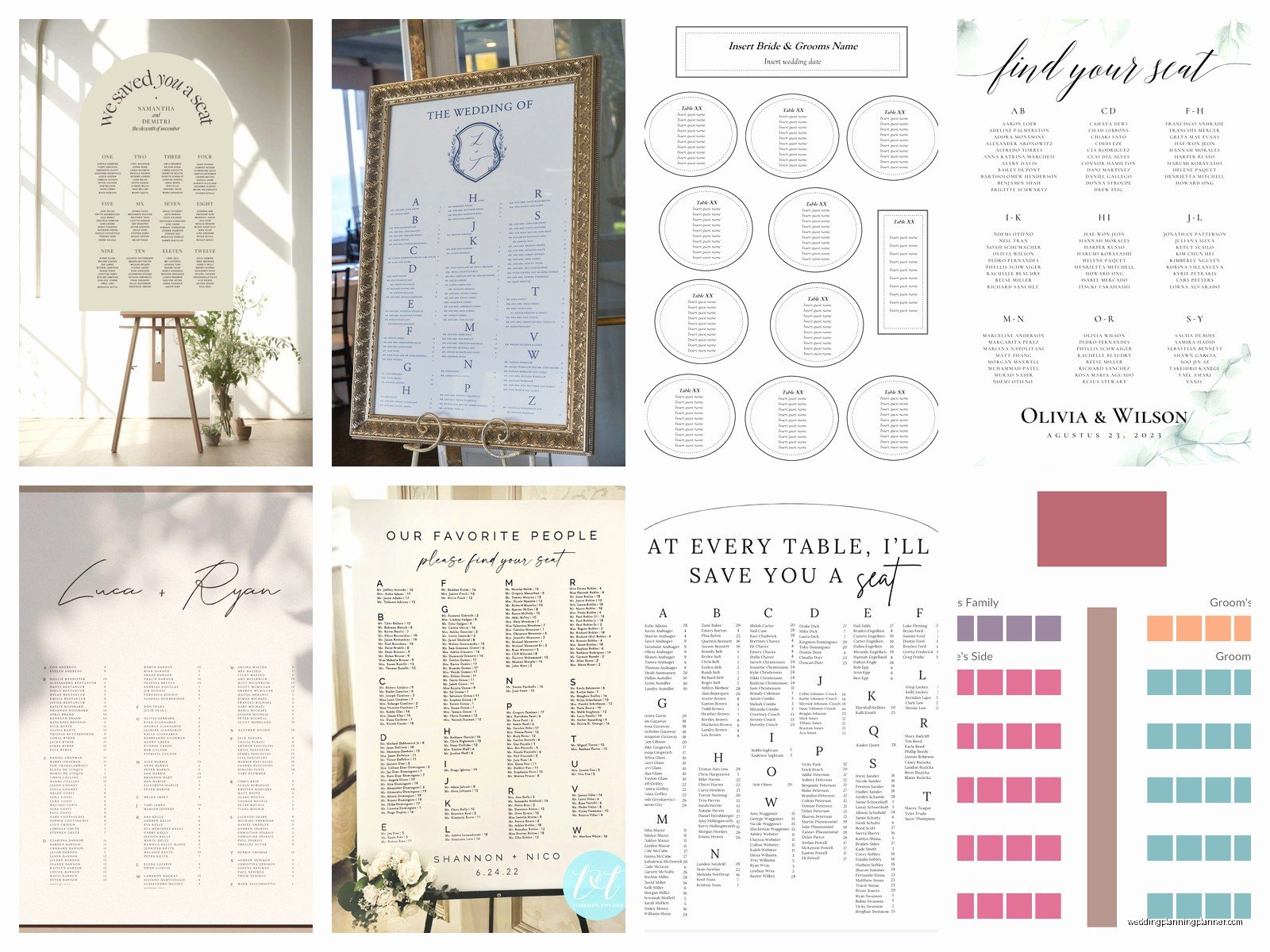
You’ve got like three main ways to do this and I switch between them depending on the couple’s vibe. First is alphabetical by last name which sounds simple but gets messy when you have couples with different last names or when Sarah Anderson is at table 4 but her husband Mike Wilson is… wait no they’re together so do you list them under A or W? See, it’s already confusing.
Second option is by table number which is what I usually recommend because guests just scan for their name and boom, done. You put “Table 1” then list everyone at that table underneath. Way easier. People aren’t standing there trying to figure out if they should look under their first name or last name or their date’s name.
Third is the escort card system where technically the wording is ON individual cards but you still need a display that explains the system, so the wording on the main sign matters.
Names and Titles – This Is Where It Gets Annoying
Okay so here’s what really bugs me about seating charts – everyone has an OPINION about how their name should appear. I had this wedding where the groom’s mom insisted on being listed as “Mrs. Robert Davidson III” but the bride’s mom wanted “Ms. Patricia Chen” and then there was a whole thing about consistency and I’m just standing there thinking about how my cat knocked over my coffee that morning and wondering why I didn’t become a vet instead.
Here’s the actual rules though:
Married couples with same last name: “Mr. and Mrs. James Peterson” OR “James and Sarah Peterson” – the formal vs casual thing. Most couples under 35 are going casual now, but if you’re doing a black-tie wedding at a country club, probably stick with the formal version or someone’s grandmother will have thoughts.
Married couples with different last names: “Sarah Johnson and Michael Torres” – just use both full names, alphabetical by first name usually looks best. Sometimes I’ll do “Sarah Johnson & Michael Torres” with the ampersand if space is tight.
Unmarried couples: Same format as married couples with different names. “Jennifer Adams and Chris Martinez” – you don’t need to indicate they’re not married, that’s kinda weird if you think about it.
Single guests with plus-ones: This is where it gets tricky and honestly where most mistakes happen. If you know the plus-one’s name, use it: “Rachel Green and Ross Geller” even if they just started dating. If you DON’T know the name, you have options: “Rachel Green and Guest” or just “Rachel Green” and then verbally tell her she has a plus-one. I prefer the second option because “and Guest” looks sad on a seating chart somehow?
The Actual Wording on The Display
Your seating chart needs a header and this is where people get creative but also where they sometimes forget to be clear. I’ve seen:
- “Please Find Your Seat”
- “Seating Assignments”
- “Find Your Table”
- “Dinner Seating”
- “Your Table Awaits”
That last one is trying too hard in my opinion but whatever makes you happy. The key is it needs to be OBVIOUS what this board is for because you’d be surprised how many people walk right past it and then ask the coordinator where they’re sitting.
If you’re doing escort cards instead of a chart, your display sign might say “Take a card, find your seat” or “Please take a card to find your table” – something action-oriented because people need instructions apparently.
Formatting Issues Nobody Tells You About
Okay so you’re gonna need to think about font size and I know that sounds obvious but I cannot tell you how many charts I’ve seen where the names are in like 8-point font and everyone over 50 is squinting and blocking the entire display. Minimum 14-point for names, preferably 16 or 18.
Table numbers or names need to be BIGGER than guest names. Like significantly bigger. Table headings should be maybe 24-point or larger, bold, different color, whatever makes them stand out. You want people to scan the table numbers first, then look at names.
If you’re doing long lists, break them into columns. A single column of 150 names is gonna be like three feet tall and nobody wants that. I usually do 2-3 columns depending on the size of your display.
Table Names vs Numbers
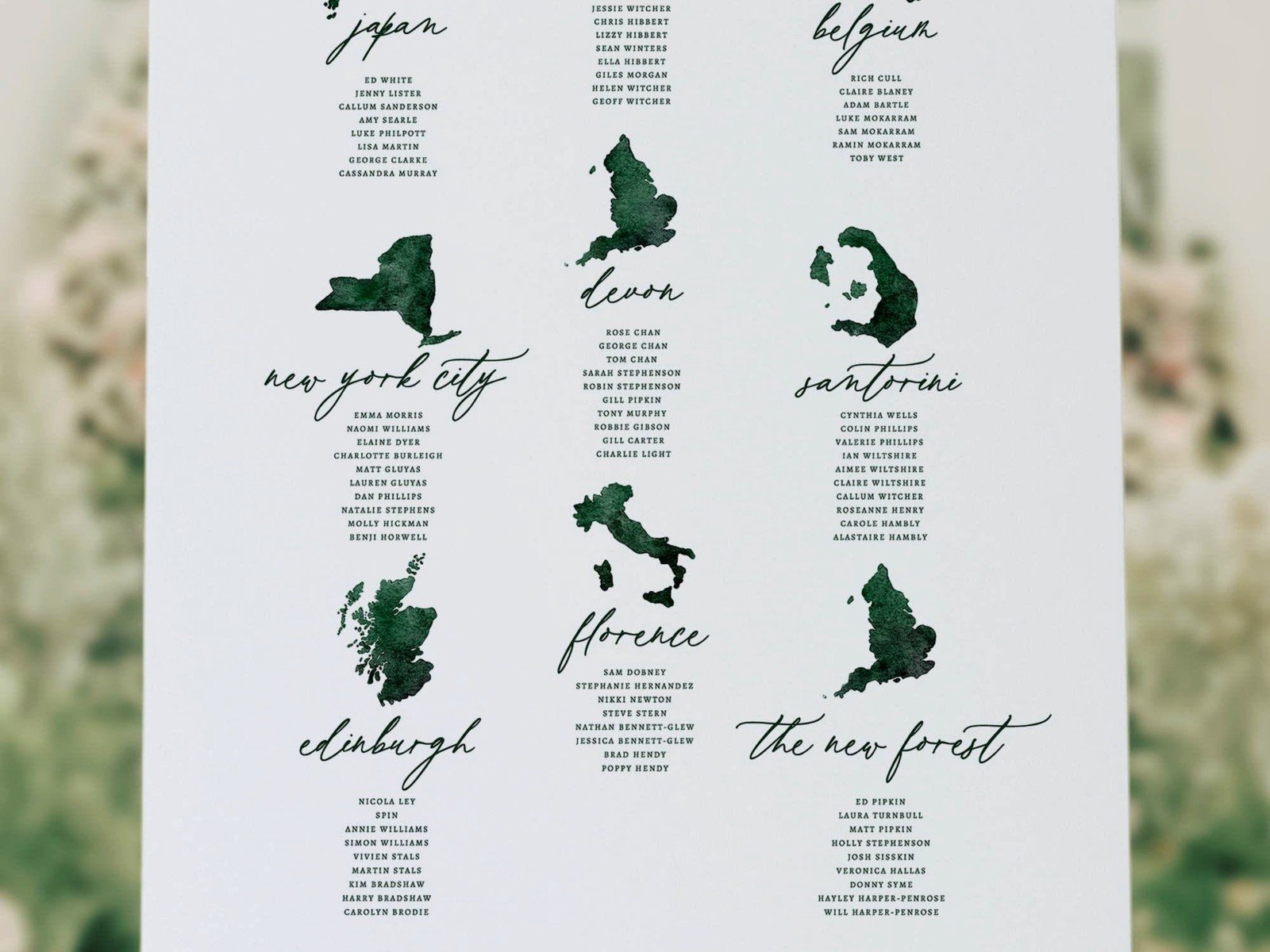
Some couples do table names instead of numbers – cities they’ve visited, favorite books, types of flowers, whatever. The wording stays the same, you just swap “Table 5” for “Table Paris” or whatever. But here’s a pro tip: still assign numbers internally for the catering staff because trying to explain to servers that the “Peonies table” is actually in the back corner near the DJ booth is gonna cause problems.
Your seating chart can say “Table Paris” but make sure your floor plan and catering captain know that’s actually Table 8 or whatever.
Special Situations That Come Up Literally Every Time
Divorced parents: List them separately, obviously. “Robert Chen” at Table 3, “Linda Chen” at Table 7. If one or both have remarried, include the new spouse: “Robert and Susan Chen” and “Linda Morrison and David Morrison” – you get it.
Kids: If you’re listing kids on the seating chart (some people don’t, they just list adults), you can do “The Peterson Family” or list them out “Mark and Jamie Peterson, Sophie, and Alex” – I kinda prefer listing everyone’s name because kids get excited seeing their name on stuff.
Vendors who are eating: Your photographer, DJ, whoever is getting a meal – list them! “Maria Santos – Photography” so people don’t wonder who the random person at Table 12 is. Or create a separate vendors table and just label it clearly.
Titles like Dr. or Judge: If someone goes by their title professionally and you know they prefer it, use it. “Dr. Amanda Foster and Mr. Ryan Foster” – but honestly unless it’s a super formal wedding or you KNOW they care, I’d skip it. It starts getting complicated when you have like three doctors and two professors and then everyone else feels weirdly casual in comparison… or maybe that’s just me overthinking.
Digital Displays vs Physical Charts
More couples are doing digital displays now – like a TV screen with scrolling names or a searchable tablet. The wording principles are the same but you have more flexibility with formatting. You can do a search function where people type their name, which solves the alphabetical vs table number debate entirely.
But you still need clear instructions: “Type your name to find your table” or whatever. And have a backup plan because technology fails at the worst possible moments, I’ve seen it happen.
Common Mistakes I See All The Time
Inconsistent formatting drives me crazy. If you do “Mr. and Mrs.” for one couple, do it for all couples. If you do first names only for one table, do it for all tables. I had a chart once where the bride’s family was all formal titles and the groom’s family was all casual first names and it looked like… I don’t even know, like two different weddings?
Misspellings are the WORST because you can’t really fix them day-of. Triple-check every name, especially ones with unusual spellings. I always send the couple a draft and make them check it twice because I’m not taking the blame when Aunt Caitlyn sees her name spelled “Katelyn” on the chart.
Forgetting to include yourself – the bride and groom! Your names should be on the seating chart too, usually at the head table or sweetheart table. Seems obvious but I’ve seen it missed.
The Actual Physical Layout
If you’re doing a poster board or acrylic sign, think about how people approach it. Put the header at the top (duh), but then organize info left to right, top to bottom, the way people naturally read. Don’t get artistic and put Table 8 randomly in the bottom corner just because it balances the design better.
Leave white space between tables/sections so it doesn’t look like a wall of text. Nobody wants to read a paragraph to find their seat.
For escort card displays, the wording on individual cards is usually just “Name(s)” on the front and “Table Number” inside or on the back. Keep it simple. The card itself can be decorative but the text needs to be readable.
Wording for Special Seating Areas
If you have reserved sections, your chart needs to indicate this clearly:
- “Head Table: Wedding Party”
- “Reserved: Family”
- “Table 1: Parents and Grandparents”
This prevents random guests from sitting in reserved spots and causing a whole thing. I learned this the hard way during a wedding in summer 2021 where we didn’t label the parents’ table clearly and a group of the groom’s college friends sat there because “it was empty” and then we had to awkwardly relocate them when the parents arrived and it was just… anyway, label everything.
Accessibility Stuff
If you have guests with accessibility needs, don’t announce it on the seating chart but DO make sure your floor plan accounts for it and maybe quietly note it somewhere for yourself. Like if Uncle Joe uses a wheelchair, Table 4 should be positioned where he can easily access it, but you don’t need to write “wheelchair accessible table” on the chart because that’s kinda personal info you’re broadcasting.
But DO make sure your seating chart itself is at a height everyone can read – not too high, not too low. About 4-5 feet off the ground usually works.
Dealing With Last-Minute Changes
Someone will cancel last-minute or bring an unexpected plus-one, it’s basically guaranteed. If you’re doing a printed chart, you can’t really fix it, so just have your coordinator or a family member stationed nearby to help confused guests. If you’re doing escort cards, you can add or remove cards as needed.
This is why I always recommend having a few blank escort cards in the same style available at the venue, just in case.
Multilingual Weddings
If you’re having a wedding with guests who speak different languages, you might need bilingual wording. “Please Find Your Seat / Por Favor Encuentre Su Asiento” or whatever languages apply. The name formatting stays the same, just translate the headers and instructions.
Themed Wedding Considerations
If you’re doing a themed wedding, your seating chart wording can reflect that but don’t sacrifice clarity for cuteness. A rustic wedding might say “Gather ‘Round Your Table” but people still need to actually understand what they’re supposed to do, so.
Beach weddings, garden weddings, whatever – the core information stays the same, you’re just styling it differently.
I think the main thing is just… remember that your seating chart has ONE job, which is to get people to their seats efficiently. Everything else – the pretty calligraphy, the flowers around the frame, the clever table names – that’s all bonus. Start with clear, accurate information, then make it pretty. Not the other way around because I’ve seen couples spend $400 on a gorgeous acrylic chart with gold lettering that nobody could actually read because the font was too swirly and the contrast was terrible and then everyone’s confused and backed up in the entry area and yeah, function over form on this one.