
Planning Guides, Style Guide
Bridal Coordinator: Complete Guide
Oct
What a Bridal Coordinator Actually Does
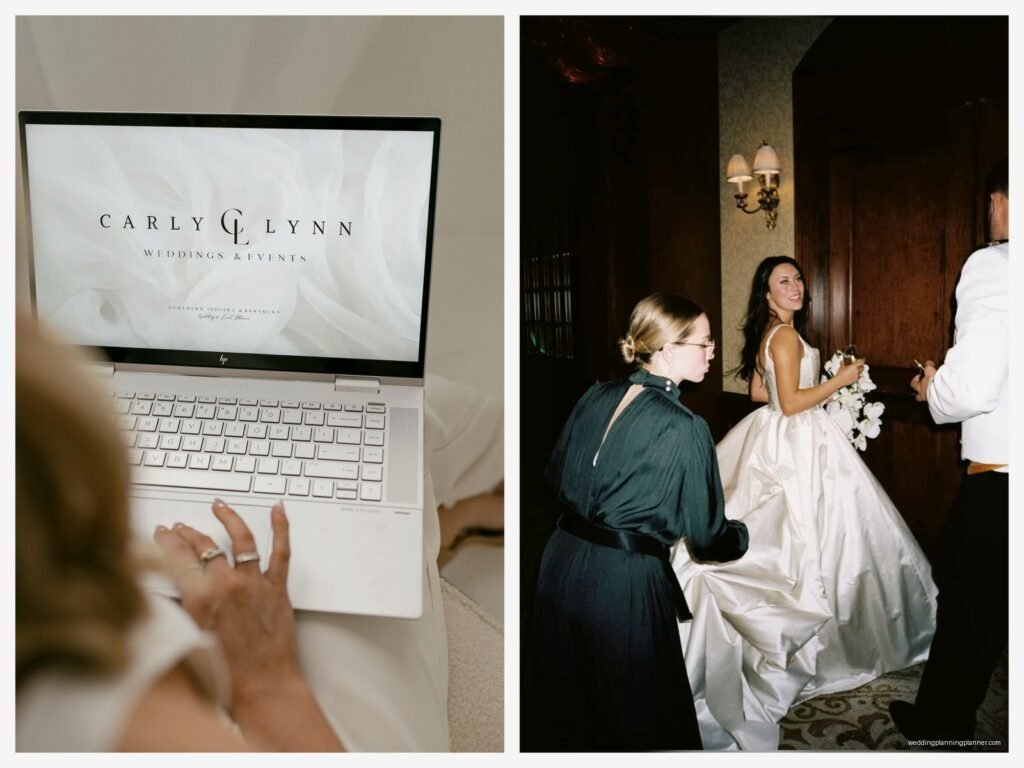
So a bridal coordinator is basically the person who shows up on wedding day and makes sure everything runs without the bride having a meltdown. You’re not the wedding planner—that’s a completely different role that annoys me so much when people mix them up—you’re the day-of execution person. The planner does all the months of prep work, you swoop in and make it happen.
I started doing this back in 2018 and lemme tell you, the first wedding I coordinated alone I was sweating through my blazer by 10am. It was summer 2021, outdoor venue, 95 degrees, and the groom’s boutonniere fell apart twice before the ceremony even started. But that’s kinda what you sign up for.
The Timeline Thing Everyone Gets Wrong
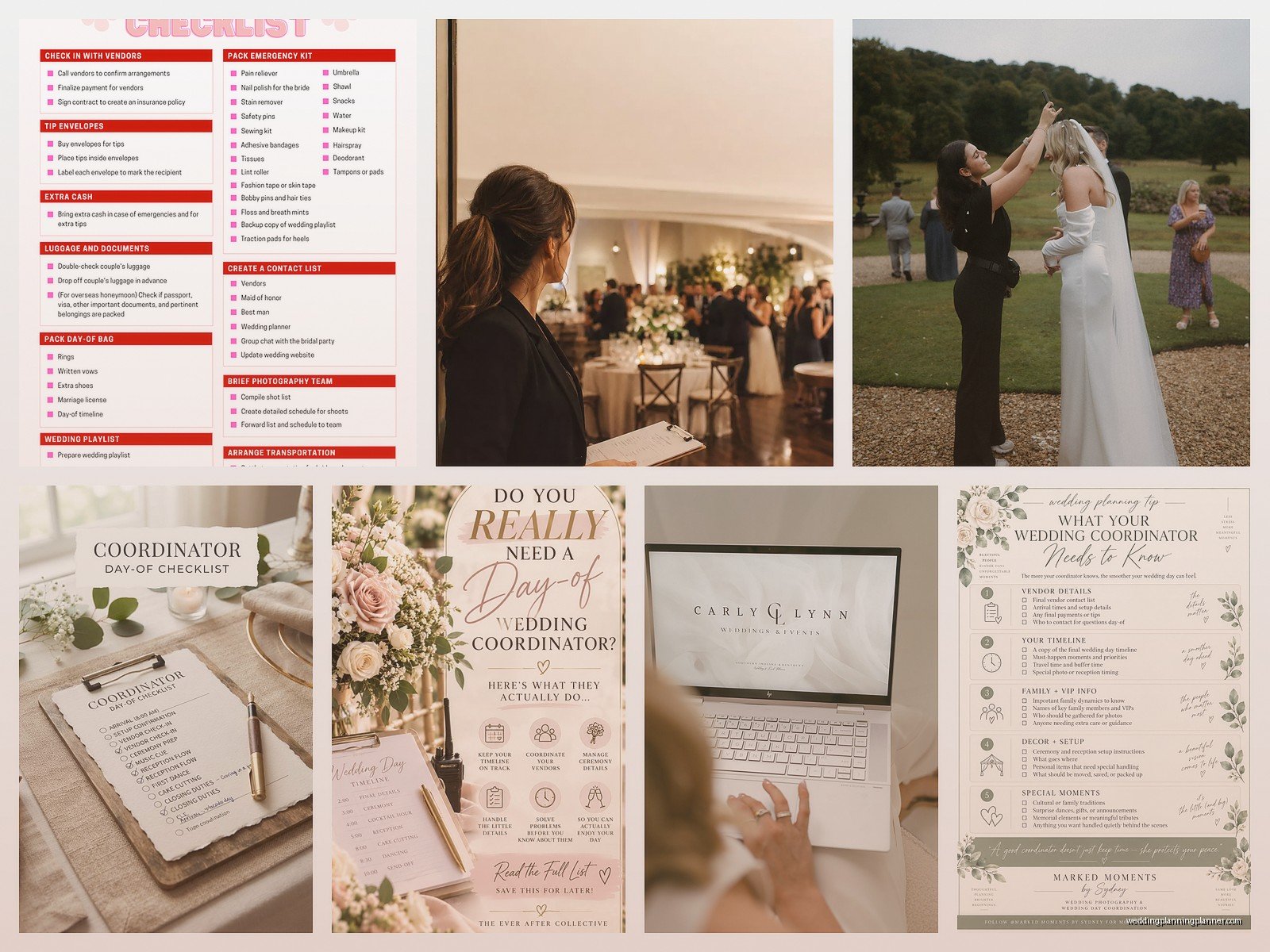
Your main job is managing the timeline. Not creating it necessarily—though sometimes you do that too—but making sure everyone sticks to it. You need to know where every single person needs to be at what time. The photographer needs the bride at 3:15pm for first look photos, the officiant needs to start seating grandparents at 4:42pm, cocktail hour starts at 5:30pm but the bartender needs to be set up by 5:15pm.
I usually create a master timeline that’s like… way too detailed for normal people but it saves your butt. Every vendor gets a copy. Every member of the wedding party gets a simplified version. The parents get an even simpler version because honestly they just need to know when to show up and where to stand.
You’re gonna need a clipboard. I know it sounds old school but your phone dies, it gets wet, whatever. Paper doesn’t die. I keep three copies of the timeline on me at all times plus vendor contact sheets.
Building Your Day-Of Kit
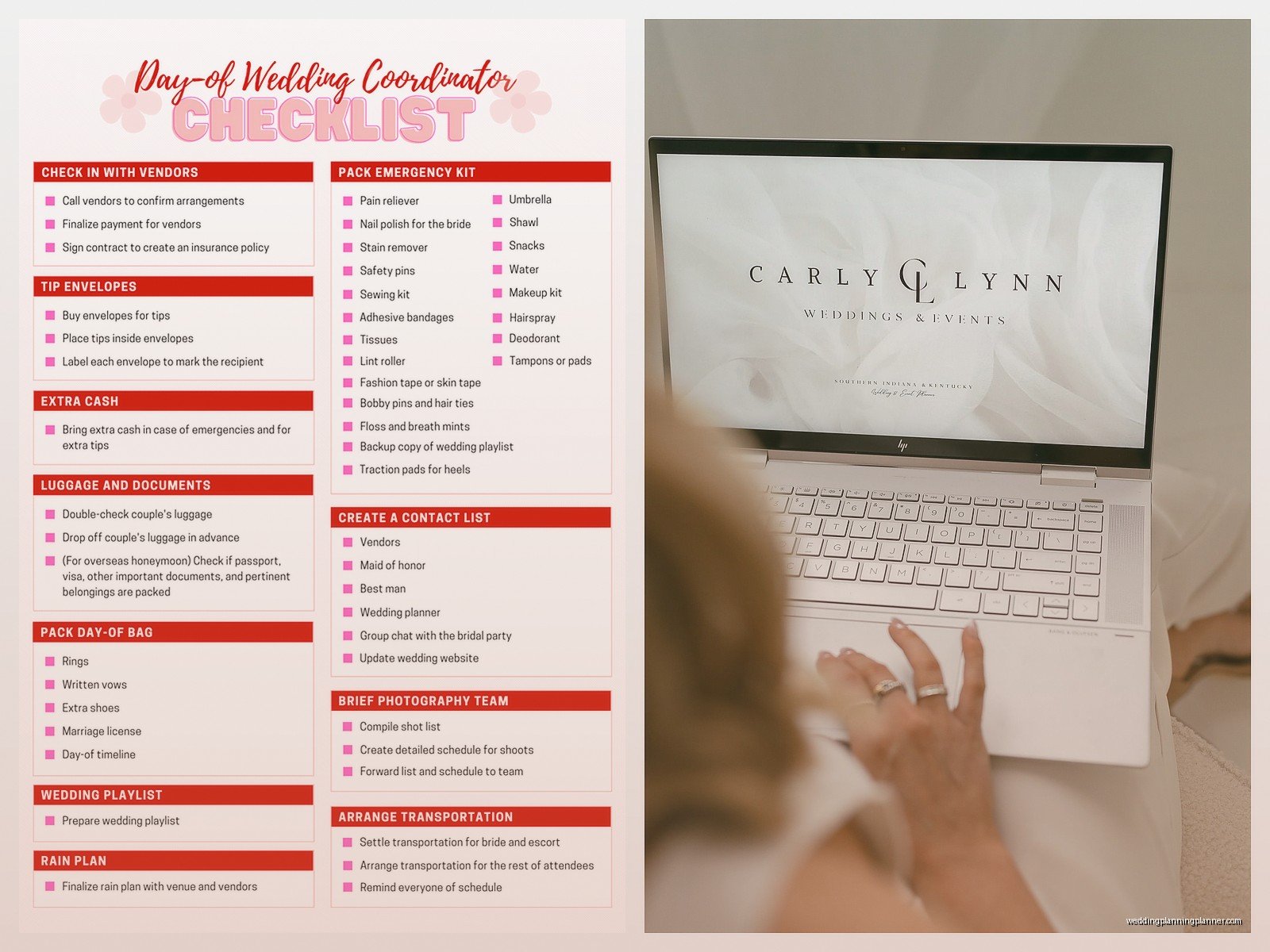
This is critical. You need an emergency kit that’s basically a portable hardware store mixed with a pharmacy. Here’s what I always have:
- Safety pins in multiple sizes (you’ll use at least 15 per wedding)
- Fashion tape and double-sided tape
- Sewing kit with white, black, and ivory thread
- Scissors and a small knife
- Stain remover pen (Tide to Go is your best friend)
- Bobby pins and hair elastics
- Clear nail polish for stocking runs
- Super glue
- Pain relievers, antacids, Band-Aids
- Breath mints
- Tissues and blotting papers
- Deodorant wipes
- Static spray
- Wrinkle release spray
- Lighter (for stray threads, sealing ribbon ends)
- Protein bars and water bottles
That last one is for you. You’re not eating a real meal for like 12 hours so pack snacks. My cat knocked over my entire emergency kit the night before a wedding once and I had to scramble at CVS at 7am replacing everything. Not fun.
The Vendor Management Part
You become the point person for every vendor on wedding day. The florist arrives and doesn’t know where centerpieces go? That’s you. The DJ needs to know when to start dinner music? You. The caterer wants to know if they can start serving? Also you.
Get every vendor’s cell number ahead of time. Not just the main company number, the actual person who will be there that day. Text them the week before confirming arrival times. Then text them the day before. Then the morning of. I know it seems excessive but vendors ghost sometimes or show up late and you need to know immediately.
Ceremony Coordination
This is where you earn your money honestly. You’re lining up the processional, cueing people when to walk, making sure the flower girl doesn’t bolt halfway down the aisle (happened to me spring 2023, we had to restart).
You need to do a ceremony rehearsal ideally the day before. Even if there’s not an official rehearsal dinner situation, you gotta at least walk through it with the wedding party. Who walks with who, what pace, where they stand, when they sit. The officiant should be there too so everyone’s on the same page.
I make the wedding party practice walking slowly. Like uncomfortably slowly. Because everyone rushes down the aisle and then it looks weird on video. Count “one one thousand, two one thousand” between each person walking or pair walking.
Have the rings. Seriously, designate yourself as backup ring holder because someone always forgets them. I keep a small pouch on me during ceremony just in case. Also tissues for crying—there’s always crying.
Reception Coordination Is Controlled Chaos
The reception is when you’re basically running in circles for five hours straight. You’re coordinating with the DJ or band for announcements, telling the caterer when to serve each course, making sure the cake gets cut at the right time, bustling the bride’s dress, fixing things that break…
Here’s the order of events usually:
- Cocktail hour (this is when you’re checking that reception space is perfect)
- Grand entrance of wedding party and couple
- First dance
- Welcome/toasts
- Dinner service
- Parent dances
- Cake cutting
- Bouquet/garter toss if they’re doing that
- Open dancing
- Last dance and exit
But honestly every wedding is different. Some couples do first dance after dinner, some do parent dances before dinner, whatever. Your job is knowing their specific timeline and making it happen.
The Communication Thing
Get a headset or at least earbuds with a mic if it’s a big wedding. You need hands-free communication with your assistant if you have one, or at minimum you need to be able to take calls without juggling your phone and clipboard and the bride’s emergency lipstick.
Develop a relationship with the photographer and videographer early in the day. You’re gonna work together constantly. They need family members for formal photos? You’re rounding people up. They need the couple for sunset photos? You’re pulling them away from cocktail hour. The videographer needs everyone quiet for a speech? You’re shushing people.
One thing that drives me insane is when couples don’t tell their families that you’re the coordinator. So you’re trying to manage something and aunt Susan is like “who are you?” and doesn’t listen. Have the couple introduce you to key family members—parents, siblings, maybe grandparents—so they know you’re the authority figure for the day.
The Setup and Breakdown
Most bridal coordinators don’t do full setup—that’s usually the venue or a separate décor company—but you’re typically there supervising. Checking that centerpieces are centered, place cards are in order, the seating chart is displayed correctly, candles are ready to be lit.
I always take photos of the setup before guests arrive. It helps with breakdown later because you can reference how things looked, plus couples like having those photos.
For breakdown, it depends on your contract. Some coordinators just handle the personal items—getting gifts to the designated person, making sure the couple’s stuff gets to their car, collecting any rented items that need returning. Other coordinators stay until everything’s packed up. I usually stay until at least the venue is clear of personal items because someone’s gotta make sure grandma’s purse doesn’t get left behind.
Dealing With Problems Because There’s Always Problems
Something will go wrong. Always. Your job is fixing it without the couple knowing. The boutonniere falls apart? You safety pin it back together. A bridesmaid’s dress rips? Fashion tape and strategic positioning. The unity candle won’t light? You’ve got a lighter. Uncle Bob gets too drunk? You’re calling him a cab or finding a sober relative to drive him home.
I had a wedding where the cake never showed up. Just… didn’t arrive. The bakery forgot or got the date wrong or I don’t even know. So I sent my assistant to the grocery store to buy sheet cakes and we cut them up in the venue kitchen and no one knew until later. The couple was mad at the bakery obviously but they didn’t find out until the next day, which is the point.
Stay calm always. Even when you’re internally freaking out. The bride feeds off your energy so if you’re stressed, she gets stressed. I’ve perfected this smile that says “everything is fine” even when it’s definitely not fine.
Working With Difficult People
Sometimes the bride is difficult. Sometimes it’s the mother-in-law. Sometimes it’s a drunk groomsman who thinks he’s hilarious. You need to be firm but polite.
I’ve had to tell mothers that no, they can’t rearrange the seating chart an hour before the reception. I’ve had to physically block a guest from bothering the bride during photos because they wouldn’t take a hint. You’re kinda the bride’s bodyguard in a way? Like you run interference so she can enjoy her day.
For drunk guests, I usually coordinate with venue staff or the couple’s family. It’s not really your job to be a bouncer but you need to know when someone’s becoming a problem and handle it discreetly.
The Business Side If You’re Going Professional
If you’re doing this as a real business and not just helping a friend, you need contracts. Spell out exactly what you’re doing and what you’re not doing. How many hours you’re working, what’s included, what costs extra.
I charge a flat rate for day-of coordination which includes one planning meeting about a month before, unlimited email communication, the rehearsal, and up to 10 hours on wedding day. Anything beyond that is hourly. Some coordinators charge by the guest count which… I get it but I don’t love that model personally.
Get liability insurance. Venues often require it anyway. You’re gonna be handling expensive stuff and if something breaks or goes missing, you need coverage.
Have a payment schedule. I do 50% when they book, 50% two weeks before the wedding. Never do the full amount day-of because good luck collecting payment from someone on their wedding day.
Building Your Reputation
Most of my clients come from referrals—either from past couples or from vendors. Photographers and venues are great referral sources because they work tons of weddings and see coordinators in action.
Be nice to vendors even when you’re stressed. They remember coordinators who are pleasant to work with versus the ones who are demanding or rude. I’ve gotten probably 30% of my bookings from photographer recommendations.
Ask couples for reviews and testimonials. Put them on your website or social media or wherever you market yourself. Specific reviews are better than general ones—like “Olivia kept us on schedule and handled our flower emergency perfectly” is more useful than “Olivia was great!”
What You Actually Need To Start
You don’t need a ton to start doing this. Your emergency kit, professional clothes (usually all black so you blend in), comfortable shoes that still look professional, your timeline materials, and honestly just confidence.
I started with a binder system for organizing everything. Now I use a combination of digital tools and paper because… okay I’m gonna be honest, I still don’t fully trust technology for wedding day. Apps crash, phones die, whatever. I keep the critical stuff on paper.
Professional clothes are important because you’re in all the photos. You’re in the background of ceremony shots, you’re visible during reception. All black is standard so you don’t distract from the wedding colors. Comfortable shoes are non-negotiable—you’re walking like 15,000 steps on wedding day.
Some coordinators wear headsets which looks super professional but I personally find them annoying unless it’s a really large wedding. For most weddings my phone in my pocket works fine.
The Mental Part Nobody Talks About
This job is exhausting. Not just physically but mentally. You’re making decisions constantly, problem-solving on the fly, managing personalities, staying alert for issues. By the end of a wedding I’m wiped.
I usually block the next day off completely because I’m useless. Just gonna sleep and watch reality TV and not talk to anyone. My friends know not to invite me to anything on Sundays during wedding season.
You also get emotionally invested even when you try not to. You spend all this time planning with a couple and you want their day to be perfect. When something goes wrong it feels personal even though it’s not.
The good part is when everything comes together and the couple is happy and you see them actually enjoying themselves instead of stressing. That moment when the bride relaxes because she knows you’ve got everything handled—that’s why you do this job.
