
Planning Guides, Style Guide
Day of Coordinator: Wedding Day Management Services
Sep
What a Day-of Coordinator Actually Does (Because Most People Get This Wrong)
Okay so here’s the thing—couples always think they don’t need a day-of coordinator until about two weeks before the wedding when they realize they have no idea who’s supposed to tell the DJ when to start the reception music or who’s collecting all the centerpieces at the end of the night. A day-of coordinator is basically the person who makes sure your wedding day runs without you having to text your bridesmaids a million questions or chase down your uncle who’s supposed to be setting up the card box.
The role starts way before the actual day though. Usually you’re meeting with the couple about 4-6 weeks before the wedding to go over every single detail. You’re reviewing their vendor contracts, creating a timeline, figuring out the floor plan, and honestly just absorbing everything they’ve been planning for the past year. It’s kinda like studying for a test except the test is someone’s entire wedding and you can’t mess it up.
The Planning Phase (Which Isn’t Actually Just One Day)
When I meet with couples that first time, I bring this massive questionnaire. And I mean massive—it’s like 15 pages. They always look at me like I’m crazy but then we start going through it and they realize how many details they haven’t thought about. Like, who’s bustling your dress? Where are the gifts going? What time does grandma need to leave to make her medication schedule? These aren’t things that just magically work themselves out.
You’re gonna want to get copies of all their vendor contracts. Read through every single one. I learned this the hard way in spring 2023 when a florist showed up an hour later than I expected because the bride had verbally agreed to a different time than what was in the contract. That was… not a fun phone call to make. Now I confirm everything in writing with every vendor about a week before.
The timeline is probably the most important thing you’ll create. I usually build it in 15-minute increments starting from when vendors arrive in the morning until the last person leaves. You need to account for travel time between venues if they’re doing photos elsewhere, how long the ceremony actually takes (spoiler: they always run over), cocktail hour, and buffer time because something always takes longer than planned.
Creating a Detailed Timeline That Actually Works
Here’s what I include in every timeline:
- Vendor arrival times and load-in schedules
- Hair and makeup schedule with specific times for each person
- When the wedding party needs to be dressed and ready
- First look timing if they’re doing one
- Family photo list with groupings (this saves SO much time)
- Ceremony start time plus 15 minutes because guests are always late
- Cocktail hour activities and timing
- Reception entrance and first dances
- Dinner service timing
- Toasts, cake cutting, bouquet toss—all that stuff
- Last song and venue exit
- Load-out schedule for vendors
The thing that really annoys me is when couples say “oh we’ll just go with the flow” for their timeline. Nah. That doesn’t work. I’ve seen “go with the flow” weddings and they end up with guests standing around for 45 minutes waiting for dinner because nobody told the caterer the couple was still taking photos. Your guests don’t need to see the timeline but you absolutely need one.
The Vendor Management Part
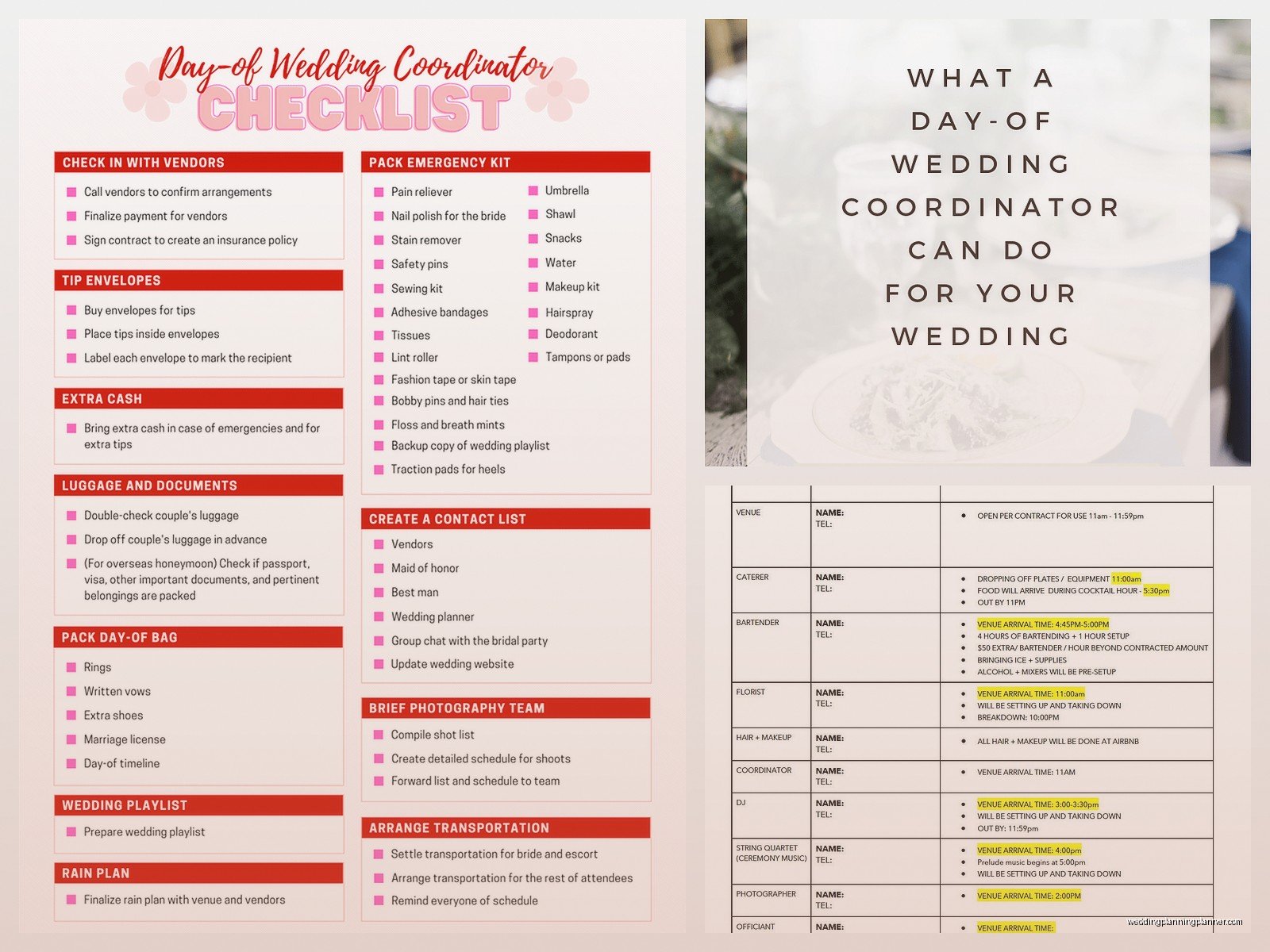
About a week before the wedding, you should be reaching out to every single vendor to confirm their arrival time, what they need for setup, and any last-minute changes. I usually send one big email to everyone with the timeline attached and then follow up with individual vendors about their specific needs.
Photographers need to know the family photo list. The DJ needs the pronunciation guide for names and the do-not-play song list. The caterer needs the final headcount and any last-minute dietary restrictions. Florists need to know exactly where each arrangement goes. The baker needs to know if there’s a cake table set up or if they need to provide one.
Oh and you need everyone’s cell phone numbers. Not just the main office number—the actual person who will be there that day. I keep all of this in a binder that I carry around all day and honestly it’s probably my most important tool besides my phone charger and the emergency kit.
The Emergency Kit Everyone Thinks Is Overkill Until They Need It
I keep a massive clear storage container in my car with everything you could possibly need. And I do mean everything. Safety pins, fashion tape, stain remover, scissors, super glue, bobby pins, hair spray, deodorant, tampons, ibuprofen, band-aids, needle and thread, lint roller, static spray, baby powder (for sand at beach weddings), sunscreen, bug spray, breath mints, phone chargers for every type of phone, tissues, makeup remover wipes, clear nail polish, and probably like 30 other things I’m forgetting right now.
Last summer a groomsman split his pants literally right before the ceremony and I safety-pinned and sewed them back together in about 4 minutes. The bride never even knew it happened. That’s the kind of thing you’re handling as a day-of coordinator—problems that would normally derail everything but you just… fix them quietly.
Setting Up and Managing Ceremony Details
On the actual wedding day, I usually arrive about 3-4 hours before the ceremony starts. Sometimes earlier if there’s a lot of DIY setup involved. You’re walking through the venue with the floor plan, directing vendors where to set up, making sure the ceremony space is arranged correctly, and double-checking that all the little details are in place.
For the ceremony, you’re usually setting up or supervising:
- Programs or ceremony fans on chairs
- Aisle runner or petals if they’re using them
- Altar arrangements and florals
- Unity ceremony supplies (candles, sand, whatever they’re doing)
- Guest book table with pens that actually work
- Seating chart or escort cards
- Reserved seat signs for family
- Any signage they want displayed
Then you’re lining up the wedding party, making sure everyone has their flowers or boutonnieres on correctly, cueing the musicians or DJ for processional songs, and basically being the backstage manager for the whole thing. I always keep the marriage license and rings with me until right before the ceremony because someone always forgets where they put them.

The Actual Ceremony Coordination
During the ceremony you’re standing in the back making sure everything flows smoothly. You’re watching to see if the officiant needs anything, if there are any issues with sound, if guests need directions to restrooms or anything like that. You’re also usually the one who tells people when to sit down if the officiant forgets or if there’s a cultural tradition happening that guests might not understand.
After the ceremony, you’re flipping the ceremony space if it’s the same location as the reception (this is always chaos and requires a whole team), directing guests to cocktail hour, making sure the family photo list happens efficiently, and checking that the reception space is ready to go.
The family photos part is where you really earn your money honestly. Families are… well they’re a lot sometimes. You need to be firm about keeping things moving because photographers only have so much time and there are always relatives who want “just one more” photo. I literally carry a printed list and check people off as we go through it.
Reception Management and Problem Solving
Once cocktail hour starts, you’re checking in with all the reception vendors. Is the caterer on schedule? Does the DJ have everything they need? Are the tables set correctly? Is the cake displayed properly? Are the place cards all in order? This is when you catch problems before they become bigger problems.
I always do a final walkthrough of the reception space about 20 minutes before guests are supposed to move in there. I’m looking for anything that’s not right—wrong table numbers, missing favors, centerpieces that aren’t centered (yes I’m that person), escort cards that fell on the floor, whatever. My cat knocked over my coffee this morning and I spent 15 minutes cleaning it up which is basically what this part of the job feels like except with more expensive stuff at stake.
Running the Reception Timeline
During the reception, you’re basically the air traffic controller. You’re telling the DJ when to make announcements, cueing the caterer when to start serving courses, making sure toasts happen at the right time, coordinating the cake cutting, and keeping everything moving according to the timeline.
But here’s the thing—you also need to know when to adjust the timeline. If speeches are running long or people are really enjoying cocktail hour, sometimes you gotta make executive decisions about pushing things back. The couple hired you to make these calls so they don’t have to think about it.
You’re also handling guest questions and issues. Someone can’t find their seat, someone needs directions to the bathroom, someone’s asking about the shuttle schedule, someone’s kid is melting down and they need to know if there’s a quiet room somewhere. You’re the information desk for everyone.
The Behind-the-Scenes Stuff Nobody Sees
Throughout the night you’re doing a million little things. Bustling the bride’s dress so she can dance. Moving gifts and cards to a secure location. Making sure the couple actually eats something (they never want to but you have to make them). Keeping an eye on vendors to make sure they’re on schedule. Dealing with venue staff about anything that comes up.
There was this one wedding where the venue’s air conditioning broke in the middle of summer and I had to coordinate getting fans brought in, moving the cake to a cooler room, and keeping everyone informed without causing panic. The couple still doesn’t know how close we came to having a melted wedding cake because we handled it before it became their problem. That’s literally the job description right there—handle problems before they become the couple’s problems.
You’re also usually the point person for any family drama that might come up. Divorced parents who don’t want to be near each other, relatives who have had too much to drink, unexpected guests who showed up without RSVPing… you become a combination of therapist, security guard, and diplomat all at once.
Working With Vendors as a Coordinator
One thing I wish more couples understood is that a good day-of coordinator has relationships with vendors in the area. I know which photographers run on time and which ones need gentle reminders. I know which caterers are flexible and which ones stick strictly to their contract. I know which DJs are gonna make everything fun and which ones might need some guidance.
When you’re on site, you’re communicating constantly with vendors. The photographer needs more time for portraits? You’re adjusting the timeline and letting the caterer know. The DJ wants to know if they should extend dancing or wrap up early? You’re checking with the couple or making that call based on the energy in the room. The florist forgot the cake flowers? You’re figuring out a solution that doesn’t involve telling the bride there’s a problem.
I always introduce myself to every vendor when they arrive and make sure they have my cell number. I tell them to come to me with any questions or issues, not the couple. That’s what creates that bubble around the couple where they can just enjoy their day.
End of Night Responsibilities
When the reception is wrapping up, you’re coordinating the exit if they’re doing one. That means lining up guests with sparklers or whatever they’re using, cueing the photographer, making sure the getaway car is ready, all that stuff.
After the couple leaves (or doesn’t leave because lots of couples stay until the end now), you’re making sure:
- All gifts and cards are collected and secured
- Personal items from the bridal suite are packed up
- Any rental items that need to be returned are gathered
- Centerpieces or decorations the couple wants to keep are packed
- The venue is left in good condition
- Any items going to specific people (like florals to grandma) get to them
I usually designate a family member or friend to take things at the end of the night because you can’t fit everything in your car and it’s not really your job to store their stuff. But you need to make sure someone responsible has it all.
What Makes a Good Day-of Coordinator
You need to be organized obviously but you also need to be able to think on your feet and stay calm when things go wrong. Because things will go wrong. Always. I’ve never had a wedding where everything went exactly according to plan and that’s fine because that’s literally why you’re there.
You also need to be assertive without being pushy. You’re directing a lot of people throughout the day—vendors, wedding party members, family, guests—and you need to do it in a way that’s firm but friendly. Nobody wants a coordinator who’s barking orders but you also can’t be so soft that people don’t listen to you or… wait I lost my train of thought, oh yeah—you need to find that balance where people respect your authority but don’t feel like you’re being bossy.
Communication skills are huge. You’re constantly relaying information between different people and you need to be clear and concise. When I’m talking to vendors, I’m direct and specific. When I’m talking to the couple, I’m reassuring and positive. When I’m talking to family members who are stressed, I’m calm and solution-oriented.
Physical stamina matters too. You’re on your feet for like 12-15 hours, you’re running around constantly, you’re carrying stuff, you’re probably not eating much. I always wear comfortable shoes that still look professional and I keep snacks in my coordinator bag because I’ve definitely almost passed out from low blood sugar during a reception before.
Pricing and Packages
Most day-of coordinators charge anywhere from $800 to $2500 depending on location and what’s included. Some coordinators include rehearsal coordination, some charge extra for that. Some include the planning meetings, some charge hourly for those. Some include setup and breakdown, some just do timeline management.
Personally, my day-of package includes two planning meetings, unlimited email communication in the month before the wedding, rehearsal coordination, and up to 12 hours of coverage on the wedding day. Setup and breakdown are included but major decorating projects aren’t—that’s a separate thing.
I tell couples that if they have more than 100 guests or they’re using more than 5 vendors, they really should have a coordinator. It’s just too much to manage on your own and your family and friends should be enjoying the wedding, not working it.
