
Planning Guides, Style Guide
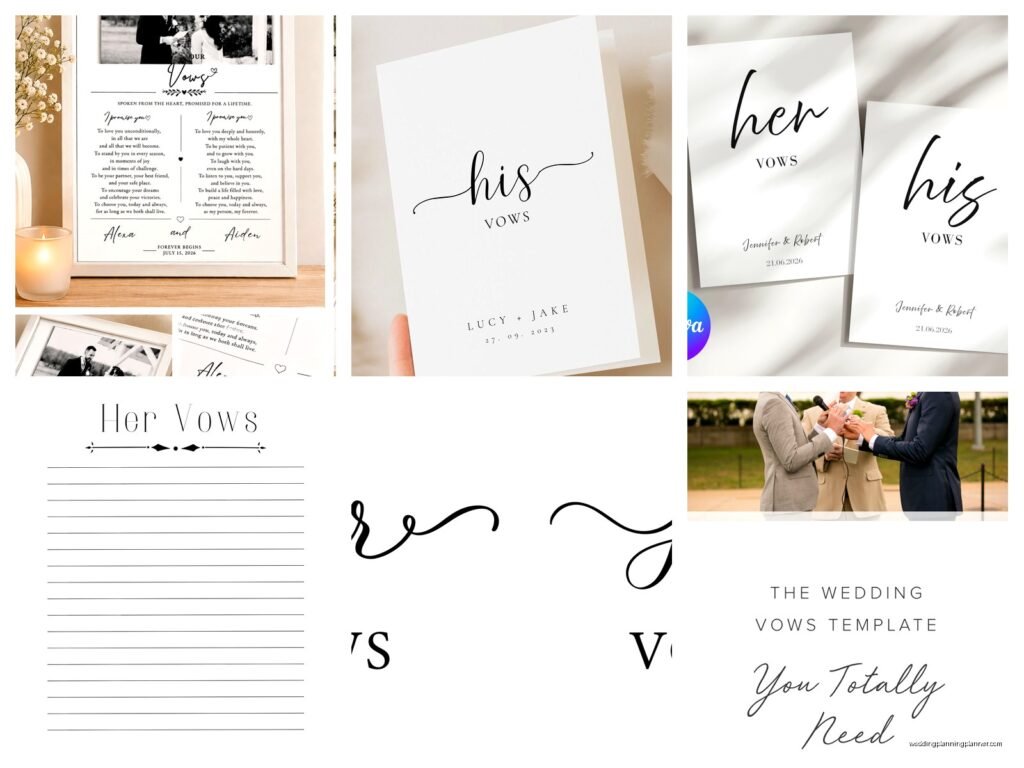
His And Her Vows Template: Free Download Files
Sep
Okay So You Need Vow Templates
Look, I’m just gonna jump right in because I’ve dealt with this exact situation probably 200 times in my career and honestly, the number of couples who show up two weeks before their wedding with nothing written is… well, it’s a lot. Spring 2023, I had this couple literally Google “wedding vows” in my office during our final planning meeting and I wanted to scream but also I get it because writing vows is terrifying.
The whole his-and-her vows thing is kinda traditional but also it gives you structure, which most people desperately need. You can find free templates all over the internet but the problem is most of them are either way too cheesy or they’re so generic that you could be marrying literally anyone. What really annoys me is when websites make you sign up for like seventeen newsletters just to download a simple PDF template. Just give me the file, Karen.
Where To Actually Find Free Templates That Don’t Suck
So here’s where I usually send my clients. First off, Canva has wedding vow templates that you can customize and they’re actually free if you use the basic account. You can type directly into them, change fonts, print them, whatever. The Wedding Officiant Directory has downloadable Word docs that are separated into his vows and her vows, though obviously you can use whichever feels right for you regardless of gender because it’s 2024 and… anyway.
Google Docs templates are underrated for this. You can search “wedding vow template” in the template gallery and there are several options. I like these because you can share them with your partner and both work on them separately, then compare notes. There’s something about seeing your vows in an actual document format that makes them feel more real, less scary somehow.
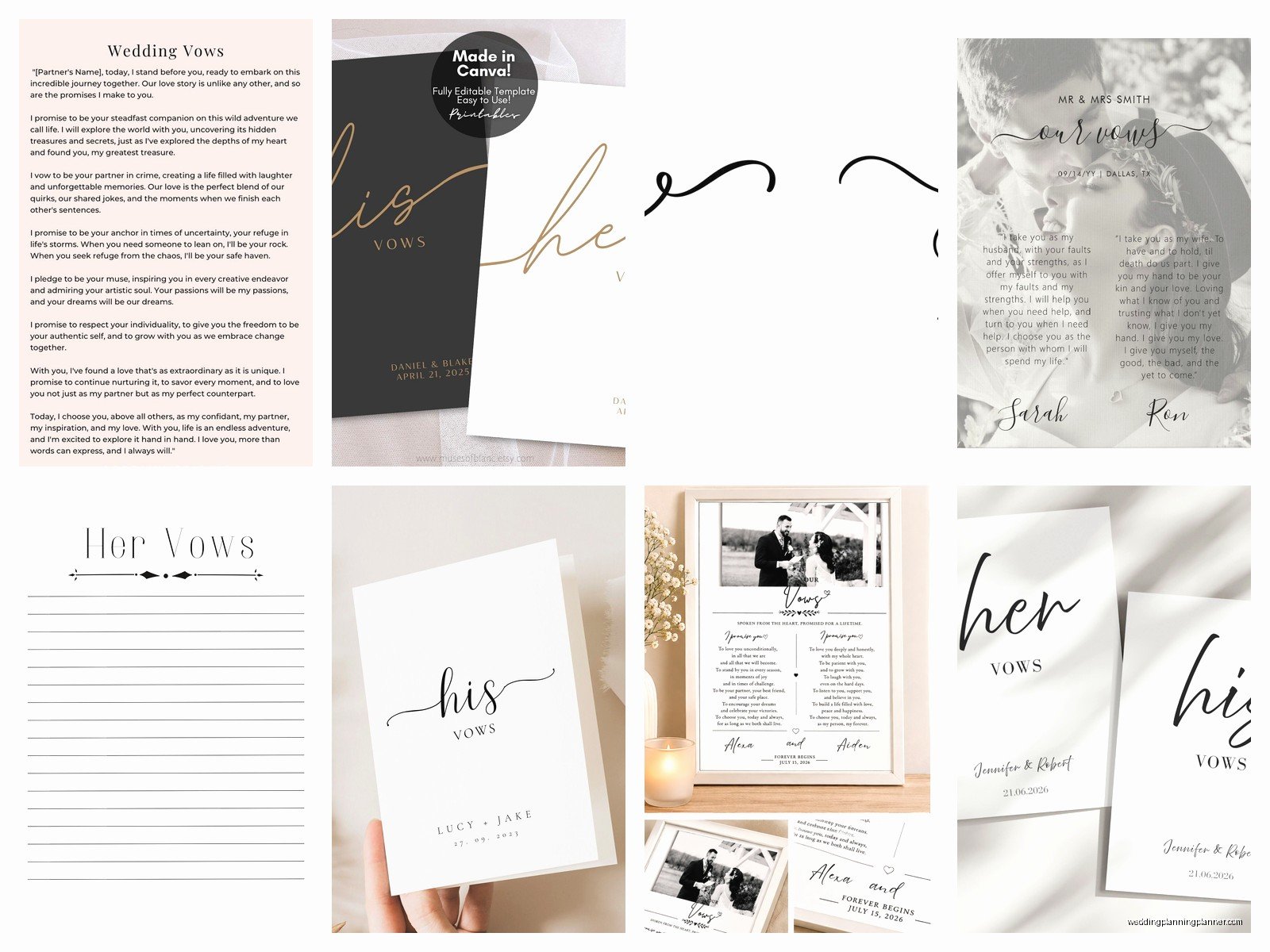
Pinterest has a million options but you gotta be careful because half of them link to dead websites or those annoying blog posts where someone talks about their grandmother’s recipe for twenty paragraphs before getting to the actual content. But if you search “printable wedding vow template PDF” you’ll find some good ones.
The Basic Structure That Actually Works
Most good templates follow this format and honestly it’s a format for a reason. You start with the acknowledgment – basically saying “I’m standing here with you today” or whatever. Then you move into the promises section which is the meat of the whole thing. After that you’ve got the future-looking stuff, like what you’re committing to for the years ahead. And then you wrap it up with something definitive like “I vow” or “I promise” or “these are my sacred promises to you.”
I always tell couples to aim for 1-2 minutes when spoken aloud. That’s roughly 150-250 words. Anything longer and people start zoning out, anything shorter and it feels like you didn’t try. Time yourself reading it out loud because I promise it sounds different in your head than it does when you’re actually saying it in front of 100 people.
His Vows Template Structure
Okay so traditionally the “his” vows template includes more direct promises and tends to be slightly more straightforward. Not always, but that’s the pattern I’ve noticed. Here’s what most templates include:
- Opening statement about why you’re here and what this moment means
- Acknowledgment of the journey you’ve been on together
- Specific promises (usually 3-5 concrete things)
- Something about facing the future together
- A closing declaration of commitment
The templates usually have fill-in-the-blank sections like “I promise to support you when ___________” or “I vow to always ___________.” Which is helpful when you’re staring at a blank page at 11pm wondering what you’ve gotten yourself into.
One template I really like has prompts like “I promise to be your partner in ___________” and “I vow to stand by you through ___________” because they force you to think specifically about your relationship rather than just copying something that sounds nice.
Her Vows Template Structure
The “her” templates tend to be slightly more emotional or detailed but honestly this is such a generalization and plenty of women write super concise vows while their partners write novels. My cat just knocked over my coffee which is perfect timing because I needed a break from typing anyway.
But the structure is similar:
- Personal opening about falling in love or choosing this person
- Reflection on what you’ve learned together
- Specific promises tailored to your relationship
- Vision for your future life together
- Final commitment statement
The templates usually encourage more storytelling elements, like “From the moment we ___________, I knew ___________” or “You’ve taught me ___________.” These prompts can actually help jog your memory about specific moments that matter.
How To Actually Use These Templates Without Sounding Like A Robot
Download whatever template speaks to you, print it out, and then just start filling in the blanks with a pen. Don’t type it first. I know that sounds weird but there’s something about handwriting that makes it feel more personal and less like you’re writing a work email. You’re gonna cross stuff out and that’s fine.
Read through the whole template first without filling anything in. See what resonates and what makes you cringe. If a section feels forced or fake, skip it entirely. The template is a guide, not a mandate from the wedding gods.
Here’s what I do with my clients – I have them fill out the template separately, then we go through it together during a planning session. Usually they’re worried their vows won’t “match” but honestly, mismatched vows are more interesting than identical ones. One person writes a poem and the other writes three sentences? Cool. Whatever.
Customizing The Downloaded Files
Most PDF templates are editable if you open them in Adobe Reader or even just your browser. Word docs are obviously easier to customize. I usually tell people to change the fonts to something readable – none of that curly script that looks pretty but is impossible to read when you’re nervous and crying.
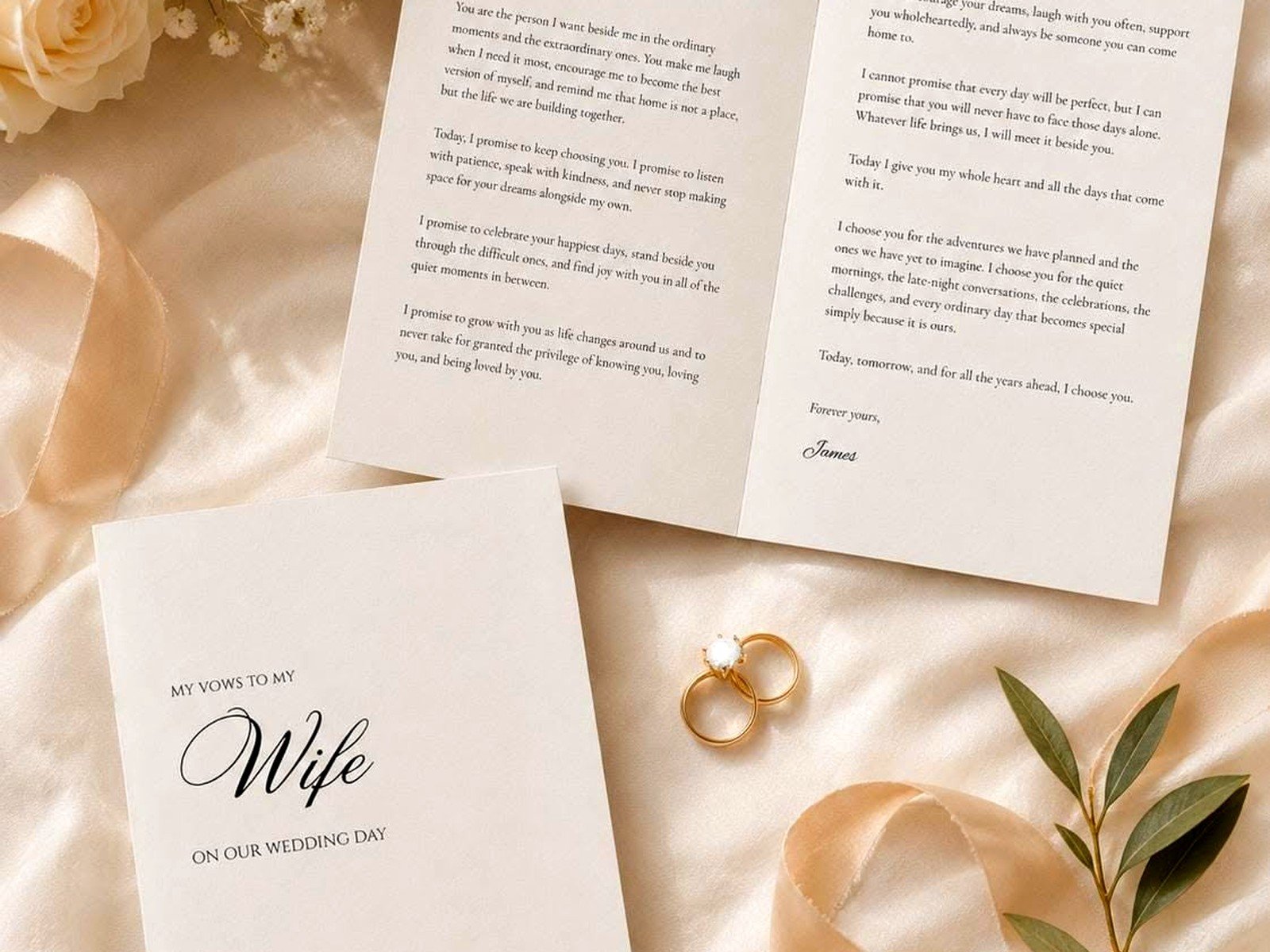
Add your own sections if the template feels incomplete. Maybe you want to include something about your kids, or your dog, or that inside joke about the time you got lost in Portland and ended up… wait, that’s getting off track. Point is, make it yours.
Delete entire sections that don’t apply. If the template has a religious section and you’re not religious, cut it. If there’s a part about “traditional marriage roles” and that’s not your vibe, delete it without guilt.
The Fill-In-The-Blank Approach
Some templates are literally just mad libs for weddings and honestly? For some people that’s perfect. You’ve got sentences like:
“I promise to love you when ___________, support you through ___________, and celebrate with you during ___________.”
“You are my ___________, my ___________, and my ___________.”
“I vow to always ___________, never ___________, and forever ___________.”
It feels a bit elementary school but it works. I had a couple in summer 2021 who were both engineers and they literally could not write vows to save their lives. They used a fill-in-the-blank template and their vows ended up being sweet and genuine because the structure gave them permission to just… say simple things.
Mixing And Matching Templates
Nothing says you have to use one template for the whole thing. Take the opening from one, the promises section from another, and the closing from a third. I do this with stationery designs all the time – nobody’s gonna arrest you for combining elements.
Print out like five different templates, highlight the parts you like from each one, and then frankenstein them together into something that feels right. This is actually how I write most of my blog posts if I’m being honest, just pulling pieces from different drafts until something coherent emerges.
What To Do After You Download The Template
Alright so you’ve downloaded your template, now what? Don’t wait until the week before to fill it out. I know you’re gonna wait anyway because everyone does, but try not to. Give yourself at least a month so you can write, sit on it, revise, and not feel panicked.
Fill it out in stages. Do the easy parts first, like the opening and closing. The promises section is harder so save that for when you’re feeling focused and not distracted by Netflix or whatever.
Read it out loud multiple times. I cannot stress this enough. What looks good on paper might sound awkward when spoken. You’ll catch weird phrasing or sentences that are too long to say in one breath.
Show it to one trusted person if you want feedback, but don’t show it to seventeen people because you’ll get seventeen different opinions and then you’ll be more confused than when you started. I usually tell couples they can show me or their officiant but that’s it.
Printing And Formatting Your Final Vows
Once you’ve customized your template and you’re happy with it, print it on nice paper. Not fancy wedding invitation paper necessarily, but something better than regular printer paper. Cardstock works great and you can get it at any office supply store.
Use a large font – at least 14pt, maybe 16pt. You’re gonna be emotional and possibly crying and you need to be able to read this easily. Double space it. Leave wide margins. Make it as easy as possible for yourself.
Print two copies. Keep one in your getting-ready space and give one to your wedding planner or coordinator or whoever’s managing things day-of. I’ve seen too many people lose their vows in the chaos of getting ready.
Some people like to put their vows in a small folder or booklet. You can buy these on Etsy pretty cheap or just use a simple folder from Target. Whatever keeps the paper from getting crumpled or stained.
Common Template Mistakes To Avoid
Don’t use a template that’s way more formal or casual than you actually are. If you don’t normally talk like a Victorian poet, don’t write vows that sound like a Victorian poet. It’ll feel weird when you say them.
Avoid templates with too many blanks. If every other word is something you need to fill in, it’s not really giving you structure, it’s just making you work harder. The template should do some of the heavy lifting.
Skip the templates that are super specific to situations that don’t apply to you. There are templates for second marriages, for blending families, for renewing vows – make sure you’re downloading the right one for your actual situation.
Don’t download a template and then just change like three words and call it done. The point is to use it as a starting point, not to plagiarize someone else’s vows. Your guests can tell when vows are generic and when they’re personal.
When Templates Don’t Work
Some people just can’t work with templates and that’s fine. If you’ve downloaded six different ones and you still feel stuck or fake, maybe templates aren’t your thing. Try recording yourself talking about why you love your partner instead, then transcribe it and edit from there. Or write a letter to them and pull the best parts for your vows.
I had a client once who threw out every template I gave her and just wrote three sentences from her heart and they were perfect. Sometimes less structure is more helpful than more structure, just depends on your brain.
If you and your partner are both struggling with templates, consider doing a vow questionnaire instead where you answer specific questions about each other and your relationship, then turn those answers into vows. There are free questionnaires online that work really well for this.
Storing Your Template Files
Save your downloaded templates in a dedicated wedding folder on your computer. Name them something obvious like “Wedding_Vow_Template_1” so you can actually find them later. I cannot tell you how many times I’ve watched someone frantically search their downloads folder for a file they saved as like “document(47).pdf”
Keep a backup in Google Drive or Dropbox. Print a copy and put it in your wedding binder if you’re old school and have a physical binder. Email it to yourself. Just… don’t lose it after you’ve spent time working on it.
If you’re sharing a template with your partner to coordinate structure, use a shared folder so you’re both looking at the same version. Nothing worse than realizing you’ve been working on different drafts and now you gotta figure out which one has the good stuff.
