
Planning Guides, Style Guide
Islamic Wedding Planner: Professional Services Guide

Oct
Understanding What Islamic Wedding Planning Actually Involves
So you’re thinking about hiring an Islamic wedding planner or maybe you want to become one, and honestly there’s so much more to it than people realize. I had this client back in spring 2023 who thought an Islamic wedding planner was just like… a regular planner who knows not to serve alcohol, and wow was she in for a surprise when we started going through everything.
Islamic wedding planning means you’re dealing with religious requirements, cultural traditions that vary wildly depending on whether the family is Pakistani, Arab, Indonesian, African American Muslim, Turkish—I could go on forever—and then modern expectations on top of all that. It’s not just about pretty decorations and a nice venue, though obviously those matter too.
The first thing a professional Islamic wedding planner needs to handle is the nikah ceremony itself. This is the actual Islamic marriage contract, and it’s legally binding in Islam even if couples also do a separate civil marriage. You gotta make sure there’s a qualified officiant (usually an imam or Islamic scholar), at least two witnesses, and that the mahr (the mandatory gift from groom to bride) has been agreed upon. Some families want this super private with just immediate family, others want it as part of the big reception.
The Religious Components You Can’t Skip
Here’s where it gets specific and why you really need someone who knows their stuff. The nikah ceremony requirements are non-negotiable from an Islamic perspective. You need that officiant, those witnesses, the bride’s consent (which must be freely given, not coerced), and the mahr agreement. Everything else? That’s where culture and personal preference come in.
I’ve planned nikahs in hotel ballrooms, in mosques, in people’s backyards, and once in this gorgeous botanical garden where my cat would’ve absolutely lost her mind with all the birds everywhere—totally off topic but I was so distracted that day. The location doesn’t matter religiously as long as it’s appropriate and modest.
Gender segregation is something you need to discuss early. Some families want completely separate spaces for men and women during parts or all of the celebration. Others are fine with mixed seating. There’s no single “Islamic” answer here because scholarly opinions differ and cultural practices vary. What annoys me is when vendors act like there’s only one way to do a Muslim wedding and try to force their cultural version on every client.
The Cultural Layers That Make Each Wedding Unique
A Pakistani walima is gonna look totally different from an Arab wedding or a Somali aroos. Pakistani weddings often have that mehndi night with all the henna and music, the baraat where the groom arrives with his family, sometimes a dholki. Arab weddings might have the zaffe entrance with drummers and traditional music, elaborate sword dances depending on the region. Indonesian weddings have their own customs with the siraman ceremony and… okay you see what I’m dealing with here?
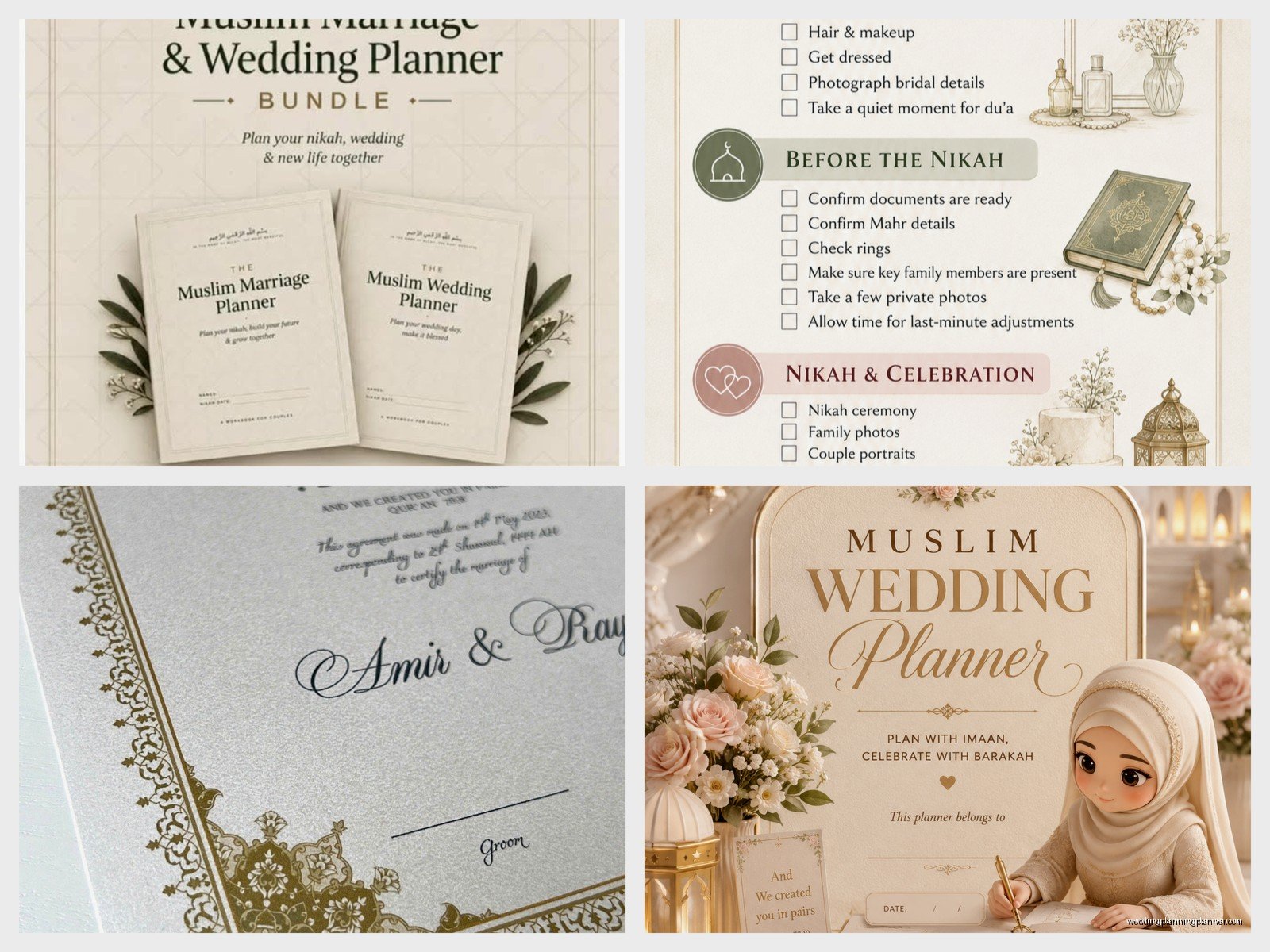
As a planner, you can’t possibly know every single cultural tradition, but you need to ask the right questions and be willing to research or bring in cultural consultants. I learned this the hard way during a Bengali wedding where I didn’t realize the gaat holud (turmeric ceremony) was such a big deal and we hadn’t allocated nearly enough time for it.
Turkish weddings often have that red ribbon ceremony, Moroccan weddings might include the bride changing into multiple traditional outfits throughout the night, and West African Muslim weddings can involve kola nut ceremonies. You’re basically becoming a cultural anthropologist on top of everything else.
Food and Beverage Considerations
Obviously no alcohol, but halal meat requirements are the bigger planning challenge honestly. You need to find caterers who either are halal-certified or can source halal meat properly. This isn’t just about avoiding pork—the meat needs to be slaughtered according to Islamic guidelines, and you’d be surprised how many caterers don’t actually understand this.
I always ask clients how strict they want to be about this. Some families only care about the meat being halal and are fine with the same kitchen preparing non-halal foods at other times. Others want completely halal-certified facilities with separate equipment. There’s also the vegetarian/vegan option route which sidesteps the whole issue, and I’ve noticed more couples going that direction lately.
Timing meals around prayer times is something people forget until the last minute. If your wedding goes through Maghrib (sunset prayer), you need to plan for that. Some couples want a designated prayer space set up, others just announce prayer time and let guests handle it individually.
Setting Up Your Islamic Wedding Planning Business
If you’re looking to actually offer these services professionally, you need more than just general wedding planning knowledge. I’m gonna be real with you—you need either personal experience with Islamic weddings or you need to do serious homework and build relationships in Muslim communities.
Education and Credentials
Get your basic wedding planning certification first. I went through the American Association of Certified Wedding Planners, but there are other programs. Then you need to specialize. Attend Islamic weddings, talk to imams and Islamic scholars about the religious requirements, join Muslim wedding planning groups on social media, follow Islamic wedding vendors.
Understanding basic Islamic principles is essential. You don’t need to be a scholar, but you should know the difference between fard (obligatory), sunnah (recommended), and cultural practices. You should understand why music is a gray area for some Muslims, why some families won’t have dancing, why photography during the nikah might be restricted.
Summer 2021 I took this online course specifically about Islamic event planning and it covered things like how to handle mixed-gender events respectfully, understanding different madhabs (schools of Islamic thought) and how they might affect wedding practices, and working with mosque venues. Game changer.
Building Your Vendor Network
You need relationships with halal caterers, hijabi-friendly hair and makeup artists, photographers who understand modest photography requirements, venues that are flexible about gender segregation if needed, and decorators who can create elegant setups without using Islamically questionable elements.

That last part sounds vague but like… some families don’t want music, so you need entertainment options that don’t rely on DJs. Some don’t want sculptures or statues in decorations. Others are fine with all of that. Having vendors who get it and won’t push back or act weird about religious requirements is crucial.
I maintain a list of officiants in my area who can perform nikahs, including their language capabilities (can they do the ceremony in Arabic, Urdu, English, etc.) and their flexibility with interfaith marriages if one partner is converting or if the families have different cultural backgrounds.
Contracts and Consultation Process
Your initial consultation needs to cover religious requirements first, then cultural expectations, then personal preferences. I use a detailed questionnaire that asks about:
- Level of religious observance and which madhab they follow if any
- Cultural backgrounds of both families
- Gender segregation preferences
- Halal food requirements and strictness level
- Prayer accommodations needed
- Music and entertainment boundaries
- Photography restrictions during religious portions
- Dress code expectations for guests
- Any specific cultural ceremonies they want included
Contracts should specify that you’ll coordinate the nikah ceremony but that the religious validity is ultimately between the couple, the officiant, and their understanding of Islamic law. You’re facilitating, not providing religious services yourself. This is a liability thing but also just… accurate?
Day-Of Coordination Specifics
Islamic wedding day coordination has some unique aspects. You might be managing a multi-day event with different ceremonies happening over several days. The nikah might be separate from the walima (reception), there might be pre-wedding events like mehndi or henna nights, and post-wedding events depending on the culture.
Prayer times are non-negotiable breaks in your timeline. I always check prayer times for the wedding date during planning and build in cushion time. If the nikah is scheduled close to a prayer time, I coordinate with the officiant about whether to pray first or after.
Modest dress codes for vendors is something I brief my team on. If you’re working a wedding where the women’s side is fully segregated, your female vendors need to understand they might need to cover more than usual, and male vendors might have limited or no access to certain areas.
Managing Family Dynamics
This is where it gets real. You’re often dealing with families who have different expectations based on culture, generation, or level of religious practice. The bride’s family might be more traditional, the groom’s more modern, or vice versa. Parents might want certain things that the couple doesn’t want.
I had this situation where the mother of the bride wanted a completely segregated event and the couple wanted mixed seating, and mediating that was… look, I’m a wedding planner, not a family therapist, but sometimes the job requires both. We ended up doing a compromise with the nikah ceremony segregated and the reception mixed, which satisfied enough people.
Navigate these conversations carefully and always defer to the couple’s wishes ultimately, but help them communicate with family in ways that respect everyone’s perspective. Sometimes you’re translating between generations as much as between cultures.
Common Challenges and Solutions
Venue restrictions can be tricky when you need separate spaces or specific accommodations. I’ve learned to be upfront with venues about requirements rather than trying to squeeze things in last minute. Need a separate bridal suite area that’s actually separate? Say that from the start. Need space for wudu (ablution before prayer)? Confirm bathroom access.
Timing is always tight because Islamic weddings often pack a lot into one day or weekend. Build in buffer time everywhere. The nikah ceremony itself might be short, but getting everyone assembled, the official proceedings, signing documents, photos—it adds up.
Decor that works across different spaces when you’re doing segregated events means either duplicating some elements or having movable pieces. I usually budget for a bit more decor than a standard wedding because you’re essentially styling multiple party spaces.
Pricing Your Services
Islamic wedding planning often requires more time than standard wedding planning because of the additional cultural research, vendor vetting for halal compliance, and coordination of religious elements. Price accordingly. I charge about 15-20% more than my standard packages for Islamic weddings, which some planners might disagree with but the work genuinely requires more specialized knowledge.
Offer tiered packages: nikah-only coordination for couples who just want the ceremony handled properly, partial planning for couples doing most of it themselves but need help with specific cultural or religious elements, and full planning for the works. I find a lot of Muslim couples are DIY-minded because of budget or because they have strong family involvement, so flexible packages work better than all-or-nothing.
Be transparent about what you know and don’t know. If a couple wants specific cultural elements you’re unfamiliar with, either quote higher to account for research time or refer them to a planner who specializes in that culture. I’ve referred out Indonesian weddings because I just don’t have the knowledge base, and that’s okay.
Marketing to Muslim Communities
You gotta actually be present in Muslim communities, not just advertise to them. Sponsor local Islamic events, join Muslim business networks, get involved with mosques (respectfully and genuinely, not just for business). Word of mouth is huge in Muslim communities, so your reputation matters more than your Instagram following, though obviously social media helps too.
Show diverse examples in your portfolio. Don’t just feature Arab weddings or just South Asian weddings—demonstrate that you can handle different cultural expressions of Islamic weddings. Use modest imagery in your marketing materials because that signals you understand the values.
Partner with halal vendors for styled shoots or collaboration posts. The Muslim wedding vendor community is pretty connected, and being recommended by trusted caterers, makeup artists, or photographers carries weight.
Understand that some families will specifically want a Muslim planner and others don’t care as long as you’re knowledgeable and respectful. Don’t misrepresent yourself either way—if you’re not Muslim but you specialize in Islamic weddings, be clear about that. Authenticity matters more than people think… or actually it matters exactly as much as you’d think, I guess.
