Planning Guides, Style Guide
Muslim Wedding Invitation Templates: Islamic Design Downloads
Jul
Finding Islamic Wedding Invitation Templates That Actually Work
Okay so Muslim wedding invitations are honestly one of my favorite things to work on but they can also be super tricky if you don’t know where to look. I had this client back in spring 2023 who waited until literally six weeks before her walima to start thinking about invitations and she wanted something that incorporated Arabic calligraphy, wasn’t too “stereotypical” (her words), and could be printed on pearl shimmer cardstock. Fun times.
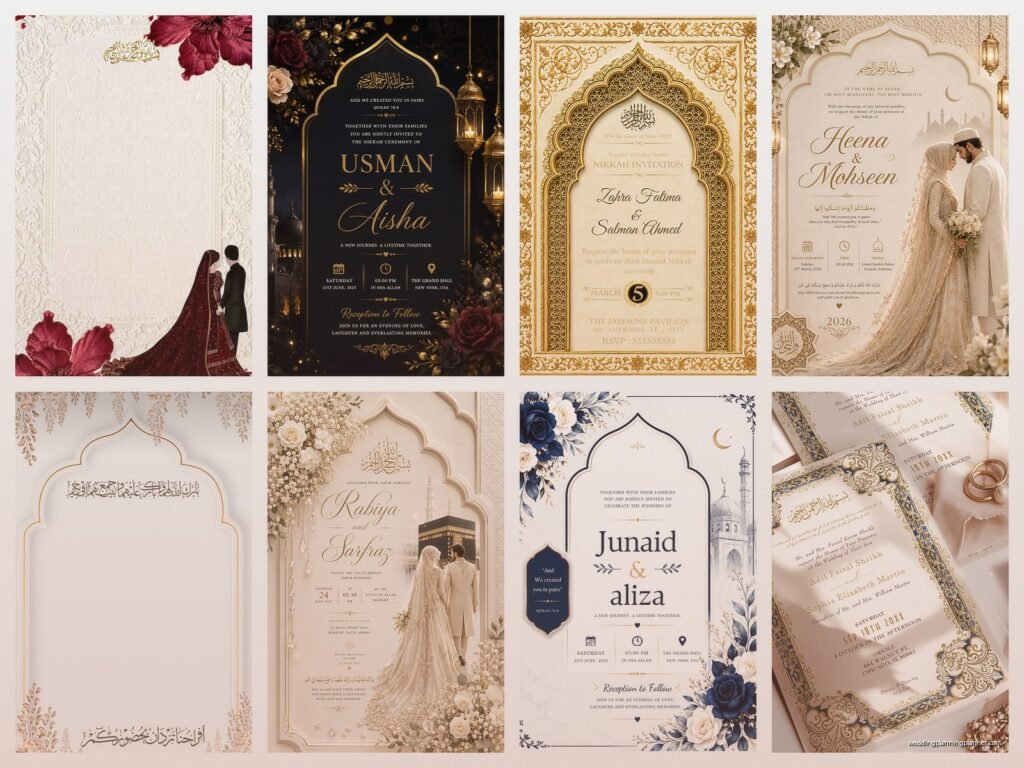
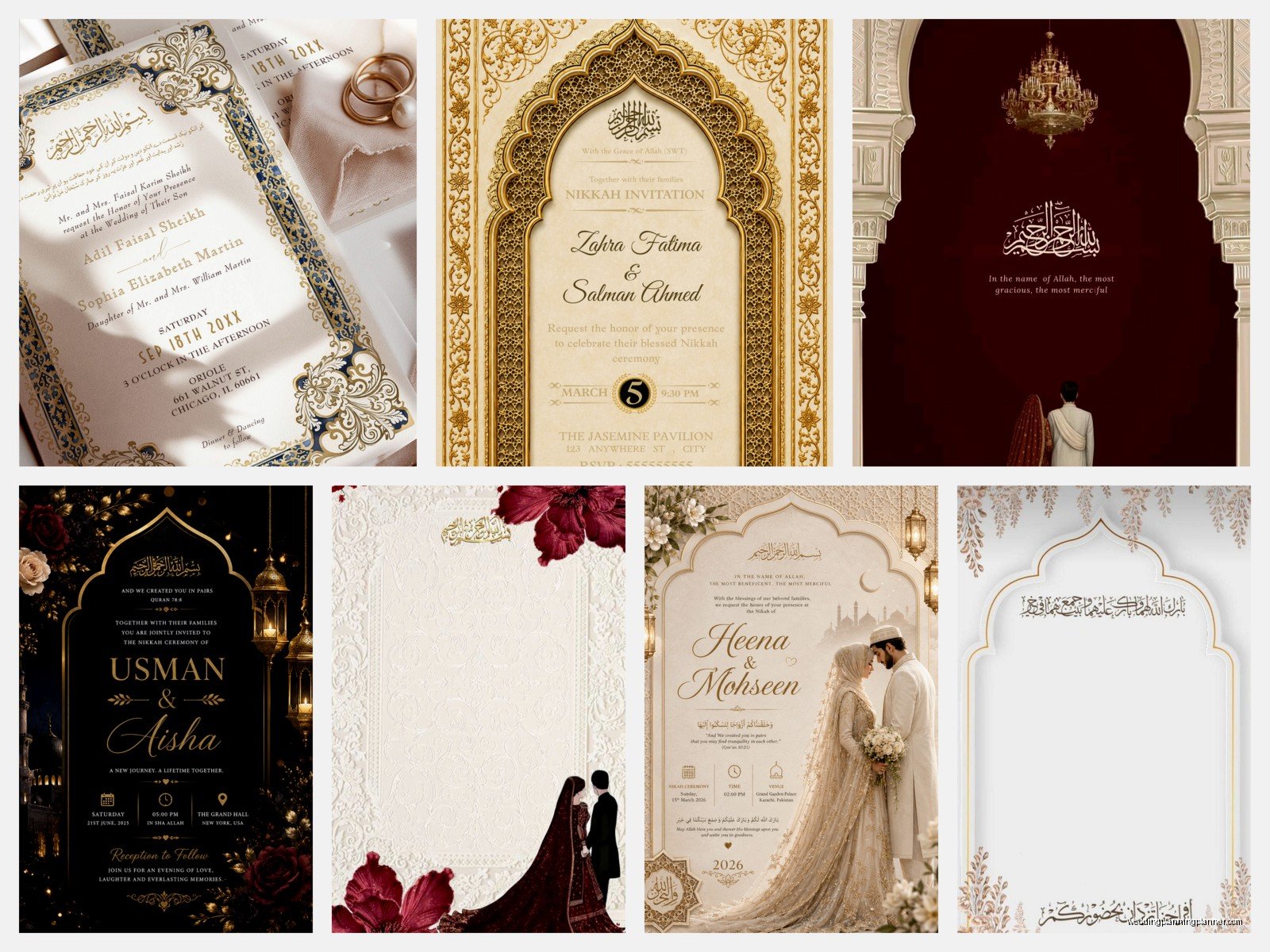
The first thing you gotta understand is that Islamic design downloads come in like a million different styles. You’ve got your traditional geometric patterns, your Arabic calligraphy options, mosque silhouettes, crescent moon and star motifs, and then the more modern minimalist Islamic designs that are super popular right now. I personally lean toward the geometric patterns because they photograph really well and they work for both traditional and contemporary weddings.
Where To Actually Download These Templates
Creative Market is gonna be your best friend here. I know everyone talks about Etsy but honestly Creative Market has way better quality files for Islamic wedding templates. You’re looking at anywhere from $8 to $40 for a good template package. The sellers usually include multiple file formats which is crucial because you never know if your printer is gonna need a PDF, an AI file, or a PNG.
Etsy is obviously huge for this too. I use it when clients have smaller budgets or when they want something super specific. The search terms matter SO much though. If you just search “Muslim wedding invitation” you’ll get a lot of… how do I say this nicely… basic stuff that looks like it was made in 2008. Instead try searching for “Islamic geometric invitation template” or “Arabic calligraphy wedding download” or “Nikah invitation editable template.” You’ll get way better results.
Canva Pro has started adding Islamic design elements which kinda surprised me. Their selection isn’t as extensive as dedicated template sellers but if you’re on a tight timeline and need something you can customize yourself in like an hour, it works. They have some decent geometric border frames and you can upload your own Arabic text if you have it designed separately.
What File Formats You Need
This is where people mess up constantly and it drives me crazy. You download a beautiful template and then realize it’s only available as a low-resolution JPEG and your printer is like nah we can’t work with this. Always check before purchasing what formats are included.
You want editable formats if possible – AI (Adobe Illustrator), PSD (Photoshop), or at minimum a layered PDF. This lets you or your designer change colors, swap out text, adjust sizing. If you’re not design-savvy yourself, even just being able to send an editable file to a local print shop is gonna save you money because they can make adjustments without having to recreate the whole thing from scratch.
For printing purposes you need high resolution – at least 300 DPI. Anything less will look blurry or pixelated when printed. I learned this the hard way with my very first Muslim wedding client back in like 2019 when I didn’t check the resolution and the geometric patterns looked fuzzy on the final print. Not my finest moment.
Customizing The Templates
Most Islamic wedding invitation templates are designed to be customized but there’s definitely a learning curve if you’re not used to design software. The easiest ones to work with are Canva templates or Templett templates because they’re browser-based – you don’t need to download any special software.
If you’re working with Adobe files you’ll need either Illustrator or Photoshop depending on the file type. There are free alternatives like GIMP or Inkscape but honestly they’re kind of a pain to learn if you’re just doing this for one wedding. I usually tell clients to either hire someone on Fiverr for like $20 to customize it or ask if they have a tech-savvy friend who knows their way around design programs.
The text is usually the main thing you’ll customize. You’ll want the couple’s names obviously, the wedding date, venue information, and possibly Quranic verses or Islamic blessings. A lot of templates come with placeholder Arabic calligraphy but make sure it actually says what you want it to say – I’ve seen templates where the Arabic text is just decorative nonsense or worse, incorrectly written. Get someone who reads Arabic to double-check before you print 200 invitations.
Color Schemes That Work
Traditional Islamic design colors are usually emerald green, gold, deep burgundy, navy blue, and ivory. These are safe choices that look elegant and appropriate. But I’m seeing more couples go with unexpected color combinations lately – dusty rose with gold, sage green with copper, even all-white minimalist designs with just black Arabic calligraphy.
One thing that really annoyed me recently was this trend of using super bright neon colors with Islamic geometric patterns. Like yes it’s your wedding and you can do what you want but neon pink geometric Islamic designs just… it doesn’t work visually. The intricate patterns get lost when the colors are too loud. But maybe that’s just me being picky after doing this for so long.
Gold foiling is massive right now for Islamic wedding invitations. A lot of the templates you download will have gold elements but they’re obviously just printed gold color unless you do actual foil stamping. Real gold foil adds like $3-5 per invitation but it makes such a difference in person. The geometric patterns especially look stunning with gold foil.
Making Sure It’s Culturally Appropriate
This is important and something I always discuss with clients. Islamic design is beautiful but you wanna make sure you’re using it respectfully. Quranic verses should be placed thoughtfully – not where they might end up in the trash or on the floor. Some families prefer not to use Quranic text on invitations at all for this reason and stick with general blessings or du’as instead.
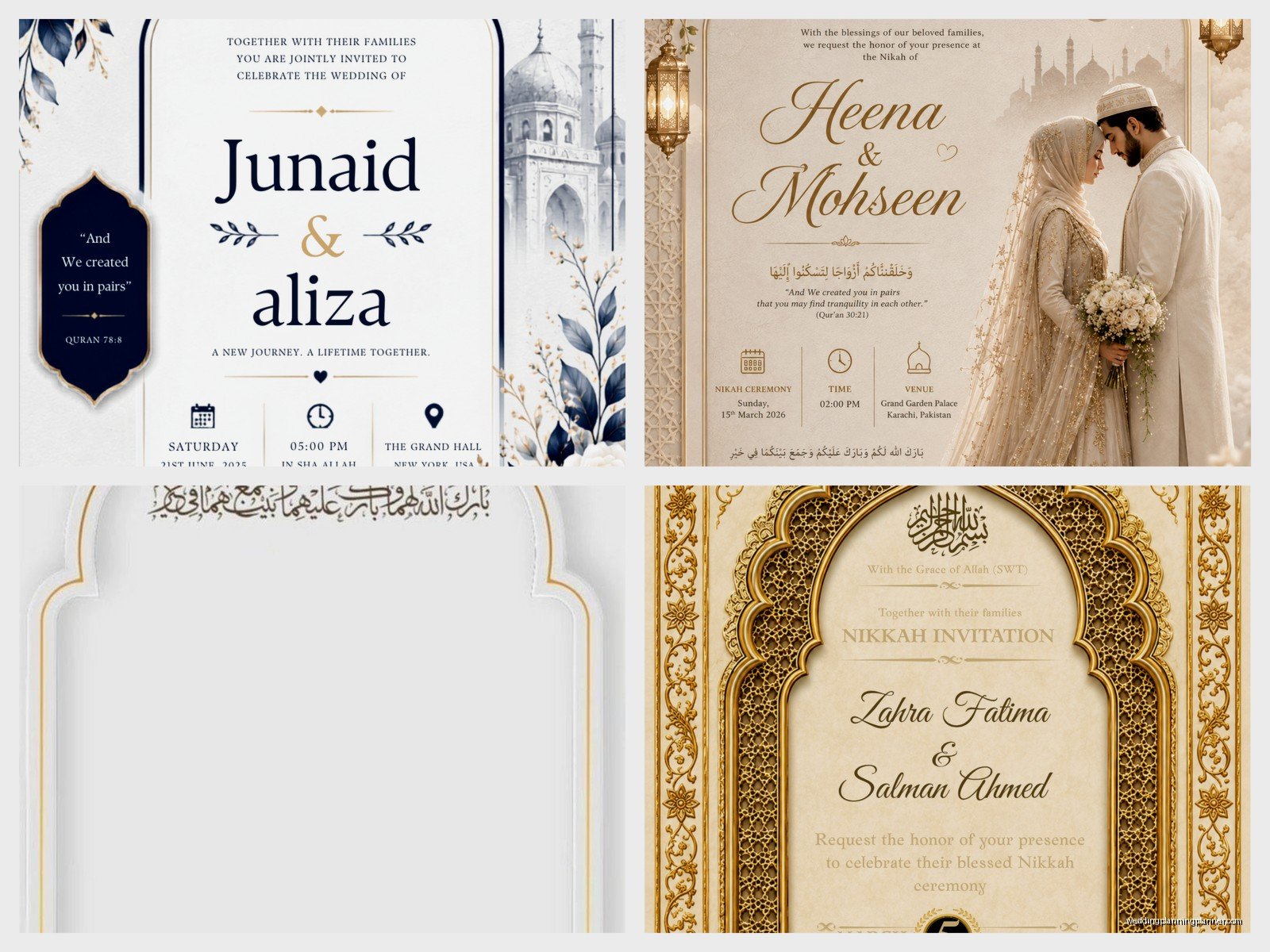
The Bismillah is commonly used at the top of Muslim wedding invitations. If you’re downloading a template that includes it, make sure it’s written correctly. I’ve seen some templates on Etsy where the Arabic calligraphy is literally backwards or missing letters because the designer just copied an image without understanding what it said.
Mosque imagery can be beautiful but some couples find it too literal or cliché. It really depends on your personal style. I had a couple last year who specifically said no mosques, no crescents, no stars – they wanted Islamic design that was more abstract. We used geometric tessellation patterns instead and it was gorgeous.
Different Events Need Different Designs
Muslim weddings often have multiple events – the Nikah ceremony, Mehndi, Walima reception, and sometimes a separate ladies’ event. You might want different invitation designs for each or a cohesive suite that ties them together. Some template packages include multiple designs for this exact purpose which is super helpful.
The Nikah invitation is usually the most formal and traditional. This is where you’d use your most elegant Islamic calligraphy and geometric patterns. The Mehndi invitation can be more playful – I’ve seen cute designs with henna pattern motifs mixed with Islamic geometric elements. The Walima invitation often mirrors the Nikah invitation but sometimes couples go more modern for the reception.
If you’re ordering templates separately for each event, make sure they’re gonna coordinate. Download them all from the same designer if possible or at least choose designs that share similar color palettes and design elements. Nothing looks more disjointed than a traditional gold-and-emerald Nikah invitation followed by a modern minimalist grey Walima invitation – unless that’s intentional I guess but it usually just confuses guests.
Printing Your Downloaded Templates
Okay so you’ve downloaded your perfect Islamic wedding invitation template and customized it… now what? You’ve got options for printing and they vary wildly in cost and quality.
Local print shops are usually my first recommendation. They can handle specialty papers, answer questions about paper weight and finishes, and if something goes wrong you can literally walk in and talk to a human. Bring your digital file on a USB drive or email it to them. Ask to see paper samples and get a single proof printed before you commit to the full order. This saved my butt during that spring 2023 wedding I mentioned earlier – the color looked completely different on screen versus printed and we had to adjust it.
Online printing services like Minted, Vistaprint, or Printique are more budget-friendly usually. Minted especially has good quality for formal invitations. The downside is you can’t see and touch samples in person before ordering and if there’s an issue the turnaround for reprints can be slow. I only recommend online printing if you’re not doing anything too complex with specialty finishes.
Home printing is possible for some templates if you have a good quality printer but I honestly don’t recommend it for wedding invitations unless you’re going for a very casual vibe or you’re printing like 30 invitations max. The color consistency is hard to maintain across large batches and most home printers can’t handle nice cardstock. Plus your printer will probably run out of ink halfway through and those cartridges are expensive.
The Actual Design Elements To Look For
Islamic geometric patterns are based on mathematical principles and they’re super intricate. Good templates will have clean crisp lines in these patterns. Zoom in on the preview images before buying – if the geometric lines look fuzzy or inconsistent the template probably wasn’t created properly.
Arabic calligraphy comes in different styles – Thuluth, Naskh, Diwani, Kufi. Each has a different aesthetic. Thuluth is flowing and elegant good for formal invitations. Kufi is more angular and geometric which works well with modern designs. If the template includes Arabic calligraphy make sure it’s actual professional calligraphy not just Arabic text in a computer font… there’s a big difference in how it looks.
Mandala designs have become really popular for Islamic weddings even though they’re not specifically Islamic in origin. They work well because they share that geometric intricate quality. I’m kinda neutral on this trend – they’re pretty but sometimes they feel more bohemian than Islamic if that makes sense.
Floral elements are tricky. Islamic art historically uses a lot of stylized floral and vine patterns but you want them to feel cohesive with the geometric elements not just randomly stuck on. The best templates integrate florals in a way that feels intentional like they’re woven into the geometric framework.
Budget Considerations Because This Stuff Adds Up
Template downloads themselves are usually affordable – $10 to $40 like I mentioned. But then you’ve got printing costs which can range from $1 per invitation for basic printing to $8+ per invitation if you’re doing letterpress or foil stamping. Envelopes are separate. Envelope liners add cost. Return address printing adds cost. It all adds up fast.
My cat just knocked over my coffee all over my desk which is perfect timing because I need a break from looking at invoice spreadsheets anyway but seriously – budget for at least $3-5 per invitation when you’re calculating total costs even if you’re using downloaded templates and basic printing. For 150 invitations that’s $450-750 just for the invitations themselves not including postage.
You can save money by doing some parts yourself. Print the main invitation professionally but print your own details cards or RSVP cards at home. Use digital RSVP options instead of printed cards with return postage. Skip the envelope liners. Use envelope seals instead of wax seals which look similar but cost way less.
Common Problems And How To Avoid Them
File compatibility issues are huge. You download a template and it won’t open on your computer or the fonts are all wrong because you don’t have them installed. Read the file description carefully before purchasing – it should list what software you need and whether fonts are included or if you need to download them separately. Some sellers include font links which is helpful but sometimes those fonts cost money too.
Color matching between screen and print is always challenging. What looks like a beautiful emerald green on your laptop might print as a murky dark teal. This is why test prints are so important. If possible, get a printed proof using the same paper and printing method you’ll use for the final invitations. The color will vary between matte and glossy paper too.
Timing is probably the biggest issue I see. People wait too long to start the invitation process and then they’re scrambling. Ideally you want to send wedding invitations 6-8 weeks before the wedding date. That means you need to have them designed, customized, printed, and assembled at least 10 weeks before the wedding. Add extra time if you’re ordering from overseas sellers or if you want to do multiple proof rounds.
Size specifications matter more than you’d think. Standard invitation sizes are cheaper to print and mail. If your template is designed for a 5×7 invitation that’s gonna be less expensive than a square 6×6 or an oversized 5.5×8.5. Square invitations also require extra postage because they can’t go through standard postal sorting machines. Nobody tells you this stuff until you’re at the post office with 150 square envelopes and they’re like yeah that’ll be an extra 20 cents each.
Extras You Might Want To Include
A lot of Islamic wedding invitation templates come as part of a suite with matching pieces. You might get the main invitation, RSVP card, details card, thank you card, envelope addressing template, and sometimes even matching programs or menus. These suites are usually a better value than buying individual templates separately.
Envelope addressing in Arabic calligraphy looks absolutely stunning but it’s time-consuming. Some couples do the guest names in English and add a small Arabic blessing. Others go full Arabic calligraphy which is beautiful but you need someone who actually knows Arabic calligraphy not just an Arabic font. There’s templates for envelope liners with Islamic geometric patterns too which is a nice subtle detail.
Wedding programs with Islamic geometric borders tie everything together nicely especially if you’re having a traditional Nikah ceremony where guests might not be familiar with the proceedings. You can usually find matching program templates from the same designer who created your invitation templates.
I’m gonna stop here because I think I’ve covered the main stuff you need to know about finding and using Islamic wedding invitation templates and honestly my hand is cramping from typing and I need to clean up this coffee situation before it gets sticky but yeah – start with Creative Market or Etsy, check your file formats, get things printed professionally if you can afford it, and please please give yourself enough time because rushed wedding invitations always end up with typos or color issues or something going wrong.