Planning Guides, Style Guide
Officiant Speech Template: Free Download Files
Sep
Okay So About Officiant Speech Templates
Look, I’ve been doing weddings since like 2009 and the number of times someone’s asked me “where do I even START with an officiant speech” is honestly ridiculous at this point. Usually it’s a friend or sibling who got ordained online (which is totally fine btw) and then suddenly realizes they have to actually… say stuff. In front of people. For like 15-20 minutes.
So here’s what you need to know about officiant speech templates and where to actually download decent ones without paying $50 for something you could honestly write yourself with a little guidance.
What Makes a Good Officiant Speech Template Anyway
The structure matters more than the flowery language, which I feel like people don’t get? You need the bones of the ceremony first. A solid template should have these sections clearly marked:
- Opening words or welcome
- Statement of intention (why everyone’s gathered)
- Reading or reflection section
- Declaration of intent (the “do you take” part)
- Vow exchange
- Ring exchange
- Pronouncement (the “I now pronounce you” bit)
- Closing or blessing
What really annoys me is when templates skip the transitions between these sections. Like you’re just supposed to magically know how to go from talking about love to suddenly asking for the rings? Nah. Good templates include those bridging sentences.
Free Download Sites That Don’t Suck
Alright so I’m gonna give you the actual sites I send people to, not the ones that pop up first on Google and then make you sign up for seventeen email lists.
The Knot has a pretty decent basic template. It’s traditional, kinda boring honestly, but it works. You can download it as a PDF and it includes notes about customization. They have like three or four variations – religious, non-religious, and interfaith.
Officiant Eric – this guy’s website looks like it’s from 2008 but don’t let that fool you. He’s got multiple free scripts you can download as Word docs. The secular ones are actually really nice and include specific places where you can insert personal stories about the couple.
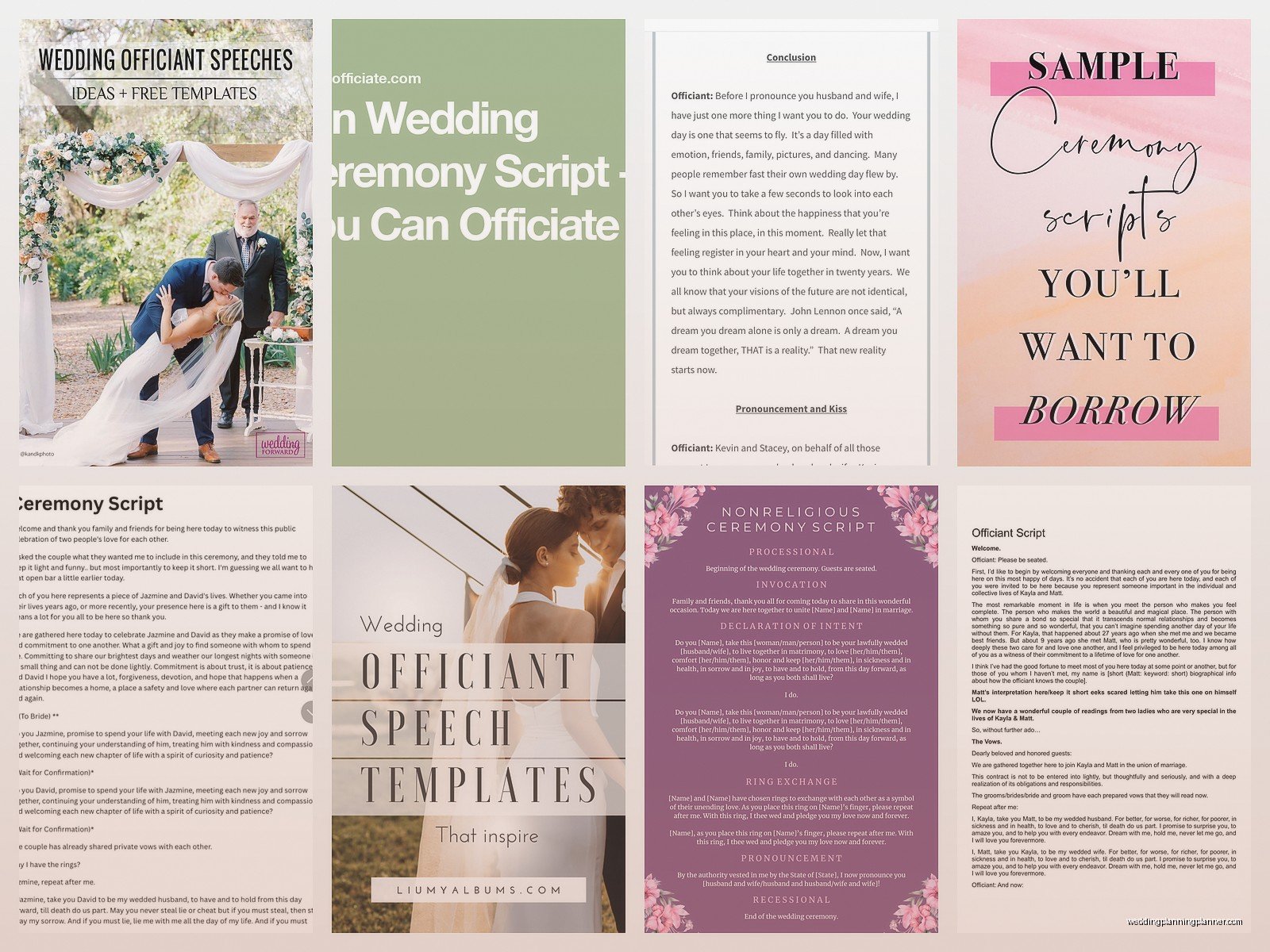
Wedding Officiant Directory has templates sorted by ceremony length which is super helpful. Sometimes you need a quick 10-minute version, sometimes the couple wants the full 25-minute experience with multiple readings.
AMM (American Marriage Ministries) – if someone got ordained through them, they have member resources including downloadable ceremony scripts. These are solid and they update them regularly.
What Happened in Summer 2021 That Changed How I Think About This
So I had this wedding in July 2021, right when things were opening back up after covid. The couple’s best friend was officiating and she’d downloaded some template from… I don’t even know where. But it was SO formal and stuffy, and these were two people who literally met at a punk show. The vibe was completely off.
We’re standing there during the rehearsal and the officiant starts reading this thing about “the sanctity of matrimony” and “entering into this blessed union” and I just watched the groom’s face fall. After the rehearsal I pulled her aside and was like, we gotta rewrite this entire thing. We sat in my car for like an hour and a half with my laptop, pulling pieces from three different templates and adding their actual story.
The ceremony ended up being perfect – she talked about how they bonded over their terrible taste in horror movies and their shared love of rescue dogs. THAT’S what people remembered. Not some generic paragraph about love being patient or whatever.
Point is: templates are starting points, not scripts you read word-for-word.
How to Actually Use a Template
Download like three or four different ones. Seriously. Put them side by side in different windows or print them out.
Read through each one and highlight the parts that feel right for your couple. Maybe you like the opening from Template A, but the ring exchange wording from Template C is better. That’s totally fine – you’re building your own Frankenstein ceremony and that’s exactly what you should be doing.
Here’s what you’re gonna do with each section:
The Opening
This is where you welcome everyone and set the tone. Templates usually have something like “We are gathered here today…” which, look, it’s classic for a reason. But you can make it warmer. I’ve seen officiants say stuff like “Thank you all for being here to celebrate Sarah and Mike” which feels more natural.
Some templates include a moment to acknowledge deceased family members here. That’s up to the couple obviously, but if they want it, make sure your template has suggested wording for that because it’s easy to make that part awkward if you wing it.
The Meat of It
The middle section is where templates vary the most. Some have long philosophical readings about love and partnership. Others keep it short and personal. You need to know your audience – is this a crowd that wants to hear a Rumi poem or are they gonna get restless?
What I tell officiants: pick ONE good reading or reflection, not three. Ceremonies feel long when you’re standing in heels on grass (speaking from experience with literally hundreds of weddings). One meaningful piece that connects to the couple’s story is better than multiple generic ones.
Declaration of Intent
This is the “do you take this person” part. Most templates have traditional wording here but you can absolutely change it. I’ve heard “Do you promise to be their partner, their best friend, and their biggest fan?” which is cute. Or keep it traditional with “Do you take this person to be your lawfully wedded spouse” – whatever fits.
Some templates have the couple say full sentences here, others just have them say “I do” or “I will.” Download a few versions so you can see the options.
Vows and Rings
Your template should clearly separate these. Are the couple writing their own vows? Then your template just needs a simple introduction like “Sarah and Mike have prepared their own vows to share with each other.”
If they’re using traditional vows, the template should have those written out word for word. Same with the ring exchange – you need the exact wording so the couple can repeat after you without getting confused.
Pro tip: whatever ring exchange wording you choose, practice it. I watched an officiant completely fumble this part because she’d never actually said the words out loud before the ceremony and kept getting tongue-tied.
The Pronouncement
This is the “I now pronounce you” part and honestly it’s harder than it looks because state laws vary on what you can actually say. Some templates still have “man and wife” which… please don’t use that unless the couple specifically requests it. “Married couple” or “spouses” or just their names works fine.
Also you gotta know if you’re supposed to say “by the power vested in me by the state of [whatever]” – some states require that language for the marriage to be legal. Your template should mention this but double-check your local laws.
File Formats and Editing
Most free templates come as PDFs or Word docs. Word is better because you can actually edit it easily. If you get a PDF, you’ll need to either retype sections or use a PDF editor.
Google Docs works great for this too – you can share the ceremony script with the couple so they can add comments or suggestions. I’ve seen officiants use shared Google Docs during the whole planning process and it makes collaboration way easier.
Save multiple versions with dates in the filename. Trust me on this. You’ll end up with CeremonyScript_Final, CeremonyScript_Final2, CeremonyScript_ActualFinal and you’ll need to know which one is actually the most recent.
What to Add to Any Template
Even the best free template needs personalization. Here’s what you should add:
How they met. Two or three sentences max. “Emma and Josh met five years ago at a friend’s birthday party. Josh spilled beer on Emma’s shoes and she still agreed to give him her number, which tells you everything you need to know about her patience and his charm.”
Something specific about their relationship. Not generic stuff about how they complete each other or whatever. Actual details. “They’ve been to 47 concerts together – yes, they keep count – and they still haven’t agreed on whether pineapple belongs on pizza.”
Why this day matters. What’s significant about the date, the location, the people gathered? Templates can’t include this because it’s unique to each wedding.
Things Templates Get Wrong
Timing notes are usually off. A template might say “10-minute ceremony” but when you actually read it out loud at a normal pace, it’s 15 minutes. Always practice with a timer.
The tone can be inconsistent. I’ve seen templates that start casual and then suddenly shift into King James Bible language halfway through. When you’re editing, read the whole thing out loud and make sure it flows.
Umm, also a lot of templates assume a religious or spiritual element that not every couple wants. Make sure you’re downloading a secular template if that’s what your couple needs, or vice versa.
My Cat Just Knocked Over My Coffee
Sorry that was a whole thing. Anyway.
Practice and Printing
Once you’ve got your final ceremony script, print it in a large font. Like 14 or 16 point. You’ll be reading this outside probably, maybe in bright sun, definitely while nervous. Small text is your enemy.
Put it in a nice folder or binder – not just loose pages that’ll blow away if there’s wind. I’ve seen that happen and it’s not cute.
Practice the whole thing out loud at least three times. Not in your head – actually speaking it. You’ll find words that are hard to say, sentences that are too long, transitions that don’t work. Fix those before the wedding day.
What About Ceremony Elements Beyond the Speech
Some templates include unity ceremonies – candle lighting, sand pouring, that kind of thing. These are optional and honestly a lot of couples skip them now. If your couple wants one, make sure your template includes the wording for it or find a separate template just for that element.
Same with cultural or religious traditions. A basic template won’t include these, so you’ll need to research and add them yourself. Don’t just wing it – if you’re incorporating a tradition from a culture that’s not your own, make sure you understand it and are presenting it respectfully.
Legal Stuff Nobody Thinks About
Your template is for the ceremony, but don’t forget about the marriage license. You’re gonna need to sign that thing, and some states require specific wording during the ceremony for it to be legally binding. Check your local requirements because templates don’t always account for this.
Also some officiants need to register with the county before they can legally perform marriages. Do that early, not the week before the wedding when you suddenly realize you’re not actually authorized yet.
When Templates Aren’t Enough
Sometimes you download a template and realize it’s just… not working. Maybe the couple’s situation is unique – it’s a second marriage for both, or they have kids from previous relationships they want to include, or they’re blending two very different cultural backgrounds.
That’s when you need to look for specialized templates or honestly consider hiring a professional officiant to at least consult. I know we’re talking about free resources here, but sometimes paying someone $100 for an hour of their time to help you structure a complex ceremony is worth it.
Backup Plans
Print two copies of your final script. Keep one in your ceremony folder and one in your car or bag. I’ve seen officiants lose their script, have it blow away, spill something on it – have a backup.
Also email it to yourself and the couple the day before. If something happens to your printed copies, you can pull it up on your phone as an absolute last resort (though please don’t read a ceremony off your phone if you can avoid it).
Some officiants I know also record themselves reading the ceremony and listen to it a few times. This helps with memorizing transitions and feeling more confident, even though you’ll still have the script with you.
The Thing About Free vs Paid Templates
I’ve looked at paid ceremony templates that cost like $30-50 and honestly? Most of them aren’t better than the free ones. They might be prettier or come with more variations, but the actual content is usually similar. Save your money unless you find a paid template that specifically addresses something unique about your ceremony.
The exception is if you’re buying from an actual wedding officiant who does this professionally. Their paid templates usually include consultation time or the ability to ask questions, which can be valuable if you’re nervous about the whole thing.
But for most people, the free templates from the sites I mentioned earlier are gonna be perfectly fine. You just gotta put in the work to customize them properly.