
Planning Guides, Style Guide
Organizer Wedding: Complete Guide
Oct
Wedding Organizers Are Actually Different Than Planners But Everyone Gets This Wrong
Okay so first thing, when people say “organizer wedding” they usually mean a wedding planner or coordinator, but technically there’s a difference and it drives me slightly nuts when vendors use them interchangeably. An organizer is kinda like… someone who keeps all the moving parts contained? While a planner designs the whole vision. But honestly most of us do both so whatever, let’s just dive into what you actually need to know.
The main thing about organizing a wedding is you need a system. Not like a fancy app necessarily—though I’ll get to those—but a actual method for tracking everything. I learned this the hard way in summer 2021 when I had three weddings in one weekend and nearly sent the wrong timeline to the wrong venue because I was using like four different Google Docs and my brain was mush.
Start With Your Master Document
You’re gonna need one central place where everything lives. I use a combination of Google Sheets and a physical binder because I’m old school like that, but you do you. The master document should have:
- Guest list with addresses, dietary restrictions, plus-ones
- Vendor contacts with contract dates and payment schedules
- Budget breakdown by category
- Timeline starting from engagement day through honeymoon
- Task list organized by month/week
- Seating chart (this will change 800 times, just accept it now)
The guest list is honestly the most annoying part of wedding organizing and I will die on this hill. You think you know how many people you’re inviting and then suddenly your mom’s like “what about the neighbors from 1987” and your partner remembers their college roommate’s girlfriend who they haven’t spoken to in six years but “it would be weird not to invite them” and—yeah. Start with your absolute must-haves, then work outward in circles of importance.
The Budget Spreadsheet That’ll Save Your Sanity
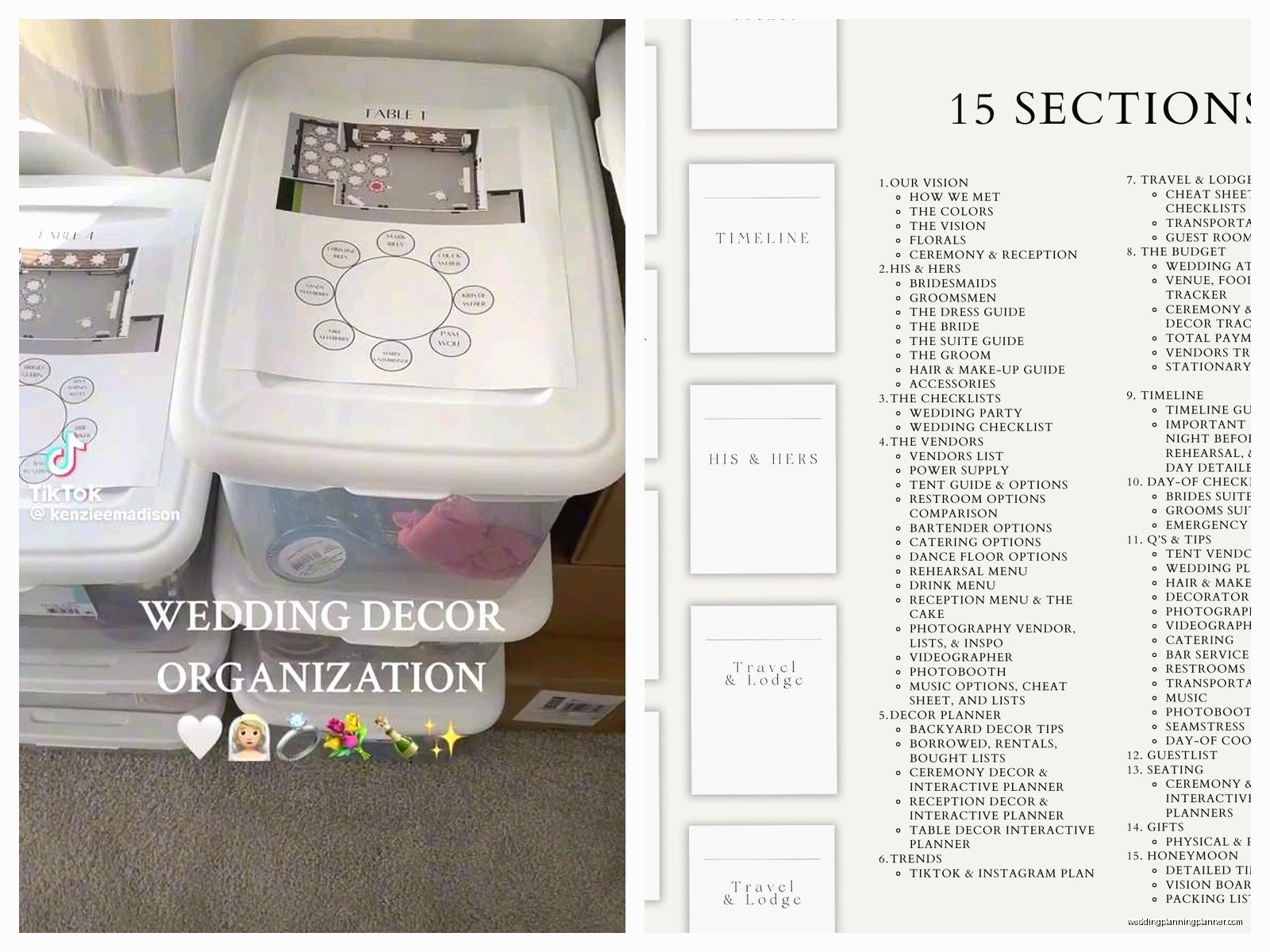
Break down your budget into these categories at minimum: venue, catering, photography, videography, flowers, music/entertainment, attire, invitations/stationery, transportation, rentals, decor, and miscellaneous (which will be way bigger than you think). Put in your estimated costs first, then actual quotes, then actual payments. The difference between those three columns will make you cry but at least you’ll know where you stand.
I had a bride in spring 2023 who didn’t track her payments properly and accidentally paid her florist twice—like the full amount twice—and didn’t realize until two weeks before the wedding when she was reconciling everything. We got it sorted but oh my god the stress.
Timeline Planning Is Where People Mess Up
You need two different timelines. No wait, three actually. There’s your planning timeline (what needs to happen when leading up to the wedding), your wedding day timeline (minute-by-minute schedule), and your vendor timeline (which is more detailed than the day-of one you give to your wedding party).
Planning Timeline:
Work backwards from your wedding date. Seriously, pick your date first or you can’t plan anything else effectively. Then:
- 12+ months out: Book venue, photographer, caterer, band/DJ
- 9-11 months: Book florist, videographer, hair/makeup, officiant
- 6-8 months: Send save-the-dates, book hotel blocks, order invitations, find your dress
- 4-5 months: Finalize menu, order cake, plan ceremony details, book transportation
- 2-3 months: Send invitations, finalize seating chart, do dress fittings, get marriage license
- 1 month: Final vendor meetings, create day-of timeline, confirm final headcount, break in your shoes
- 1 week: Rehearsal, final payments, pack for honeymoon, try not to have a breakdown
These are rough guidelines and everyone’s gonna tell you something different but this is what’s worked for literally hundreds of weddings I’ve done.
The Day-Of Timeline Nobody Tells You About
This needs to be so specific it feels ridiculous. Like “3:47pm – bride finishes photos with bridesmaids” specific. Because if you just say “afternoon photos” then your photographer’s gonna take 90 minutes and you’ll miss cocktail hour at your own wedding. Which I’ve seen happen. Not pretty.
Start with your ceremony time and work backwards for getting ready, then forwards for reception. Include buffer time because something will run late (usually hair and makeup, sorry stylists but you know it’s true). Your vendors need arrival times, setup times, breakdown times. Your wedding party needs to know when to be where. Your family needs… honestly they’re gonna do whatever they want but at least give them a schedule to ignore.
Organization Tools That Actually Work
Alright so there’s approximately one million wedding planning apps and most of them are kinda useless? But here’s what I actually recommend:
The Knot or WeddingWire: Good for guest list management and collecting addresses. The checklist feature is okay but pretty generic.
Google Drive: For sharing documents with your partner, planner, and vendors. Everything in one place, accessible anywhere, you can’t lose it unless Google implodes.
Trello: If you’re visual, this is great for organizing tasks by category and moving them through stages. I use it for my clients who get overwhelmed by spreadsheets.
Aisle Planner: This is what I use professionally and it’s worth the money if you’re DIY-ing your planning because it does everything—floor plans, timelines, budgets, contracts.
But honestly? A good old spiral notebook works too. My cat knocked over my coffee onto my planner last month and I almost had a heart attack, but everything was backed up digitally so… learn from my panic.
Organizing Your Vendors Is A Whole Thing
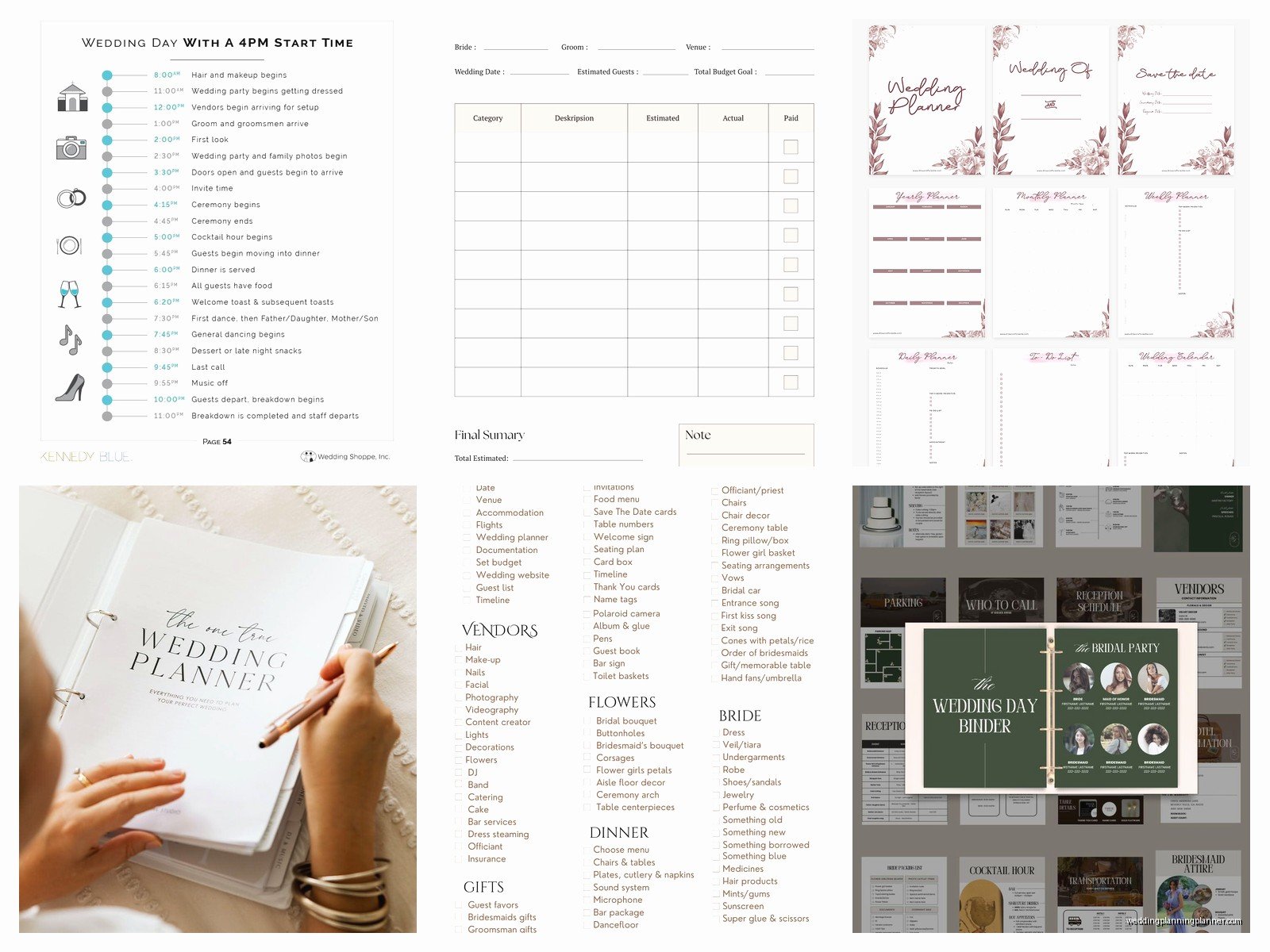
Create a vendor contact sheet with everyone’s name, company, phone, email, social media, and what they’re responsible for. Send this to all your vendors so they have each other’s info. Your florist needs to coordinate with your rental company. Your caterer needs to know when the photographer wants to shoot the cake. Your DJ needs the photographer’s timeline so they don’t talk over important photo moments.
In your vendor folder (physical or digital), keep:
- Signed contracts
- Proof of insurance and licenses
- Payment receipts
- Inspiration photos you’ve discussed
- Email chains with important decisions
- Their emergency contact info
I cannot stress the emergency contact thing enough. I had a baker ghost on a wedding once—like completely disappeared the week of—and we had to scramble to find a replacement. If I’d had her business partner’s number it might’ve been… okay it still would’ve been a disaster but slightly less of one.
The Vendor Payment Schedule
Most vendors want a deposit to book (usually 25-50%), then the remainder either before the wedding or on the day. Put these dates in your calendar with alerts because missing a payment deadline can mean a vendor drops you, and good luck finding a replacement photographer two weeks before your wedding.
Some vendors let you do payment plans. Use them. Spreading out $3000 for photography over six months is way easier than dropping it all at once. Just… track it properly unlike that bride I mentioned earlier.
Invitation And Stationery Organization Because This Is My Specialty
Okay so this is where I get really specific because stationery is literally my thing and people underestimate how much organization this requires. You’re not just ordering invitations, you’re managing:
- Save-the-dates
- Invitations with response cards and details cards
- Envelopes (multiple kinds probably)
- Ceremony programs
- Menus
- Place cards
- Table numbers
- Signage
- Thank you cards
Each of these has a different timeline. Save-the-dates go out 6-8 months before, invitations 8-10 weeks before, programs and menus you can wait on until you have final details, place cards can’t be done until you have final seating, thank you cards… well those are gonna take you six months after the wedding let’s be real.
Keep a spreadsheet of who you’ve sent what to and when. When RSVPs come back, log them immediately or they’ll get lost in the pile of mail and you’ll have no idea if Aunt Susan is coming or not. Mark dietary restrictions right away. Note who’s bringing a plus-one and get their name—”and guest” on a place card looks tacky.
The Assembly Line Method
When it’s time to assemble invitations, set up stations. One person stuffs, one addresses, one seals, one stamps. Do NOT try to do each invitation completely before starting the next one or you’ll be there forever. Trust me on this, I’ve assembled thousands of invitation suites and the assembly line is the only way that doesn’t make you lose your mind.
Also weigh one complete invitation at the post office before you buy stamps because if it’s over one ounce you need extra postage and there’s nothing worse than having invitations returned for insufficient postage. Well, there are worse things—I once watched an episode of that baking show while addressing envelopes and completely zoned out and addressed like 15 envelopes to the wrong people, that was pretty bad—but you get the idea.
Organizing The Actual Wedding Day Stuff
You need an emergency kit. Everyone says this and everyone thinks they don’t need it and then someone’s dress strap breaks or a groomsman splits his pants or someone’s crying off their makeup and suddenly you’re desperate for a safety pin.
In your emergency kit:
- Safety pins in multiple sizes
- Fashion tape
- Sewing kit
- Stain remover pen
- Clear nail polish (for stocking runs)
- Bobby pins
- Hair spray
- Bandaids
- Pain reliever
- Antacids
- Tampons
- Tissues
- Breath mints
- Phone charger
- Scissors
- Lighter (for candles or frayed ribbon ends)
Assign someone to be in charge of this kit on the day. Not you, the bride or groom. Someone else. Your planner, your maid of honor, your mom, whoever.
The Box Of Stuff For Your Coordinator
If you’re having a day-of coordinator (which you should, even if you planned everything yourself), prepare a box with all the physical items they might need:
- Extra copies of the timeline
- Vendor contact list
- Ceremony program master copy
- Seating chart
- Place cards organized by table
- Table numbers
- Any signage
- Guest book and pens
- Card box
- Toasting flutes if you’re providing them
- Cake cutting set
- Any decor items that need to be placed
Label everything clearly because your coordinator doesn’t wanna be guessing which ribbon goes where while you’re getting your hair done.
Managing RSVPs Without Losing It
This part is gonna test your patience. People will not RSVP by your deadline. They just won’t. Send your invitations 8-10 weeks out with an RSVP deadline of 3-4 weeks before the wedding. This gives you time to hunt down the people who didn’t respond.
Make a list of non-responders one week after your deadline. Start texting. “Hey! Just finalizing our headcount—are you able to make it to the wedding?” Most people will be like “oh crap I forgot to send that back” and tell you right away. Some people will ghost you completely and you’ll have to decide if you wanna count them as a no or keep following up.
The thing that annoys me most about wedding organizing is definitely the RSVP situation. Like, you sent a card with a stamp and everything, all they have to do is check a box and drop it in the mail, but somehow that’s too much effort for some people? And then they get mad if you don’t save them a seat? Anyway.
Seating Chart Strategy
Don’t start your seating chart until you have final RSVPs. I know you’ll be tempted to start earlier but you’ll just have to redo it seventeen times. Once you know who’s actually coming, here’s the method:
Group people by relationship—family, college friends, work friends, etc. Then think about who actually likes each other, not just who knows each other. Your college roommate and your work friend might’ve never met but if they both love hiking maybe they’ll sit together great. Your two cousins might be related but if one’s super religious and the other’s super not, maybe don’t put them at the same table.
Keep a table for older guests near the restrooms but not right next to the speakers. Keep a table for parents with small children near an exit so they can escape if needed. Put your fun single friends together—they’ll entertain themselves. Avoid a singles table though, that’s just depressing.
Use a digital tool for this. I like AllSeated because you can drag and drop people and see a visual representation. Trying to do this on paper is a nightmare when you have to change things.
Final Weeks Organization Checklist
One month out, confirm everything with all vendors. Not just “hey we’re still on” but actual details. Send your photographer the family photo list. Send your caterer the final headcount (even though it’ll change). Send your DJ the must-play and do-not-play songs. Send your florist the final timeline so they know delivery window.
Two weeks out, do a final walkthrough of your venue if possible. Visualize where everything will go. Take measurements if you need them for decor. Confirm the layout matches what you discussed.
One week out, make sure someone’s assigned to handle vendor payments on the day if you haven’t prepaid everything. Put cash in labeled envelopes. Assign someone to take gifts home from the reception. Confirm transportation for everyone who needs it. Pack your emergency kit and your coordinator box.
The day before, try to relax because you’ve done everything you can at this point and stressing won’t help anything and—lol just kidding you’re gonna stress anyway, but at least you’ll be organized while you stress.
Digital Organization For Modern Couples
Create a shared Google Drive folder with your partner and your planner if you have one. Inside, make folders for each vendor with subfolders for contracts, inspiration, correspondence, and receipts. Make a folder for guest list stuff. Make a folder for your own reference with dress photos, suit details, registry info, whatever.
Use a shared calendar for all wedding-related appointments and deadlines. Color code by category—vendor meetings, dress fittings, payment deadlines, etc. Set reminders for a week before and a day before important dates.
If you’re having a wedding website (which you should for sharing info with guests), keep it updated. Put your hotel block info there, directions to the venue, FAQ about dress code and timing, registry links. Check it actually works on mobile because that’s how most people will view it.
Organizing Your Rehearsal And Related Events
The rehearsal usually happens the night before the wedding. You need to organize who needs to be there (wedding party, parents, officiant, any readers or special participants), where it’s happening (usually the ceremony venue), and what time. Plan for 30-45 minutes max because people get bored and it’s really not that complicated.
If you’re doing a rehearsal dinner after, organize that separately. Get a headcount, pick a venue or location, arrange payment, send details to everyone invited. This is usually more casual than the wedding but still needs actual planning.
For any other events—welcome party, day-after brunch, whatever—assign someone else to organize them if possible because you’re gonna be busy enough with the actual wedding. Let your parents or wedding party take point on these.
The key to organizing a wedding is really just… breaking everything into smaller tasks and actually tracking what you’ve done versus what still needs doing. It’s not complicated in theory, it’s just a lot of details all at once. But if you’ve got your systems in place from the start, you’ll be way less likely to forget something important or double-book yourself or show up to your venue on the wrong day which—okay that’s never happened to me but I bet it’s happened to someone and I bet they weren’t using a good organizational system so there you go, learn from hypothetical mistakes
