
Planning Guides, Style Guide
Plus One Wedding: Complete Guide
Sep
So Your Invitation Says “Plus One” – Now What
Okay so the plus one thing is honestly one of the most confusing parts of wedding planning and I say this after dealing with like hundreds of guest lists where couples are tearing their hair out trying to figure out who gets to bring someone and who doesn’t. Let me just walk you through this because it’s gonna save you so much drama.
First thing – if you’re the one getting the invitation, check the actual envelope and the inner card. The couple will usually write it as “Sarah Johnson and Guest” or just your name if you’re flying solo. Don’t assume you can bring someone just because you’re in a relationship or because you don’t wanna show up alone. I had this thing happen in spring 2023 where a guest literally brought her new boyfriend without him being invited and it threw off the entire seating chart, the catering count, everything. The bride was so stressed she cried in the bathroom and I had to scramble to find an extra chair and meal. Not fun.
Who Actually Gets A Plus One
This is where couples get it wrong all the time and honestly it kinda drives me nuts when people don’t think it through. Here’s the general rule of thumb that makes sense:
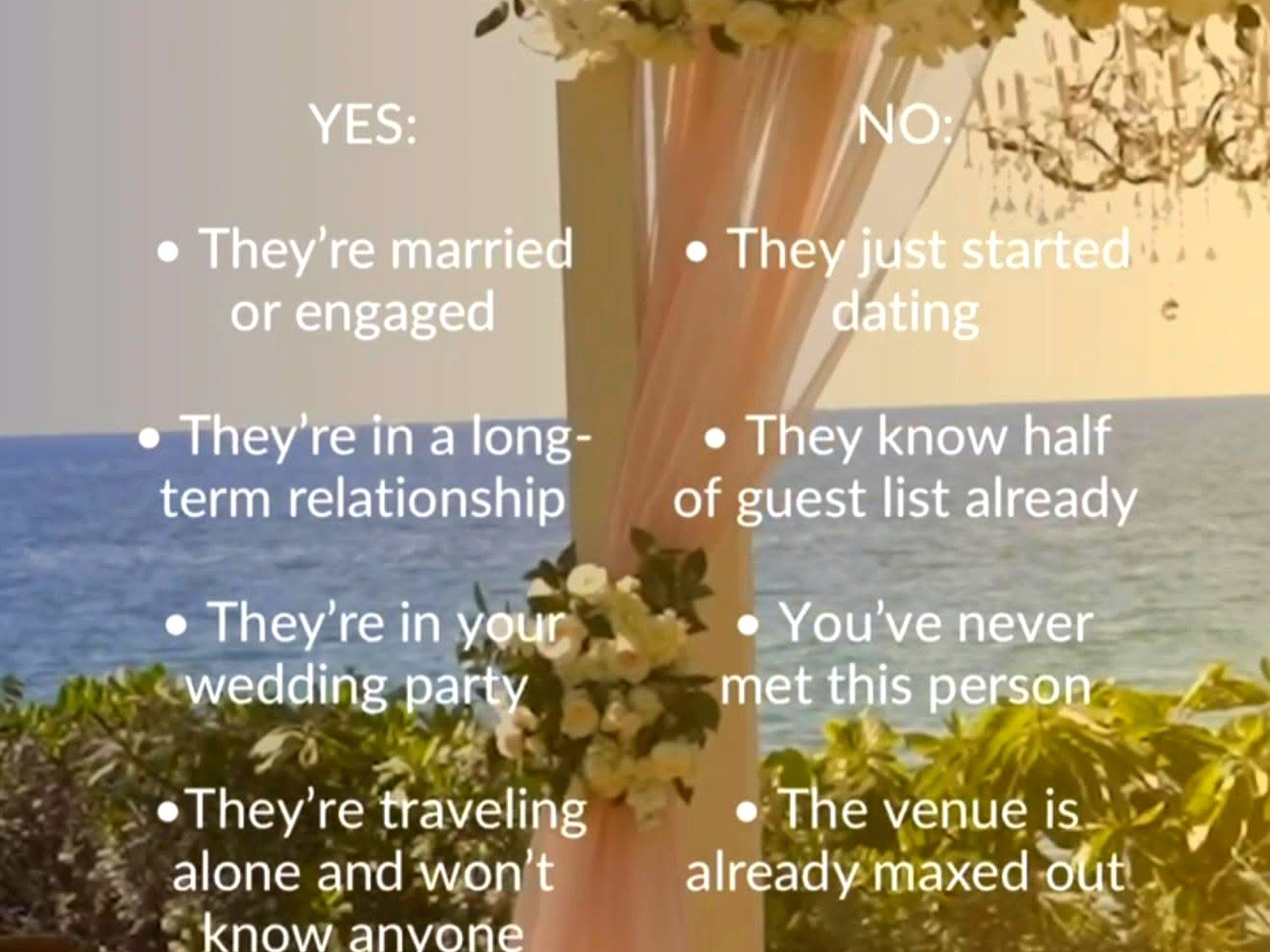
- Anyone married, engaged, or living with their partner – they’re basically a social unit at this point, you can’t split them up
- Anyone in a serious long-term relationship (like over a year usually)
- Your wedding party members – they’re doing work for you, throw them a bone
- Guests who won’t know anyone else at the wedding
- Sometimes single guests if your budget allows it
But here’s where it gets messy. You might have a cousin who’s been dating someone for three months and they’re gonna be mad if they don’t get a plus one. Or your college friend who’s perpetually single and wants to bring their flavor of the month. The thing is, weddings are expensive – I’m talking like $150-300 per person when you factor in food, drinks, rentals, everything. So you gotta draw a line somewhere.
Creating Your Plus One Policy
What I tell couples is to make a clear policy and stick to it. Write it down. Don’t let your mom guilt you into exceptions because then everyone’s gonna want exceptions and suddenly your 100-person wedding is 140 people.
Some couples do the “no ring, no bring” rule – meaning only married or engaged folks get plus ones. It’s harsh but it’s clear. Others do the relationship length thing where if you’ve been together over a year, you’re in. Some just give plus ones to everyone in the wedding party and people who are traveling from out of town.
Whatever you pick, apply it consistently. If you give your brother’s girlfriend of six months a plus one, you gotta give your college roommate’s boyfriend of six months one too, or there’s gonna be hurt feelings and passive aggressive Facebook posts.
How To Word It On Invitations
The outer envelope should have the names of everyone invited. So if someone gets a plus one, it’s either:
“Ms. Rachel Green and Guest”
Or if you know their partner’s name (which you should try to find out):
“Ms. Rachel Green and Mr. Ross Geller”
Don’t write “Rachel Green +1” because that looks super informal and kinda cheap honestly. The inner envelope can just say “Rachel and Guest” or “Rachel and Ross.”
If someone does NOT get a plus one, only their name appears. That’s it. Just “Ms. Rachel Green.” This should be a clear signal but you’d be surprised how many people miss it or ignore it.
Handling The Awkward Conversations
People are gonna ask. They just are. I remember this one wedding where the groom’s aunt called me directly (why do they always call the planner like we’re the bad guy?) asking why her daughter didn’t get a plus one when her son did. I had to explain that her son was married and her daughter had been dating someone for two weeks, but she acted like I was being unreasonable… anyway.
When someone asks if they can bring a date, you have a few options. You can:
- Politely say you’re keeping it intimate and can’t accommodate extra guests
- Blame it on the venue capacity (even if that’s not entirely true)
- Explain your plus one policy if they’re a close friend who’ll understand
- Offer to add them to a B-list if people decline
Whatever you do, don’t say “well we’re only giving plus ones to people in serious relationships” because that sounds like you’re judging their relationship status and people get super defensive about that.
The B-List Strategy
Okay so here’s something that sounds kinda sneaky but literally everyone does it – the B-list. You make your A-list of must-invite people, and then you have a B-list of folks you’d like to invite if space opens up. As RSVPs come back with declines, you send out invites to the B-list.
The key is timing. Send your A-list invites about 8 weeks before the wedding. If people decline, immediately send B-list invites so they still have like 5-6 weeks notice. Don’t wait until two weeks before because then it’s super obvious they were second choice and that’s just… yeah, don’t do that.
Some couples use the B-list for plus ones specifically. Like, “if we have 15 people decline, we’ll open up plus ones for the single guests.” It’s a way to be fair without blowing your budget.
If You’re The Guest With A Plus One
Alright so flipping this around – you got the invitation and it says “and Guest” so now what? First, actually use it if you have someone to bring. Don’t RSVP yes for two people and then show up alone because the couple paid for that meal.
If you’re bringing someone, give their name when you RSVP. Don’t just write “plus one” on the response card. The couple needs actual names for the seating chart, place cards, all of that. I’ve gotten response cards that just say “John Smith +1” and then I gotta track down John Smith to ask who the hell he’s bringing. My cat literally knocked over my coffee on one of those cards once and I had to call the guest anyway, so maybe it was a sign.
Who Should You Bring As Your Plus One
This is where people get it wrong. Your plus one should be:
- Someone you’re actually dating or seriously interested in
- A close friend if you’re single and don’t wanna go alone
- NOT your new Tinder date who you’ve met twice
- NOT someone who’s gonna get drunk and cause drama
- NOT your kid unless kids are specifically invited
I’ve seen people bring the most random plus ones. Someone brought their life coach once. Another person brought their hairdresser. Like… if you don’t have anyone appropriate to bring, just go solo and meet people at the wedding. It’s not that deep.
And if you’re in a new relationship (like under three months), really think about whether a wedding is the right place to bring them. Weddings are intense – you’re gonna be emotional, there’s family drama, everyone’s asking about your relationship status. It’s a lot for a new couple.
The Ghost Plus One Problem
Here’s something that annoys me SO much – when people RSVP yes for their plus one and then that person doesn’t show up. The couple literally paid for that seat and that meal. If your plus one cancels last minute, you gotta tell the couple or the planner ASAP. Even if it’s the day before, we might be able to adjust the catering count.
I had a wedding where seven plus ones just didn’t show up. Seven! The couple spent over $2,000 on meals for people who weren’t even there. It was during summer 2021 when things were just opening back up and honestly people were still flaky about events, but still. Tell. Someone.
Plus Ones And Seating Charts
If you’re planning the wedding, think about where you’re putting guests with plus ones. Don’t stick them at a table where they know no one except each other – that defeats the social purpose of a wedding. Mix it up so they have familiar faces but also their date doesn’t feel completely isolated.
Also, seat couples together. Sounds obvious but I’ve seen seating charts where someone put a husband and wife at different tables because they were trying to “balance” the tables. Nah. Keep couples together unless they specifically ask to be separated (which… that’s a whole other situation).
Budget Math For Plus Ones
Let’s talk numbers because this is where reality hits. Say you’re inviting 100 people and you give everyone a plus one – that’s potentially 200 people. At $200 per person (which is like mid-range), you’re looking at $40,000 just for catering. If you limit plus ones to just married/engaged couples and wedding party, you might cut that down to 130 people and save $14,000.
That’s a honeymoon. That’s a down payment on a house. That’s a really nice… I dunno, I was gonna say car but actually maybe not a whole car, but you get the point. The money adds up fast.
So when you’re making your plus one decisions, literally calculate it out. How many potential plus ones are you offering? What’s your per-person cost? Can you actually afford this or are you just saying yes because you feel obligated?
Destination Weddings And Plus Ones
Destination weddings are a whole different beast. Generally, if someone’s traveling across the country or internationally for your wedding, they should probably get a plus one. It’s a bigger ask and they’re spending more money to be there.
But also, destination weddings naturally have smaller guest counts, so plus ones are less of a budget explosion. And honestly, people are less likely to bring a casual date to a destination wedding because that’s a weird amount of commitment for a new relationship.
Just be clear in your invitation about what you’re covering (if anything) and what guests need to pay for. If you’re covering the hotel room, specify if that includes their plus one or if the plus one needs their own room.
What About Kids As Plus Ones
Quick sidebar – kids are not plus ones. They’re a separate category. If you’re having an adults-only wedding, make that crystal clear on your invitations and website. People will still try to bring their kids (I’ve literally had parents show up with toddlers at adults-only weddings and act shocked that there’s no kids menu), but at least you were clear about it.
If you are allowing kids, specify ages. Like “children over 12 welcome” or whatever your cutoff is. Otherwise you’ll have people asking if their six-month-old counts or if their teenager can bring a friend and it gets messy.
Last Minute Plus One Changes
Life happens. People break up, new relationships start, someone’s original date gets sick. If a guest needs to change their plus one name, that’s usually fine as long as they tell you before you’ve done the seating chart and place cards. Once those are printed, changes are harder but not impossible.
As a guest, just communicate. Don’t ghost the couple about changes. A quick text like “hey my boyfriend and I broke up, can I bring my friend Sarah instead?” is totally fine and way better than just showing up with a different person.
The worst is when someone brings a completely different plus one without telling anyone and we have the wrong name on the place card and the wrong meal preference and everything’s chaos. Just… communicate. Please.