
Planning Guides, Style Guide
Punjabi Marriage Card: Design & Ordering Guide
Jun
Getting Your Punjabi Wedding Cards Right
Okay so Punjabi wedding cards are honestly one of those things where if you get it wrong, everyone‘s gonna notice but if you do it perfectly nobody really says anything – they just expect it. I learned this the hard way back in spring 2023 when I had a bride who ordered these gorgeous cards but forgot to include the Ardas timing and her grandmother literally refused to distribute them to her side of the family until we reprinted. Like, full stop refused.
First thing you need to know is that Punjabi wedding invitations aren’t just pretty cards. They’re basically a whole information packet because Punjabi weddings have multiple events and you gotta tell people about all of them. We’re talking Roka, Sagan, Mehendi, Sangeet, Anand Karaj ceremony, and the reception. Sometimes there’s also Choora ceremony, Jaggo, and like… honestly the list can keep going depending on how traditional the families are.
Design Elements That Actually Matter
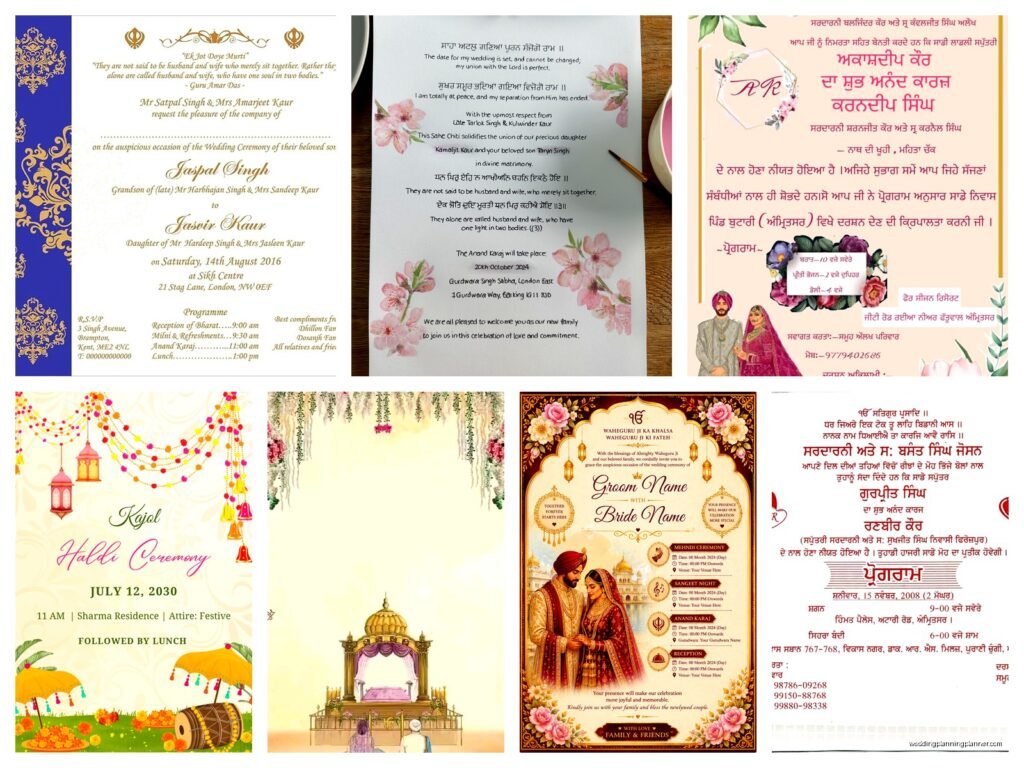
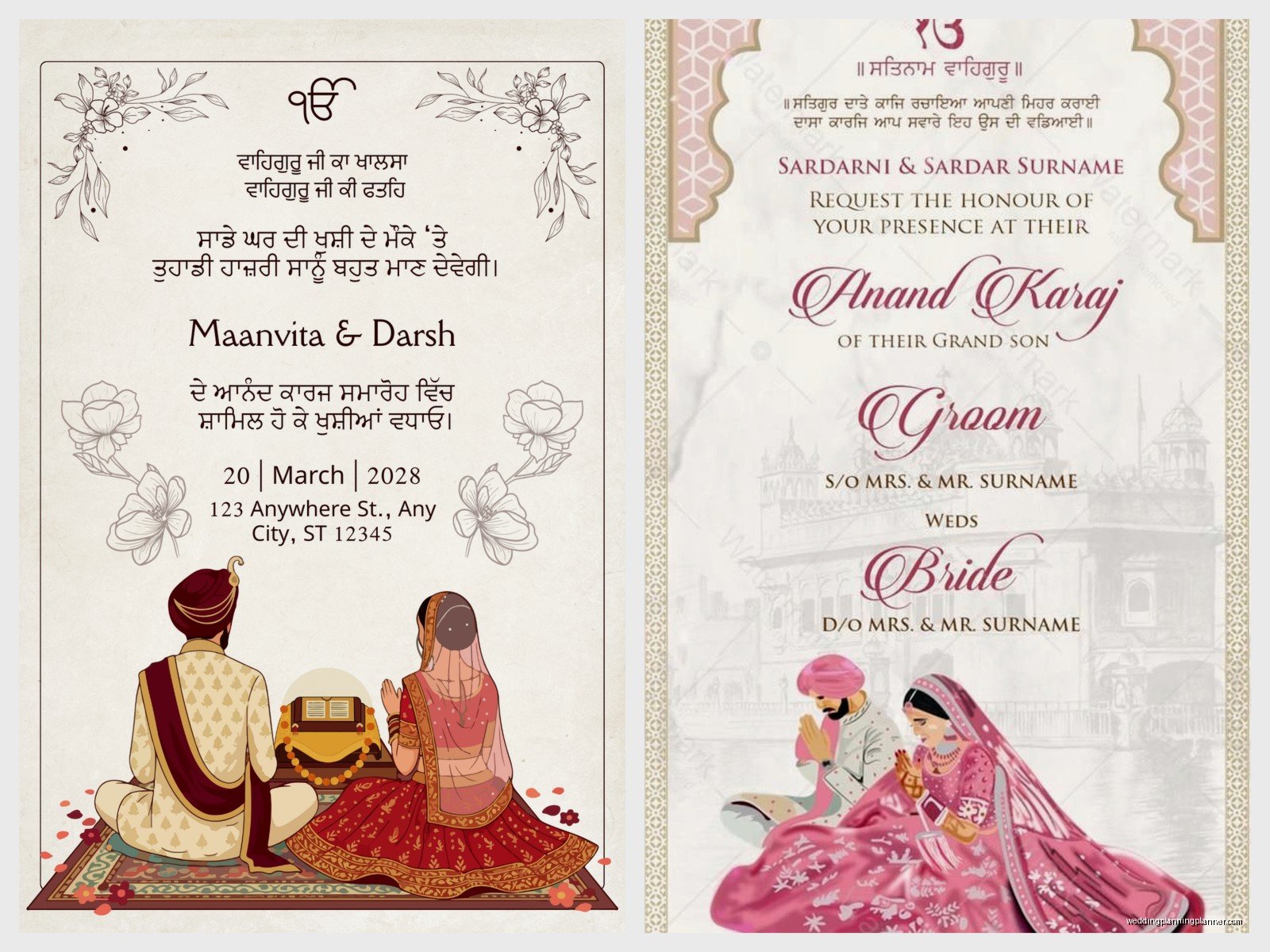
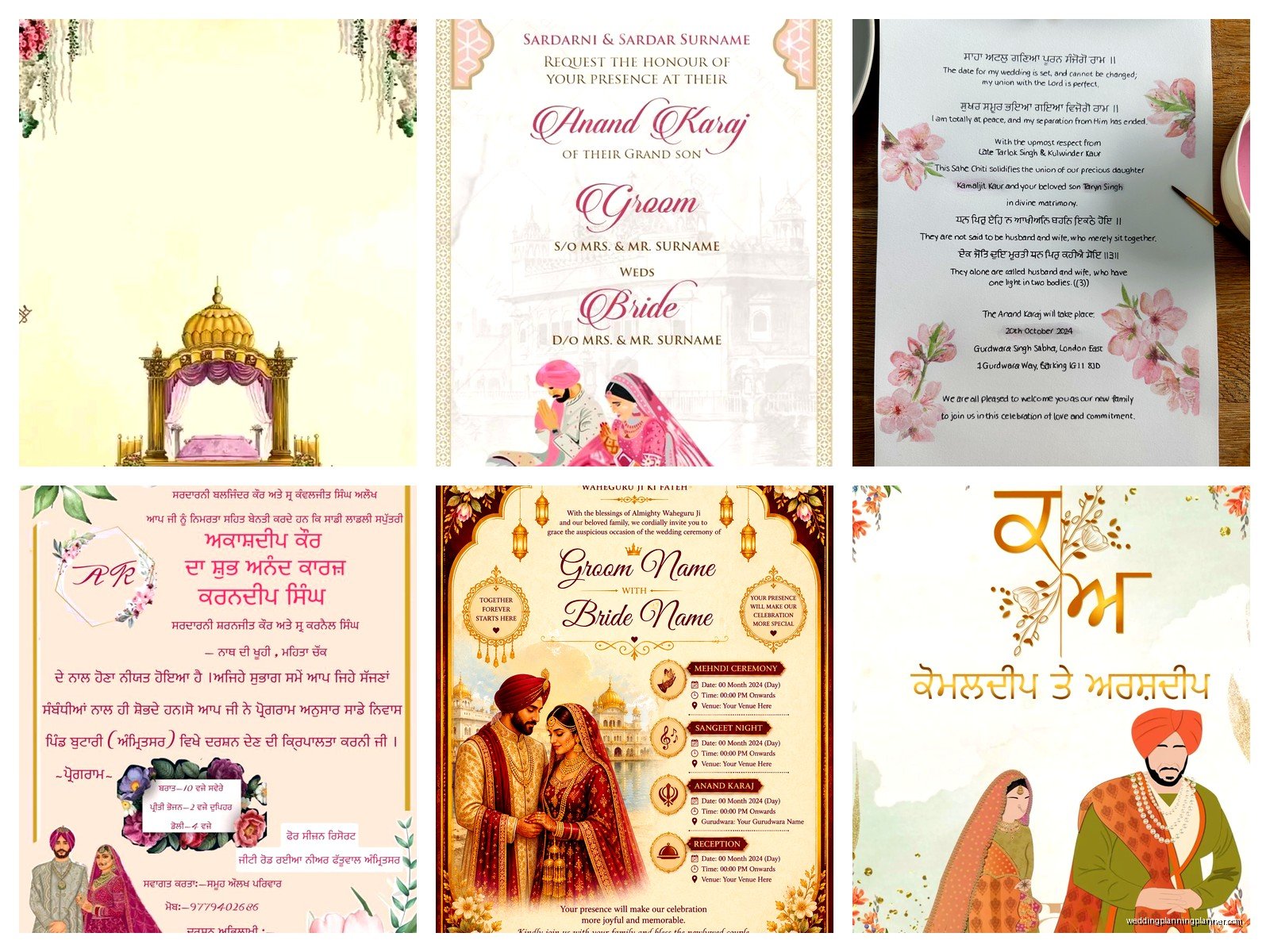
The design is where things get interesting because you’re balancing tradition with modern aesthetics. Most Punjabi wedding cards will have religious symbols – the Ik Onkar is super common, or the Khanda symbol. You’ll also see a lot of peacock motifs, lotus flowers, and lately I’ve been seeing tons of couples go for that royal Patiala-inspired look with geometric patterns.
Colors are kinda a big deal. Red and gold are classic for obvious reasons, but maroon, orange, and fuchsia pink are also really popular. I had this one couple who wanted navy blue and copper which was actually stunning but the groom’s mom was like “where is the red?” for weeks. We compromised by adding red accents to the envelope lining and she eventually came around.
The thing that annoyed me most when I first started working with Punjabi wedding cards was how vendors would just slap on some random Gurmukhi text without actually checking if it was appropriate or even spelled correctly. You need to be so careful with this. If you’re including Mool Mantar or any Gurbani verses, have someone who actually reads Gurmukhi check it. Don’t just trust the designer unless they specifically know Punjabi weddings.
What Information You Actually Need To Include
This is where it gets detailed and honestly a bit overwhelming. Your main card needs the couple’s names obviously, but in Punjabi culture you’re also listing the parents’ names. Usually it’s formatted like “Mr. & Mrs. [Father’s name] request the honor of your presence at the marriage of their daughter/son [name] with [partner’s name] son/daughter of Mr. & Mrs. [other father’s name].”
Then you need all the event details. For the Anand Karaj ceremony itself, you absolutely must include the Gurdwara name and full address, the date, and the time. Pro tip – always mention if it’s morning or evening in Punjabi weddings because the timing actually affects what guests will wear and whether they’ll plan to stay for Langar.
The reception details go on either the same card or a separate insert. I usually recommend a separate card for the reception if it’s at a different venue or on a different day because it just reads cleaner.
For the pre-wedding events, you can do individual cards for each or one combined card that lists everything. The combined approach is gonna save you money but individual cards feel more formal and give each event its proper importance. Depends on your budget honestly.
Wording and Language Stuff
So here’s where you decide – full English, full Punjabi, or bilingual. Most people go bilingual these days. The Punjabi text is usually on one side or at the top, with English translation below or on the facing page if you’re doing a booklet style card.
If you’re including the Ardas timing (which you should), make sure it’s clearly stated. Some families do Ardas before the ceremony, some do it as part of the ceremony. This matters because close family needs to be there for it.
One thing I always tell couples – if you’re doing a destination wedding or if lot of guests are coming from abroad, add a separate information card about accommodation, transportation from airport, dress code specifics, and maybe even a brief explanation of the ceremonies. Your Canadian cousins might not know what Chooda ceremony is and that’s okay but give them a heads up.
Card Styles and Formats
Punjabi wedding cards come in so many formats now. The traditional approach is that boxed invitation with multiple inserts, maybe some dry fruits or a small kalash. These are beautiful but they’re expensive – you’re looking at anywhere from $15 to $50 per box depending on how elaborate you go.
Booklet style cards are super popular right now. They’re like a mini magazine about your wedding and you can fit all your events, photos, even a timeline of your relationship if you want. These usually run between $8 to $20 per card.
Single card invitations with inserts are the most budget-friendly, usually $3 to $10 per invitation. You have your main card, then separate insert cards for different events, RSVP card, and maybe a details card.
Scroll invitations are having a moment too. They’re dramatic and different but honestly they’re kind of a pain because people don’t know where to… I mean they look amazing in photos but practically speaking, guests sometimes struggle with how to open them or they lose the small pieces.
Finding the Right Vendor
This is crucial. You want someone who specifically does South Asian wedding cards, not just someone who can print pretty designs. There are tons of online vendors now – 123WeddingCards, IndianWeddingCard, Parekh Cards – but I still think there’s value in visiting a physical store if you have one nearby, especially in areas with large Punjabi communities like Brampton, Southall, or parts of California.
When you’re comparing vendors, ask to see actual printed samples, not just digital mockups. Colors look different on screen versus paper. Also ask about their editing process – how many rounds of revisions do you get? What if there’s a typo? What’s their reprint policy?
Timeline wise, you’re gonna want to start this process like 4-5 months before your wedding. Good vendors get booked up, especially during peak wedding season (April to June and October to November). Order your cards at least 2-3 months before the wedding so you have time to address them and mail them out 6-8 weeks in advance.
Customization Options
Okay so beyond just the basic design, there’s so much you can customize. Envelope linings are a small detail that makes a big impact – maybe a pattern that coordinates with your wedding colors or even a custom print.
Wax seals are super trendy right now. You can get custom seals made with your initials or the Ik Onkar symbol. My cat actually knocked over a whole box of wax seals once while I was working on a client’s invitations and I found them scattered around my apartment for weeks after.
Laser cutting and embossing add texture and dimension. Foil stamping in gold, rose gold, or copper looks really luxe. Just know that each of these additions increases your cost per card.
Some couples are doing portrait illustrations of themselves on the cards which is adorable but make sure you hire a good illustrator because I’ve seen some questionable ones where the couple looks like… not themselves.
The Actual Ordering Process
Once you’ve picked your design, you’ll need to provide all the information. Make a spreadsheet or document with everything spelled out exactly as it should appear – names with correct spellings, all addresses, phone numbers, every single detail. Double check the Punjabi text with someone fluent.
You’ll usually get a digital proof first. Review this SO carefully. Read every word, check every number, verify the dates. Show it to your parents, show it to your partner’s parents. I cannot stress this enough because I’ve had clients approve proofs and then realize the venue address was wrong after 300 cards were printed.
Order extras. Always. I usually recommend ordering 10-15% more than you think you need. People lose cards, you’ll think of additional guests, you’ll want some for keepsakes. Trust me on this.
Budget Reality Check
Let’s talk numbers because this can get expensive fast. For a guest list of 300-400 people (pretty standard for Punjabi weddings), you’re looking at:
- Budget option: $1,000-$2,000 for simple cards with basic printing
- Mid-range: $3,000-$5,000 for nicer card stock, some customization, maybe foiling
- High-end: $7,000-$15,000+ for boxed invitations with all the bells and whistles
These numbers include printing, envelopes, and basic inserts. Add more for things like envelope addressing (you can hire a calligrapher or use digital printing), postage (those boxed invites need extra postage), and any extra inserts.
Digital Invitations – Are They Acceptable?
Honestly this is still a touchy subject in Punjabi communities. Some families are totally fine with digital invites, especially for pre-wedding events like Sangeet. But for the main Anand Karaj ceremony, most traditional families still expect a physical card.
That said, I’m seeing more couples do a hybrid approach – physical cards for the ceremony and close family, digital invites for extended guests or for events like Mehendi. You can create beautiful digital cards using Paperless Post, Greenvelope, or even custom designs through Canva.
If you do go digital for anything, make sure the information is just as detailed and respectful as a physical card would be. And maybe give older relatives a heads up that they’ll be receiving a digital invite so they know to check their email or WhatsApp.
Addressing and Mailing
Okay this part is tedious but important. For Punjabi weddings, you’re often inviting entire families, not just individuals. The addressing should reflect this – “The Kumar Family” or list out all the family members’ names if you prefer.
Inner envelopes are traditional and useful for specifying exactly who’s invited. This helps avoid the awkward situation where someone assumes their kids are invited when you’re trying to have an adults-only reception.
Postage – those beautiful thick cards or boxed invitations need extra postage. Take one fully assembled invitation to the post office and have them weigh it so you know exactly how much postage you need. Nothing’s worse than having invitations returned for insufficient postage.
For international guests, mail those cards earlier – like 10-12 weeks in advance. International shipping is unpredictable and you want people to have time to arrange travel.
Common Mistakes To Avoid
Don’t forget to include an RSVP card or at least clear RSVP instructions. Punjabi weddings often struggle with accurate headcounts because traditionally everyone just shows up, but venues need numbers.
Don’t use super light colored text on light backgrounds. I know that blush pink on cream looks ethereal but your aunties can’t read it. Contrast is your friend.
Don’t skip proofreading the Gurmukhi text. Seriously this is so important I’m mentioning it again.
Don’t order exactly the number you need. You will need extras, I promise.
Don’t forget about thank you cards while you’re ordering. You can often get a discount if you order them at the same time as your invitations, and you’ll definitely need them after the wedding when you’re drowning in gifts and exhausted from the celebrations but still need to acknowledge everyone’s generosity and…
Working With Family Expectations
Look, this deserves its own section because Punjabi weddings involve a lot of family input on the invitations. Your mom might have opinions, your dad might have opinions, your partner’s entire extended family might have opinions about everything from the color scheme to whose name appears first.
My advice? Pick your battles. If your future mother-in-law really wants a specific religious verse included, just include it. If your dad insists on a particular format for how the names are listed, go with it. Save your “this is non-negotiable” energy for things that truly matter to you.
That said, it’s also okay to set some boundaries. If you’re paying for the invitations, you get more say. If you want a modern design and the families are pushing for very traditional, find a compromise – maybe a modern design with traditional motifs incorporated.