Planning Guides, Style Guide
South Indian Wedding Card: Design & Ordering Guide
Jun
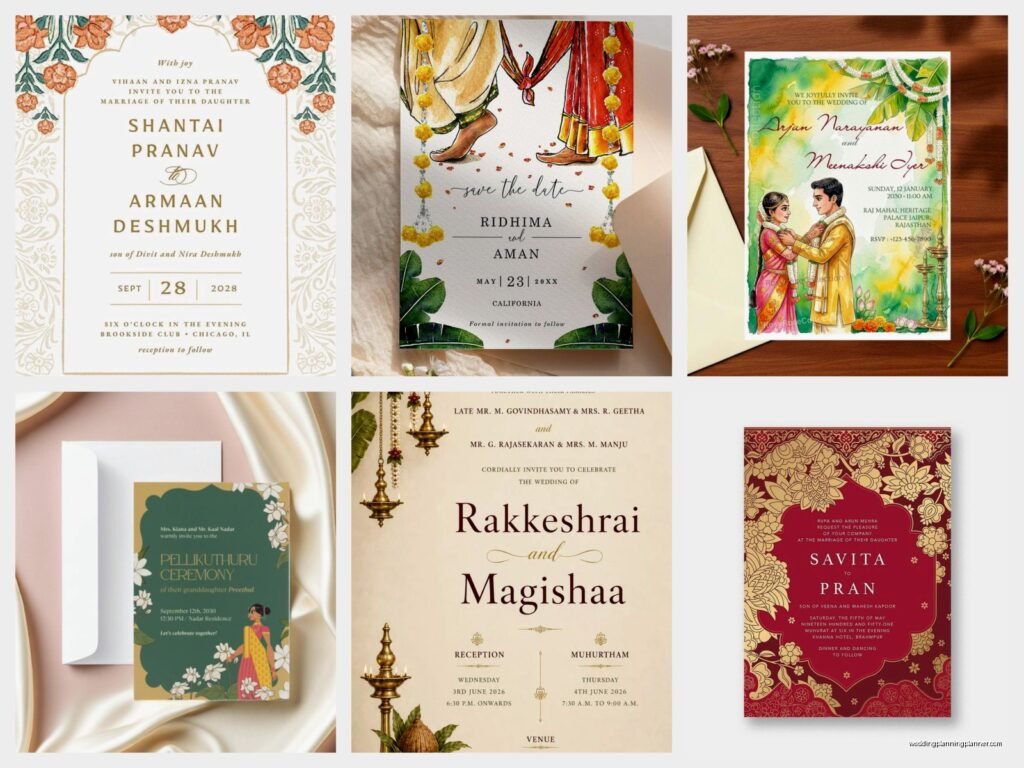
Okay so South Indian wedding cards are their own whole universe
The first thing you gotta understand is that South Indian wedding invitations are not just pretty cards with fancy script. They’re like… entire informational packets that need to communicate a LOT. I’m talking multiple events, sometimes spanning several days, with different dress codes, different venues, and honestly sometimes I feel like I need a flowchart to explain them to my clients.
Back in summer 2021, I had this bride from Chennai who wanted to order her cards through one of those generic online platforms because it was cheaper. She called me three weeks before the wedding absolutely panicking because the cards arrived with the muhurtham time printed wrong and the groom’s father’s name misspelled. We had to rush-order replacements and pay literally double what she would’ve spent if she’d just gone with a specialist printer from the start. That whole situation still makes me tense.
The basic components you’re working with
South Indian wedding cards typically have way more inserts than Western invitations. You’ve got the main invitation card, then separate inserts for different ceremonies like the mehendi, sangeet if you’re doing one, the actual wedding ceremony, and the reception. Some families also include a separate card for the Nalangu or post-wedding games.
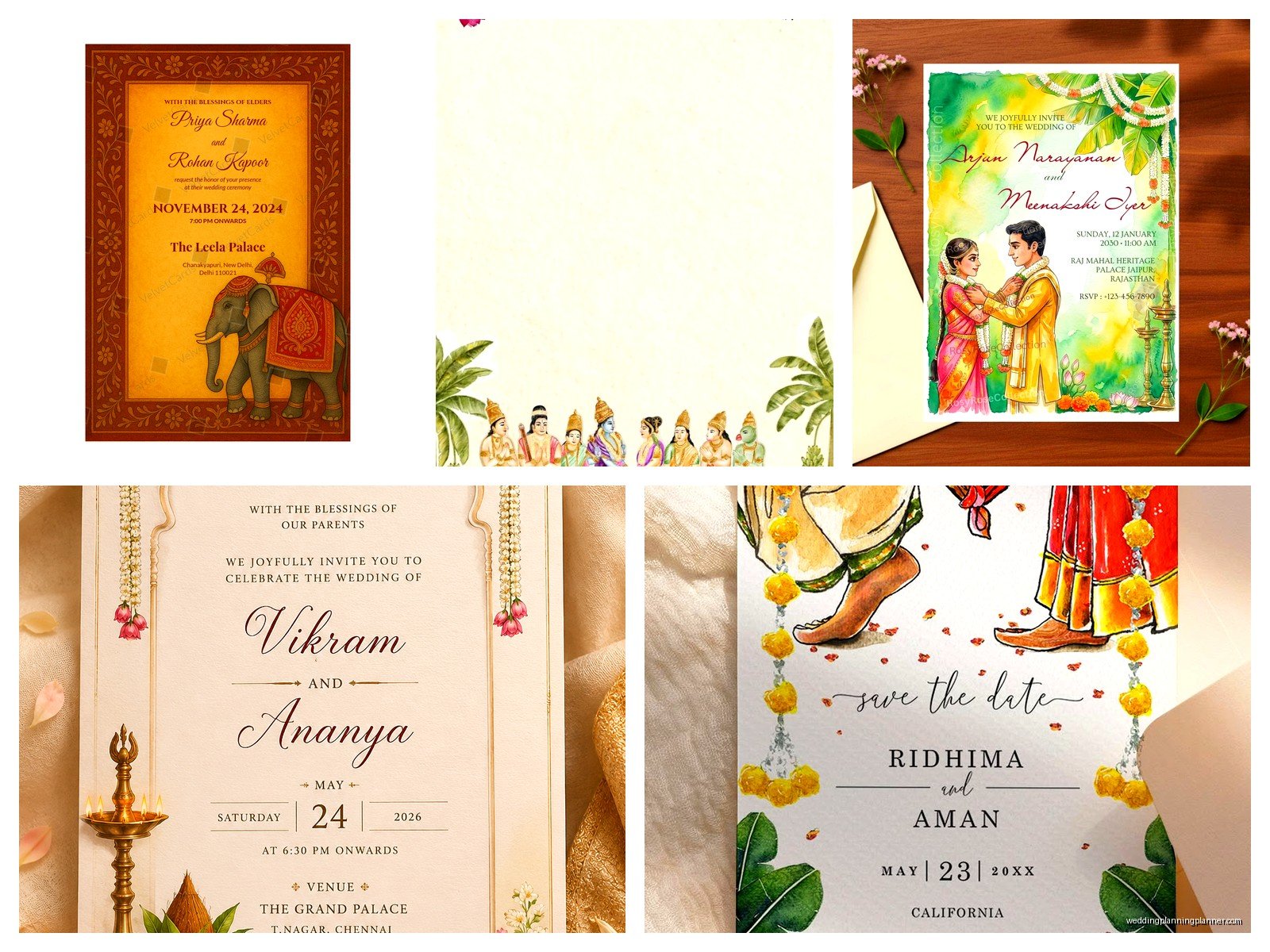
The main card usually features gods and goddesses – Ganesha is super common obviously, but I’ve also seen beautiful designs with Lakshmi and Saraswati. The language matters too. Most families want Tamil, Telugu, Kannada, or Malayalam text alongside English, and you need to make absolutely sure your printer has proper fonts and someone who can proofread. Don’t just trust Google Translate for this stuff.
One thing that really annoys me is when couples try to cram everything onto one card to save money on printing. Like, I get it, weddings are expensive, but your guests need to actually READ the information and know where to show up when. A cluttered card just confuses everyone and then you’re fielding 50 phone calls asking “wait, is the reception at the same venue or…”
Colors and symbolism you should know about
Red and gold are traditional but honestly they’re kinda overdone at this point. I’ve been seeing more couples go with rich jewel tones – deep emerald greens, royal blues, burgundy. These still feel festive and traditional without being exactly like every other South Indian wedding card.
The border designs usually incorporate traditional motifs like paisleys, mango leaves, temple gopuram designs, or kolam patterns. Some families are very particular about this. I had a client whose grandmother insisted on a specific type of paisley pattern that represented their family’s region in Kerala, and we spent HOURS finding a designer who could replicate it properly.
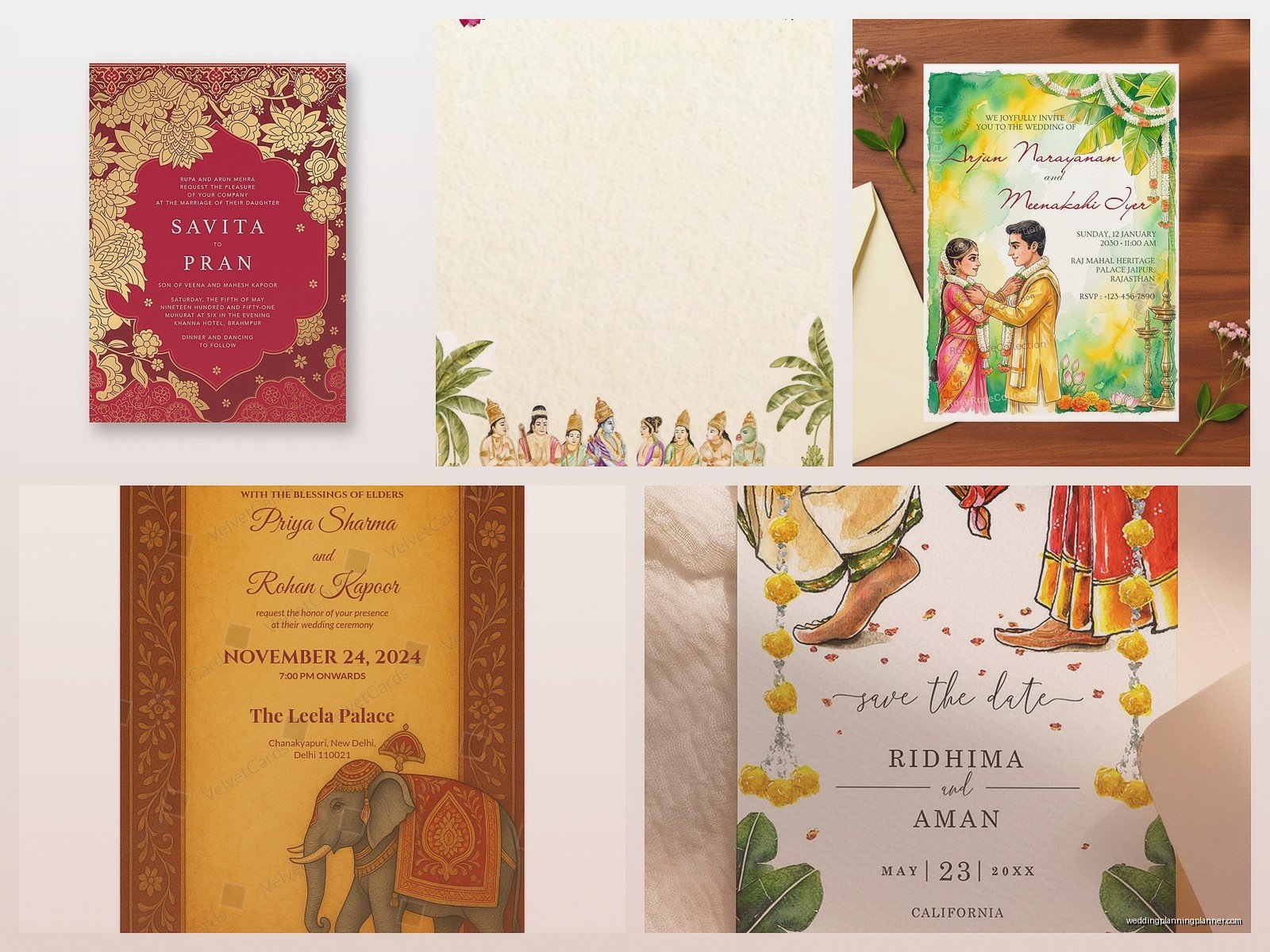
Gold foiling is pretty standard for South Indian cards. You can do rose gold too now which looks really elegant. Laser cutting has become super popular – you’ll see these intricate cutout designs on the card cover that reveal a colored insert underneath. They’re gorgeous but they’re also more expensive and take longer to produce, so factor that into your timeline.
Timeline for ordering (this is important don’t skip this part)
Okay so you need way more time than you think. Like, if you’re planning to hand-deliver or mail these cards 6-8 weeks before the wedding, you should be starting the design process at least 4 months out. That gives you time for:
- Finding and vetting designers or printers (2-3 weeks)
- Getting initial design concepts and revisions (2-3 weeks)
- Finalizing all the text and getting family approval – this takes FOREVER because everyone has opinions (2-4 weeks)
- Printing and production (2-4 weeks depending on complexity)
- Shipping to you (1 week)
- Assembly if you’re doing inserts and envelopes yourself (1 week)
I once had a couple try to do this whole process in 6 weeks total and it was a nightmare. We made it work but I probably lost a year off my life from the stress and my cat Mr. Whiskers definitely noticed I was more irritable because he started avoiding me during work hours.
Where to actually order these things
You’ve got several options and they all have pros and cons. Local South Indian printers in areas with large South Indian communities (like parts of New Jersey, California, Texas) usually have tons of experience and sample books you can flip through. They get the cultural nuances and they often have connections to get rush jobs done if needed.
Online specialty sites like 123WeddingCards, IndianWeddingCard.com, or Parekh Cards have huge selections. You can filter by region and religion which is helpful. The downside is you can’t always see the paper quality in person before ordering, and if there’s an issue, you’re dealing with customer service through email instead of walking into a shop.
Etsy has some really talented independent designers who do custom South Indian wedding cards. This is great if you want something totally unique, but make sure they have experience with the specific format and information that needs to be included. I’ve seen some beautiful designs from Etsy sellers that were missing crucial elements like the star/nakshatra information or didn’t have space for both sets of parents’ names formatted correctly.
High-end custom designers – these are gonna cost you but if budget isn’t your primary concern, working with someone who does bespoke invitation suites is amazing. They’ll do custom illustrations, hand-painted elements, whatever you want. I worked with one couple who had their invitation designed to look like a miniature temple with multiple panels that unfolded. It was stunning but also like $45 per invitation.
What information absolutely needs to be on there
This is where people mess up all the time. You need:
- Both sets of parents’ full names (and sometimes grandparents depending on family preference)
- The couple’s full names – and I mean FULL names, not nicknames
- Date and time of each event – be specific about the muhurtham time for the ceremony
- Venue names and full addresses for each event
- The nakshatra (birth star) information if the family wants it included
- Dress code or attire suggestions for different events
- RSVP information – who to contact and by when
- Accommodation details if you’re having a destination wedding or lots of out-of-town guests
Some families also include a small note about the significance of certain rituals or a timeline of events to help guests who might not be familiar with South Indian wedding customs. This is actually really thoughtful especially if you’re having a mixed crowd.
The whole insert situation
So typically you’ll have the main card in an envelope, and then multiple inserts. I usually recommend having them in different sizes or colors so guests can easily distinguish between the mehendi card, ceremony card, and reception card. Some printers will do a small map insert too which is helpful.
You can get fancy with the assembly – ribbon ties, wax seals, belly bands, boxed invitations. I saw this trend in spring 2023 where couples were doing scroll-style invitations in decorative boxes and honestly while they looked incredible, several guests told me they weren’t sure if they were supposed to keep the box or what… sometimes simpler is better for actual communication purposes even if it’s not as Instagram-worthy.
Budget breakdown so you know what you’re getting into
Basic South Indian wedding cards from online printers: $2-5 per invitation suite. These are usually standard designs with your custom text, maybe one or two color choices.
Mid-range with some customization: $5-12 per suite. Better paper quality, more design options, maybe some foiling or embossing.
High-end custom: $15-50+ per suite. Sky’s the limit really. Custom illustrations, hand-assembly, premium papers, laser cutting, boxed presentations, etc.
Don’t forget to factor in envelopes (sometimes sold separately), postage (these can be heavy with all the inserts), and shipping costs to get them to you. Also order extras – I always tell clients to order at least 15-20 more than their guest count because addresses change, things get lost in the mail, and you’ll want some for your own keepsakes.
Proofreading is not optional I’m serious
Get multiple people to proofread everything before you approve the final proof. And I mean EVERYTHING. Check dates, times, spellings, addresses, phone numbers. Check the Tamil/Telugu/Kannada/Malayalam text if you’re including it – have someone who actually reads that language check it, not just someone who speaks it.
I cannot tell you how many times I’ve seen cards with typos that got printed because everyone assumed someone else had checked it carefully. It’s like when you’re watching a show and you think you know what’s happening but then… wait where was I going with this? Oh right, proofreading.
One trick I use: read everything out loud. Your brain autocorrects when you read silently, but reading aloud helps you catch weird phrasings or mistakes.
Modern vs traditional design choices
There’s been this big shift toward blending traditional elements with modern design aesthetics. You might see a very contemporary minimalist layout but with traditional motifs incorporated subtly. Or modern typography paired with classical color schemes.
Some couples are doing illustrated cards that tell their love story or incorporate elements from both their hometowns. I had a client who met her husband in grad school and they had tiny illustrations of their university campus worked into the border design alongside traditional kolam patterns. It was really personal and sweet.
QR codes are becoming more common too – you can link to your wedding website, RSVP form, or a video message from the couple. Older relatives sometimes find this confusing though, so maybe include traditional RSVP options too.
Environmental considerations if that matters to you
Eco-friendly wedding invitations are definitely a thing now. Seed paper that guests can plant, recycled paper stocks, soy-based inks, digital invitations. For South Indian weddings though, there’s often family expectation around having physical invitations – it’s part of the ritual of personally inviting people.
A compromise I’ve seen work is doing beautiful physical invitations for close family and elders, and digital invites for extended family and friends who are more environmentally conscious. Or using recycled paper but still doing the full traditional format.
Assembly and mailing logistics
If you’re doing this yourself, set aside a whole day or weekend. You’ll need a clean workspace, all your inserts organized, envelopes, any decorative elements, and probably some wine honestly. Get a few friends to help assembly-line style.
For mailing, take a fully assembled invitation to the post office and have them weigh it. You’ll probably need extra postage because of the weight and size. Also those fancy laser-cut cards or ones with ribbon ties might not go through automated sorting, so they might need hand-canceling which costs more.
Hand-delivery is still really common for South Indian weddings, especially for local guests and close family. Some families consider it disrespectful not to personally deliver invitations to elders and very close relatives. Factor this into your distribution plan.
International shipping for guests overseas – start this early. Like, really early. International mail is slow and unpredictable. I usually recommend at least 10-12 weeks before the wedding for international invitations.