
Planning Guides, Style Guide
Wedding Card Wholesale: Design & Ordering Guide
Jun
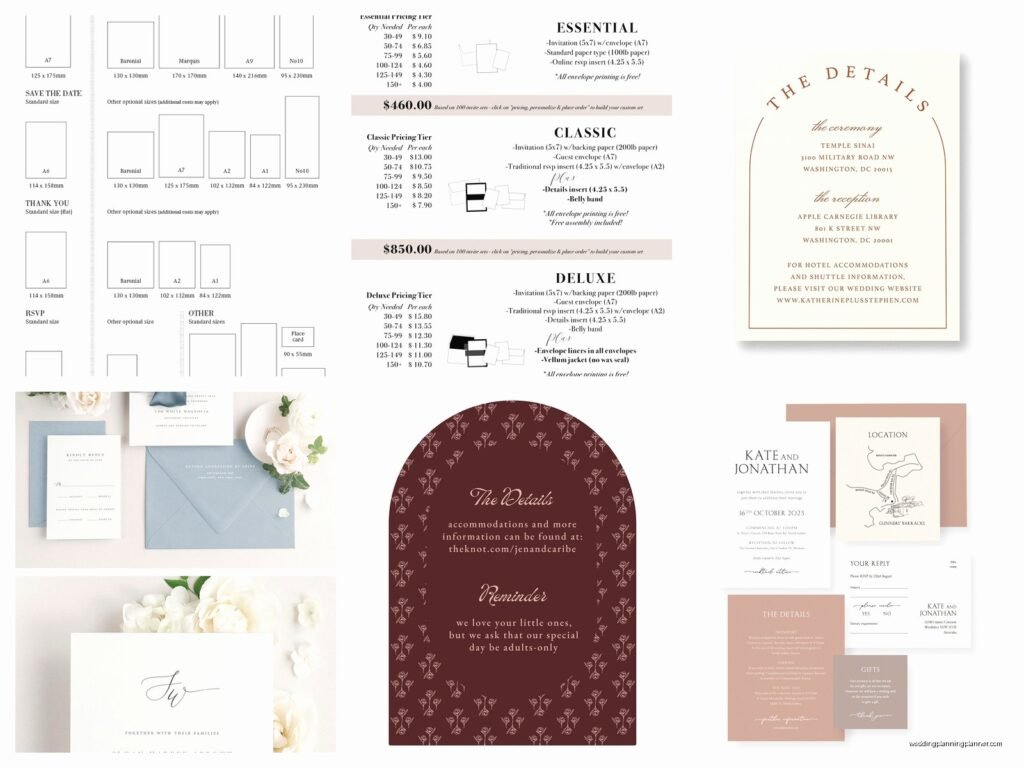
Okay so wedding card wholesale is actually way more complicated than people think
Most couples think they can just order wedding invitations like they’re buying printer paper in bulk and honestly that’s where everything goes sideways. I learned this the hard way back in summer 2021 when I had a bride who wanted 300 invitations and she found some “amazing deal” online that turned out to be… well let’s just say the cardstock felt like napkins from a fast food place.
The thing about wholesale wedding cards is that you’re basically choosing between three routes and each one has its own nightmare potential. You’ve got your true wholesale suppliers who only sell to trade professionals, your semi-wholesale companies that pretend they’re wholesale but really just offer bulk discounts, and then print-on-demand services that call themselves wholesale because they sound fancier that way.
Finding actual wholesale suppliers that won’t ghost you
Real wholesale requires a business license or resale certificate in most cases. Companies like Carlson Craft, Birchcraft, and Checkerboard have been around forever and they only work with verified retailers or wedding planners. You can’t just rock up to their website as a regular person and start ordering.
But here’s what kinda drives me insane – some of these wholesale companies have minimum orders that are absolutely bonkers for individual weddings. Like you might need to order 500 units when your guest list is 150 people. The math doesn’t math, you know?
If you’re a planner like me, you gotta get set up with accounts at 2-3 reliable suppliers. I use Carlson Craft for traditional stuff and then I have accounts with smaller boutique wholesalers for the couples who want something less cookie-cutter. The application process usually takes like a week and they want proof you’re legit running a business.
Design options and customization levels
This is where it gets fun or overwhelming depending on your personality type. Wholesale suppliers typically offer four tiers of customization and the prices jump significantly between each level.
Tier 1: Template designs with text changes only – You pick from their catalog, change names and dates, maybe adjust fonts. Cheapest option, fastest turnaround, but you’re gonna see the same design at three other weddings that season. Prices usually run $0.80-$2.50 per invitation at wholesale.
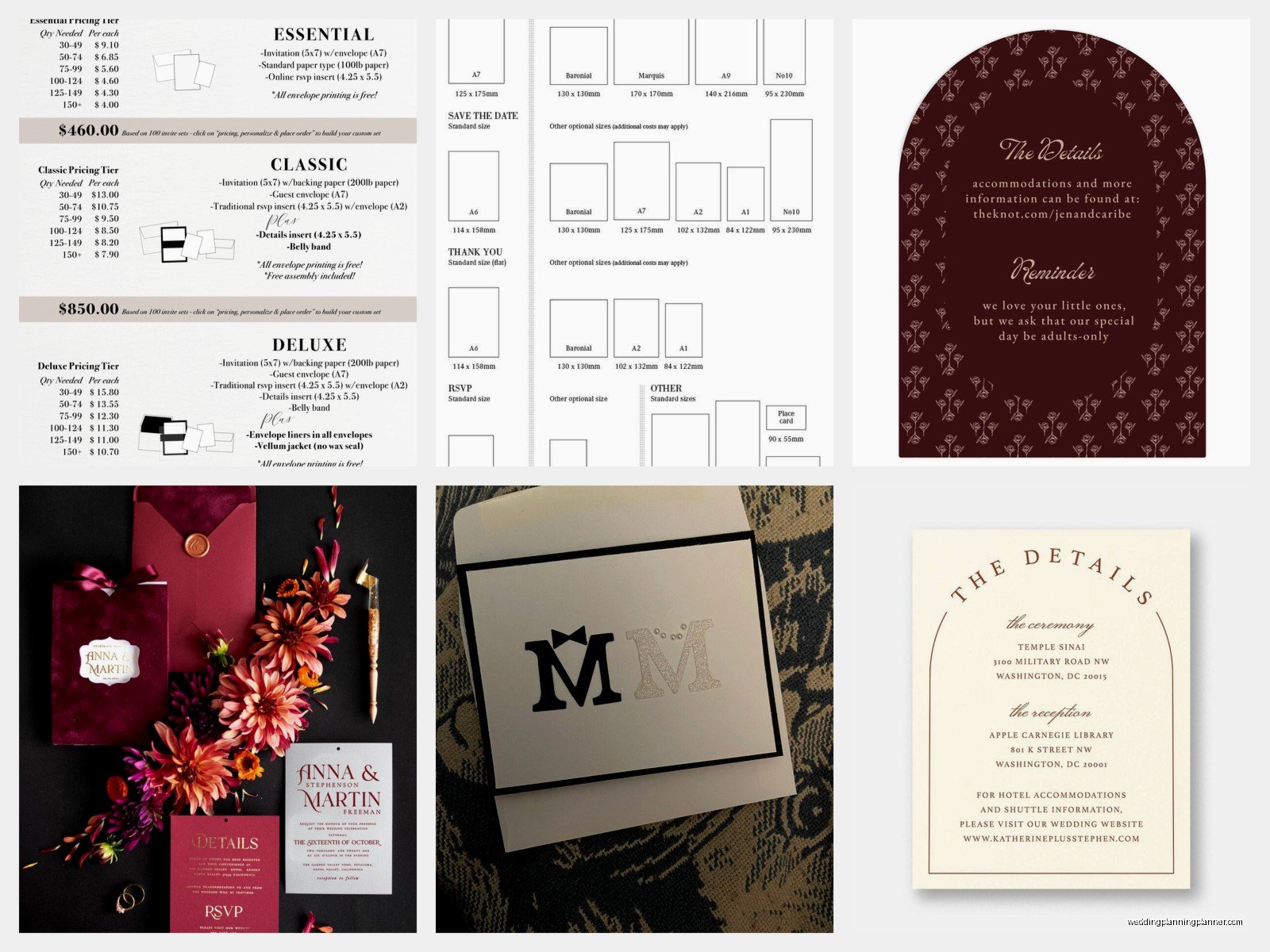
Tier 2: Semi-custom with color modifications – Same templates but you can change ink colors, paper colors, maybe swap out design elements. This is where most of my clients land because it feels custom enough without the custom price tag. Expect $2.00-$4.50 per piece.
Tier 3: Full custom design with their production – You or a designer creates the artwork, they print it. You’re paying for their paper quality and printing expertise but bringing your own vision. Usually $4.00-$8.00 per invitation depending on printing method.
Tier 4: Completely bespoke – This isn’t really wholesale anymore, this is custom stationery design with artisan production. We’re talking letterpress, hand-torn edges, wax seals, the whole Pinterest fever dream. Can easily hit $15-$30 per invitation suite.
I had this couple in spring 2023 who wanted letterpress invitations but had a $600 total budget for 200 invitations and I just… the conversation got awkward real fast because that’s like $3 per invite and letterpress setup fees alone are usually $200-$300.
Paper weight and quality because this actually matters
Nobody tells you this but paper weight is where cheap wholesale goes wrong. Standard cardstock is 80lb cover weight and it’s fine I guess but it feels flimsy. You want at minimum 100lb cover, preferably 110lb or higher for the actual invitation card.
Here’s the weights broken down:
- 65-80lb cover: Feels cheap, bends easily, screams “we ordered these last minute online”
- 100lb cover: Decent quality, sturdy enough, this is your sweet spot for budget-conscious couples
- 110-130lb cover: Premium feel, substantial weight, makes the right impression
- 14pt or 16pt cardstock: Super thick, almost too thick sometimes, luxury tier
And then there’s the finish – matte, glossy, linen, felt, pearlescent, recycled. My cat knocked over my sample book last week and I’m still finding little paper swatches under the couch but anyway, each finish photographs differently and feels different in hand.
Matte is classic and takes printing beautifully. Glossy can look cheap unless you’re doing photo invitations. Linen texture is very traditional wedding vibes. Pearlescent is having a moment right now but it doesn’t work well with certain printing methods which brings me to…
Printing methods and why this affects your wholesale choices
Digital printing is the most common for wholesale and it’s perfectly fine for most weddings. It’s cost-effective, quick turnaround, handles full color beautifully. The quality has gotten really good in recent years so unless someone’s examining your invitation with a magnifying glass they won’t know it’s digital.
Thermography is that raised printing that looks like engraving but isn’t. It’s a wholesale staple because it feels fancy without the engraving price tag. The text is slightly raised and shiny. Some people love it, some people think it’s trying too hard. I’m neutral on it honestly.
Offset printing is what you’d use for huge quantities – like 1000+ invitations. The setup cost is high but the per-unit cost drops significantly. Most couples won’t need this unless they’re inviting their entire hometown.
Letterpress, foil stamping, and engraving are the premium methods and they’re not really “wholesale” in the traditional sense even though some wholesale companies offer them. Letterpress creates that gorgeous debossed impression, foil stamping adds metallic elements, and engraving is the traditional fancy method where the text is… okay I’m getting into the weeds here but basically these methods have longer lead times and higher minimums.
The actual ordering process and timeline
So you’ve picked your supplier and your design and now you gotta actually place the order which is where timing becomes critical. Most wholesale suppliers need 2-3 weeks for production after you approve the proof, then add shipping time.
Here’s the timeline I always recommend:
- 6-8 months before wedding: Start looking at designs and samples
- 5-6 months before: Finalize guest list numbers (you can adjust slightly later)
- 4-5 months before: Place your order with the wholesale supplier
- 3-4 months before: Receive invitations and start addressing
- 2-3 months before: Mail invitations
But real talk, half my clients ignore this timeline and then we’re scrambling at 8 weeks out trying to find a supplier who does rush orders. Rush fees are usually 20-30% of your order total so just… don’t do that to yourself or your budget.
Proofing is not optional I don’t care what you think
Always, ALWAYS order a printed proof before approving the full run. Digital proofs on your screen look different than the actual printed product. Colors shift, fonts can look different sizes, and I once had a bride approve a digital proof that had her fiancé’s name spelled wrong and didn’t catch it until 200 invitations showed up.
Most wholesale suppliers charge $15-$30 for a physical proof but it’s the best money you’ll spend. You can check the actual paper quality, the print colors, the overall feel. If something’s off, you can make changes before they print 300 units.
Some suppliers offer free digital proofs and charge for physical ones. Some include one physical proof in your order cost. Just ask upfront so there’s no surprises.
Quantities and the overorder situation
Here’s something annoying that nobody explains clearly – you should always order 10-15% more invitations than your guest count. Not per household, but like… okay so if you’re inviting 100 households, order at least 110-115 invitations.
Why? Because:
- You’ll mess up addressing some envelopes (everyone does)
- Guests will lose their invitation and ask for another one
- You’ll want keepsakes for parents, grandparents, yourself
- Last minute additions to the guest list happen more often than you’d think
- Some might arrive damaged in the mail
The cost difference between 100 and 115 invitations at wholesale pricing is usually pretty minimal compared to having to place a rush reorder later. And some wholesale companies have minimum reorder quantities like 25 pieces, so you can’t just order “3 more.”
What’s typically included in wholesale invitation suites
Wholesale pricing usually breaks down per piece, not per suite, which confuses people. A complete invitation suite might include:
- The main invitation card
- Reception card (if ceremony and reception are different locations)
- Response card
- Response envelope
- Accommodations card
- Direction/map card
- Outer envelope
- Inner envelope (less common now but traditional)
When you see wholesale pricing like “$1.50 per invitation,” that’s usually JUST the main card. Each additional insert is priced separately. So your actual cost per complete suite might be $4-6 when you add everything up.
This is where couples get sticker shock because they thought they were paying $1.50 total and suddenly the quote is $800 for 150 suites. The math is mathing, it’s just that nobody explained what “per piece” meant.
Envelope addressing options through wholesale
Some wholesale suppliers offer envelope printing services and some don’t. If they do, you’re usually looking at $0.50-$1.50 per envelope for digital printing of guest addresses. It’s clean, it’s fast, it’s practical.
But it’s also kinda impersonal? Like I know we’re all busy and hand-addressing 200 envelopes sounds like torture (because it is), but there’s something nice about… nevermind, if you want to print them, print them. Nobody’s judging. Okay some people are judging but those people have too much free time.
Calligraphy addressing is a separate service that you’d hire out independently. It’s not really part of wholesale ordering but it’s gonna run you $2-5 per envelope depending on the calligrapher’s rates and style. Beautiful, but expensive.
Common wholesale ordering mistakes that will haunt you
Not ordering samples first is the biggest one. Most wholesale companies sell sample packs for $10-20 that include paper samples and design examples. Order these. Touch them. Look at them in different lighting. I cannot stress this enough.
Forgetting about return address printing. You need your return address on the outer envelope and on the response envelope. Some people hand-write these, some get a custom stamp (cute and reusable), some have them printed. Budget for this.
Underestimating assembly time. Even if you order pre-assembled suites (which costs extra), you still need to stuff envelopes, add any belly bands or ribbon, seal everything, add postage, etc. For 200 invitations, plan for like 4-6 hours of assembly time. Put on a good show, pour some wine, make it an event.
Not weighing a complete invitation before ordering postage. Wedding invitations are usually over 1 oz which means extra postage. Take a fully assembled invitation to the post office and have them weigh it before you buy stamps. And if you’re using wax seals or thick ribbon, those might not go through sorting machines and need hand-canceling which is another fee.
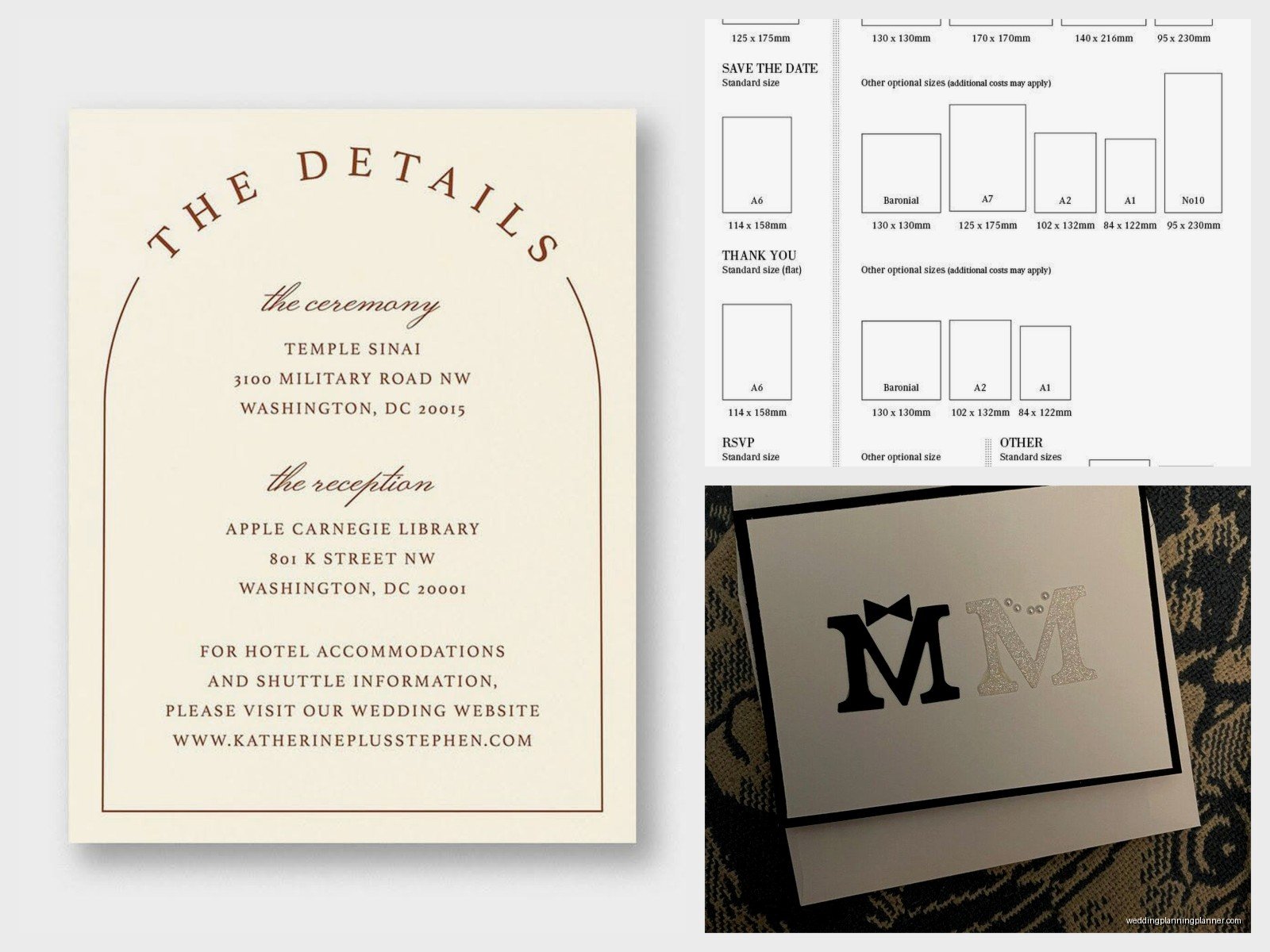
Choosing a weird envelope size just because it looks cool. Standard sizes (A7, A6, 5×7) are cheaper for postage. Non-standard sizes get upcharged by USPS and might not fit in mailboxes properly.
Working with wholesale reps and customer service
If you’re ordering as a professional, you’ll probably get assigned a sales rep. Use them. They know production schedules, they can expedite things if needed, they can tell you which designs are backordered or discontinued.
For couples ordering directly through semi-wholesale sites, customer service response times vary wildly. I’ve seen companies respond in 20 minutes and I’ve seen companies take 5 days to answer a simple question. Read reviews specifically about customer service before committing.
And get everything in writing – your quote, your production timeline, your shipping date. Screenshots are your friend. I had a situation where a supplier insisted they quoted $2.50 per piece and I had an email showing $1.85 and that email saved my client like $200.
Alternative wholesale options worth considering
Print-on-demand services like Minted, Zazzle, or Vistaprint aren’t traditional wholesale but they offer bulk discounts that can be competitive. The quality has gotten pretty decent and the design options are massive. You’re trading that trade professional pricing for convenience and variety.
Etsy shops sometimes offer wholesale pricing if you message them directly. I’ve had good luck with independent designers who are willing to work out bulk pricing for larger orders. Just make sure they can handle your quantity and timeline.
Local print shops can be surprisingly affordable for wedding invitations if you provide print-ready files. You might pay $1-3 per piece for quality printing on good cardstock. Building a relationship with a local printer is actually really valuable as a planner because rush jobs happen and they can sometimes squeeze you in.
Hybrid approach – order your main invitations wholesale and DIY the extras like detail cards or thank you notes. This cuts costs while still maintaining quality where it matters most. Nobody’s scrutinizing your accommodations card the way they look at your actual invitation.
The real cost breakdown you should expect
For a standard wedding with 150 guests (so roughly 120-130 households):
- Invitations at wholesale: $300-$600 depending on customization level
- Additional inserts: $100-$200
- Envelopes with printing: $75-$150
- Postage: $100-$175 (assuming extra postage needed)
- Save the dates if ordered together: $150-$300
Total: $725-$1,425 for a complete invitation suite at wholesale pricing. That’s significantly less than retail where you might pay $2,000-$3,000 for the same thing.
But also remember you might need thank you cards, programs, menus, place cards, and other stationery. Some couples bundle everything together for better wholesale pricing, others just order invitations wholesale and DIY the rest.
The wholesale advantage is real but it requires planning ahead, knowing what you want, and being comfortable with some level of DIY assembly. If you want someone to handle everything soup to nuts, you’re probably better off with a full-service stationer who’ll charge more but also manage the whole process. There’s value in both approaches depending on your budget, timeline, and how much you enjoy or tolerate this kind of project management stuff.