
Planning Guides, Style Guide
South Asian Wedding Planner: Professional Services Guide

Oct
What You’re Actually Getting Into With South Asian Wedding Planning
Okay so South Asian weddings are absolutely nothing like the typical American weddings I started with back in 2015. I mean, you’re looking at multiple events over several days, hundreds of guests minimum, and honestly the complexity level is just… it’s a completely different category of work. When couples first reach out to me they’re usually like “we want help with our wedding” and I have to explain that we’re not talking about a wedding, we’re talking about potentially five or six separate events that all need their own planning.
The professional services you need to offer as a South Asian wedding planner are way more extensive than regular wedding planning. You’ve gotta understand the cultural significance of each ceremony, the religious requirements, the family dynamics which honestly can get really complicated, and the sheer logistics of coordinating that many events.
The Core Services Breakdown
First off, you need to position yourself as either a full-service planner or a day-of coordinator, but I’m gonna be real with you – day-of coordination for South Asian weddings is kinda misleading because you’re still doing weeks of prep work. I learned this the hard way in spring 2023 when I took on what was supposed to be a “simple coordination” job for a three-day Gujarati wedding and ended up basically doing full planning because nobody had actually organized anything properly.
Pre-Wedding Event Planning
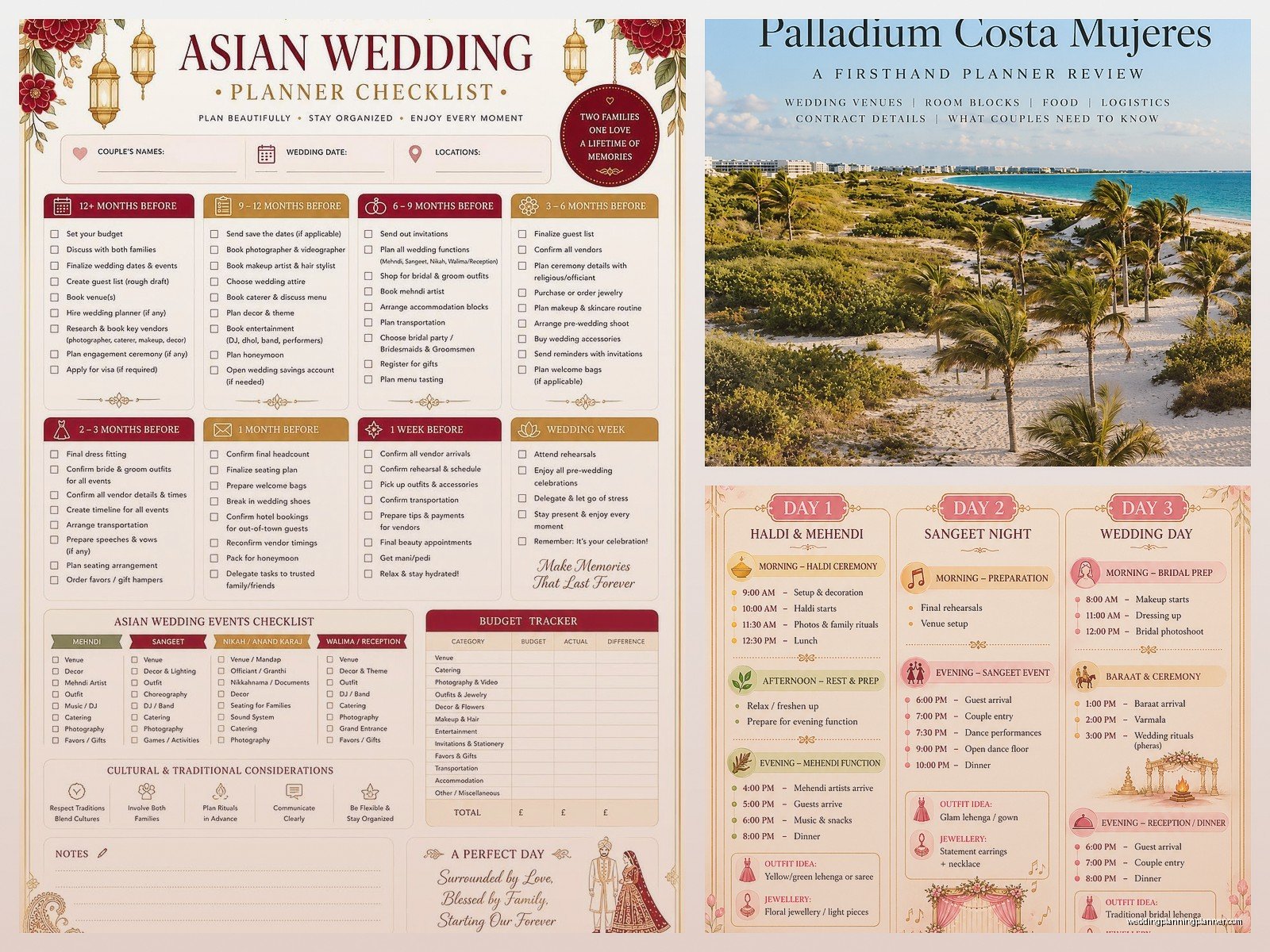
You’re looking at coordinating things like the Mehndi ceremony, Sangeet night, Haldi ceremony, and sometimes a Garba night depending on the regional background. Each one needs its own venue (sometimes), its own decor scheme, entertainment, catering, and timeline. The Mehndi alone can be a 6-hour event with multiple mehndi artists, specific seating arrangements for the family, and usually some kind of performance or music setup.
For the Sangeet, you’re basically planning a full concert and dance competition. Families rehearse for months and you need to coordinate tech rehearsals, sound systems, lighting that actually works with the performances, and manage like 15 different family groups who all want to perform but also all hate each other’s song choices or whatever drama is happening that week.
Main Wedding Day Coordination
The actual wedding ceremony requires you to understand whether it’s a Hindu, Sikh, Muslim, or other religious ceremony because they’re all completely different. For Hindu weddings you’re working with a pandit who has specific requirements for the mandap setup, the sacred fire, the timing based on astrological considerations… and honestly some pandits are super particular about everything being exactly right.
I remember this one pandit in summer 2021 who refused to start the ceremony because the mandap pillars were 3 inches too far apart according to some measurement system I’d never heard of and we had to literally rebuild part of the structure while 400 guests waited. That was fun.
You also need to coordinate the Baraat – the groom’s processional – which can involve a horse, a vintage car, a fancy sports car, or once I had a groom arrive on an elephant which required permits I didn’t even know existed. The Baraat can last anywhere from 20 minutes to 2 hours depending on how much the families want to dance in the streets, and you need to manage the dhol players, the dancing, the traffic control, and making sure the groom actually gets to the venue eventually.
Vendor Management Specifics
The vendor coordination for South Asian weddings is honestly where you earn your money. You’re not just booking a photographer and a florist and calling it done.
Catering and Menu Planning
South Asian wedding catering is its own beast. You’re usually working with specialized caterers who understand regional cuisine – North Indian, South Indian, Pakistani, Bengali, Gujarati – they’re all different. You need to coordinate multi-course meals, live food stations, chai and coffee stations, sometimes separate vegetarian and non-vegetarian kitchens if the family is particular about that.
The tastings alone take forever because you’re sampling like 30 different dishes and the families have opinions. Everyone’s mom makes the best biryani obviously, so whatever the caterer makes is never gonna be quite right, but you work with what you’ve got. I’ve learned to just let the aunties complain and then gently redirect them to making actual decisions.
Decor and Design Services
South Asian wedding decor is where budgets can get absolutely wild. You’re talking about elaborate mandap designs, sometimes multiple stage setups for different events, floral arrangements that use thousands of flowers, draping, lighting design that completely transforms spaces, and props for photo ops.
You need to work with decor companies that specialize in this – regular wedding decorators usually can’t handle the scale or style. I partner with about three main decor companies now who understand that when I say I need a mandap, I mean something structurally sound that can support hanging floral arrangements and looks good from every angle for the seven hours people will be staring at it.
My cat actually knocked over an entire mandap model during a client meeting once and we all just… pretended it didn’t happen while she walked away like nothing occurred, which honestly was the vibe for that whole wedding anyway.
Photography and Videography
You need to coordinate teams, not just individual photographers. Most South Asian weddings have at least two photographers, two videographers, sometimes a drone operator, and often a separate team for candid shots versus traditional portraits. They need to understand the key moments – the phere, the bidaai, the jaimala – and position themselves correctly without interfering with the ceremony.
The shot list for a South Asian wedding is like 400 items long because you need photos with every possible family combination. Both sides of the family, then just bride’s side with subcategories of immediate family, extended family, mom’s side, dad’s side… it goes on forever and you need to manage this efficiently or you’ll be doing photos until midnight.
Timeline Management
Creating timelines for South Asian weddings requires you to basically throw out everything you learned about regular wedding timelines. Nothing starts on time, everything runs over, and you need to build in massive buffers while also somehow keeping things moving.
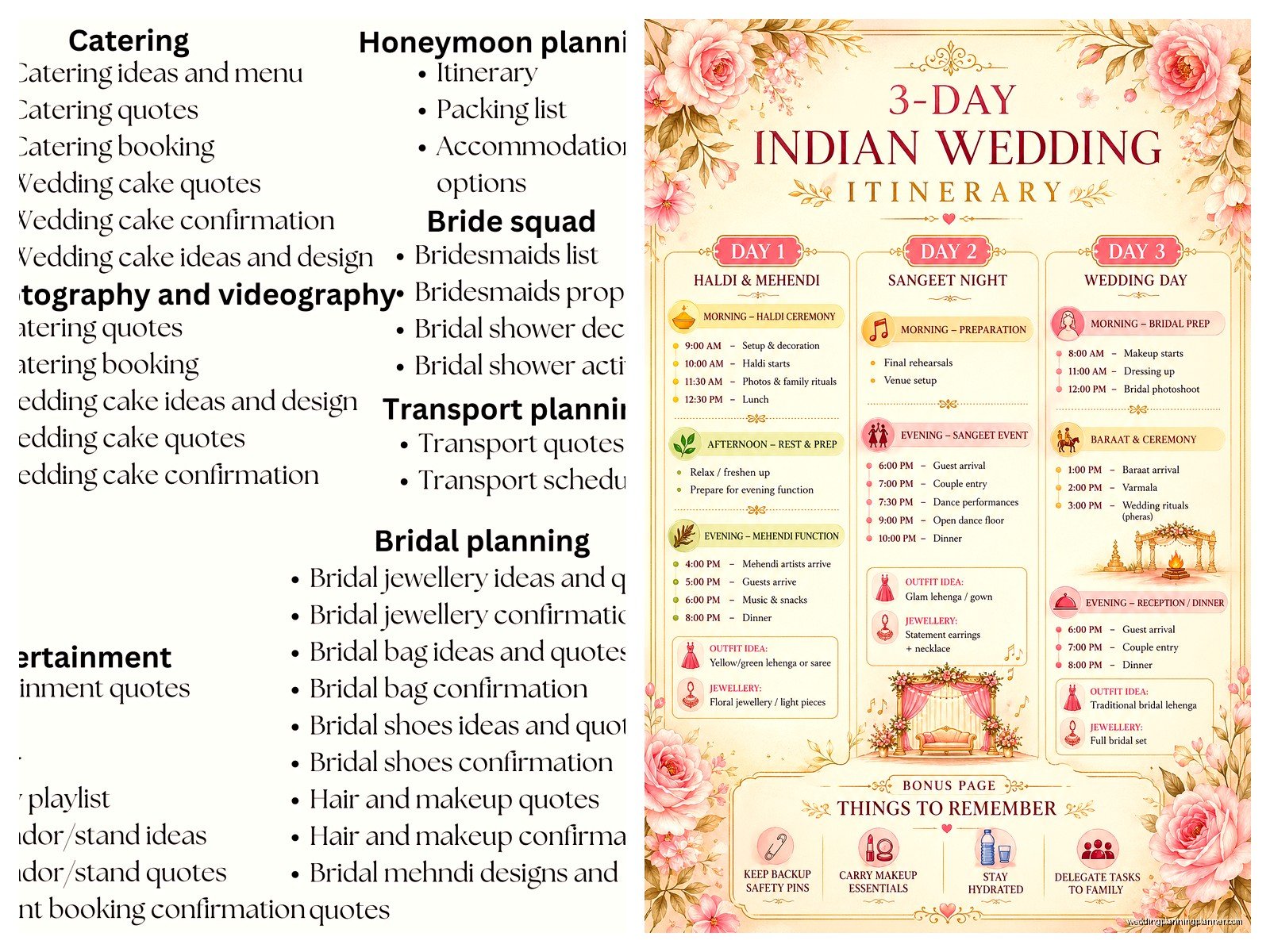
For a typical wedding day, I usually create a realistic timeline and then a “what we tell the family” timeline that’s about 30-45 minutes earlier for everything. Even then, we’re usually running late. The baraat is supposed to arrive at 3pm? Tell them 2pm, and they’ll show up at 3:30pm. It’s just how it works.
You also need to coordinate between multiple venues sometimes – I’ve had weddings where the Mehndi is at someone’s house, the Sangeet is at a banquet hall, and the wedding and reception are at a hotel. Moving 300+ people between locations requires actual logistics planning with transportation coordination and… it’s a whole thing.
Family Dynamics and Cultural Consulting
This is gonna sound weird but like half your job is actually family therapy and cultural mediation. You get families who are trying to blend different regional traditions, or parents who want a traditional wedding while the couple wants something modern, or families from different countries who have different expectations about how ceremonies should go.
I position this as “cultural consulting” in my service packages because it sounds more professional than “preventing family arguments and gently explaining to aunties why their ideas won’t work.” You need to understand the significance of different rituals so you can help families decide what to include, what to modify, and what to skip without it becoming a huge issue.
What really annoys me is when families wait until like two weeks before the wedding to mention some crucial cultural requirement that affects the entire setup. “Oh by the way, we need to do a coconut breaking ceremony that requires a specific type of stone platform” – okay great, would’ve been nice to know that four months ago when we were planning the ceremony layout.
Budget Management and Pricing
South Asian weddings typically have higher budgets than average American weddings, but the money also goes way further because you’re planning multiple events. I usually price my services either as a percentage of the total budget (usually 10-15% for full planning) or a flat fee based on the number of events and guest count.
For a typical three-day wedding with 300-400 guests, you’re looking at budgets that range from $75,000 on the lower end to $300,000+ for luxury weddings. Your planning fee should reflect the complexity – I charge more for South Asian weddings than regular weddings because the time investment is easily triple.
You need to help clients understand where their money is going and prioritize. Some families want to spend everything on decor, others on food, others on entertainment. There’s no right answer but you gotta help them allocate the budget across all the events effectively.
Service Package Structures
I offer three main packages: Full Planning (involved from day one, 12-18 months out), Partial Planning (coming in about 6 months out to execute their vision), and Day-Of Coordination (really more like month-of for South Asian weddings). Each package scales based on number of events.
Full planning includes unlimited meetings, all vendor sourcing and contract negotiation, complete design and decor planning, timeline creation for all events, rehearsal coordination, and full day-of management with my assistant. Partial planning cuts out some of the early vendor sourcing and assumes they’ve already booked some key vendors. Coordination is just making sure everything they’ve planned actually happens smoothly.
Vendor Network Development
You absolutely need to build a strong network of South Asian wedding vendors. This isn’t something where you can just use your regular vendor list – you need caterers who understand the cuisine, decorators who can execute the aesthetic, DJs who have the right music library, and hair/makeup artists who know how to work with South Asian skin tones and can do traditional styling.
I spend a lot of time attending South Asian bridal shows, networking in the community, and actually going to other planners’ weddings (when invited) to see how different vendors perform. Your reputation depends heavily on your vendor recommendations, so you can’t just refer anyone.
Building relationships with venues that understand South Asian weddings is crucial too. You need places that allow outside catering (many South Asian families want specific caterers), don’t have noise restrictions that’ll shut down the Sangeet at 10pm, and have kitchen facilities that can handle the cooking requirements for this type of cuisine.
The Reality of Multi-Day Event Coordination
When you’re coordinating a multi-day wedding, you’re basically living with this family for a week. I’m on-site for every event, usually arriving 3-4 hours before each one to oversee setup, and staying until the last guest leaves. For a three-day wedding, that’s essentially 60-70 hours of actual event time, plus all the prep work.
You need a good team – I usually bring at least one assistant for smaller weddings and two or three for larger ones. We divide responsibilities: someone manages vendors and setup, someone handles family coordination and timeline, someone troubleshoots issues as they come up, and someone manages the couple directly so they’re not stressed about logistics.
The physical stamina required is no joke. I’ve had weekends where I’m on my feet for 14 hours a day, three days straight, in heels, in summer heat, managing crisis after crisis while smiling and making sure the families think everything is going perfectly according to plan. You gotta really love this work to sustain it because it’s… I mean there’s a reason I started doing yoga and actually meal prepping during wedding season or I’d just collapse.
Specialized Knowledge Areas
To really succeed as a South Asian wedding planner, you need to educate yourself constantly. I’ve taken workshops on different regional traditions, attended religious ceremonies to understand the flow, worked with cultural consultants, and honestly just asked a lot of questions to families and vendors over the years.
Understanding the symbolism behind different rituals helps you explain to vendors why certain things matter. Like why the mandap faces a certain direction, why certain colors are avoided or preferred, why timing matters for certain ceremonies – this knowledge makes you more valuable to clients and helps you anticipate their needs before they even express them.
I also stay updated on trends in South Asian weddings – like right now everyone wants those fancy LED dance floors and cinematic highlight videos and Instagram-worthy installations. Trends shift sorta like regular weddings but with cultural elements mixed in, and you need to know what’s current while also respecting tradition.
The legal requirements are important too – marriage license procedures, officiant requirements, understanding which ceremonies are legally binding versus purely religious or cultural. I always make sure couples actually do the legal paperwork correctly because I’ve heard horror stories of couples who did beautiful ceremonies but forgot to actually file their marriage license properly and had to deal with legal issues later.
