
Planning Guides, Style Guide
The Wedding Invitation: Design & Ordering Guide
Jun
Okay so wedding invitations are basically the first real impression your guests get
And honestly? They’re way more complicated than people think. Like you can’t just pick something pretty on Etsy and call it a day—well, you can, but there’s gonna be drama if you don’t think through the actual details first.
Start with your timeline because this is where everyone screws up. You need invitations in guests’ hands 6-8 weeks before the wedding. That means you’re working backward from there. Add 2-3 weeks for printing and shipping (more if you’re doing fancy stuff like letterpress or foil stamping). Then add another week or two for proofing and revisions because I promise you’ll find a typo on the first proof. So realistically, you’re starting this process 10-12 weeks out, maybe even 14 if you’re doing save-the-dates too.
Save-the-dates should go out 6-9 months before, or even earlier for destination weddings. I had this couple in spring 2023 who sent their save-the-dates only 3 months before their Italy wedding and then were shocked—literally shocked—when half their guest list already had conflicts. Like… what did you expect?
Figure out your actual guest count first
Don’t design anything until you know how many you’re ordering. I see people fall in love with a $15 per invitation suite and then realize they need 200 of them. That’s $3,000 just on invitations. Add postage (which is NOT cheap anymore, especially if your invites are heavy or oversized), and you’re looking at serious money.
The breakdown most people don’t think about: you need one invitation per household, not per person. So a family of four gets one invite. But you’ll also want extras—order at least 15-20 more than you think you need for keepsakes, mistakes, and last-minute additions. Trust me on this.
The actual design part which is kinda overwhelming
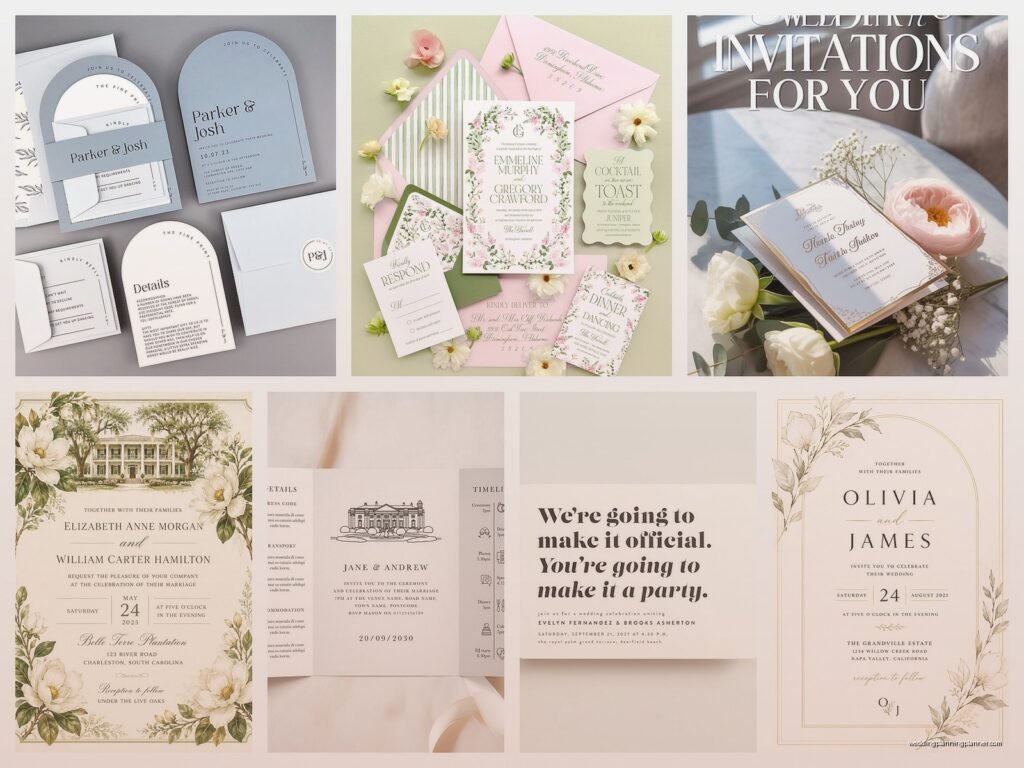
Your invitation suite usually includes several pieces and this is where it gets expensive fast:
- The main invitation (the big one with ceremony details)
- RSVP card and envelope
- Reception card if ceremony and reception are different locations
- Details card for hotel blocks, website, dress code, whatever
- Outer envelope
- Inner envelope (optional, kinda old-fashioned now but some people love them)
You don’t need all of these. Honestly, I usually tell couples to skip the inner envelope unless they’re doing a super formal wedding. It’s extra cost for not much benefit.
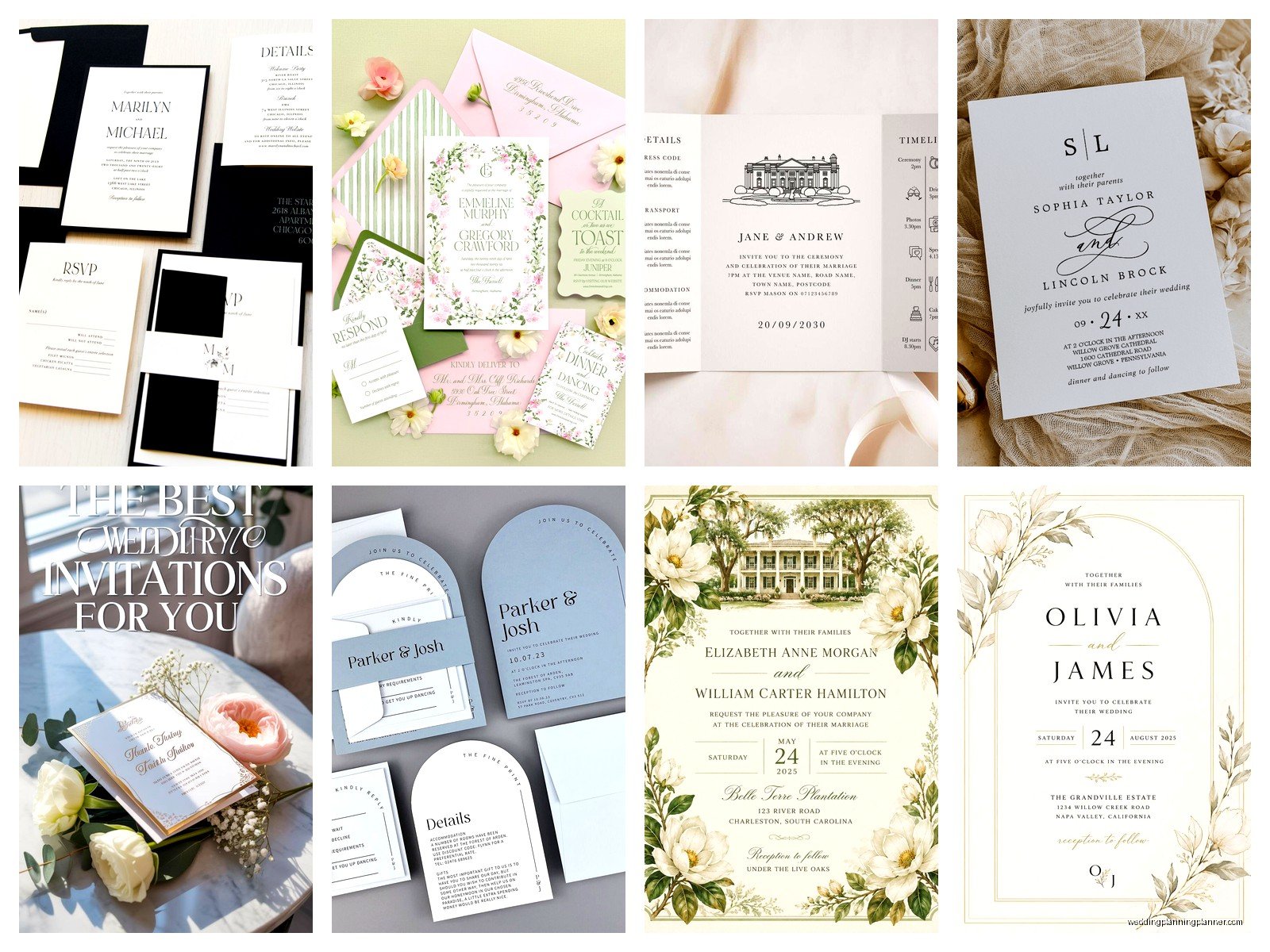
Design-wise, you want something that matches your wedding vibe but isn’t so trendy it’ll look dated in photos later. This is where I got annoyed with the whole pampas grass explosion—like every invitation in 2021 had pampas grass and now they all look super dated already. Just saying.
Colors and fonts matter more than you think
Pick 2-3 colors max. More than that and it looks chaotic. Your fonts should be readable—I cannot stress this enough. I’ve seen invitations with such swirly script fonts that guests literally couldn’t read the address or time. You can do fancy script for names or headers but keep the actual information in something clean.
And test your colors! What looks good on a screen might print totally different. Most online companies will send you paper samples, and yeah it costs like $10-20 but it’s worth it. I learned this the hard way when a “dusty blue” came out looking straight-up grey and my bride almost had a breakdown.
The information you actually need to include
This is the practical part that people forget when they’re busy choosing pretty borders. Your invitation needs:
- Full names (decide if you’re doing formal names or not—like “William” vs “Will”)
- Date spelled out (no numbers, looks tacky)
- Time spelled out (and specify if it’s AM or PM because people are dumb, sorry but they are)
- Full venue name and city/state
- Dress code if it’s not obvious
- Your wedding website URL
On your RSVP card you need a clear deadline (make it 2-3 weeks before your actual catering deadline), space for names, meal choices if you’re doing a plated dinner, and a pre-stamped return envelope because if you make people find their own stamp, half of them won’t send it back.
The details card is where you put everything else—hotel information, transportation, registry info if you must (though I prefer this just on the website), and any other logistics. Don’t cram this onto the main invitation, it looks cluttered.
Wording is weirdly political
Traditional wording has the bride’s parents as hosts (“Mr. and Mrs. John Smith request the honour of your presence…”) but like, that’s not everyone’s situation anymore. Divorced parents? Both sets paying? You’re paying for it yourselves? There’s different wording for all of it.
If both families are hosting: “Together with their families, Sarah and Jake…”
If you’re hosting yourselves: “Sarah Jones and Jake Miller invite you to celebrate their wedding…”
Honestly this is where I spend so much time with couples because family drama comes out. I had a bride whose parents were divorced and remarried and she wanted to include all four parents on the invitation and it took us like three weeks to get wording that didn’t offend anyone. Fun times.
Where to actually order these things
You’ve got options and they all have pros and cons:
Online companies (Minted, Zola, Paperless Post, etc.): These are easy and have good templates. Prices range from affordable to expensive depending on printing method. They’re reliable, ship fast, and customer service is usually decent. The downside is your invitation might look similar to other weddings if you use a popular template.
Local stationery designers: More expensive but you get custom work and can see samples in person. You’re supporting small business which is nice. Timeline can be longer though, and if you need changes it’s more complicated than just editing online.
Etsy: Hit or miss honestly. Some Etsy designers are incredible and affordable. Others… not so much. Read reviews carefully. Make sure you understand what you’re buying—is it a template you print yourself? A PDF they customize? Actual printed invitations? Communication can be slower.
Print-it-yourself: Cheapest option if you’ve got design skills or buy a template. You can print at home on nice cardstock or use a print shop. Just know it’s time-consuming and you gotta make sure everything’s aligned correctly.
Printing methods because apparently this matters
Digital printing is the standard—looks good, costs less, works fine for most people. It’s what online companies usually use.
Letterpress is that fancy pressed-into-the-paper look. Gorgeous but expensive, like $1,500-3,000 for 100 invitations. Takes longer to produce too.
Foil stamping adds metallic or colored foil. Pretty but adds cost—usually $200-500 extra depending on how much foil you use.
Thermography creates raised printing that looks kinda like engraving. Middle-ground price option.
I personally think digital printing has come so far that unless you’re doing a very formal wedding or you just really love the look of letterpress, save your money for something else. But that’s just me.
Addressing envelopes is its own nightmare
You can handwrite them (time-consuming but personal), print labels (easy but looks cheap honestly), print directly on envelopes (better than labels), or hire a calligrapher (beautiful but expensive—like $3-5 per envelope).
There’s also digital calligraphy which is a middle option—looks hand-done but it’s printed. Costs less than real calligraphy.
Get your addresses early. Like, start collecting them as soon as you’re engaged because hunting down addresses later is annoying. Make a spreadsheet. Include full formal names even if you call them by nicknames.
And learn proper etiquette for addressing—married couples are “Mr. and Mrs. John Smith” traditionally, but lots of women keep their names now so it’s “Mr. John Smith and Ms. Sarah Jones.” Unmarried couples living together both get names on the envelope. Kids over 18 get their own invitation even if they live at home.
The postage situation that nobody warns you about
This drives me crazy because couples never budget for it properly. A regular Forever stamp is fine for a basic flat envelope under 1 ounce. But if your invitation suite is thick, has multiple cards, includes a ribbon, or is square-shaped, you need extra postage.
Square envelopes cost more to mail because they can’t go through automated sorting. Anything over 1 ounce needs additional stamps. Take a fully assembled invitation to the post office and have them weigh it BEFORE you buy 150 stamps.
Also those pretty vintage stamps everyone uses for weddings? They’re real stamps but you usually need multiple stamps to meet postage requirements, and tracking down enough of them is a pain. I spent a whole Saturday in summer 2021 with a bride going to different post offices looking for specific botanical stamps because she needed 200 of them. My cat was so mad I was gone all day… anyway.
Proofing is where you catch disasters
When you get your proof, don’t just glance at it. Read every single word out loud. Check spelling of names, dates, times, addresses. Make sure AM/PM is correct. Verify the venue address with Google Maps because I’ve seen wrong addresses printed more than once.
Have at least two other people proofread it. You’ll miss stuff because you’ve looked at it too many times. Common mistakes I see: wrong year (people accidentally put 2024 instead of 2025), misspelled names, wrong venue, time zones not specified for destination weddings.
Most companies give you one or two rounds of revisions included, then charge for additional changes. So get it right early.
Assembly and mailing tips that actually help
Set up an assembly line if you’re doing this yourself. Lay out all your pieces in order, stuff envelopes in batches, seal them all, then address them all. It’s faster than doing one complete invitation at a time.
The traditional order for inserting pieces: invitation on bottom (facing up), then reception card, then details card, then RSVP card and envelope on top. Fold them all so guests can read them when they pull everything out.
For the RSVP envelope, stamp it yourself. Don’t make guests do it. And consider pre-addressing it with your address so they literally just have to fill out the card and drop it in a mailbox.
Mail everything on the same day if possible so they all arrive around the same time. And don’t mail on a Friday—they’ll sit in the post office all weekend.
Digital invitations are totally valid now
Like, I used to be such a paper snob but honestly? Digital invitations have come a long way. Paperless Post has gorgeous designs. They’re instant, you can track who’s opened them, RSVPs are automatic, and they’re obviously way cheaper.
Good for: casual weddings, small weddings, eco-conscious couples, tight budgets, short timelines
Not great for: very formal weddings, older guest lists who might not be tech-savvy, anyone who wants the traditional experience
You can also do a hybrid—digital save-the-dates and paper invitations, or vice versa. There’s no rule that says you can’t mix it up.
Budget real talk
Invitations typically cost 4-6% of your total wedding budget, but that’s just an average. You can spend $100 on DIY invites or $5,000 on custom letterpress suites. Most couples I work with spend $300-800 for 100 invitations including postage.
Ways to save money: skip inner envelopes, print your own details card, use online companies instead of custom designers, do digital RSVPs instead of cards, choose simpler designs without foil or letterpress, print your own envelope addressing.
Where it’s worth spending: good quality paper (cheap cardstock is obvious), clear readable fonts and design, proper postage, and enough extras so you’re not stressed about mistakes.
The thing is invitations set the tone for your whole wedding so they’re important but they’re also literally going in the trash after the wedding, so like… keep perspective. I’ve seen couples spend $3,000 on invitations and then complain they can’t afford flowers or good photography and it’s like, maybe you prioritized wrong? But that’s their choice obviously.
Timing reminders because this is where people panic
12-14 weeks before: finalize design and order
10-12 weeks before: receive invitations, proof them, assemble
8 weeks before: mail them out
3-4 weeks before: RSVP deadline
If you’re behind on this timeline don’t panic, just adjust. You can do rush printing (costs extra), mail invites 6 weeks out instead of 8, or move up your RSVP deadline. It’s not ideal but it works.
Also track your RSVPs in a spreadsheet as they come in because your caterer will need final numbers and you don’t wanna be scrambling the week before trying to remember who responded.