
Planning Guides, Style Guide
Unique Wedding Card Ideas: Design & Ordering Guide
Apr
okay so wedding cards are honestly where you can get SO creative
The first thing I tell couples is that your wedding invitation is literally the first impression guests get of your whole event vibe. Like, if you’re doing a black-tie ballroom situation, please don’t send out kraft paper rustic cards because everyone’s gonna show up in jeans and boots thinking it’s a barn wedding. I learned this the hard way in spring 2023 when a bride sent out these gorgeous casual watercolor invites for what turned out to be a super formal hotel wedding and half the guests were underdressed and mortified.
The Main Card Styles That Actually Work
So there’s basically a few directions you can go. Traditional folded invitations are still the most popular—they’re that classic bifold or gatefold style where you open it up and all the info is inside. These feel formal and elegant without being stuffy. Then you’ve got flat cards which are more modern and minimalist, just one sheet with everything laid out. I kinda love these for contemporary weddings because they’re clean and you can do really interesting graphic design work on them.
Pocket invitations are having a moment right now and honestly they’re one of my favorites to work with. You get this pocket folder situation where you tuck in the main invite, RSVP card, details card, maybe a map or accommodation info. Everything’s organized and it feels really luxe when guests open it. The only annoying thing is they’re more expensive and you gotta make sure everything actually fits in the pocket because I’ve seen designers mess up the measurements and then you’re scrambling to reorder.
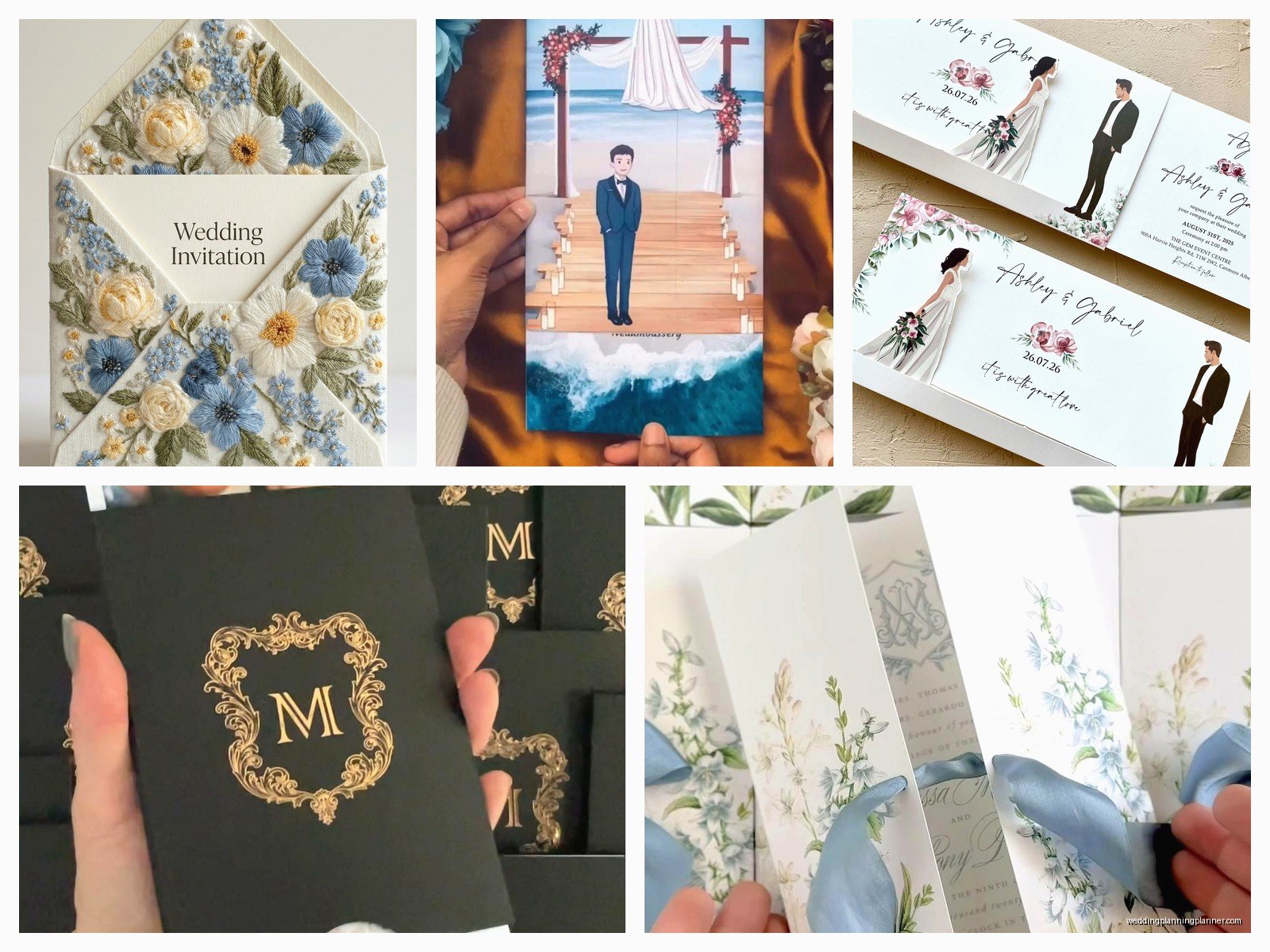
Booklet or accordion-fold invites are super unique if you want something really different. These unfold like a little story or fan out to show different sections. Great for destination weddings where you need to include lots of information but don’t want a million separate cards flying around.
Materials That’ll Make People Actually Keep Your Invite
Okay so paper weight matters more than you think. I always recommend at least 100lb cardstock for the main invitation. Anything lighter feels cheap honestly, and it’ll curl or bend in the mail which looks terrible. For premium vibes, go with 130lb or even letterpress cotton paper which is like… chef’s kiss.
Vellum overlays are gorgeous and add this romantic translucent layer over your main card. You can print names or a design on the vellum and it creates this really elegant effect. Just know that printing on vellum requires specific techniques so not every printer can do it well.
Acrylic or wood invitations are STUNNING but pricey. I had a couple in summer 2021 who did clear acrylic invites with white ink and they were absolutely show-stopping. Every single guest kept theirs and like three people framed them. But you’re looking at $15-30 per invitation easy, sometimes more. Plus you need special packaging so they don’t break in transit.
Handmade paper with embedded flowers or texture is really pretty for garden or bohemian weddings. It photographs beautifully and feels organic and special. The texture can sometimes make printing tricky though so test it first.
Design Elements That Actually Elevate Everything
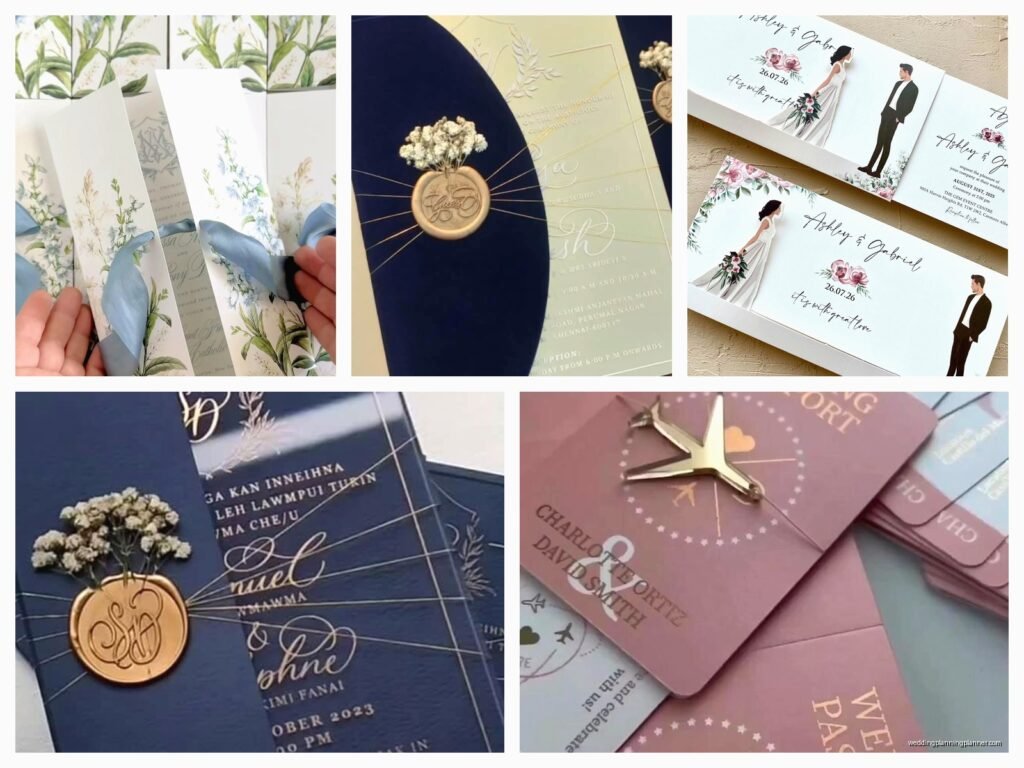
Foil stamping is probably the most popular upgrade and it’s worth it if your budget allows. Gold, rose gold, silver, or even colored foils add this shine that catches light and looks expensive. It works on dark papers especially well—like navy with gold foil is a classic combo that never looks bad.
Letterpress printing creates this beautiful debossed impression in the paper. You can literally feel the text when you run your fingers over it. It’s traditional but also very tactile and special. The setup costs are higher so it makes more sense if you’re ordering like 100+ invitations.
Wax seals are having a MAJOR comeback and I’m here for it. You can get custom stamps with your initials or monogram, and sealing each envelope with wax is such a nice detail. Pro tip: use glue gun sealing wax instead of traditional wax because it’s more flexible and won’t crack as easily in the mail. My cat knocked over a whole tray of wax seals once and I wanted to cry because we had to redo like 50 of them.
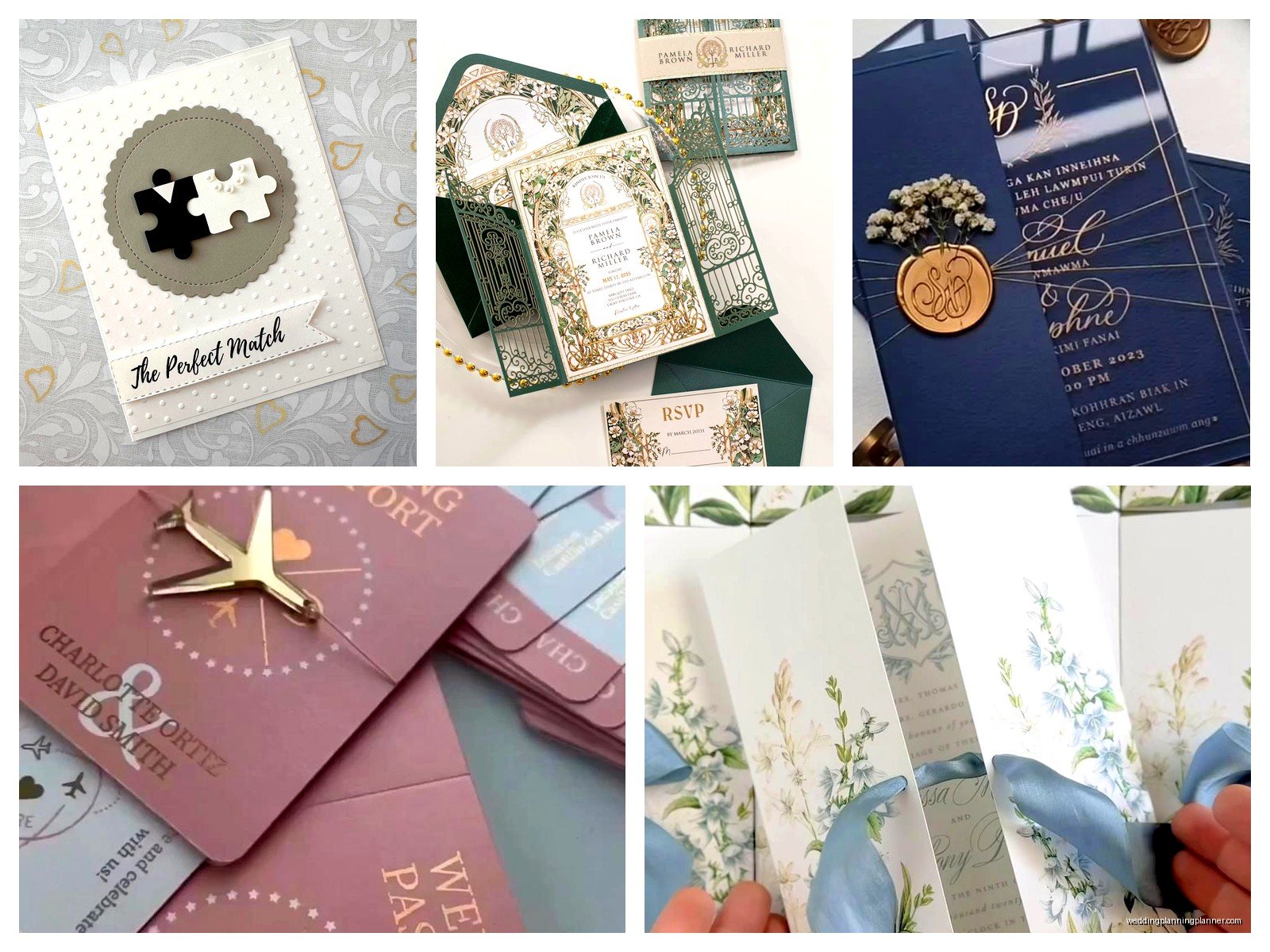
Colored envelopes or envelope liners add personality without being over the top. Even if your invitation itself is simple, a really pretty liner in a complementary pattern or color makes opening it more exciting.
Unique Ideas I’ve Actually Seen Work
Video invitations are becoming more common especially post-pandemic. You send a physical card with a QR code that links to a video message from you both. It’s personal and modern and great for tech-savvy couples or if you’ve got a funny story about how you met that you wanna share.
Scratch-off elements are super fun for revealing details like “you’re invited to our wedding!” or the date. I’ve seen these used really cleverly where guests scratch off to reveal their table number or a fun fact about the couple.
Puzzle invitations where the invite IS a puzzle that guests have to put together. Honestly this is risky because some people will find it annoying (I know I would if I’m trying to quickly check the date), but for the right crowd it’s memorable.
Passport or boarding pass style invites for destination weddings are always a hit. They set the travel theme immediately and you can include all the destination info in a really organized way that makes sense with the design.
Seed paper invitations that guests can actually plant after the wedding. The paper has flower seeds embedded in it so it grows into wildflowers or herbs. Very eco-friendly and symbolic, though the paper texture is rough so your printing options are limited.
The Actual Ordering Process (this is where people mess up)
Start looking at invitation options like 6-8 months before your wedding. I know that seems early but good stationery designers book up and custom printing takes time. Plus you need to factor in proofing, potential reprints if there’s errors, and assembly time.
Order samples before you commit to anything. Most online companies will send you sample packs for like $5-15 and it’s so worth it because colors look different in person and you need to feel the paper quality. I’ve had brides order based on website photos alone and then hate what arrives.
Getting Your Quantities Right
Count your guest list carefully but here’s the thing—you send one invitation per household, not per person. So a couple living together gets one invite, not two. Always order 15-25 extras though for last-minute additions, keepsakes, mistakes during assembly, or if you wanna frame one.
Don’t forget you also need to order RSVP cards, details cards, reception cards if ceremony and reception are different locations, and any other inserts. Each of these needs its own quantity and they should all match in style.
Printing Methods Explained
Digital printing is the most affordable and works for basically any design. Colors are vibrant and it’s fast. Perfect if you’re on a tighter budget or have a shorter timeline.
Thermography creates raised printing that looks similar to engraving but costs way less. It’s shiny and dimensional. Works great for traditional formal invites.
Engraving is the most expensive but also the most prestigious. The text is actually carved into a metal plate and pressed into the paper. You can feel the indentation on the back of the card. Very formal and classic.
Letterpress I mentioned before but it’s worth noting it works best with simple designs and solid colors rather than photographs or gradients.
Working With Designers vs DIY
If you’re hiring a stationery designer (which I obviously recommend because it’s literally my job), expect to pay anywhere from $800 to $3000+ for a full suite depending on complexity and quantity. Custom illustration or calligraphy drives the price up but creates something totally unique to you.
Online templates from places like Minted, Zola, or Etsy are solid middle-ground options. You get professional designs that you can customize with your info and colors. Prices usually run $200-600 for everything. Just make sure you’re allowed to edit everything you need to edit before you buy.
True DIY where you’re designing from scratch in Canva or whatever is gonna save you the most money but it takes time and skill. If you go this route, please please please have someone proofread everything multiple times because typos on printed invitations are… there’s no fixing that without reordering and it’s expensive and embarrassing.
What to Include in Your Invitation Suite
The main invitation obviously needs your names, date, time, and location. The formal wording is “request the honour of your presence” for religious ceremonies or “request the pleasure of your company” for non-religious. But honestly you can word it however feels right for your vibe.
RSVP cards should have a deadline that’s like 3-4 weeks before your wedding so you have time to finalize catering numbers. Include a pre-addressed and stamped envelope because if you make guests hunt down stamps, some just won’t respond. Also add a line for meal choices if you’re doing plated dinner—makes your caterer’s life so much easier.
Details card is where you put your wedding website, hotel room blocks, dress code, and any other important info. Don’t try to cram all this on the main invite because it gets cluttered and hard to read.
Direction or map cards are helpful if your venue is hard to find or if you’ve got multiple events at different locations. Though honestly most people will just use Google Maps anyway so this is optional.
Addressing and Mailing
Okay so this part is tedious but matters. Handwritten addresses look beautiful but if you’ve got like 200 invites that’s… a lot. You can hire a calligrapher which runs about $2-5 per envelope, or print addresses directly on envelopes which is efficient but less fancy, or use printed address labels which I’m gonna be honest usually look kinda cheap on a nice invitation.
Take a fully assembled invite to the post office and have them weigh it before you order stamps. Square envelopes, thick invitations, and anything with wax seals usually requires extra postage. Also square envelopes cost more to mail because they can’t go through automated machines and have to be hand-cancelled.
Mail invitations 8-10 weeks before your wedding for local guests, 12 weeks for destination weddings. Send save-the-dates 6-8 months out or even earlier for destination celebrations so people can plan travel.
Things That Drive Me Crazy About Wedding Invitations
When couples don’t include their wedding website on the invite. Like where else are guests supposed to find that information?? I had this one bride who thought it looked “too casual” to include the website and then got mad when guests kept texting her asking for details and I was just like… this is why we include it.
Also when people use fonts that are completely illegible because they look pretty. Your grandma needs to be able to read the address without a magnifying glass. Design is important but readability comes first.
Eco-Friendly Options If That’s Your Thing
Recycled paper is the obvious choice and honestly it’s come a long way—you can get really nice quality recycled cardstock now that doesn’t look like notebook paper. Soy or vegetable-based inks are better for the environment than petroleum-based inks.
Digital invitations are the most eco-friendly obviously since there’s no paper waste at all. Services like Paperless Post or Greenvelope make them look elegant and track RSVPs automatically which is convenient. Some guests especially older ones might think it’s too informal though so know your crowd.
Tree-free paper made from cotton, bamboo, or hemp is another option. It’s sustainable and often has a really nice texture.
Timeline for the Whole Process
Like I said start looking 6-8 months out. Place your order 4-5 months before the wedding. Most custom orders take 4-6 weeks for production plus shipping. Then you need time to assemble everything—stuffing envelopes, adding belly bands or ribbons, sealing, addressing. If you’re doing this yourself with like one other person, budget at least a full weekend or several evenings. It’s kinda therapeutic actually once you get in a rhythm, put on a good show or podcast and just assembly-line it.
Send save-the-dates way earlier than invitations, and then send the actual invitations 8-10 weeks before like I mentioned. Some people do “coming soon” teaser cards too but that feels excessive to me unless you’re doing like a multi-day destination event where people really need lots of advance notice.
One more thing—order your thank you cards at the same time as your invitations if you can. You’ll get a discount usually and they’ll match your suite which looks really cohesive. You’re gonna need them anyway and it’s one less thing to think about after the wedding when you’re exhausted and have a million thank yous to write