
Planning Guides, Style Guide
Wedding Cards For Couple: Design & Ordering Guide
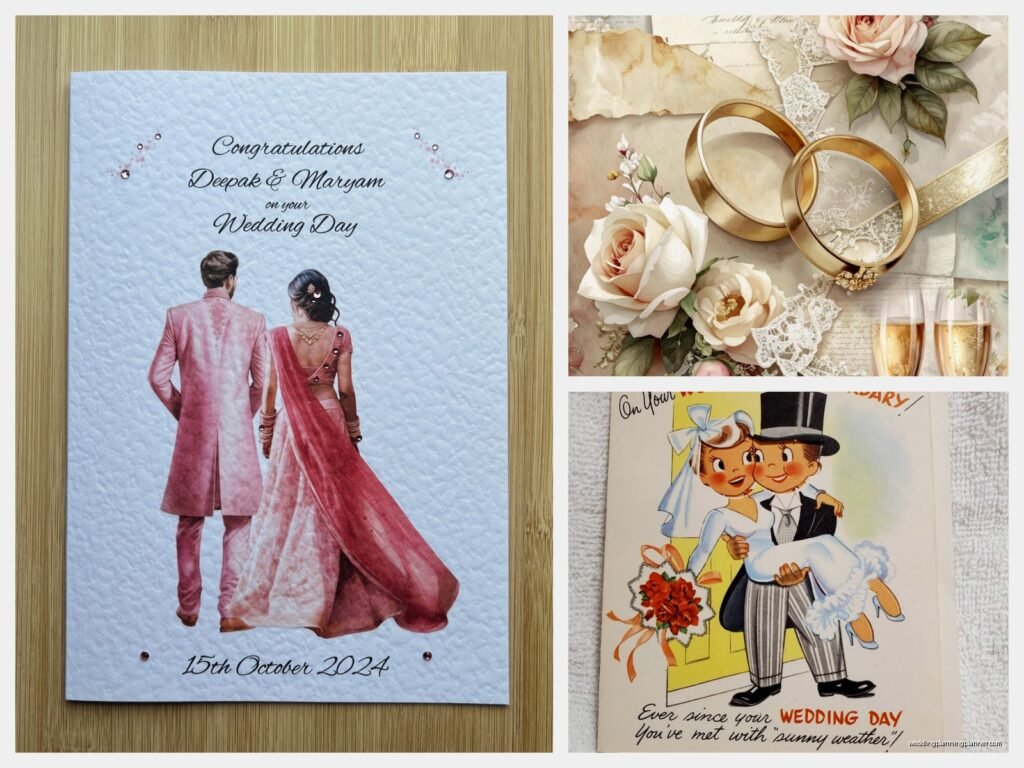
Jun
Okay so wedding cards for couples are basically your first impression
Like seriously, I cannot stress this enough—the save-the-dates and invitations you send out are literally the first thing your guests see about your wedding vibe. And you’d think this would be straightforward but oh my god, the number of couples I’ve worked with who get totally overwhelmed by this process is… a lot.
So first thing you gotta figure out is what kind of cards you even need. Most couples think it’s just invitations but nah, there’s actually a whole suite of stuff you might want:
- Save-the-dates (send these 6-8 months before, or earlier for destination weddings)
- The actual invitations (goes out 8-10 weeks before)
- RSVP cards (these come with the invitation suite)
- Details cards (accommodation info, website, dress code)
- Menu cards
- Programs
- Thank you cards
You don’t need ALL of these obviously. I’ve had couples do just a simple invitation and handle everything else digitally, and I’ve had couples who wanted every single printed element to match. Both are totally fine.
Design process and where to even start
This is where it gets overwhelming fast. Back in spring 2023 I had this couple—super sweet, been engaged for like six months already—and they came to me having looked at approximately 4,000 invitation designs online and were literally paralyzed by choice. They couldn’t make a decision because everything looked good but also nothing felt “right.”
Here’s what I tell everyone: start with your wedding vibe first, not the card designs. Are you doing formal black-tie? Rustic barn? Beach casual? Modern minimalist? The invitation should match that energy.
Then pick your color palette. And I mean actually pick it—like write down 2-3 specific colors. Don’t just say “blue” because there are 8 million blues and your printer needs to know which one.
Design elements to consider
Okay so when you’re looking at designs or working with a designer, here’s what you’re actually choosing:
Paper type: Cardstock is standard (110lb is good, 130lb is thick and luxe). Then there’s cotton paper which feels really nice and expensive. Linen has texture. Kraft paper is that brown recycled look. Vellum is translucent and you layer it over other paper. I personally love a good cotton paper but it does cost more.
Printing method: This is where people get confused. Digital printing is the cheapest and works for like 90% of designs. Letterpress is that pressed-into-the-paper look, super classic and tactile but expensive. Foil stamping adds metallic elements—gold, silver, rose gold, whatever. Thermography raises the ink slightly, kinda looks like engraving but cheaper. Actual engraving is the most expensive and you can feel it on both sides of the paper.
One thing that really annoys me is when couples fall in love with a letterpress design and then freak out about the cost. Like yes, letterpress is gorgeous, but it’s literally a specialized printing technique that requires custom plates and… it’s gonna be pricey. If you love the look but can’t afford it, thermography can get you somewhat close for way less money.
Envelope situation: Don’t sleep on envelopes because they’re the first thing people see when they get your invitation. You can do colored envelopes, lined envelopes (my cat knocked over my coffee while I was stuffing envelope liners once and it was a disaster, but anyway), printed return addresses, calligraphy addresses, or those printed address labels that look like calligraphy.
Where to order from
You’ve got basically three routes here and they all have pros and cons.
Online retailers (Minted, Zola, Paperless Post, Etsy)
These are super convenient and usually pretty affordable. Minted and Zola have thousands of designs, you can customize them online, and they’ll print and ship everything to you. Prices usually range from like $1.50 to $4 per invitation depending on what you choose.
Etsy is great if you want something more unique or you find an independent designer whose style you love. You’re supporting small businesses which is cool. Prices vary wildly—I’ve seen anywhere from $2 to $10 per invitation.
Paperless Post does digital invitations mostly, but they also have paper options now. Their digital ones are actually really beautiful and you can do some fancy animated stuff that… okay I know not everyone loves digital invitations but honestly for like a casual wedding or if you’re on a tight budget, they work fine.
Local stationery designers or print shops
This is gonna be more expensive but you get personalized service and truly custom designs. I work with a few local designers and they’re amazing at capturing exactly what a couple wants. You’ll have in-person meetings, see paper samples, make revisions. Expect to pay anywhere from $5 to $15+ per invitation for fully custom work.
The benefit is that you’re not limited to templates. They can incorporate your engagement photo, create custom illustrations, match your exact wedding colors, whatever.
DIY printing
Some couples buy designs on Etsy (templates usually cost $10-40) and print them at home or at a local print shop. This can save money but honestly it’s also a huge time commitment and you gotta make sure you have a good printer or that your print shop knows what they’re doing with color calibration and paper feeding and—
I had a bride in summer 2021 who decided to print 150 invitations at FedEx Office and the color came out completely different from what she designed on her home computer and she had a full meltdown in the store. The staff had to explain that screens show RGB colors and printers use CMYK and they’re just different and… anyway, it was a whole thing. They eventually got it sorted but she wasted money on that first print run.
Wording and what information to include
Okay so the actual words on your invitation matter obviously. Traditional formal wording is like “Mr. and Mrs. John Smith request the honour of your presence at the marriage of their daughter…” but honestly most couples these days do something more casual or they host the wedding themselves so it’s “Together with their families, Sarah and Jake invite you…”
You need to include:
- Who’s getting married (full names or just first names, your call)
- Date and time (spell out the time formally or just put 4:00 PM, whatever matches your vibe)
- Location with full address
- Reception info if it’s at a different location or time
- Dress code (optional but helpful—I always recommend including this because otherwise you get guests emailing you constantly asking what to wear)
- RSVP deadline and how to RSVP
- Wedding website if you have one
For the RSVP cards, keep them simple. Name line, attending/not attending checkboxes, maybe meal choice if you’re doing plated dinner, and a line for dietary restrictions. That’s it. Don’t get cute with the wording like “will you party with us?” because I’ve seen guests get confused about whether that means they’re supposed to come to the ceremony or just the reception or what.
Timeline for ordering
This is where couples mess up constantly. You need more time than you think.
Save-the-dates should go out 6-8 months before your wedding, so you need to order them like 7-9 months before. That gives you time for design, proofs, printing, delivery, and addressing.
Invitations need to go out 8-10 weeks before the wedding (12 weeks for destination weddings), which means you should order them at least 4-5 months before your wedding date. Here’s why: you’ll spend time choosing a design, then you’ll get a proof and need to review it (always order a proof, always), then there might be revisions, then printing takes 1-3 weeks depending on the method, then shipping, then you gotta address all of them and stuff them and get them to the post office.
I cannot tell you how many couples have ordered invitations 6 weeks before their wedding and then panicked when they realized they wouldn’t arrive in time or they’d have to pay rush fees.
Proofing is crucial don’t skip this
Always, always, ALWAYS order a printed proof before you print the full quantity. What looks good on your computer screen might look totally different printed. Colors shift, fonts might be smaller than you expected, there might be typos (even though you’ve checked it 50 times, there’s always that one typo that slips through).
Most online retailers offer digital proofs for free and printed proofs for like $10-30. Get the printed proof. I’ve seen too many couples skip this step to save money and then discover an error after printing 200 invitations and having to reorder everything.
Budgeting for this whole thing
Wedding stationery typically costs about 2-4% of your total wedding budget, but that can vary a lot based on what you want.
Basic digital printing from an online retailer: $200-500 for 100 invitations with envelopes and RSVP cards
Mid-range with some special printing or custom design: $500-1,200
High-end letterpress or fully custom: $1,200-3,000+
Don’t forget to budget for postage because wedding invitations are usually heavier than regular mail and might need extra postage. Take a fully assembled invitation to the post office and have them weigh it BEFORE you put stamps on all of them. I’ve had couples use regular stamps and then have invitations returned because they were like 20 cents short on postage.
Ways to save money without looking cheap
Okay so if you’re on a budget but still want nice invitations, here’s what actually works:
Skip the save-the-dates and just put your wedding date on your website or send a casual email. Save-the-dates are kinda unnecessary unless you’re doing a destination wedding or holiday weekend.
Do a postcard invitation instead of the full suite. One piece, less postage, still looks good if it’s well-designed.
Print your own envelopes instead of paying for calligraphy. You can get nice fonts and print directly on envelopes with most home printers.
Skip extra inserts and put all info on your wedding website. Just include a small details card with the website URL.
Choose a simpler printing method. Digital printing has come so far and looks really good now for most designs.
Assembly and mailing tips from someone who’s done this too many times
Once your invitations arrive, you gotta assemble and mail them. Set aside like a whole afternoon or evening because it takes longer than you think, especially if you’re doing 100+ invitations.
Traditional assembly order (from bottom to top): invitation card, then reception card, then any other insert cards, then RSVP card and envelope tucked under the flap of the RSVP envelope or on top. Some people do belly bands or vellum wraps to hold everything together.
But honestly? Do whatever makes sense for your suite. There’s no invitation police gonna come check your assembly order.
Addressing: you can handwrite them (time-consuming but personal), print labels (practical), print directly on envelopes (clean and modern), or hire a calligrapher (expensive but gorgeous). I usually print mine because my handwriting is sorta messy and I don’t have time to hand-address 150 envelopes.
Get your guest addresses organized early. Like start asking for addresses as soon as you’re engaged because people are slow to respond and you’ll be chasing down addresses until the last minute anyway.
Common mistakes I see all the time
Not ordering enough extras. Order at least 10-20 extra invitations. You’ll mess up addressing some, you’ll want to keep some for your own memory box, and there’s always those last-minute guests who get added to the list.
Forgetting about the RSVP deadline. Make your RSVP date at least 3-4 weeks before your wedding so you have time to follow up with people who don’t respond (and trust me, people will not respond) and get final counts to your caterer.
Not including enough info. I get that you want a clean minimalist design, but your guests need to know where the wedding is, what time, and how to RSVP. Put the essential info on the invitation itself, not just on the website.
Choosing a font that’s impossible to read. Script fonts are beautiful but if your grandmother can’t read the address, it’s not a good choice. Make sure your key information is in a legible font.
Ordering way too late and then paying rush fees that cost more than the invitations themselves.
Digital vs. paper invitations real talk
Some people are gonna judge you for digital invitations. Older generations especially tend to expect paper. But like… digital invitations are environmentally friendly, way cheaper, you get instant RSVPs, and you can track who’s opened them.
I think paper invitations are still the standard for formal weddings and they do feel more special. There’s something about getting a beautiful envelope in the mail that an email just doesn’t match. But for casual weddings, second marriages, elopement announcements, or if you’re on a really tight budget, digital is totally fine.
You could also do a hybrid—send paper invitations to your older relatives and close family, and digital to everyone else. Just make sure you’re not accidentally offending anyone by who gets paper vs. digital.
Working with designers and printers
If you’re going the custom route, here’s how to make that process smooth. Come to your first meeting with: your wedding date and venue, your color palette, any design inspiration you’ve saved (Pinterest boards are helpful here), your budget, and your guest count estimate.
Be clear about your timeline and budget upfront. Designers can work with almost any budget but they need to know what they’re working with so they can suggest appropriate options.
Give feedback clearly. Instead of “I don’t like it,” say “the font feels too formal for our backyard wedding” or “can we try a different shade of blue that’s more navy and less royal?”
Understand that revisions take time. Most designers include 2-3 rounds of revisions, but if you keep changing your mind, that’ll cost extra and delay your timeline.