Planning Guides, Style Guide
Wedding Contract Template: Vendor Agreement Downloads
Jun
Why You Actually Need This Stuff
Okay so wedding vendor contracts are basically the thing nobody wants to deal with until something goes horribly wrong and then suddenly everyone’s like “wait where’s the paperwork.” I learned this the hard way back in summer 2021 when a florist just completely ghosted one of my clients two weeks before the wedding and we had NOTHING in writing about deposits or cancellation terms and it was… yeah it was a nightmare.
You need a solid contract template for every single vendor you work with. Not just the big ones like your venue or photographer but literally everyone. The calligrapher doing your escort cards, the food truck you hired for late night snacks, the person bringing those fancy portable bathrooms because your barn venue only has two regular toilets and you’ve got 150 guests.
What Makes a Contract Actually Useful
I’m gonna be real with you, most contract templates you download for free online are either way too complicated with legal jargon that nobody understands or they’re so basic they’re useless. You want something in the middle that actually covers your butt without needing a law degree to read it.
The essential sections you gotta have are payment terms, cancellation policies, what happens if someone doesn’t show up or the weather ruins everything, and really specific descriptions of what you’re actually getting. Like don’t just write “wedding flowers” because that could mean a single bouquet or could mean elaborate installations hanging from the ceiling and you need to be on the same page.
Payment Terms That Won’t Bite You Later
This is where I see people mess up constantly. You need to spell out exactly when money is due, how much, and what payment methods you accept. I usually recommend a structure like deposit due at signing, second payment at some milestone like 60 days out, and final payment at least a week before the wedding. Never ever do full payment on the wedding day itself because if something goes wrong you have zero leverage.
Also include late payment fees. I know it feels awkward but vendors are running businesses and if you’re late paying them they might deprioritize your wedding or worse, not show up at all. Something like 5% of the outstanding balance per week is pretty standard.
One thing that really annoyed me is when couples would try to negotiate payment terms AFTER signing the contract like… that’s not how contracts work? The whole point is you agree to everything first and then you sign it and then you’re both bound by those terms.
Where to Actually Get These Templates
Alright so you’ve got a few options here and they’re all kinda different depending on what you need.
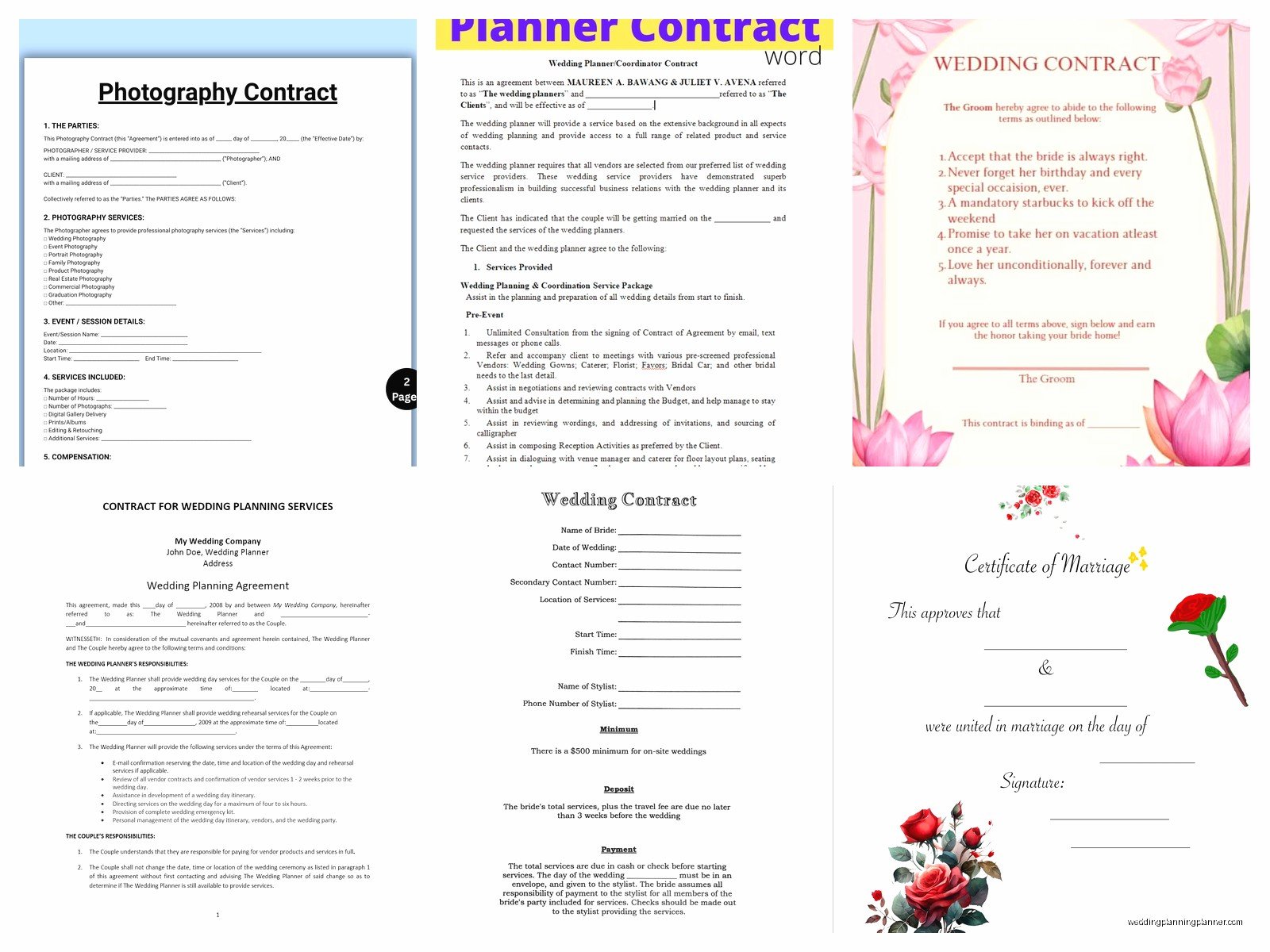
The Contract Shop has really good templates that are state-specific which is important because contract law varies by location. They’re not free but they’re like $100-150 which is way cheaper than hiring a lawyer to draft one from scratch. I used their stuff when I was first starting out and honestly they held up really well.
HoneyBook and Dubsado both have built-in contract features if you’re using them for client management anyway. The nice thing about these is they integrate with your invoicing and scheduling so everything’s in one place. The annoying thing is you’re kinda locked into their platform and if you ever want to switch you’ve gotta migrate everything.
17hats is another option that’s more budget-friendly and still has decent contract templates. They’re not as pretty as HoneyBook but they work fine.
You can also find free templates on sites like LawDepot or Rocket Lawyer but you usually get what you pay for. They’re super generic and you’ll need to customize them heavily which kinda defeats the purpose of using a template in the first place.
Customizing Templates for Different Vendor Types
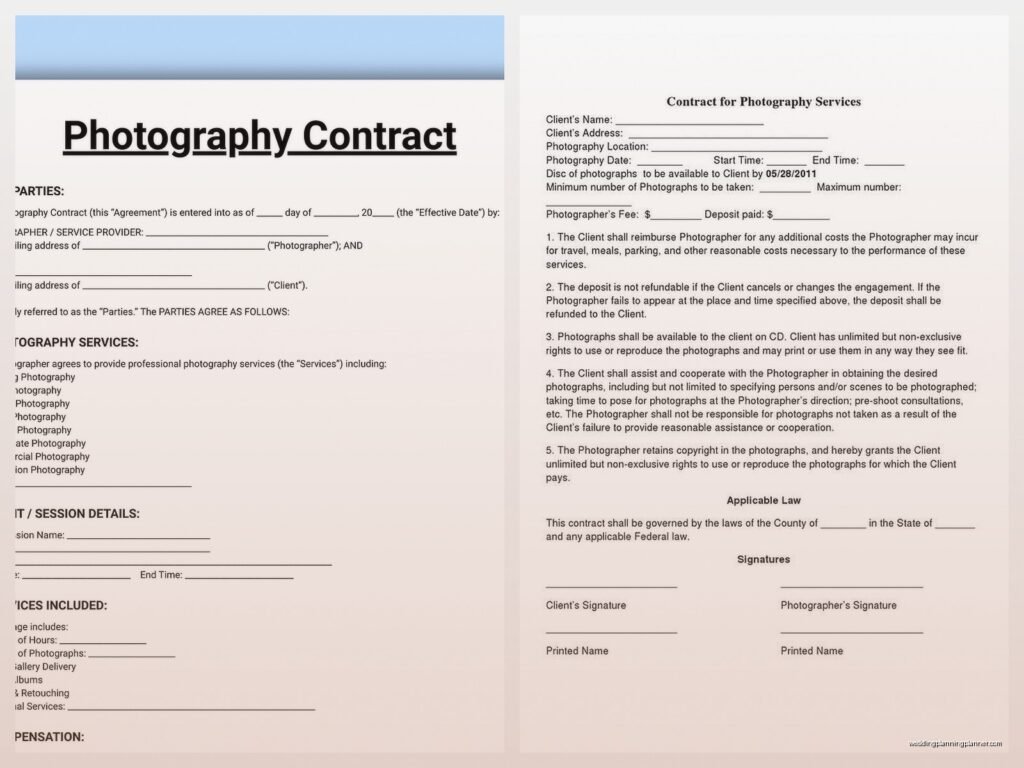
So once you have a base template you can’t just use the exact same one for your photographer and your caterer because the services are completely different. Your photography contract needs stuff about image rights and how many edited photos you get and turnaround time for the final gallery. Your catering contract needs headcount deadlines and menu selections and whether they’re providing staff and rentals or just food.
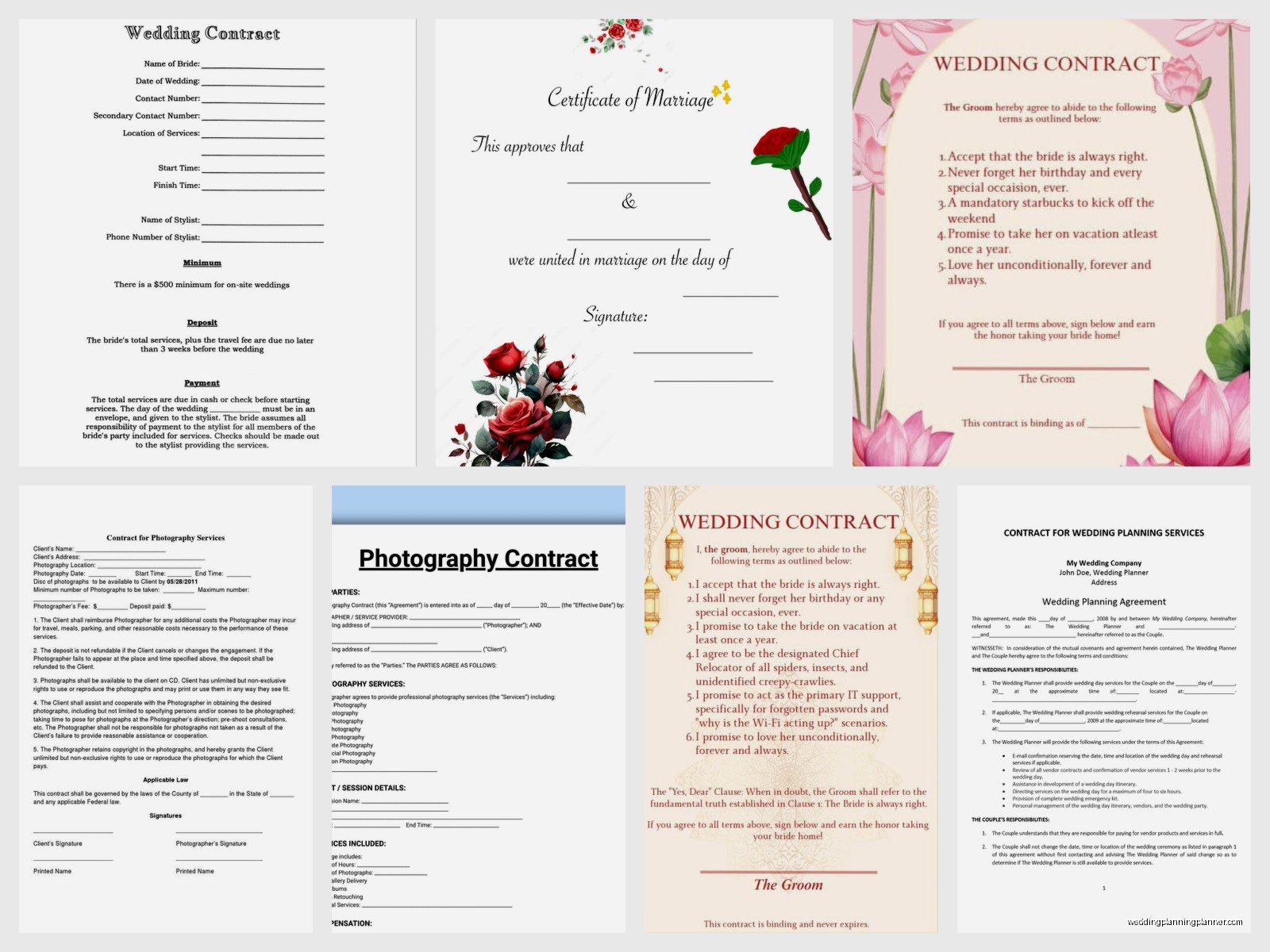
I keep a master folder with different versions for each vendor category and then I customize from there for specific vendors. It’s way faster than starting from scratch every time.
The Stuff People Forget to Include
Okay this is important. There are certain things that seem obvious but people leave them out all the time and then they’re screwed when problems come up.
Weather contingencies: What happens if there’s a hurricane or blizzard and the wedding has to be postponed? Are you entitled to a refund, will the vendor transfer your date, what if they’re already booked on your backup date?
Vendor meal requirements: If you’re having a wedding where vendors will be there for 6+ hours you probably need to feed them. This should be in the contract so there’s no confusion about whether that’s included in their price or an additional cost.
Setup and breakdown times: Your venue might give you access from 2pm-11pm but your florist needs 4 hours for setup which means they need to start at 10am which means… see where this is going? Get the timing in writing.
Overtime fees: If your reception goes past the contracted end time what does that cost? Some DJs charge like $200 per extra hour and you don’t want that surprise when everyone’s having fun and doesn’t want the party to end.
I had this situation in spring 2023 where a couple’s ceremony ran 45 minutes late because the groom’s family was stuck in traffic and then everything was behind schedule and we ended up with like $800 in overtime fees that nobody had budgeted for because it wasn’t clearly outlined in the vendor contracts and the couple was SO mad but there was nothing I could do about it.
Force Majeure Clauses Are Your Friend
This became REALLY obvious during the pandemic but it’s relevant for any major disaster situation. A force majeure clause basically says what happens if something outside everyone’s control makes the wedding impossible – natural disasters, government shutdowns, zombie apocalypse, whatever.
Most vendor contracts now include pandemic-specific language but you want it to cover other scenarios too. And you want it to be fair to both parties like maybe you get your deposit back but not the full amount because the vendor has already invested time and resources into your wedding.
The tricky part is that “bad weather” isn’t usually considered force majeure unless it’s like a declared state of emergency. Rain on your outdoor wedding day is unfortunate but it’s not grounds to cancel the contract without penalty in most cases which is why you need that separate weather contingency section I mentioned earlier.
Insurance Requirements
Your contract should specify what kind of insurance the vendor needs to have. Liability insurance is the big one – if your caterer accidentally gives everyone food poisoning or your DJ’s equipment causes an electrical fire you want to know they have coverage.
Some venues require proof of insurance from all vendors before they’re allowed onsite so you might need to collect those certificates and provide them to your venue coordinator. I usually include a clause that vendors must provide proof of insurance at least 30 days before the wedding.
The Cancellation Policy Thing
This needs its own section because it’s SO important and people hate thinking about it because who wants to plan for their wedding getting cancelled but like… life happens.
A good cancellation policy is tiered based on timing. Like if you cancel 12+ months out maybe you get 75% of your deposit back, 6-12 months out you get 50%, 3-6 months out you get 25%, less than 3 months and you lose everything. The exact numbers vary by vendor type and how much work they’ve already done.
And it should go both ways – what happens if the vendor cancels on you? They should be required to refund everything you’ve paid AND help you find a replacement if possible. I actually think vendor-initiated cancellations should have a penalty beyond just the refund but not all contracts include that.
My cat just knocked over my coffee while I’m writing this which is perfect timing because now I’m annoyed but anyway…
Intellectual Property and Usage Rights
This mostly applies to photographers and videographers but also to anyone creating custom designs for you like your stationer or your cake designer. Who owns the final images or designs? Can you use them for whatever you want? Can the vendor use them in their portfolio and on social media?
Most vendor contracts give you personal use rights but retain commercial rights for the vendor. So you can post your wedding photos on Instagram and make a photo album but you can’t like, sell them to a stock photo company. And the photographer can use them in their advertising.
If you want exclusive rights where the vendor can’t use the images at all that usually costs extra. I’ve seen photographers charge 30-50% more for that.
The Signature and Date Situation
Okay this seems super basic but you’d be surprised how many people sign contracts without dating them or they date them wrong or only one party signs or… ugh.
Both parties need to sign and date. If you’re using electronic signatures through DocuSign or HelloSign or whatever that’s fine and legally binding in most places. Just make sure everyone gets a copy of the fully executed contract.
I keep digital copies of everything in Google Drive organized by client and then by vendor type and I also keep a master spreadsheet tracking which contracts have been signed and which payments have been made because otherwise it’s too easy to lose track when you’re managing like 15 different vendor relationships.
Reading the Fine Print Actually Matters
I know contracts are boring and you just want to sign and move on but you really need to read the whole thing. Look for anything that seems unfair or unclear and ask questions BEFORE you sign.
Red flags to watch for: automatic renewal clauses, hidden fees, really aggressive cancellation penalties that seem punitive rather than compensatory, vague language about what’s included, or anything that says the vendor can substitute services or products without your approval.
If something doesn’t make sense or seems sketchy, ask the vendor to clarify or revise it. A good vendor will be happy to explain their terms and make reasonable modifications. A vendor who gets defensive or refuses to budge on unreasonable terms is probably not someone you want to work with anyway.
Digital vs. Paper Contracts
Honestly most people are doing everything digitally now which is way easier for storage and organization but some older vendors still prefer paper contracts. Either is legally valid as long as it’s properly signed.
The advantage of digital is you can’t lose it and you can access it from anywhere and you can easily send copies to other people who need them. The advantage of paper is umm… I guess some people just like having physical documents? I dunno I’m team digital all the way.
If you do go digital make sure you’re saving PDFs not just links to documents that could be edited later. You want a snapshot of what you agreed to at the time you signed it.
When Things Go Wrong Despite the Contract
Even with a perfect contract sometimes vendors flake or mess up or you have a legitimate dispute about whether they fulfilled their obligations. The contract should specify how disputes get resolved – mediation, arbitration, small claims court, whatever.
I always recommend trying to work it out directly first before getting lawyers involved because legal fees add up fast and might cost more than what you’re fighting over. But if you do need to escalate having a clear written contract makes everything SO much easier.
Document everything in writing even if you’re having verbal conversations. Send follow-up emails confirming what was discussed. Keep all receipts and invoices. Take photos and videos as proof of what was delivered versus what was promised.
The florist situation I mentioned earlier? We eventually got most of the deposit back by threatening small claims court and showing our contract that clearly outlined what was supposed to be delivered. Without that contract we would’ve had nothing.