
Planning Guides, Style Guide
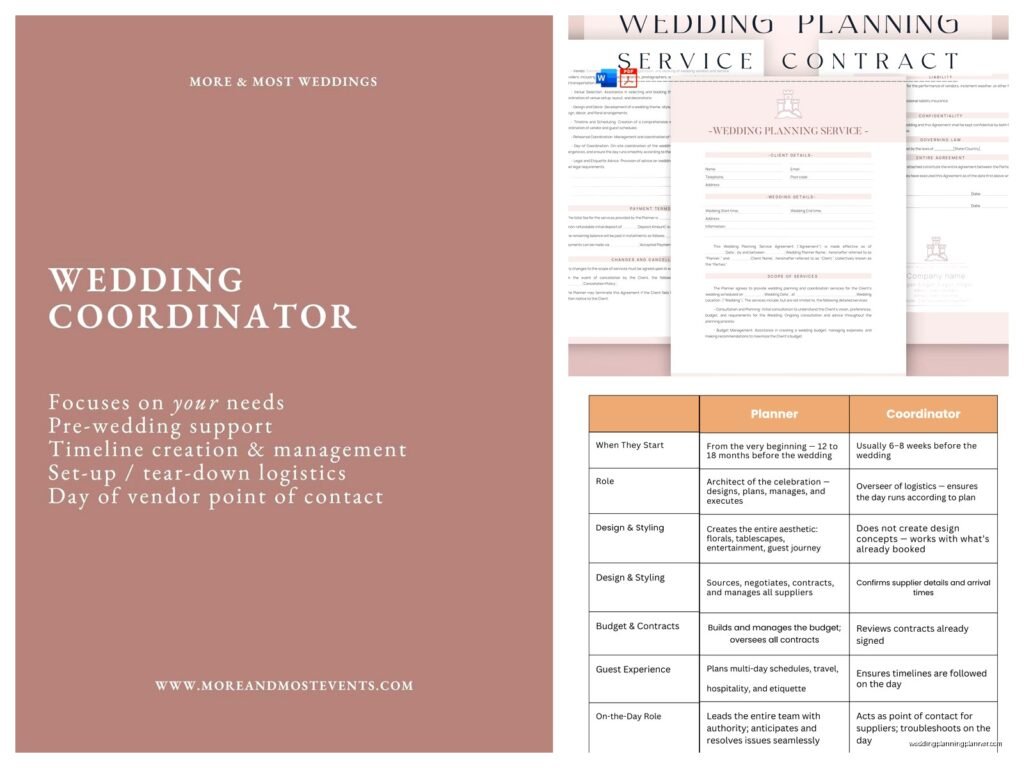
Wedding Coordinator Contract: Service Agreement Template
Jun
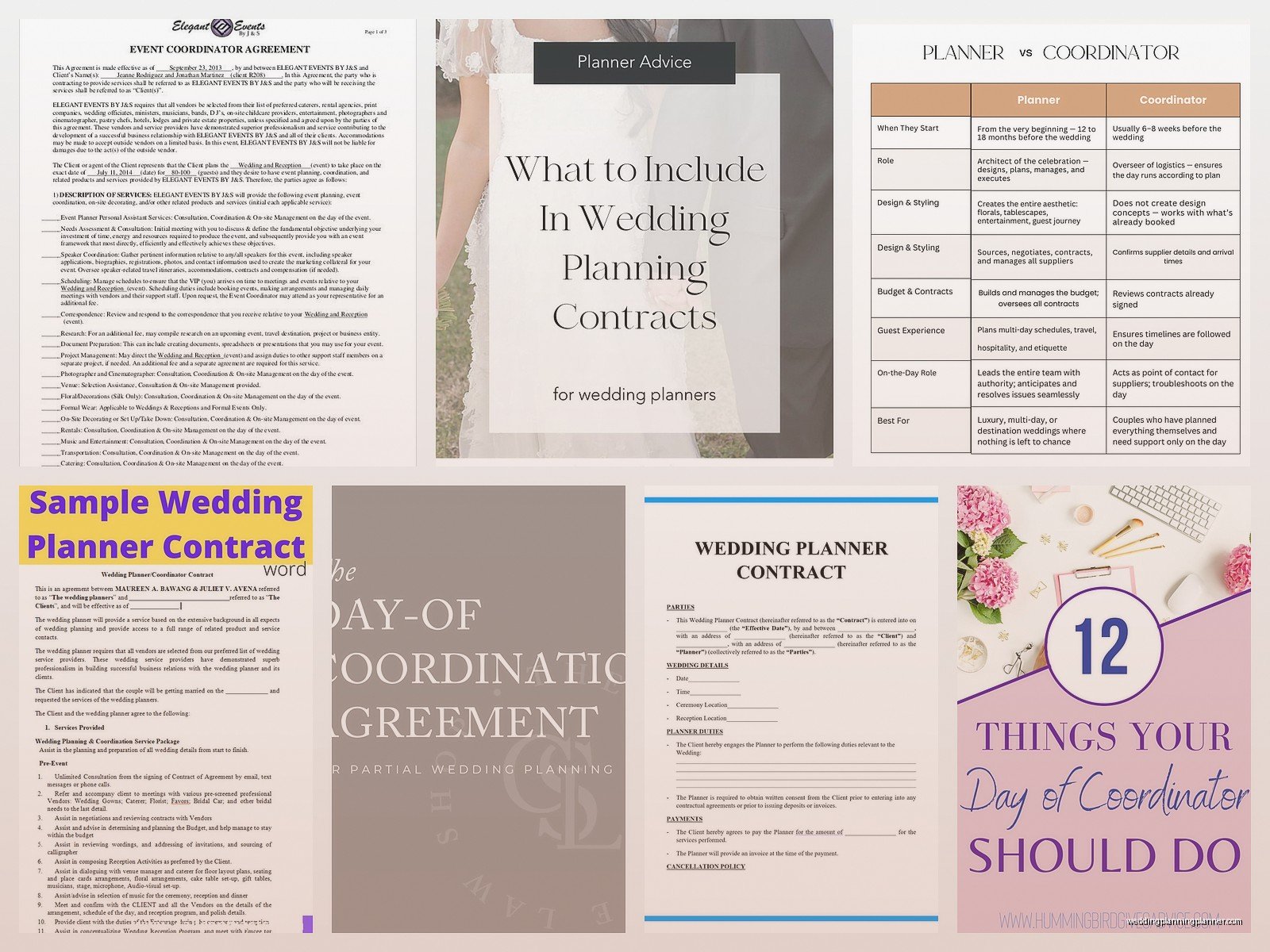
What Actually Needs to Be in Your Wedding Coordinator Contract
Okay so the service agreement is literally the thing that’s gonna save your butt when things get weird with clients and trust me they will get weird. I learned this the hard way in spring 2023 when a bride tried to claim I never told her about my vendor coordination limits even though we’d literally discussed it three times but nothing was spelled out clearly in my contract and yeah that was a mess.
First thing you need right at the top is the basic identifying information. Your business name, the couple’s names, wedding date, venue name and location. Sounds obvious but I’ve seen coordinators forget to put the actual wedding date in there which is kinda insane when you think about it. Also include when the contract is being signed because timeline matters for cancellation policies and stuff.
Services Section Is Where People Get Lazy
This is the part that annoys me SO much when I see other coordinators’ templates – they’re super vague about what they actually do. Like “full coordination services” means absolutely nothing to a client who’s never hired a coordinator before. You gotta break it down specifically.
List out exactly what you’re providing. Are you doing unlimited email correspondence or is there a limit? How many in-person meetings are included? Are you creating the timeline or just implementing one they create? Do you coordinate with all vendors or just certain ones? When do your services actually start – three months out, six months out, the day before the wedding?
I typically include:
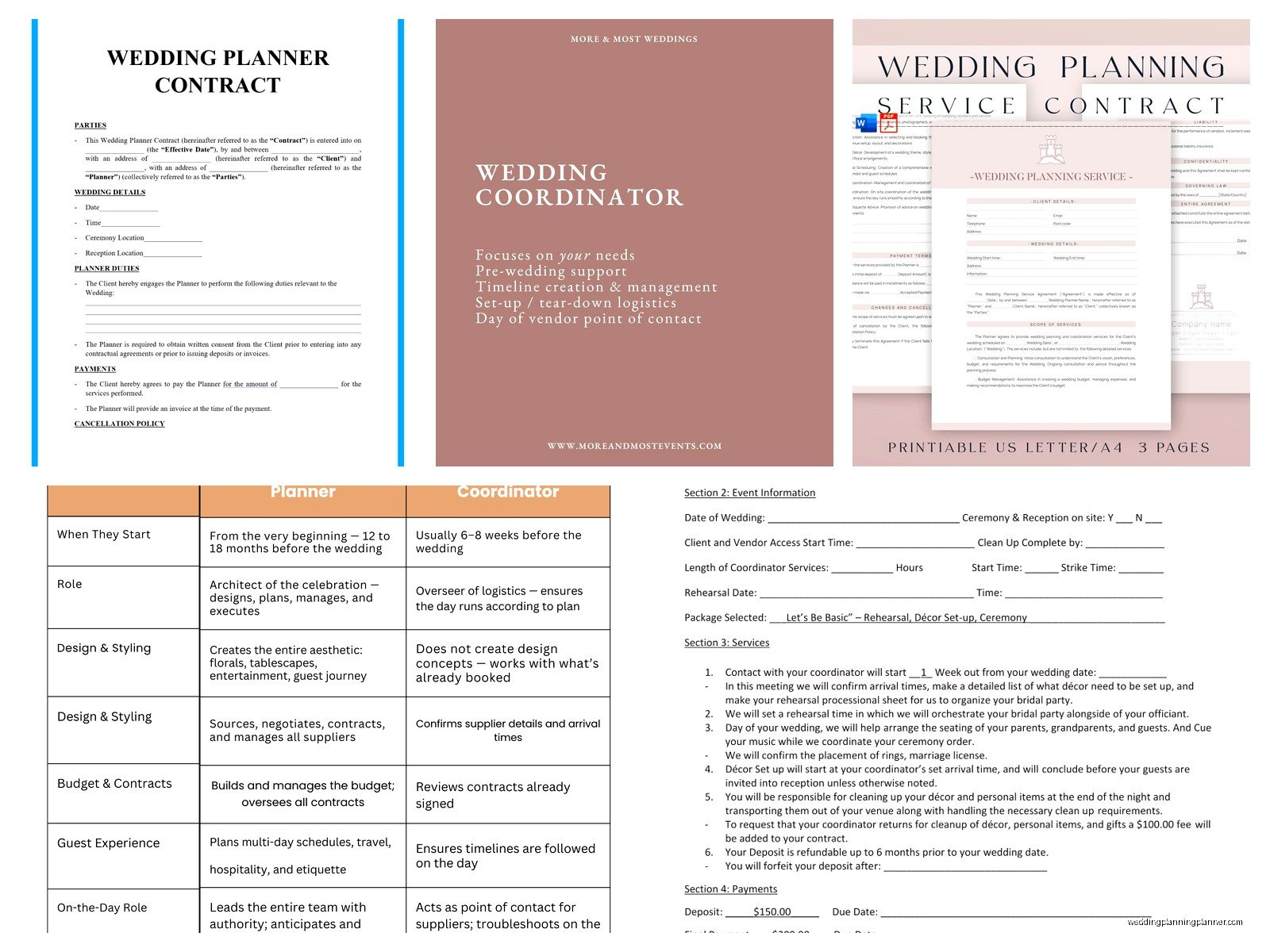
- Number of planning meetings and whether they’re in-person or virtual
- Timeline creation and distribution to vendors
- Vendor confirmation calls (I do these two weeks before)
- Rehearsal coordination with specific time limit
- Day-of coordination hours (I do 8 hours for most packages)
- Setup and breakdown responsibilities – be VERY clear about this
- What you’re NOT responsible for because that matters just as much
For things you don’t do make sure you spell it out. I don’t handle decor setup beyond like placing items vendors deliver, I don’t manage guest issues during cocktail hour, I don’t babysit drunk relatives… actually maybe I should add that last one officially.
Money Stuff Has To Be Crystal Clear
Put your total fee right there in bold. Then break down the payment schedule – I usually do 50% at signing, 25% three months before, final 25% two weeks before the wedding. Some coordinators do different splits and that’s fine just make sure it’s written out.
Include your accepted payment methods. I take checks, Venmo, and bank transfers but not credit cards because the fees kill me and I’m not set up for that. If you charge late fees for missed payments put that in there with the specific amount or percentage.
Also this is where you put your travel fees if the wedding is beyond your normal service area. I charge mileage over 30 miles from my office plus hotel if it’s more than 90 minutes away. One time I forgot to include this and ended up driving 3 hours each way for a rehearsal and… yeah learn from my mistakes.
Cancellation and Refund Policy
Ugh this section is not fun to write but you absolutely need it. What happens if they cancel? What happens if YOU need to cancel (illness, emergency, whatever)? What deposits are non-refundable?
My policy is the initial 50% deposit is non-refundable once the contract is signed because that holds my date and I’m turning away other clients. If they cancel more than 6 months out they lose the deposit. If they cancel 3-6 months out they owe 75% of the total. Less than 3 months they owe everything because at that point I’ve done most of my work anyway.
For postponements which became a HUGE thing during you know when – I allow one date change within 18 months for a $500 rescheduling fee if the new date is available. If the new date isn’t available we treat it as a cancellation. This saved me so much drama during 2020-2021.
If I need to cancel for emergency I’m required to help them find a replacement coordinator or provide a full refund. I’ve only had to do this once when my cat had emergency surgery and I was honestly a mess and couldn’t work but that’s a whole other story.
Timeline and Deadlines Section
You need to outline when you need stuff from them. I require a preliminary vendor list 4 months before the wedding, final guest count 3 weeks before, final timeline approval 2 weeks before, all decor items delivered to my studio 1 week before if I’m transporting them.
What happens if they miss these deadlines? I include a clause that says if I don’t receive required information by the deadlines my ability to provide services may be limited and I’m not responsible for issues that result from late information. Sounds harsh but when a bride sends you the ceremony music playlist at 11pm the night before the wedding you need this protection.
Liability Limitations
This is the legal CYA stuff and you should probably have a lawyer look at your specific state requirements but generally you want to limit your liability to the amount they paid you for services. You’re not responsible for vendor failures, venue issues, weather, family drama, or acts of god.
I also include that I’m not responsible for personal items left at the venue or in my care beyond reasonable precautions. I once had a bride try to claim I lost her grandmother’s earrings that she never actually gave me and that was fun times, so now I have an itemized personal items form they sign if they want me to handle anything valuable.
You should also state that you’re not liable for photography/videography content – like if the photographer misses a shot that’s between them and the photographer, not your problem. Unless you specifically guaranteed something which… don’t do that.
The Stuff People Forget
Vendor Relationships and Recommendations
If you have preferred vendors or get referral fees from vendors you work with this needs to be disclosed. Some coordinators don’t think this matters but transparency is important and in some states it’s actually legally required.
I have a preferred vendor list but I make it clear that couples can use whoever they want. I also note that if they hire vendors I haven’t worked with before I may need additional time to coordinate with those vendors and establish relationships.
Emergency Contact and Backup Coordinator
You need their emergency contact info obviously but also you should list who your backup coordinator is if you have one. I have an agreement with another coordinator in my area where we cover for each other’s emergencies. This goes in the contract so clients know there’s a backup plan.
My backup has only had to step in once when I got food poisoning the morning of a wedding and honestly thought I might die but she was amazing and the couple never knew anything was wrong until I told them later.
Communication Expectations
How quickly will you respond to emails? What are your working hours? Do you answer calls/texts on weekends? I learned to put this in after having clients text me at like 2am about napkin colors or whatever and expecting immediate responses.
I promise response within 48 business hours for emails, I don’t take calls after 7pm or on Sundays except for true emergencies (and I define what constitutes an emergency), and I’m not available for questions during other clients’ wedding weekends. Seems obvious but spell it out.
Changes to Services
What if they want to add services later or reduce services? I include that any changes must be in writing via email or contract addendum. Additional services are charged at my hourly rate which I specify. Reducing services doesn’t reduce the contract price unless we’re more than 6 months out and it’s a significant change.
This prevents the “oh can you just quickly also handle the gift table” conversations that turn into 3 hours of extra work you’re not being paid for.
Legal Boring Stuff That Actually Matters
Governing Law and Dispute Resolution
Which state’s laws govern the contract? Where would disputes be handled? I include a mediation clause that requires we try mediation before anyone can sue anyone which hopefully never happens but you never know.
Some coordinators include arbitration clauses instead of mediation. Either way you want something that keeps you out of court because legal fees will destroy your profit margin real quick.
Force Majeure
This is the fancy term for “what happens when crazy stuff outside anyone’s control happens” – natural disasters, pandemics (yeah we all know about this now), government shutdowns, venue closures, etc.
My clause says that if the wedding can’t happen due to force majeure both parties are released from obligations but I’m entitled to payment for work completed up to that point. If they postpone to a new date my services transfer if I’m available or we work out a partial refund based on work completed.
Entire Agreement Clause
This just says that the written contract is the whole agreement and any previous verbal discussions or emails don’t count unless they’re incorporated into the contract. Prevents the “but you said” arguments because if it’s not in the contract it doesn’t exist.
Also include that any changes to the contract must be in writing and signed by both parties. No verbal modifications allowed.
Severability
If one part of the contract is found to be unenforceable the rest still stands. Basically if a judge says one clause is invalid the whole contract doesn’t fall apart… or something like that, I’m not a lawyer but my lawyer told me to include this.
Signature Section Setup
Both parties need to sign and date. I have lines for both members of the couple even if just one is communicating with me because both need to be bound by the agreement. Include printed names under signatures.
I use electronic signatures through DocuSign now which makes everything so much easier but I keep a clause that says electronic signatures are just as valid as wet signatures. Some older clients get weird about digital signatures so having that in there helps.
Also include a line that says by signing they acknowledge they’ve read and understood the entire agreement and had opportunity to ask questions or have it reviewed by an attorney. Nobody ever actually does this but it’s good to have.
Attachments and Addendums
Reference any attachments that are part of the contract – your detailed services checklist, your preferred vendor list, your specific package description, whatever. Make sure you actually attach these things and that they’re referenced in the main contract.
I messed this up once and referenced a services checklist that I forgot to attach and then had a disagreement with a client about what was included and it was just awkward because I couldn’t prove what I meant to include.
Leave space for any custom addendums you might need for specific situations. Sometimes you’ll have a client with unique needs that require custom clauses and you can add those as addendums that both parties initial.
Actually Using The Contract
So here’s the thing about having a great contract template – you actually have to USE it properly. Don’t skip sections because you’re excited about a booking or because the couple seems really nice. Every single client gets the full contract no exceptions.
Walk through it with them either in person or on a video call. I know it’s tempting to just email it and ask them to sign but spending 20 minutes explaining the key points prevents so many misunderstandings later. Plus it makes you look professional and like you know what you’re doing even when you’re kinda winging it.
Don’t let them pressure you to change your standard terms unless you really think it’s necessary. I had a groom once try to negotiate my cancellation policy and I almost caved but then I remembered why I have that policy in the first place and held firm. He ended up signing anyway.
Keep a copy of every signed contract obviously – I keep digital copies in Dropbox and Google Drive because I’m paranoid about losing things. Reference your own contract before each wedding to remind yourself exactly what you promised because with multiple clients you will forget specific details.
Update your template annually based on what issues came up during the previous year. I add new clauses pretty much every season based on situations that arose. It’s a living document that gets better over time as you learn what problems need to be addressed.