
Planning Guides, Style Guide
Wedding Day Timeline Template: Hour-by-Hour Schedule
Jun
Getting Your Timeline Actually Working
So you need a wedding day timeline and honestly this is where most couples either nail it or end up in chaos. I’m gonna walk you through what actually works because I’ve seen both scenarios play out and trust me, the difference is night and day.
Start with your ceremony time and work backwards. Like, if you’re getting married at 4pm, that’s your anchor point for everything. Most people try to build forward from hair and makeup but that’s backwards thinking and it screws everything up. Your photographer needs certain light, your venue has specific access times, your ceremony is the thing guests show up for—so that’s where you begin.
Morning of the Wedding (typically 6am-11am)
Hair and makeup usually starts around 7am or 8am depending on how many people you’ve got. Each bridesmaid takes about 45 minutes for hair, an hour for makeup. The bride takes longer—plan 90 minutes for hair, 90 minutes for makeup. Yeah, it’s a lot. Spring 2023 I had this bride who insisted she only needed 30 minutes for makeup and we ended up running 45 minutes late because surprise, surprise, wedding makeup is different than your everyday five-minute routine.
Here’s what that morning block looks like:
- 7:00am – Hair and makeup team arrives, sets up
- 7:15am – First bridesmaid starts hair
- 8:00am – Second bridesmaid starts hair while first moves to makeup
- 8:45am – Third bridesmaid starts (you see the rotation here)
- 9:30am – Bride starts hair
- 11:00am – Bride starts makeup
- 12:30pm – Bride is completely done
You want everyone else done at least 30 minutes before the bride finishes. This gives you buffer time and also you don’t want six people hovering while you’re getting your foundation applied. Also someone needs to be getting breakfast during all this—I usually assign one bridesmaid or the mom to do a coffee run around 8:30am because people get hangry and shaky hands don’t help anyone.
Getting Dressed and Detail Photos (11am-1pm)
This is where your photographer usually shows up if you’re doing getting-ready photos. I always tell couples the photographer should arrive about 2 hours before you need to leave for the ceremony location. They’ll shoot your dress hanging up, your shoes, the rings, all those detail shots that end up in your album.
The bride should get dressed last. I mean it. If you put your dress on first, you’re gonna sit around for an hour worrying about wrinkling it or spilling something on it, and also you can’t really help anyone else with their dresses or ties or whatever because you’re basically immobilized in a giant gown.
Timeline looks like:
- 11:00am – Photographer arrives, shoots details
- 11:30am – Bridesmaids get dressed
- 12:00pm – Bride gets dressed (with help)
- 12:30pm – Bridesmaid photos, mom putting on final jewelry, all that stuff
- 1:00pm – First look OR travel to ceremony venue
First Look or No First Look (that’s the question)
Okay so this changes everything about your timeline. If you’re doing a first look, you can knock out like 80% of your photos before the ceremony which makes cocktail hour way more relaxed. If you’re not doing a first look, you need to build in way more time after the ceremony.
First look timeline (add this around 1pm-2:30pm):
- 1:00pm – Bride and groom travel to first look location
- 1:30pm – First look happens (photographers set it up, takes about 15 minutes for the actual moment plus reactions)
- 1:45pm – Couple portraits (30-45 minutes just the two of you)
- 2:30pm – Wedding party arrives, group photos start
- 3:15pm – Family photos
- 3:45pm – Everyone heads to ceremony site, final touches
Without a first look, you’re basically just getting dressed and traveling to the venue, and all those photos happen after the ceremony which means your cocktail hour is gonna be… well, you’re not attending it really.
Ceremony Time (usually 30-45 minutes)
Most ceremonies run 20-30 minutes but you gotta pad it. Guests need to arrive and be seated, the wedding party needs to line up, there’s always someone running late or someone’s phone goes off or whatever. Build in 45 minutes to an hour for this whole block.
For a 4:00pm ceremony:
- 3:15pm – Venue doors open for guests
- 3:30pm – Musicians/DJ starts prelude music
- 3:45pm – Ushers start seating immediate family
- 3:55pm – Groom and officiant take their places
- 4:00pm – Processional begins
- 4:05pm – Bride enters (yeah that’s how long it takes to get everyone down the aisle)
- 4:30pm – Ceremony ends, recessional
- 4:35pm – Guests directed to cocktail hour
One thing that really annoys me is when couples don’t tell their officiant there’s a time limit. Summer 2021 I had an officiant go on for like 50 minutes with stories and tangents and we were so behind schedule that we had to cut the father-daughter dance entirely because the venue had a hard stop time. Tell your officiant: keep it to 25 minutes max.
Cocktail Hour (1 hour, obviously)
This is pretty straightforward but here’s where you’re doing photos if you didn’t do a first look. Your guests are having drinks and appetizers while you’re… taking pictures. Which is fine, that’s what cocktail hour is for, but it means you need to be super efficient.
Photo timeline during cocktail hour:
- 4:35pm – Wedding party photos (20 minutes)
- 4:55pm – Extended family photos (15 minutes)
- 5:10pm – Couple portraits (20 minutes)
- 5:30pm – Touch up makeup, use the bathroom, have a snack
- 5:40pm – Line up for grand entrance
Seriously though, make sure you eat something during this window. I always stash granola bars or nuts in the bridal suite because I’ve caught too many brides almost passing out during their first dance because they haven’t eaten since 9am and they’re running on adrenaline and champagne.
Reception Schedule (usually 4-5 hours)
This is where things get tricky because you’re balancing dinner service, dances, toasts, cake cutting, and just… letting people party. The key is clustering your formal events and then getting out of the way so people can actually dance.
Standard reception flow for a 5:45pm start:
- 5:45pm – Grand entrance (DJ announces you, takes like 5 minutes)
- 5:50pm – First dance right away (don’t wait, just do it)
- 5:55pm – Welcome speech if you’re doing one
- 6:00pm – Dinner service starts (salad or appetizer course)
- 6:15pm – Toasts during dinner (maid of honor, best man, parents if they want)
- 6:45pm – Main course served
- 7:30pm – Cake cutting
- 7:45pm – Parent dances (father-daughter, mother-son)
- 8:00pm – Open dance floor
- 9:30pm – Bouquet/garter toss if you’re doing it (or skip it, most people do now)
- 9:45pm – Last call at the bar
- 10:30pm – Last song
- 10:45pm – Grand exit or just… everyone leaves
I always tell couples to do the first dance immediately after the grand entrance because everyone’s already watching you and you’re gonna be nervous about it all night if you wait. Just get it done, then you can relax and eat dinner.
Timing the Toasts
Do toasts during dinner service, not before. If you do toasts before dinner, everyone’s standing around with empty stomachs getting restless and your speeches feel like they’re holding up the food. During dinner, people are eating anyway and they’re a captive audience.
Limit each speech to 3-5 minutes. I know, I know, your best man has hilarious stories but anything over 5 minutes loses the room. I’ve seen 15-minute best man speeches and by minute 8 people are just… scrolling their phones or going to the bar. Tell your speakers upfront: keep it tight.
Buffer Time Is Your Friend
Here’s the thing nobody tells you—build in 15-minute buffers between major events. Hair and makeup runs over? You’ve got buffer time. Photos take longer because it started raining and you had to move inside? Buffer time. Someone’s uncle gives a surprise speech that takes 10 minutes? You’ve got the buffer.
Without buffers, one delayed thing creates a domino effect and suddenly you’re cutting your cake at 9:30pm when you planned for 7:30pm and half your guests have already left because they thought the night was wrapping up.
My cat actually knocked over my coffee while I was writing this and I had to stop and… anyway, where was I? Right, buffers.
Vendor Timing Considerations
Your vendors need specific things at specific times and if you don’t account for this, things get messy:
Photographer needs: Good light for outdoor photos (usually the hour before sunset, so check sunset time for your date), time to scout locations, at least 20 minutes for couple portraits, 15 minutes for family photos (yes really, family photos are quick if you’re organized)
Your caterer needs: Access to the kitchen 2-3 hours before service, clear timeline for when to serve each course, heads up 15 minutes before cake cutting so they can plate dessert
DJ/band needs: 30 minutes before ceremony for sound check, clear signal for when to start dinner music vs. dancing music, final song timing so they can build to it
Florist needs: Access to ceremony and reception spaces 3-4 hours early for setup, someone to tell them where everything goes (this is usually your planner or day-of coordinator)
Transportation Timing
If you’re renting transportation—limo, party bus, vintage car, whatever—you need to coordinate pickup and drop-off times. Most rental companies charge by the hour and if you’re vague about timing, you either pay for time you’re not using or the car leaves before you need it.
Typical transportation schedule:
- Car arrives at getting-ready location: 45 minutes before you need to leave
- Travel time to venue: add 15 minutes to actual drive time for traffic/delays
- Car waits or returns for: grand exit at the end of the night
Make sure your transportation company has the full timeline, not just pickup times.
The Actual Template You Can Use
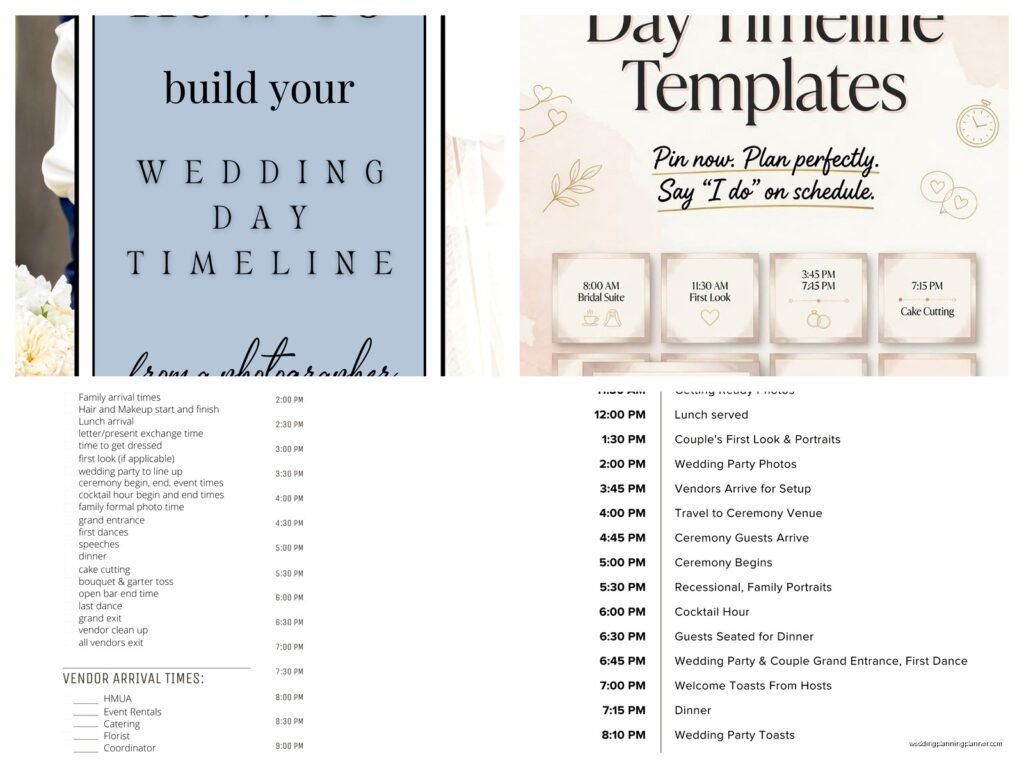
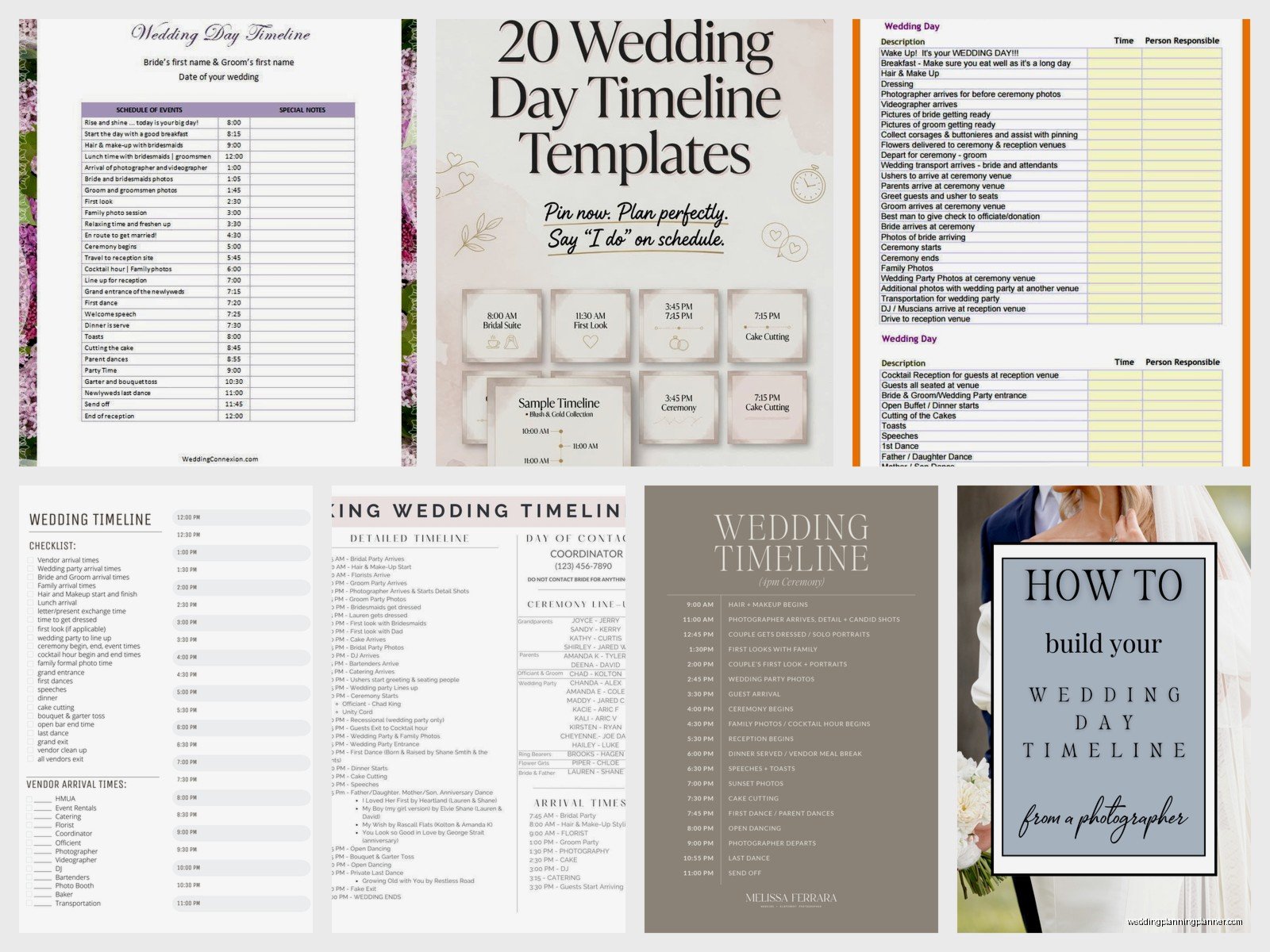
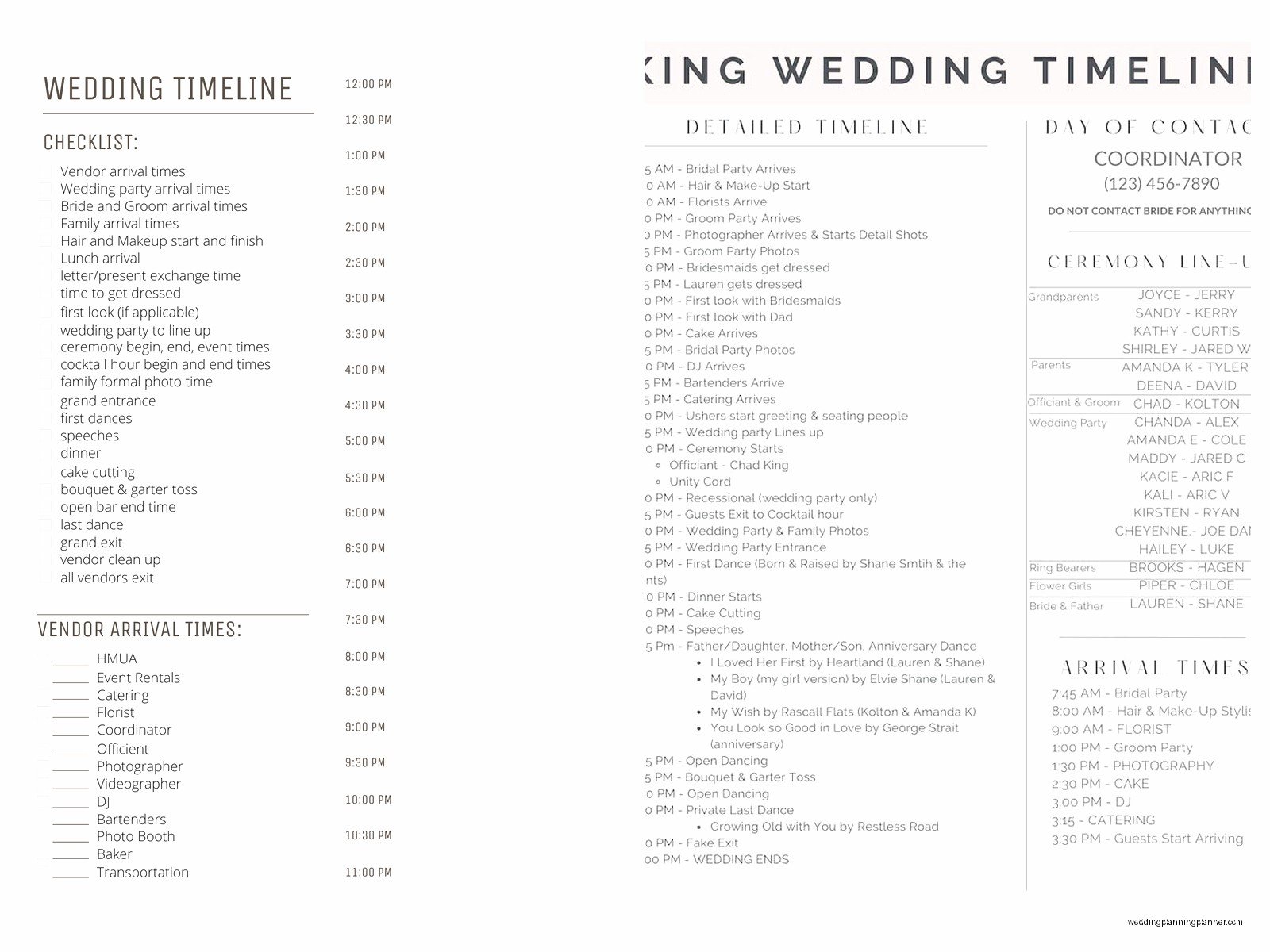
Okay so here’s a fill-in-the-blank template you can actually customize. Your times will be different but the structure works for most weddings:
8:00am – Hair and makeup begins
12:00pm – Bride gets dressed
1:00pm – Photographer arrives
1:30pm – First look (optional)
2:00pm – Wedding party photos
3:30pm – Guests arrive at ceremony
4:00pm – Ceremony begins
4:30pm – Ceremony ends
4:45pm – Cocktail hour begins
5:45pm – Grand entrance
5:50pm – First dance
6:00pm – Dinner service
7:30pm – Cake cutting
7:45pm – Parent dances
8:00pm – Dance floor opens
10:30pm – Last dance
10:45pm – Grand exit
Things That Always Take Longer Than You Think
Getting everyone into place for family photos. It’s like herding cats. Someone’s in the bathroom, someone’s getting another drink, someone wandered off to take a phone call. Build in extra time.
The receiving line if you’re doing one. Each guest takes about 15 seconds, so for 150 guests that’s… wait let me do the math… almost 40 minutes. Most couples skip the receiving line now and just make rounds during cocktail hour or dinner instead.
Cake cutting. It seems simple but the photographer needs to set up the shot, you need to figure out how to actually cut the cake without destroying it, there’s the feeding each other thing, the photos… it’s 15 minutes minimum.
Bustling your dress. If your dress has a bustle (and most do), factor in 10 minutes for someone to bustle it properly before the reception. You can’t really dance or move around easily with a train dragging behind you.
Day-Of Timeline Distribution
Make sure everyone who needs the timeline actually has it. I’m talking:
- Your photographer (email it a week before)
- Your videographer
- Your DJ or band
- Your caterer
- Your venue coordinator
- Your wedding party (especially the people giving toasts)
- Your parents
- Your day-of coordinator or planner
- Hair and makeup team
- Transportation company
Send it via email as a PDF and also print copies for the day of. Someone’s phone will die or they’ll forget to check their email and you’ll be glad you have physical copies.
Adjusting for Seasonal Differences
Summer weddings have late sunsets so you can do ceremony at 6pm and still have good light. Winter weddings have early sunsets so if you want outdoor photos, your ceremony might need to be at 2pm or 3pm. Check the actual sunset time for your wedding date and location—don’t just guess.
Also weather impacts timing. If there’s even a chance of rain, have a backup plan and make sure your timeline accounts for moving things indoors or setting up tents or whatever. I’ve seen couples lose 30 minutes of photo time because it started drizzling and nobody had thought through the indoor photo locations in advance.
When to Break Your Own Timeline
Sometimes you gotta just let go of the schedule. If your ceremony moment is really emotional and meaningful and it’s running 10 minutes over… that’s fine. If your guests are having an amazing time on the dance floor and you’re supposed to cut the cake but nobody wants to stop dancing… push the cake back.
The timeline is there to prevent chaos, not to make your wedding feel rushed or regimented. Use it as a guide but don’t be so rigid that you miss out on spontaneous joy or genuine moments because you’re watching the clock.
That said, there are some hard stops you can’t negotiate—venue end times, vendor contract hours, last call at the bar. Know which times are flexible and which ones aren’t.
Last thing I’ll say is this: assign someone to be the timeline keeper on the day. Not you, not your partner—someone else. Your mom, your planner, your maid of honor, whoever. Give them the timeline and tell them their job is to gently keep things moving. Because you’re gonna be in the moment and you’re not gonna be thinking about whether it’s time for toasts or cake cutting or whatever, and that’s exactly how it should be.