
Planning Guides, Style Guide
Wedding Help: Complete Planning Support & Resources

Sep
Okay So You Need Wedding Planning Help
Right so the biggest mistake I see is people thinking they can just wing it because “weddings plan themselves” or whatever nonsense their aunt told them at Thanksgiving. They absolutely do not. I learned this the hard way in summer 2021 when a couple hired me literally six weeks before their date because they thought they had it handled and then realized they’d booked a venue but forgotten about, you know, chairs. Like actual chairs for people to sit on.
First thing you gotta do is get yourself a planning system that actually works for your brain. Some people swear by those fancy planners with the ribbon bookmarks and the gilt edges, but honestly? I’ve seen brides plan entire weddings in Google Sheets and it worked perfectly fine. The key is picking ONE system and sticking with it instead of having notes in seventeen different places including that napkin from the restaurant where you met with the florist.
Timeline Stuff That Actually Matters
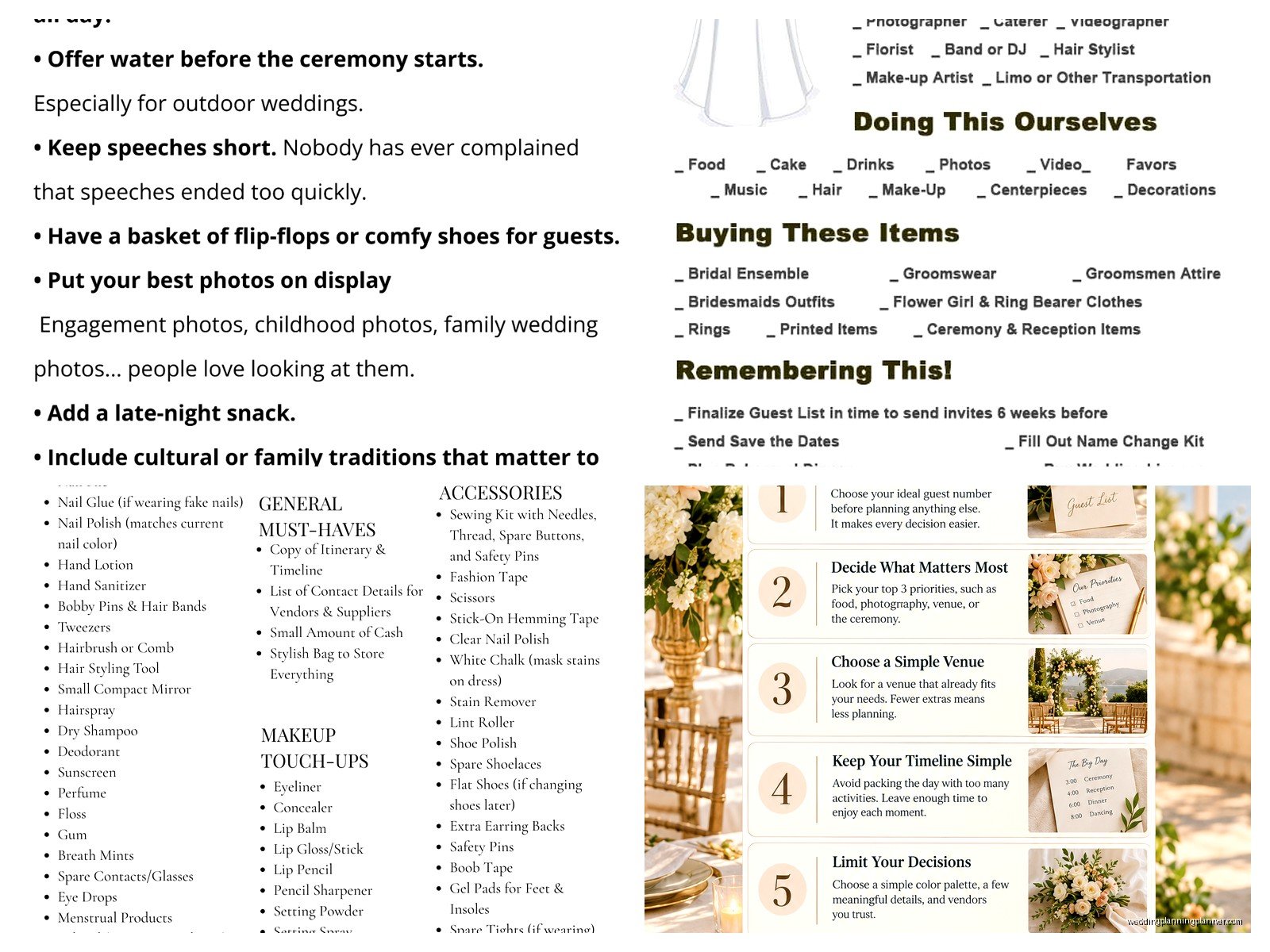
Everyone’s gonna tell you to start planning 12-18 months out and yeah that’s ideal but also like… half my clients come to me with 6-8 months and we make it work. Here’s what you really need to prioritize first:
- Venue because literally nothing else matters if you don’t have a place
- Photographer because the good ones book out fast and you’ll be so mad if you settle for someone whose portfolio looks like they shoot with a potato
- Caterer if your venue doesn’t include one
- Band or DJ because dancing with no music is just awkward swaying
- Officiant because someone’s gotta make it legal
Everything else can honestly wait a bit. I know people stress about invitations but you’ve got time on those, trust me. What really annoys me is when vendors try to pressure you into booking immediately with fake urgency. “Oh we only have TWO dates left this year!” Okay but it’s January and you’re looking at October so… do the math on how many weekends that actually is.
Budget Reality Check
This is where I’m gonna sound harsh but weddings cost more than you think they will. Just accept it now. The average wedding in the US is somewhere around $30,000-$35,000 and I know that sounds insane but it adds up so fast. Venue rental, food for 100+ people, alcohol, flowers that die the next day, a photographer for 8 hours, a dress you wear once – it’s kinda ridiculous when you think about it too hard.
Make a spreadsheet with these categories:

- Venue and catering (usually 40-50% of your budget)
- Photography and videography (10-15%)
- Flowers and decorations (8-10%)
- Entertainment (8-10%)
- Attire for both of you (5-8%)
- Invitations and paper goods (2-3%)
- Miscellaneous and emergency fund (10-15%)
That emergency fund is not optional by the way. Something will go wrong or cost more than expected. In spring 2023 I had a wedding where the cake collapsed during transport and we had to emergency order sheet cakes from three different grocery stores and honestly? The guests didn’t even care, they were just happy to have cake.
Vendor Research Without Losing Your Mind
Okay so finding vendors is overwhelming because there are approximately eight million photographers in your area and they all have Instagram accounts with the same presets. Here’s how I actually recommend doing this:
Start with your venue’s preferred vendor list but don’t feel locked into it. Some venues require you use their catering and that’s fine, but for other stuff you can shop around. Read reviews but like, read them smart. Ignore the one-star review from someone complaining that the florist wouldn’t do blue roses (because those aren’t real, Sharon). Look for patterns – if multiple people mention a vendor being late or hard to communicate with, that’s a red flag.
When you’re meeting with vendors, ask them about their backup plans. What happens if they’re sick? If their equipment breaks? A professional will have answers. Someone who looks at you like you just asked them to explain quantum physics maybe isn’t the right fit.
The Guest List Nightmare
This is where families get involved and everything becomes complicated. You’re gonna have people who think they deserve an invitation because they sent you a birthday card in 1997 or whatever. Here’s my advice: start with your absolute must-haves, the people you can’t imagine getting married without there. Then add from there based on your budget and venue capacity.
And like… you don’t have to invite everyone who invited you to their wedding. I know etiquette books say otherwise but etiquette books weren’t written in the era of $150 per plate catering costs. Be realistic about who you actually want there versus who you feel obligated to invite.
Plus-ones are another thing entirely. I usually tell couples to give plus-ones to anyone married, engaged, or in a long-term relationship (like over a year). Random Tinder dates from last month don’t need to come to your wedding, it’s okay.
Invitations and All That Paper Stuff
Since this is literally part of what I do for a living I have opinions here. Send save-the-dates about 6-8 months before, especially if you’re having a destination wedding or getting married during a busy season. People need time to request off work and book travel.
Actual invitations should go out 8-10 weeks before the wedding. Yes you can do online invitations and no, they’re not tacky anymore – we’re in 2024, not 1950. But if you want paper invitations, cool, just budget for them properly. A full suite with invitation, RSVP card, details card, envelope liners, and fancy stamps will run you $3-8 per invitation easily.
The RSVP deadline should be at least 3-4 weeks before your wedding so you have time to chase down the people who inevitably don’t respond. And there will be people who don’t respond. There are always people who think “oh they know I’m coming” and then you’re texting them at 11pm like “HEY ARE YOU COMING OR NOT I NEED FINAL COUNTS.”
Day-Of Coordination vs. Full Planning
So there’s different levels of help you can get. Full-service planning is when someone like me handles everything from the beginning – vendor recommendations, contract negotiations, design concept, timeline creation, all of it. Partial planning is jumping in midway to help finish things up. Day-of coordination (which should really be called month-of coordination) is when someone makes sure everything runs smoothly during the actual event.
If you only have budget for one thing, get the day-of coordinator. Your aunt Susan who “loves organizing things” is not equipped to handle a vendor showing up late or a bridesmaid having a meltdown or the seventeen other small fires that happen at every wedding. Let her enjoy being a guest instead.
I’ve seen so many couples try to save money by skipping a coordinator and then they spend their wedding day solving problems instead of, you know, enjoying getting married. Not worth it.
Design and Decoration Decisions
Pinterest is both your best friend and worst enemy here. It’s great for gathering inspiration but it’ll also make you think you need to DIY 47 different projects and rent a fog machine and have a choreographed first dance. You don’t need all that unless you genuinely want it.
Pick 2-3 colors maximum. Choose a general vibe – romantic garden, modern minimalist, rustic barn, whatever speaks to you. Then make decisions based on whether they fit that vibe. This prevents you from ending up with a confused mismatch of ideas because you saw something pretty on Instagram.
Flowers are expensive and there’s not really a way around that. If budget is tight, focus flowers where people will see them most: bouquets, centerpieces, ceremony backdrop. You don’t need elaborate arrangements in the bathroom or whatever. My cat knocked over a vase last week and I was finding petals for three days, which isn’t related but I’m still finding petals.
Managing Family Expectations and Drama
Oh boy this is the fun part. Everyone will have opinions about your wedding. Your mom wants you to invite her entire book club. His dad thinks you should get married in his hometown three states away. Your grandmother is scandalized that you’re serving alcohol or not serving alcohol or getting married outside or…
Here’s the thing: it’s your wedding. If someone isn’t contributing financially, they get an opinion but not a vote. Be polite but firm. “Thank you for the suggestion, we’ll consider it” is a complete sentence. You don’t have to justify every decision to every relative.
Also assign someone to be the point person for vendor questions and family drama on the wedding day. This should not be you or your partner. You should be unreachable except for genuine emergencies. If Aunt Carol wants to know where to put the gifts or complain about the music volume, she can talk to your designated person.
Resources That Actually Help
Okay so beyond hiring professionals, here are tools I recommend:
- Wedding planning apps like Zola or The Knot for keeping track of everything
- Shared Google Calendar with your partner for vendor meetings and deadlines
- A dedicated wedding email address so vendor stuff doesn’t clog your regular inbox
- Budget tracking spreadsheet that you update weekly
- Private Pinterest board for saving ideas
- Wedding website for sharing info with guests
For actual planning help, look into local wedding planning groups on Facebook or Reddit. Real brides sharing real experiences are more helpful than a lot of generic advice articles. Just take everything with a grain of salt because what worked for someone in rural Montana might not work for your urban wedding.
Timeline for the Actual Day
Work backward from your ceremony time. If you’re getting married at 5pm, you need to be dressed and ready by 4:30pm at the latest, which means hair and makeup needs to finish by 3:30pm, which means it needs to start by… you see where this goes. Build in buffer time because everything takes longer than you think.
A typical timeline looks something like:
- 8am: Hair and makeup starts
- 2pm: Get dressed, first look if you’re doing one
- 3pm: Wedding party photos
- 4:30pm: Guests arrive
- 5pm: Ceremony
- 5:30pm: Cocktail hour while you do family photos
- 6:30pm: Reception entrance and dinner
- 8pm: Dancing starts
- 10pm: Send-off or last dance
This is flexible obviously but you get the idea. Don’t try to cram too much in. I had a bride once who wanted a two-hour cocktail reception with lawn games and a photo booth and appetizer stations and… it was too much, people got tired and drunk before dinner even started.
Common Mistakes to Avoid
Don’t forget to feed your vendors. Seriously, your photographer and DJ are there for 8+ hours, they need to eat. Most contracts specify vendor meals and it’s just the right thing to do anyway.
Don’t skip the tasting with your caterer. I don’t care how many good reviews they have, taste the actual food you’ll be serving. Also this is one of the fun parts of planning so why would you skip it?
Don’t assume someone else will handle something. If it’s not explicitly assigned to a person, it won’t get done. Who’s bringing the marriage license to the venue? Who’s taking the gifts home? Who’s designated to bustle your dress? Figure this out beforehand.
And don’t forget to actually spend time with each other during the reception. You’ll be pulled in a million directions but try to sit down together, eat your dinner, take five minutes to just look around and absorb it. It goes by so fast and then it’s over and you’re like wait did that really just happen?
When to Ask for Professional Help
If you’re feeling overwhelmed more often than excited, get help. If you and your partner are fighting about wedding stuff constantly, get help. If you lie awake at night mentally reviewing your vendor contracts, maybe get some help or at least some therapy probably both honestly.
Wedding planners aren’t just for rich people or huge weddings. We work with all budgets and honestly sometimes we save you money because we know which vendors are worth it and which are overpriced, which corners you can cut and which you can’t. Plus we have relationships with vendors that can sometimes get you better rates or priority booking.
Even just a few sessions with a planner to get organized and create a solid timeline can make a huge difference. Think of it like… you could probably figure out how to fix your own plumbing but sometimes calling a plumber saves time and prevents flooding your bathroom, you know?
