
Planning Guides, Style Guide
Wedding Payment Plans: Installment Financing Options
Oct
Wedding Payment Plans Are Actually Pretty Standard Now
Okay so first thing you should know is that paying for a wedding in installments isn’t some sketchy thing anymore. Like, back in maybe 2019 I was still seeing couples get kinda embarrassed about asking vendors if they could split payments, but honestly? After 2020 happened and everyone’s finances got weird, installment plans became totally normalized. I had this couple in spring 2023 who apologized THREE times for asking about payment options and I was like… this is literally how most people book now, you’re fine.
The basic concept is simple—instead of dropping $30,000 or whatever all at once, you’re spreading it across multiple payments over several months. Sometimes that’s through the vendor directly, sometimes it’s through a third-party financing company, and sometimes it’s just you being smart with credit cards (but we’ll get to that).
How Vendor Payment Plans Usually Work
Most wedding vendors already have built-in payment schedules. It’s not even really “financing” in the traditional sense—it’s just how they operate. The standard structure I see (and use myself for bigger stationery packages) is:
- Deposit when you book: usually 25-50% of total cost
- Second payment: maybe 3-6 months before the wedding
- Final payment: typically due 2-4 weeks before the wedding date
Venues especially work this way. You’ll put down like $2,000 to hold the date, then they’ll have you pay chunks as you get closer. Some places do it quarterly if you’re planning far in advance. I had a venue coordinator tell me once that they prefer this because it keeps couples engaged in the planning process… or something? I kinda think it’s just easier accounting on their end but whatever works.
Third-Party Wedding Financing Companies
This is where it gets more interesting. There are actual companies now that exist specifically to finance weddings. The big ones are Fiona, Upstart, and LightStream for personal loans, but then there’s also wedding-specific ones like Maroo (which honestly annoys me because their marketing makes it seem like going into debt for centerpieces is totally normal and necessary, but that’s my personal issue).

These work basically like any other loan:
- You apply online with your credit score and income info
- They approve you for a certain amount
- You get the money (sometimes directly, sometimes they pay vendors)
- You pay it back monthly with interest
Interest rates are gonna vary wildly depending on your credit. I’ve seen everything from like 5% APR to 25% APR. The couples with good credit scores (above 700-ish) usually get the better rates. If you’re sitting at a 620 credit score, you’re probably gonna pay more in interest, which… I mean, just factor that into your math.
Personal Loans vs Wedding Loans
Honestly there’s not much difference. A “wedding loan” is just a personal loan that’s marketed toward engaged couples. The money isn’t earmarked specifically for wedding stuff—you could technically use it for whatever. Personal loans from banks or credit unions might actually have better rates than the wedding-specific ones because they’re not paying for all that targeted Instagram advertising.
Credit unions are weirdly underrated for this. If you or your partner are members of a credit union, check their personal loan rates first before you go clicking on those Facebook ads.
Buy Now Pay Later Services
Okay so Affirm, Afterpay, Klarna—these are everywhere now and some wedding vendors are starting to accept them. I’ve seen dress shops and even some photographers offering Affirm at checkout. The way these work is you split the purchase into 4 payments (usually) or sometimes longer payment plans with interest.
The short 4-payment plans are often interest-free, which is kinda great if you just need to spread out like a $2,000 dress payment over two months. But the longer plans? They charge interest just like any other financing. You gotta read the terms because sometimes it’s sneaky—they’ll advertise “0% APR!” but that’s only if you pay within a specific timeframe.
What annoyed me about these services is when I had a client in summer 2021 who used Afterpay for literally every single wedding purchase—like, babe, you’re paying for napkins in installments? At some point you gotta just… but anyway, not my money, not my business. She made it work for her budget so actually I guess it was smart.
Credit Cards (The Good and Bad)
You’re probably gonna use credit cards for at least some wedding expenses. The question is whether you’re strategic about it or just swiping randomly.
Good strategy: Get a 0% intro APR card. A bunch of cards offer like 12-18 months of no interest on purchases. If you open one of these, you can basically finance your wedding expenses interest-free as long as you pay it off before that intro period ends. Chase Slate, Citi Diamond Preferred, and some of the bigger rewards cards do this.
I did this for my own wedding invitations business startup costs and it worked perfectly, but you HAVE to be disciplined about paying it down. Set up automatic payments that’ll actually clear the balance before the 0% period ends, otherwise you get slammed with all that back interest and… yeah, not fun.
Bad strategy: Just putting everything on your regular credit card and making minimum payments. That’s how you end up paying 18-24% interest on flowers that died the day after your wedding.
Rewards Cards Strategy
Some couples get real strategic and open a rewards card specifically for wedding expenses. Like if you’re spending $30,000 anyway, you might as well get points or cash back, right? The catch is you gotta pay it off quickly to avoid interest eating up those rewards.
I know people who’ve fully funded their honeymoon with credit card points from wedding expenses. You just gotta be organized about it, which… if you’re already planning a wedding, you’re probably already drowning in spreadsheets anyway so what’s one more.
Vendor-Specific Payment Plans
Some individual vendors offer their own payment plans that are more flexible than the standard deposit structure. I do this for my stationery clients sometimes—if someone wants a big custom suite but can’t drop $3,500 upfront, we’ll work out monthly payments leading up to the wedding.

Photographers and videographers sometimes do this too. Venues less so because they’re usually working with bigger companies that have set policies, but smaller independent vendors? We can be flexible.
The trick is to ask BEFORE you book. Don’t sign a contract and then be like “hey can we actually change this payment thing?” Because at that point you’ve already agreed to the terms. When you’re in the initial conversation, just say something like “I love your work and want to book you—do you offer any flexibility on the payment schedule?” Most vendors would rather work with you than lose the booking entirely.
What to Watch Out For
Okay so here’s where I get a little serious because I’ve seen couples mess this up. Financing your wedding isn’t inherently bad, but you gotta know what you’re getting into.
Interest adds up fast. If you’re financing $20,000 at 12% APR over three years, you’re paying like $4,000+ in interest. That’s… that’s a whole honeymoon. Just do the math before you commit.
Missing payments tanks your credit. If you set up a payment plan and then miss payments because wedding expenses got overwhelming (which happens), that’s going on your credit report. And if you’re planning to buy a house after the wedding, that’s gonna make things harder.
Some contracts have weird clauses. I had a client whose venue contract said if they missed a payment, the entire remaining balance became due immediately. Like, all of it. That’s brutal. Read your contracts.
Financing companies sometimes pay vendors late. This created a whole mess for me once where a company was supposed to pay me for a client’s order, but they were like two weeks late, and I’d already ordered all the custom printing, and… it was just annoying. The couple had no idea there was even an issue, but it put me in a weird spot.
How to Actually Choose a Financing Option
If you’re standing here with like six different financing options in front of you, here’s how I’d think through it:
First, check if your vendors offer payment plans. This is the easiest option and usually doesn’t involve interest. You’re just spreading out payments over time according to their schedule.
Second, look at 0% intro APR credit cards. If you can get approved and you’re confident you can pay it off during the intro period, this is basically free financing. Just be honest with yourself about whether you’ll actually make those payments or if you’re gonna get distracted by, I dunno, your cat knocking things off counters and forget to set up autopay. (My cat does this constantly and it’s so annoying but also kinda funny.)
Third, compare personal loan rates. Check your bank, your credit union, and maybe one or two online lenders. See who gives you the best rate. Don’t just go with the first offer.
Last resort is high-interest options. If your credit isn’t great and you’re getting quoted like 20%+ interest rates, you might wanna reconsider your wedding budget entirely rather than financing at those rates. I know that’s not what you wanna hear, but starting married life with high-interest debt is…
The Conversation With Your Partner
You gotta get on the same page about this. I’ve seen couples where one person is fine with financing and the other is really debt-averse, and it creates tension throughout the whole planning process.
Sit down and actually talk about: How much are we comfortable borrowing? What monthly payment fits our budget? Are we okay with still paying for the wedding after it’s over? What happens if one of us loses a job before it’s paid off?
These aren’t fun conversations but they’re necessary. And honestly, if you can’t have these conversations about wedding financing, you’re gonna struggle with the bigger financial decisions in marriage, so like… practice now I guess?
My Actual Advice After Doing This For Years
The couples I’ve seen handle wedding financing best are the ones who treat it like any other major purchase. They compare options, read the fine print, build the monthly payments into their budget BEFORE committing, and they don’t finance anything they couldn’t eventually afford to pay off.
The couples who struggle are the ones who just click “yes” on financing offers without really looking at terms, or who finance the wedding they want rather than the wedding they can afford, thinking they’ll somehow make more money before payments are due.
Payment plans and financing can be really useful tools. They let you book vendors early (which is important for popular vendors), they spread out the financial hit, and they can make a nicer wedding accessible without draining your savings all at once. But they’re tools, not magic solutions. You’re still spending the money—just spending it over time instead of all at once.
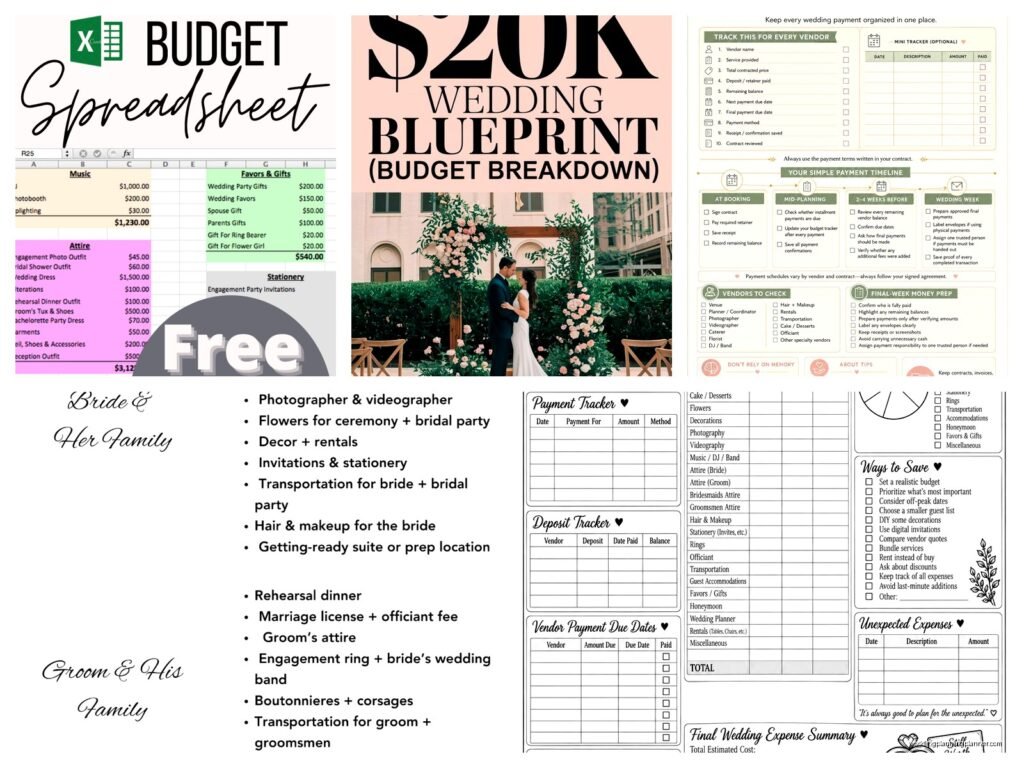
Also, random thing, but keep track of all your payment schedules in one place because juggling like eight different payment dates is how you accidentally miss something. I use a simple spreadsheet but there are also apps for this now. Whatever works for you, just… keep it organized because wedding planning is chaotic enough without also wondering if you paid the caterer’s second installment or not.
