Planning Guides, Style Guide
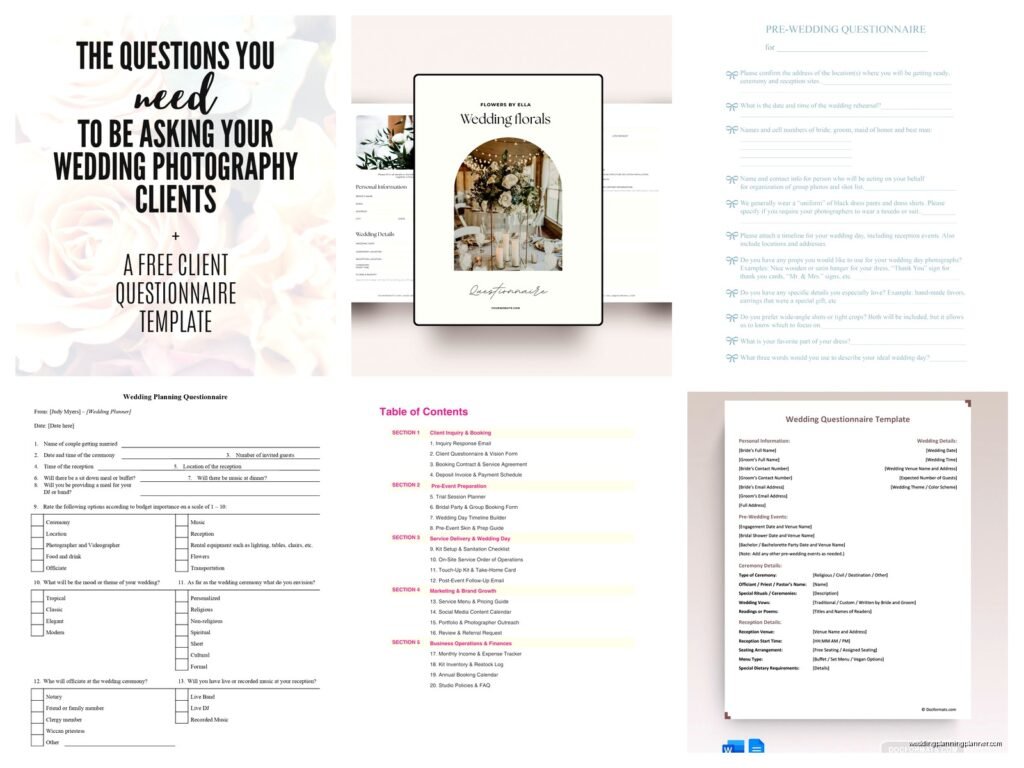
Wedding Questionnaire Template: Client Intake Form
Jul
Okay so wedding questionnaires are like the backbone of not completely screwing up a client relationship before you even start, and I learned this the hard way back in spring 2023 when I had this couple who wanted “rustic elegance” and I just… didn’t ask enough questions upfront and we ended up with them hating the first venue proposal because apparently rustic meant barn-chic not garden-rustic and I wanted to crawl under a table.
Why You Actually Need This Thing
The intake form is basically your insurance policy against assumptions. You think you know what someone means when they say “intimate wedding” but then they show up with a guest list of 200 people because to them intimate just means “family and close friends” which apparently includes their mom’s entire book club and dad’s golf buddies. I’ve seen it happen.
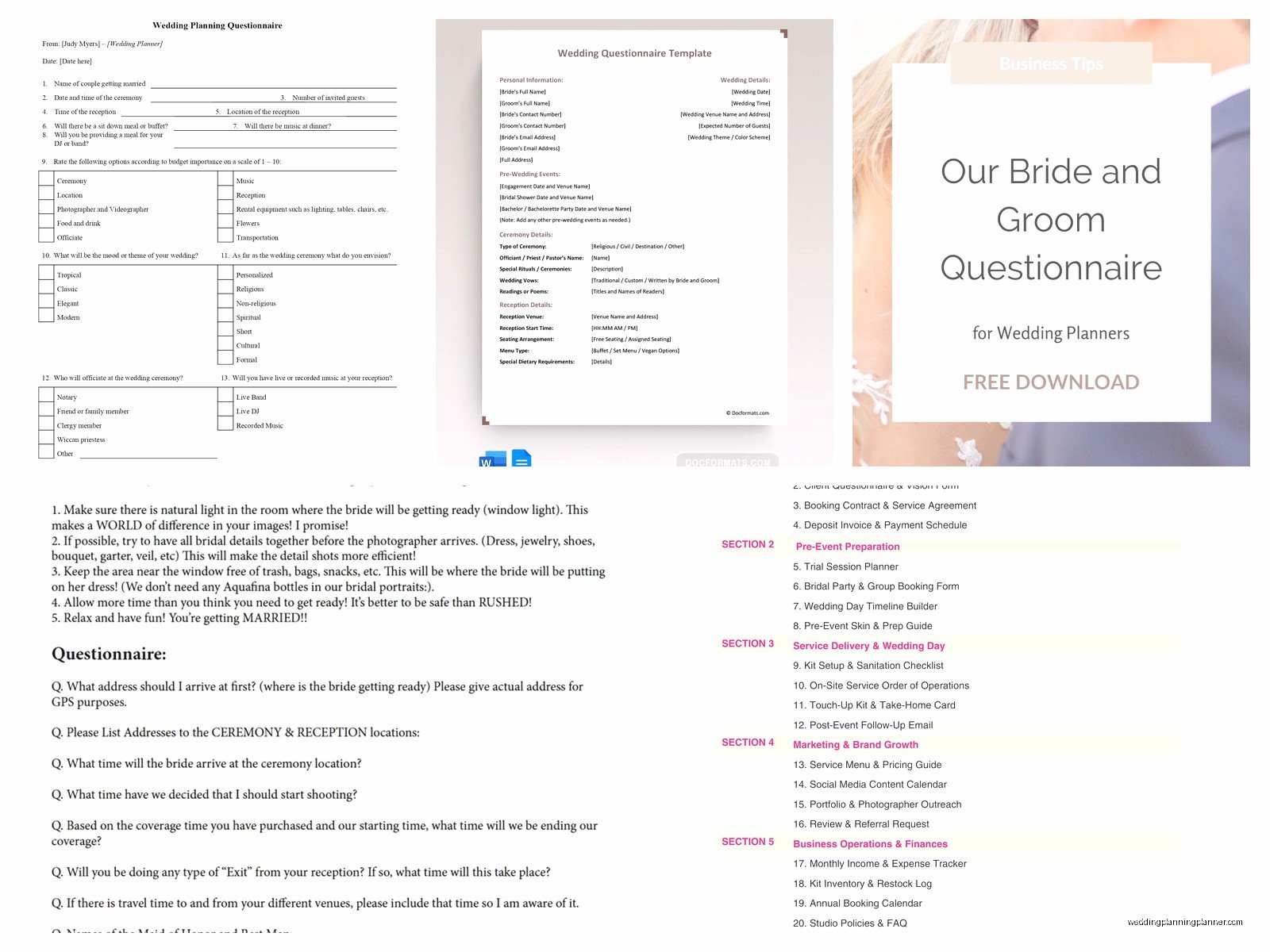
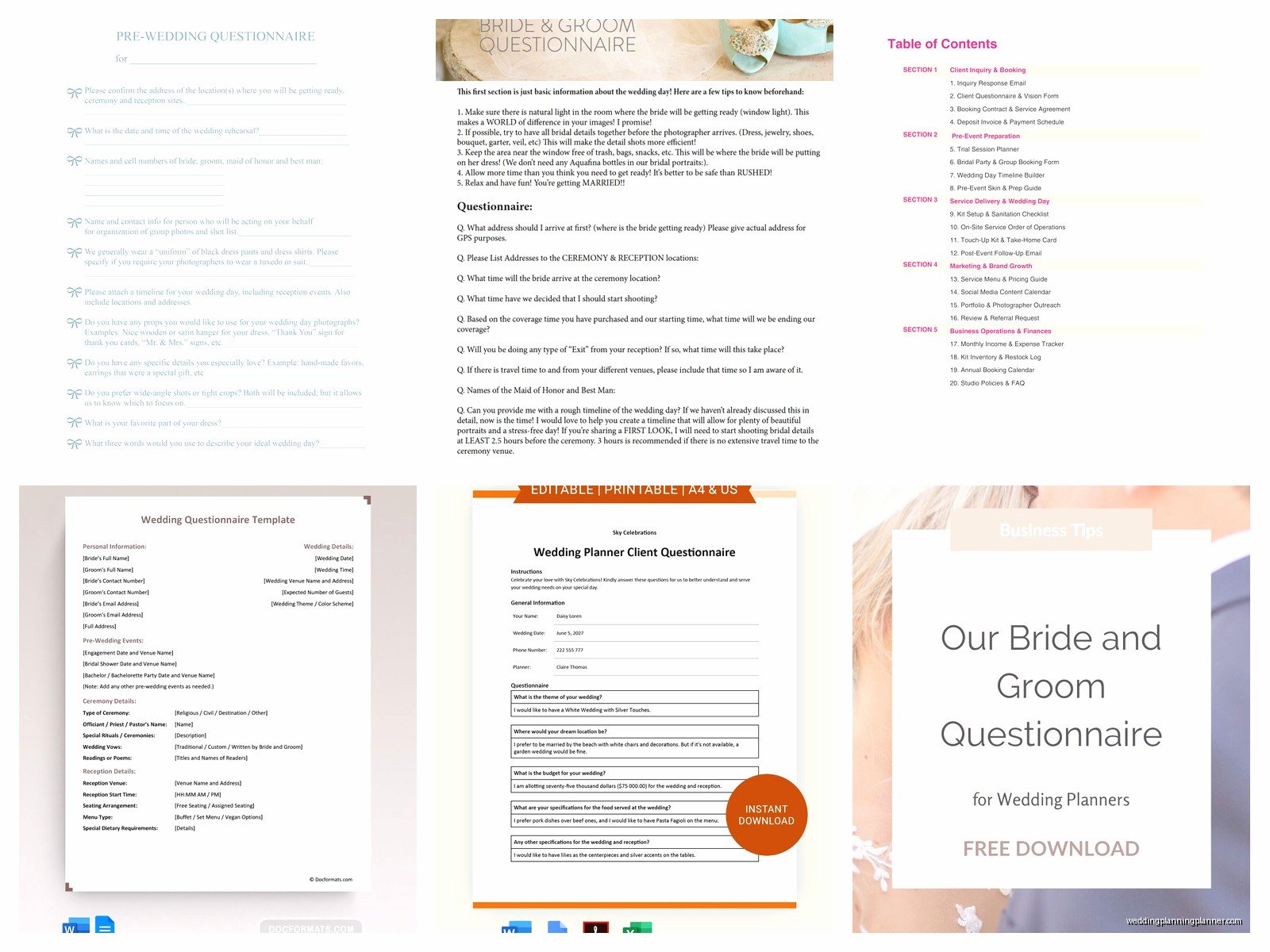
Your questionnaire needs to live somewhere accessible—I use a combination of Google Forms for initial contact and then a more detailed PDF they fill out after we sign the contract. Some planners do everything in fancy client management software which is great if you have the budget but honestly a well-organized Google Form works just fine.
The Basic Information Section
Start with the obvious stuff but make it thorough:
- Both partners’ full names (legal names for contracts)
- Preferred names if different
- Contact info for each person separately—phone, email, address
- Who’s the primary contact or are decisions joint
- Wedding date or preferred date range
- Backup dates if they’re flexible
- Estimated guest count with a range
The thing that annoyed me for YEARS was couples who would only give me one phone number and one email and then I’d be trying to reach them about time-sensitive stuff and the one person would be on a work trip with no service and we’d miss deadlines. So now I require both contacts even if they insist they share everything.
Budget Reality Check Questions
This is where people get weird and cagey but you gotta push through the awkwardness. I ask:
What’s your total wedding budget? Not what you think sounds reasonable to tell a vendor, but the actual number you have to work with including what family might contribute.
What’s already spent or allocated? Like did they already book a venue, put down deposits, buy a dress? This matters because if they say $50K budget but $30K is gone on the venue, we’re working with $20K not $50K.
What are your top three budget priorities? Some couples will spend anything on photography, others don’t care but want premium catering. You need to know this upfront.
Are you comfortable going slightly over budget for the right fit? This tells you how firm that number really is.
I also ask who’s contributing financially because it affects decision-making. If parents are paying for half, they’re gonna want input, and pretending otherwise just creates drama later.
The Vision and Style Section
This is where you dig into aesthetics and it needs to be specific because “romantic” means literally nothing. I include:
- Three weddings they’ve attended that they loved (and what specifically they loved about them)
- Three weddings they’ve attended that they didn’t vibe with (and why)
- Pinterest board links or Instagram saves
- Five adjectives to describe their ideal wedding
- Colors they’re drawn to vs. colors they hate
- Formality level on a scale of backyard BBQ to black-tie gala
- Time of day preference and why
- Indoor vs. outdoor or both
The adjectives thing is surprisingly useful. When someone says “whimsical, intimate, organic, luminous, joyful” you’re getting somewhere different than “classic, timeless, elegant, sophisticated, refined.”
Venue and Location Stuff
Ask about:
Geographic requirements—are they stuck in one city, open to destination, willing to go an hour outside town? I had a couple once who said they were flexible on location and then rejected every venue outside a 15-minute radius from the bride’s childhood home, which would’ve been helpful to know from the start.
Venue type preferences—hotel, barn, garden, museum, restaurant, private estate, weird unique space? And equally important, what they definitely don’t want. Some people have trauma from a bad wedding at a particular type of venue and you need to know that.
Guest experience priorities—do they care more about parking availability, hotel room blocks, accessibility for elderly or disabled guests, kid-friendliness? This shapes venue selection big time.
My cat just knocked over my coffee while I’m writing this which feels very on-brand for how chaotic wedding planning actually is…
The Ceremony Deep Dive
Don’t assume anything about ceremony structure:
- Religious, spiritual, secular, or a mix
- Officiant already chosen or need help finding one
- Cultural or family traditions that must be included
- Length preference (I’ve seen everything from 10 minutes to 90 minutes)
- Processional order and who’s walking with whom
- Any readings, rituals, or special elements
- Vows—traditional, personal, mix, or silent
- Music preferences or requirements
I always ask if there are any family situations I need to navigate carefully—divorced parents who won’t sit together, estranged siblings, family members who aren’t invited but might show up. This isn’t gossip, it’s logistics and security planning.
Reception Priorities
The reception is usually where the bulk of budget and planning energy goes so this section is gonna be long:
Food and drink: Dietary restrictions and preferences, bar setup (open bar, limited bar, beer and wine only, cash bar which nah don’t do that), meal style (plated, buffet, family style, food stations, cocktail reception only), importance of food quality vs. other elements.
Entertainment: DJ vs. band vs. playlist, must-play songs, do-not-play songs (every wedding has a do-not-play list and you need it in writing), first dance details, parent dances, other special dances, dancing importance level, other entertainment like photo booths or lawn games.
Flow and timeline: Do they want a receiving line, grand entrance, speeches (how many and when), cake cutting, bouquet toss, garter toss (mostly dying out thank god), sparkler send-off or other exit moment? What’s the ideal reception length?
Guest experience: Favors or nah, welcome bags for out-of-town guests, kids attendance policy, plus-one policy, seating style (assigned seats, assigned tables only, open seating).
Vendor Preferences and Existing Bookings
You need a clear picture of:
- Which vendors are already booked (get names and contact info)
- Which vendors they want you to book
- Which vendors they plan to book themselves
- Any vendors they’ve worked with before or were referred to specifically
- Any vendors they do NOT want to work with and why
- Preferences on vendor diversity, local vs. imported vendors, sustainability practices
I also ask about photography and videography priorities specifically because this is such a personal thing. Some couples want candid documentary style, others want heavily posed and edited, some want film photography, some specifically want digital. The more detail here the better.
Design and Décor Questions
This overlaps with vision but gets more tactical:
Floral budget and priorities—are flowers everywhere essential or could you do minimal florals with other décor? What flowers do they love or hate? Any allergies?
Lighting importance—do they understand that lighting transforms a space or do you need to educate them on this? Are they open to renting specialty lighting?
Rentals—what’s included with venue vs. what needs renting? Do they care about specialty rental items like vintage furniture, unique place settings, lounge areas?
Stationery suite—this is my other business so I always dig deep here… save the dates, invitations, programs, menus, place cards, signage, thank you cards. Digital vs. print vs. both. Design cohesion importance.
Logistics and Practical Stuff
Ask about:
Getting ready locations for each partner and their parties. Transportation needs—shuttles, classic cars, party buses, just coordinating Ubers? Setup and breakdown—who’s responsible, do they have friends and family who can help or does everything need to be vendor-managed?
Rehearsal and rehearsal dinner plans. Welcome events or after-parties. Next-day brunch. These extra events add up in planning time even if you’re not managing them directly.
Insurance and permits—are they aware they might need these? Weather backup plans for outdoor elements.
I had this wedding in summer 2021 where the couple insisted they didn’t need a rain plan because “it never rains in July here” and guess what happened… we scrambled to move everything indoors four hours before the ceremony and it was a nightmare that could’ve been avoided if we’d planned for it from the start.
Communication and Decision-Making
This section saves your sanity:
- Preferred communication method (email, text, phone, video calls)
- Response time expectations on both sides
- Meeting frequency preference
- Decision-making process—do they need time to discuss everything or can they decide in meetings
- Who else needs to be involved in decisions (parents, wedding party, etc.)
- Stress management styles and how you can best support them
I also ask about their work schedules and busy seasons because if one person travels constantly for work or they’re both teachers who disappear during school year, you need to plan around that.
The Weird But Important Questions
These are the ones that seem random but have saved me:
What are you most excited about for your wedding? This tells you what to protect and prioritize no matter what.
What are you dreading or stressed about? This tells you where to offer the most support and take things off their plate.
What’s non-negotiable vs. what are you flexible on? Helps with problem-solving when inevitable issues come up.
How do you handle conflict or disagreement with each other? Because you’ll witness it during planning and need to know if you should give space or mediate.
Any surprise elements or secret plans? Proposals during the reception, special performances, whatever. You can’t plan around secrets you don’t know about.
Timeline and Planning Stage Assessment
Figure out where they are:
- How long have they been engaged
- How much planning have they done already
- What decisions are already made vs. totally open
- Timeline between now and wedding—this affects everything about how you work together
- Any hard deadlines before the wedding (vendor deposit deadlines, invitation mail dates, etc.)
For rush weddings under six months, the questionnaire helps you triage what’s realistic vs. what needs to be adjusted or… I mean sometimes you just have to tell people that certain things aren’t gonna happen in the timeframe and it’s better to know that from the intake form than three weeks in.
How to Actually Use This Information
Collecting all this is pointless if you don’t reference it constantly. I keep a one-page summary document pulled from the questionnaire that has their key priorities, budget breakdown, non-negotiables, and communication preferences. This lives in every meeting agenda and vendor brief.
The detailed questionnaire responses go into your client management system or even just a well-organized Google Drive folder. When a vendor asks about music style or a venue asks about guest count, you’re not texting the couple for the fifteenth time, you’re checking the intake form.
Update the questionnaire as things change too. Guest counts shift, budgets get adjusted, people change their minds about wanting a live band. Keep a version history so you can track decisions and refer back to what they originally said when they forget why they made certain choices.
And honestly? The act of filling out a thorough questionnaire helps couples clarify their own vision. I can’t tell you how many times someone has said “we never actually talked about that until we saw it on your form” and it prevented conflicts later. The questionnaire is doing emotional labor for you before you even have the first real planning meeting.
The biggest mistake is making your questionnaire too short because you don’t want to overwhelm people. A wedding is a massive event with a million decisions—your intake form should reflect that reality. If it takes them an hour to fill out, that’s appropriate. You’re saving yourself dozens of hours of back-and-forth emails later.