Planning Guides, Style Guide
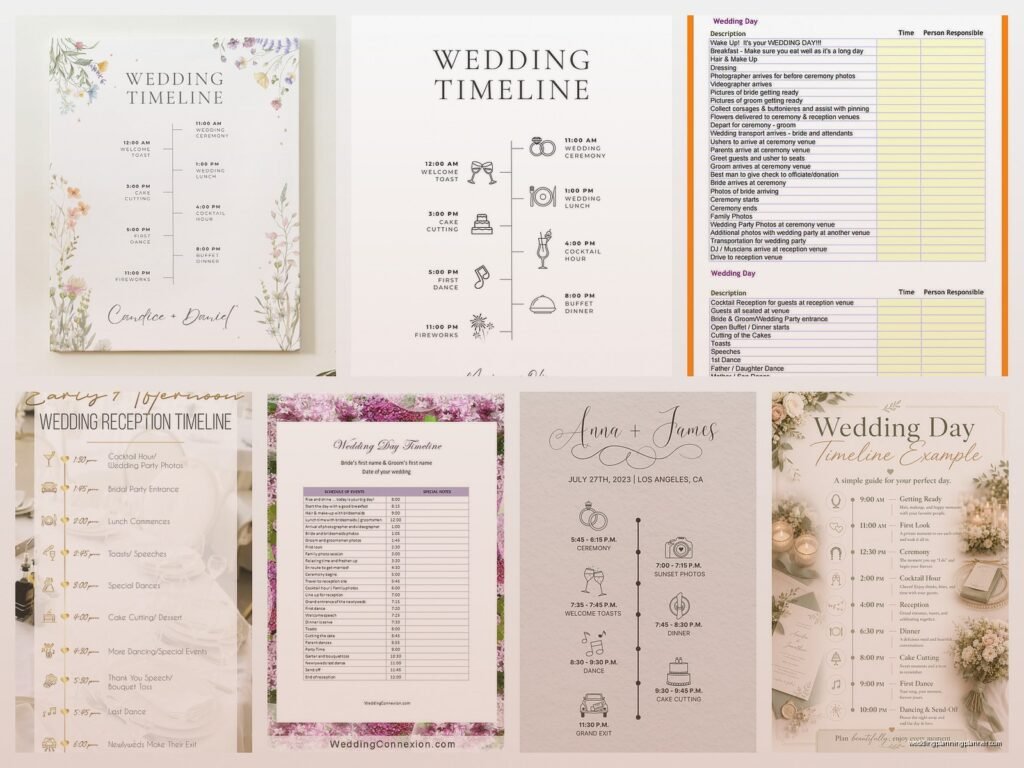
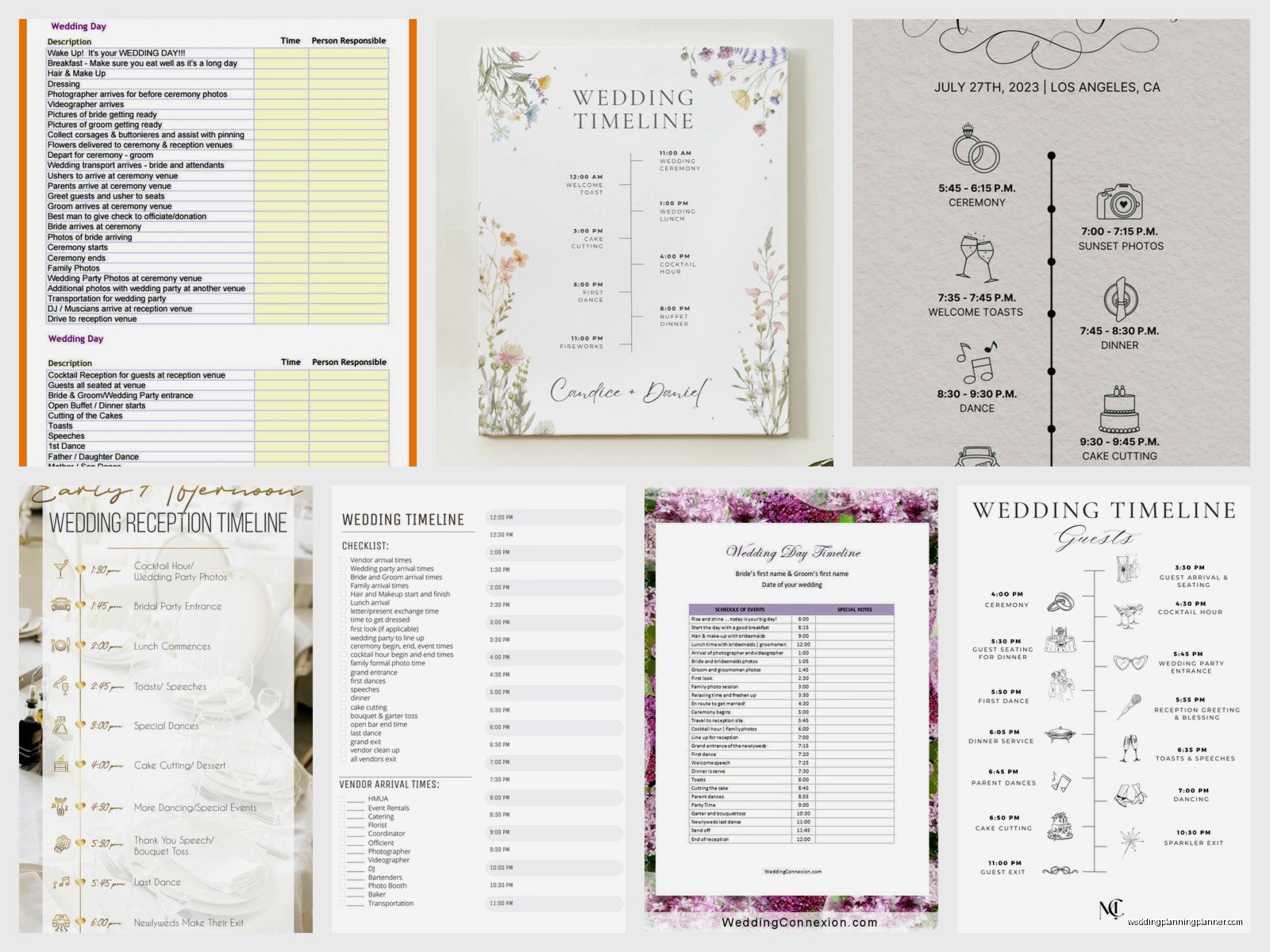
Wedding Reception Timeline Template: Party Schedule
Jul
The Reception Timeline Nobody Tells You Actually Works
Okay so you need a reception timeline that doesn’t make everyone stand around awkwardly or cut into dancing time because the speeches went too long. I’ve been doing this since 2009 and honestly the biggest mistake I see is couples downloading some Pinterest template and thinking it’ll just work for their specific situation—it won’t.
Here’s what actually happens: you need to build backwards from your end time. Like if your venue kicks you out at 11pm, that’s your anchor point. Everything else fills in from there, and I’m gonna walk you through this the way I’d explain it if we were sitting at a coffee shop and you were freaking out about your timeline.
The Basic Structure Nobody Questions But Should
Most reception timelines follow this pattern: cocktail hour, grand entrance, dinner, speeches, cake cutting, first dance, open dancing, last dance. But here’s the thing—this order isn’t gospel. Summer 2021 I had a couple who did their first dance RIGHT after the grand entrance, before dinner was even served, and it was actually perfect because everyone was already standing and excited. The energy was there.
Your cocktail hour is usually 60-75 minutes. This is happening while you’re taking family photos or couple portraits. Guests are drinking, eating apps, mingling. Don’t stress about entertaining them—they’re fine. They’re adults with drinks and cheese.
What drives me absolutely nuts is when couples try to cram the cocktail hour into 30 minutes because they think people will get bored. Nah. Your guests need time to find their seats, go to the bathroom, get a drink from the bar. The cocktail hour is a buffer that saves your whole timeline.
Grand Entrance Through Dinner
The grand entrance takes like 3-5 minutes max unless you’re doing some choreographed thing. You walk in, everyone claps, you sit down or go straight to your first dance. I usually tell couples to do a welcome toast here—super quick, just “thanks for coming, let’s eat”—because it transitions nicely into dinner service.
Dinner service is where timelines fall apart. Plated dinners take 45-60 minutes. Buffets can take 60-90 minutes depending on guest count. Stations or family-style might be 50-70 minutes. You gotta account for the actual eating time plus service.
This is when speeches happen and oh my god, you need to limit these. I had this wedding in spring 2023 where the maid of honor spoke for EIGHTEEN MINUTES. Eighteen. People were checking their phones. The food got cold. It was a disaster and the couple was too polite to cut her off.
Here’s my rule: 3-4 speakers maximum, 3-5 minutes each. That’s it. Best man, maid of honor, maybe one parent from each side. If your dad wants to speak AND your mom wants to speak AND your stepdad wants to speak, someone’s getting cut or you’re combining them. Put the most entertaining speaker last so you end on a high note.
The Actual Timeline Template Thing
Alright here’s what I give clients as a starting point for a 6-hour reception (5pm-11pm):
- 5:00-6:15pm: Cocktail hour (75 min)
- 6:15-6:20pm: Grand entrance (5 min)
- 6:20-6:25pm: Welcome toast/blessing (5 min)
- 6:25-7:15pm: Dinner service (50 min)
- 6:45-7:10pm: Speeches during dinner (25 min total, 3-4 speakers)
- 7:15-7:25pm: Cake cutting (10 min)
- 7:25-7:30pm: First dance (5 min)
- 7:30-7:40pm: Parent dances (10 min)
- 7:40-10:45pm: Open dancing (3 hours)
- 10:45-10:50pm: Last dance (5 min)
- 10:50-11:00pm: Send-off (10 min)
But like I said, this is just a framework. I’ve had 4-hour receptions and 8-hour receptions and they all need different approaches.
The Dancing Block Is Sacred
Notice how I gave you THREE SOLID HOURS of dancing time? That’s intentional. This is what people actually remember. Not your centerpieces, not your signature cocktail—they remember if the dance floor was packed and if they had fun.
Too many couples eat up dancing time with activities. They want a bouquet toss (10 min), garter toss (10 min), anniversary dance (10 min), special cultural traditions (15-20 min), surprise performance (10 min)… and suddenly you’ve only got 90 minutes of actual dancing. Everyone leaves early because there’s no momentum.
Pick ONE extra activity max. My cat literally just knocked over my water bottle while I’m writing this which feels relevant to how chaotic wedding timelines can get if you don’t protect that dance time.
Adjusting For Different Reception Lengths
For a 4-hour reception, you’re looking at basically cutting the cocktail hour to 45 minutes and the dancing to 90 minutes. It’s tight. You might skip cake cutting as a formal moment and just have it served as dessert. Parent dances might get combined into one song.
For a 5-hour reception, which is pretty standard, you get about 2 hours of dancing if you’re efficient with everything else. This is fine—most people don’t dance for more than 2 hours anyway unless there’s… certain substances involved which I’m not gonna get into.
For an 8-hour reception (usually brunch or lunch weddings), you have so much time you can do everything. Multiple cake cuttings if you want, I don’t care. Though honestly these long receptions can drag if your DJ isn’t good at reading the room.
The Stuff Nobody Remembers To Schedule
Sunset photos! If you want those golden hour couple shots, you need to block out 20-30 minutes during the reception. Usually this happens during open dancing when people won’t miss you as much. I always coordinate this with the photographer and DJ so there’s a smooth transition.
Private last dance—some couples want 2-3 minutes alone on the dance floor before the official last dance with everyone. You gotta tell your DJ/band this in advance or it won’t happen.
Vendor meals need to be scheduled too, usually during dinner service. Your photographer can’t shoot on an empty stomach for 8 hours.
The send-off needs setup time if you’re doing sparklers or glow sticks or whatever. Someone needs to hand those out, get people in position, etc. Budget 15 minutes for this even though the actual send-off is 5 minutes.
When To Do Cake Cutting
This is weirdly controversial but I’m gonna tell you what works: right after dinner, before dancing starts. Here’s why—everyone’s still at their tables, you have their attention, and it transitions nicely into the first dance. The cake cutting takes like 10 minutes including photos, then boom, you’re into the party portion.
Some people do it later during dancing but then you’re interrupting the flow, pulling people off the dance floor, and honestly half your guests have already left or they’re outside smoking or whatever.
Unless you’re doing a dessert-only reception or the cake IS your dessert service, in which case… different rules apply and we’d need a whole other conversation about that.
Cultural Traditions And Special Moments
I work with a lot of couples who have cultural traditions—hora, money dance, tea ceremony, jumping the broom, whatever it is. These need specific time blocks and usually they happen at strategic moments.
The hora, for example, works great right after parent dances to kick off the dancing portion. It gets everyone on the floor immediately. Money dances can happen mid-reception during open dancing—they don’t need a formal announcement necessarily.
Tea ceremonies or other cultural rituals that are more formal usually happen before dinner or right after the grand entrance. You want people seated and attentive, not three drinks in and ready to dance.
The Vendor Coordination Part
Your timeline needs to go to like eight different people: venue coordinator, caterer, DJ/band, photographer, videographer, florist (for timing on cake delivery or flower wall or whatever), transportation company, and your day-of coordinator if you have one.
And here’s what’s annoying—they all need it in different formats. Your DJ wants specific song choices noted. Your photographer wants to know exact timing for golden hour. Your caterer needs to know when to start plating. I usually create a master timeline and then customize it for each vendor which sounds extra but it prevents so many issues.
The week before the wedding, I do a final walkthrough call with the couple and key vendors. We go through the timeline minute by minute. Someone always catches something—like oh wait, we forgot to schedule when the mariachi band comes in, or actually Uncle Joe is doing a reading during dinner.
Buffer Time Is Your Friend
Build in 5-10 minute buffers between major transitions. If you schedule the grand entrance at exactly 6:00pm and dinner service to start at exactly 6:00pm, you’re gonna be stressed because something WILL run late. Your limo got stuck in traffic, your mom needed her lipstick touched up, whatever.
I learned this the hard way at a wedding where everything was scheduled to the exact minute and the bride had a panic attack because we were running 7 minutes behind. Seven minutes! It was fine, nobody noticed except her, but she couldn’t enjoy her own cocktail hour because she was watching the clock.
What If Things Run Long
They will. Something always runs long—usually speeches or dinner service. Here’s your priority list for what to cut:
- Bouquet/garter toss—honestly most guests don’t care about these anyway
- Anniversary dance—sweet but skippable
- Extra photo ops during reception—you’ve got enough photos
- Formal cake cutting if cake is being served as dessert anyway
What you DON’T cut: dancing time, dinner (obviously), first dance, parent dances. Those are the core memories.
Special Situations That Mess With Standard Timelines
Brunch or lunch weddings move faster. People don’t drink as much (usually), they leave earlier, and you can’t rely on darkness to create ambiance. Your dancing block might only be 60-90 minutes and that’s normal.
Outdoor weddings need sunset factored in. If you want dancing under the stars, you gotta time dinner to finish before it gets dark. Or if you want ceremony photos in daylight… you see where I’m going with this.
Venues with strict noise ordinances—like 10pm music cutoff—mean you need to start earlier or accept a shorter reception. I had a venue that required all music off by 9:30pm and we had to do a 2pm start time to make it work.
Multiple locations (ceremony at church, reception at different venue) eat up time in transportation. Budget at least 30-45 minutes for guest travel time, which means your cocktail hour might need to be 90 minutes.
The Day-Of Timeline Sheet
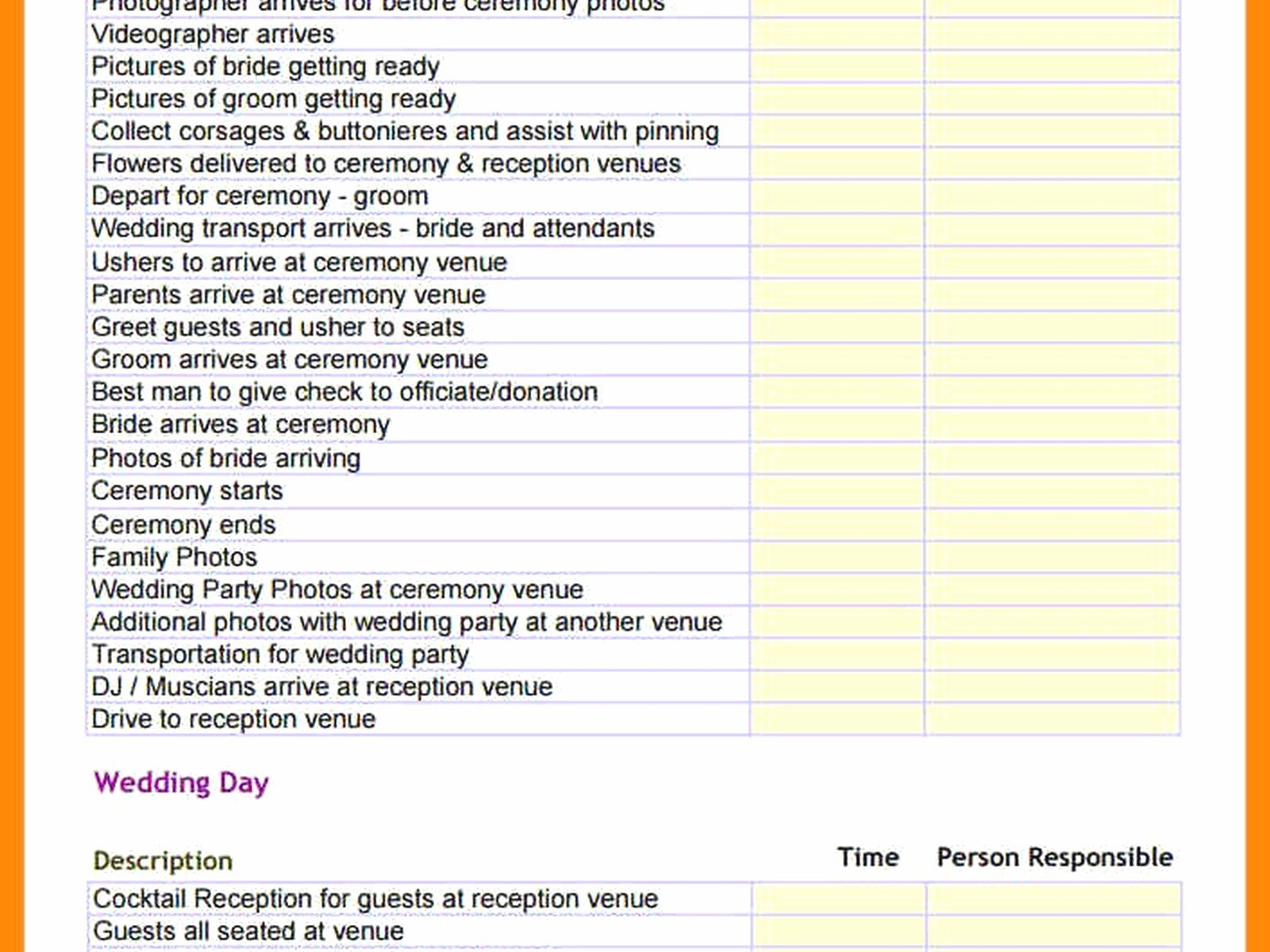
I create two versions: a detailed one for vendors (with setup times, breakdown times, all the behind-the-scenes stuff) and a simplified one for the wedding party and family. The family version just has the highlights—when to be ready for photos, when speeches are, when special dances happen.
Your wedding party needs to know when they’re “on duty” versus when they can relax. Like they need to be present for grand entrance and they’re probably in some photos, but they don’t need to sit at the head table through all of dinner if you’re doing a sweetheart table situation.
I also give the couple a “you’re off duty” time—usually once open dancing starts. That’s when they can stop worrying about hosting and just enjoy themselves. Before that, they’re greeting people, taking photos, doing all the formal stuff.
Sample Timelines For Different Scenarios
Laid-Back Backyard Wedding (4 hours, 6pm-10pm)
- 6:00-6:45pm: Cocktails and lawn games (45 min)
- 6:45-6:50pm: Everyone grab food from buffet stations (5 min announcement)
- 6:50-7:30pm: Casual dinner, people eating at their own pace (40 min)
- 7:15-7:25pm: Quick toasts during dinner (10 min, 2 speakers max)
- 7:30-7:35pm: First dance (5 min)
- 7:35-9:45pm: Dancing and hanging out (2+ hours)
- 9:30pm: Cake served during dancing, no formal cutting
- 9:45-9:50pm: Last dance (5 min)
- 10:00pm: Lights on, party over
Formal Hotel Wedding (6 hours, 6pm-12am)
- 6:00-7:00pm: Cocktail hour (60 min)
- 7:00-7:05pm: Grand entrance (5 min)
- 7:05-7:10pm: Welcome and blessing (5 min)
- 7:10-8:00pm: Plated dinner service (50 min)
- 7:30-7:55pm: Speeches during dinner (25 min, 4 speakers)
- 8:00-8:10pm: Cake cutting (10 min)
- 8:10-8:15pm: First dance (5 min)
- 8:15-8:25pm: Parent dances (10 min)
- 8:25-11:30pm: Open dancing (3+ hours)
- 9:30-9:50pm: Couple sneaks out for night shots (20 min)
- 11:30-11:35pm: Bouquet toss (optional) (5 min)
- 11:35-11:40pm: Last dance (5 min)
- 11:40-11:55pm: Sparkler send-off (15 min)
See how the longer reception gives you breathing room? You can add activities without killing the dance time. Though honestly by hour 5, half your guests are gonna be tired anyway unless your crowd is really into partying.
The biggest thing I want you to take away from this is that your timeline should reflect YOUR priorities, not what some template says you’re supposed to do. If you don’t care about cake cutting, skip it. If you want two hours of cocktail hour because you have an amazing appetizer spread, do it. The template is just a starting point to make sure you don’t forget anything important and that the flow makes sense logically—like don’t schedule toasts after everyone’s already drunk and dancing, you know?
Also gonna be real with you, even with the most perfect timeline, something will go differently than planned and that’s completely fine. I’ve never seen a wedding stick to the timeline exactly. The goal is to have a framework so your vendors know what’s happening and when, not to stress yourself out trying to execute every minute perfectly.