
Planning Guides, Style Guide
Wedding Set Up Services: Venue Installation & Decor
Oct
Wedding Setup Services Are Way More Complicated Than Anyone Thinks
So venue installation and decor setup is basically the backbone of making a wedding actually look like what the couple imagined, and honestly most people have no idea how much goes into it until they’re standing in an empty venue at 7am wondering where to even start. I’ve been doing this for like fifteen years now and the amount of times I’ve had to explain to couples that no, the centerpieces don’t just magically appear on tables is kinda wild.
The first thing you gotta understand is that setup services fall into different categories depending on what you actually need. There’s basic venue prep which is just getting the space ready—chairs, tables, linens. Then there’s decor installation which is where things get interesting and expensive. And finally there’s full-service design and installation where a team basically transforms the entire space and you just show up.
What Venue Installation Actually Covers
Most venues will include certain setup elements in their package but you need to read that contract super carefully because “setup included” can mean wildly different things. Some venues literally just mean they’ll unlock the doors and turn on the lights. Others will set up their standard chairs and tables in whatever configuration you want.
Basic installation usually includes table arrangement, chair setup, and maybe hanging some simple draping if the venue already has the infrastructure. You tell them you want 15 round tables of 8 and a head table, they make it happen. But here’s where it gets tricky—if you want those chairs to have covers or sashes or if you want specialty linens that aren’t the venue’s standard white or ivory, that’s additional. And someone has to put those on.
I had this wedding back in spring 2023 where the venue swore up and down that setup was included and the bride was so relieved because her budget was tight. We get there the morning of and yeah, tables and chairs are out, but they’re in completely the wrong configuration, the linens are wrinkled to hell, and nobody told us we needed to provide our own team to put the chair covers on. We had 200 chairs and three hours. I’m still annoyed about that one because it was in the contract but buried in section 8.4 subsection B or whatever.
Decor Installation Is Where You Actually Need Help
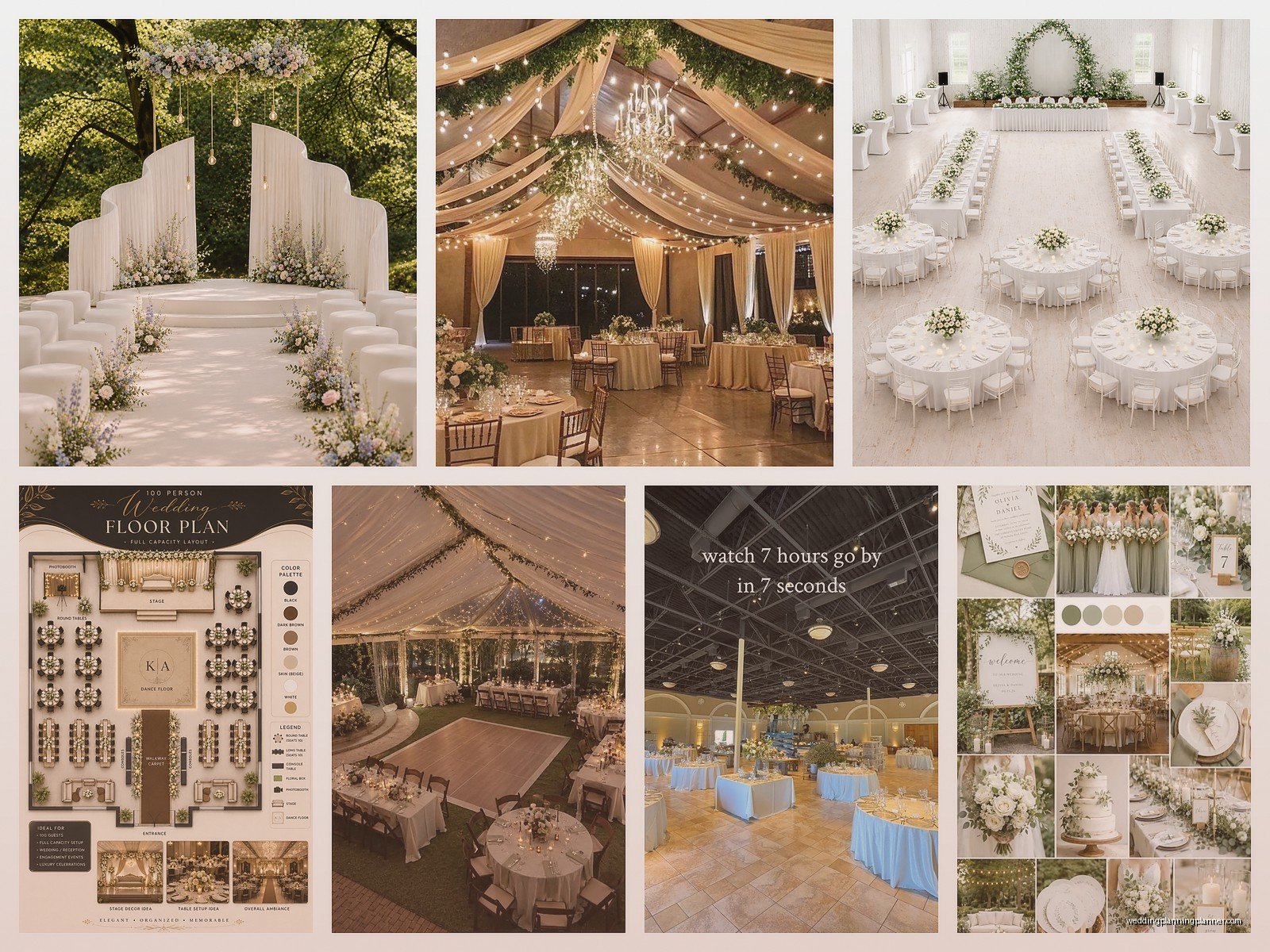
Okay so decor installation is different from basic setup. This is centerpieces, signage, escort card displays, ceremony arbors, hanging installations, uplighting, draping, floral arrangements, candles, all that stuff that makes the venue look like a wedding and not just a room with tables.
You have a few options here. You can DIY it which I’ll talk about in a second, you can hire your florist or decorator to handle installation, or you can hire a separate setup crew. Each option has pros and cons and honestly it depends on how complex your decor is and how much you trust your family members to not screw things up.
If you’re going with a professional installation team, they typically charge either by the hour or a flat rate depending on the scope. Hourly rates for setup crews range from like $35-75 per person depending on your location and their experience level. A basic setup with centerpieces and some signage might take a 2-person team about 3-4 hours. More complex installations with draping, hanging elements, elaborate florals—you’re looking at 6-8 hours or more with a bigger team.
What really matters is having a detailed floor plan and timeline. The setup crew needs to know exactly where everything goes and in what order. You can’t have them setting up centerpieces while the florist is still trying to install the ceremony arch in the same space. It’s like a weird choreographed dance and… actually my cat does this thing where he tries to walk across my keyboard while I’m working and it’s kind of the same energy, everyone trying to occupy the same space at the same time and causing chaos.
DIY Setup Sounds Cheap Until You Actually Do It
Let’s talk about DIY setup because so many couples think they’re gonna save money by having their wedding party and family handle it. And look, sometimes this works great! But you need to be realistic about what you’re asking people to do.
First, somebody needs to be in charge. Not the bride, not the groom, not the parents who are already stressed. You need one person who has the floor plan, knows where everything goes, and can direct people. Without this person you’ll have twelve people standing around asking questions and nothing getting done efficiently.
Second, you need way more time than you think. If you’ve never set up a wedding before, add at least 50% more time to whatever you estimated. Putting linens on tables takes forever. Setting up 20 centerpieces sounds easy until you realize each one has multiple components and you’re trying to make sure they all look identical and face the right direction.
Third, someone’s gonna get stressed and possibly fight. I’ve seen bridesmaids have complete meltdowns over escort card arrangement. Family drama comes out when people are tired and hungry and trying to hang draping at 9am. Just… be prepared for that possibility.
The stuff you can reasonably DIY: simple centerpieces, signage placement, escort card displays, favor setup, basic table decorations. The stuff you should not DIY unless someone in your family is actually experienced: anything hanging from the ceiling, complex draping, floral installations that need specific techniques, lighting setup, anything involving ladders or electrical.
Working With Vendors on Installation
Most florists include delivery and installation in their pricing, but you need to confirm exactly what that means. Are they just dropping off bouquets and centerpieces, or are they actually placing everything? Will they come back for teardown? What about ceremony flowers that need to be moved to the reception—who handles that?
Your rental company should deliver and set up their items, but again, confirm timing and what’s included. Are they setting up the place settings or just putting plates on tables? Are they arranging the lounge furniture or just dropping it wherever?

The thing that annoys me most about vendor installation is when timelines aren’t coordinated. You’ll have the rental company wanting to come at 8am, the florist says they need the rentals in place first so they’re coming at 10am, but then the draping company can only come at 9am and they need access to the ceiling which means ladders which means the rental company can’t have tables underneath yet. It’s a whole thing and this is why you need either a planner or a really detailed timeline that everyone agrees to in advance.
Setup Timeline and Logistics
Venue access time is crucial and you need to negotiate this before you sign anything. Some venues only give you access 4 hours before your event start time. That might sound like enough but if you have any kind of elaborate setup, it’s not. You want at least 6-8 hours for a full setup, more if you’re doing major transformations.
The setup order generally goes: structural elements first (draping, arbors, backdrops), then furniture and rentals, then linens, then decor and florals, then final touches and lighting. You can’t do these out of order without creating problems.
You also need to think about load-in access. Can vendors drive up to the door or is there a loading dock situation? Are there stairs? Elevators? Is there somewhere to store empty boxes and equipment during the event? I’ve done setups where we had to carry everything up three flights of stairs because the elevator was broken and nobody told us in advance.
What to Include in Your Setup Brief
If you’re hiring setup services, you need to provide them with clear information. This includes a scaled floor plan with table numbers and exact placement, photos or sketches of what you want (Pinterest boards are actually helpful here), a list of every single item that needs to be set up and where it goes, and any special instructions.
For centerpieces, specify which tables get which arrangements if you’re mixing designs. For signage, note exact placement and whether it needs an easel or stand. For anything that needs assembly, either provide instructions or make sure the setup team knows what they’re doing.
I create what I call a “setup bible” for every wedding which is basically a binder with the floor plan, photos of each decor element, a master checklist, vendor contact info, and the timeline. This lives with whoever is running setup and it means anyone can answer questions without bothering you.
Ceremony to Reception Flip
If you’re doing ceremony and reception in the same space, the flip is its own special nightmare that needs planning. You need a dedicated team to handle this during cocktail hour, and it needs to happen fast. We’re talking 60-90 minutes usually to completely transform a space.
The ceremony chairs need to go somewhere—either they’re getting moved to become reception seating or they’re being cleared entirely. The ceremony arch or backdrop needs to be struck or repositioned. Any aisle decor needs to be repurposed or removed. Then all your reception elements need to come out and get set up.
This is not a job for your wedding party because they should be taking photos and enjoying cocktail hour. This is definitely a job for professionals or at minimum some very reliable family friends who know what they’re doing. And you need the venue to agree to this plan because some venues have rules about what can happen during the flip.
Breakdown and Cleanup
Okay so everyone focuses on setup but breakdown matters too. Who’s taking down decorations at the end of the night? Who’s packing up your personal items? What needs to go home with you versus what’s getting picked up by vendors?
Most setup crews charge separately for breakdown or you can sometimes negotiate it into the package. Vendors will pick up their own stuff but someone needs to gather your personal items—the card box, leftover favors, that expensive cake topper, signage you want to keep, decorations you’re reusing or returning.
Assign someone to be in charge of this who isn’t the couple and who isn’t gonna be super drunk by the end of the night. Give them a list of what needs to be collected and where it’s going. I’ve had to retrieve so many items from venues the next day because nobody remembered to grab them and it’s such a pain.
Costs and Budgeting
Setup services can range from a few hundred bucks for basic help to several thousand for full installation. If your florist charges $3000 for flowers, installation might be included or might be an additional $500-800. A separate setup crew for 4 hours might run $600-1200 depending on team size and your market.
For draping and structural installations you’re looking at higher costs because it requires more expertise and equipment. A draped ceiling installation might cost $2000-5000 just for the labor, not including the draping rental itself.
One way to save money is to reduce complexity. Every additional element adds setup time. Simple centerpieces that come pre-arranged are faster to place than ones that need assembly onsite. Minimal ceremony decor means less to move during the flip. Sometimes less really is more, both aesthetically and practically.
Questions to Ask Before Hiring Setup Services
You want to know how many people will be on the setup team and who’s supervising them. What’s their experience level with weddings specifically? Can they provide references or photos of past setups? What’s included in their rate and what costs extra?
Ask about their insurance because if someone breaks something expensive at your venue, you want to know who’s liable. Get clarity on timing—what time will they arrive and how long do they estimate the work will take? What happens if they run over?
Find out what they need from you and when. Most setup teams want all your items delivered to them at least a few days before, labeled and organized. If you’re dropping stuff off the morning of the wedding, that’s gonna create problems and delays.
The Reality Check
Here’s the thing about wedding setup that nobody really tells you—it’s physical labor and it takes longer than you think and something will probably go wrong. A centerpiece will break, someone will forget an item, the draping won’t hang quite right, whatever. This is normal and it’s why you build buffer time into your timeline.
Professional setup services are worth it if your budget allows because they know how to problem-solve and they work efficiently and you don’t have to worry about it. But if you’re doing it yourself or with help from friends, just be organized and patient and have a backup plan for the stuff that doesn’t work out exactly as imagined. Nobody in your wedding will notice if the escort cards are arranged slightly differently than you planned or if one centerpiece is facing the wrong direction. They will notice if you’re stressed and running around trying to fix things during your own event, so at some point you gotta just let it go and trust that it’ll be fine.
