Planning Guides, Style Guide
Wedding Venue Contract Template: Location Agreement Form
Jun
Okay so venue contracts are literally the most important piece of paper in your entire wedding planning process
I cannot stress this enough and honestly it drives me crazy when couples just skim through and sign without reading because back in spring 2023 I had a bride call me sobbing—literally sobbing—because her venue double-booked her date and there was NOTHING in her contract about what happens if they screw up. Like nothing. She had no recourse except small claims court and a massive headache six weeks before her wedding.
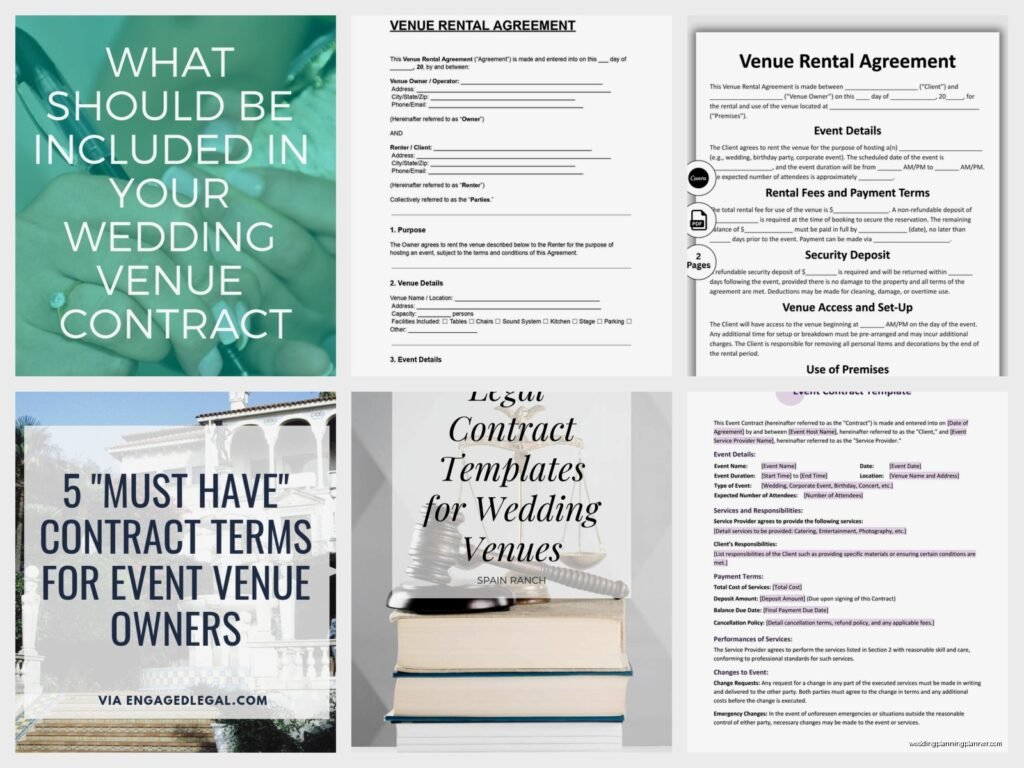
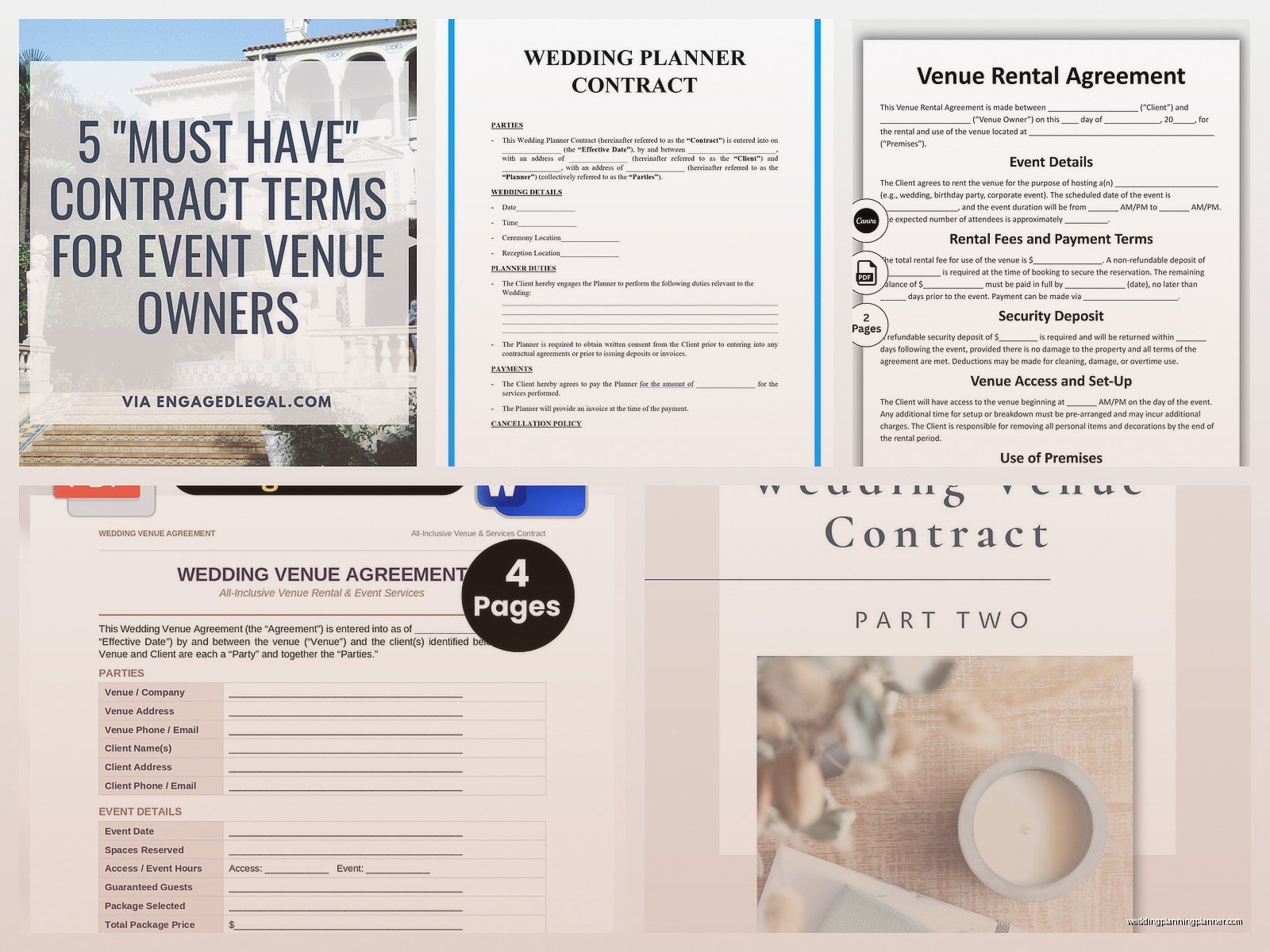
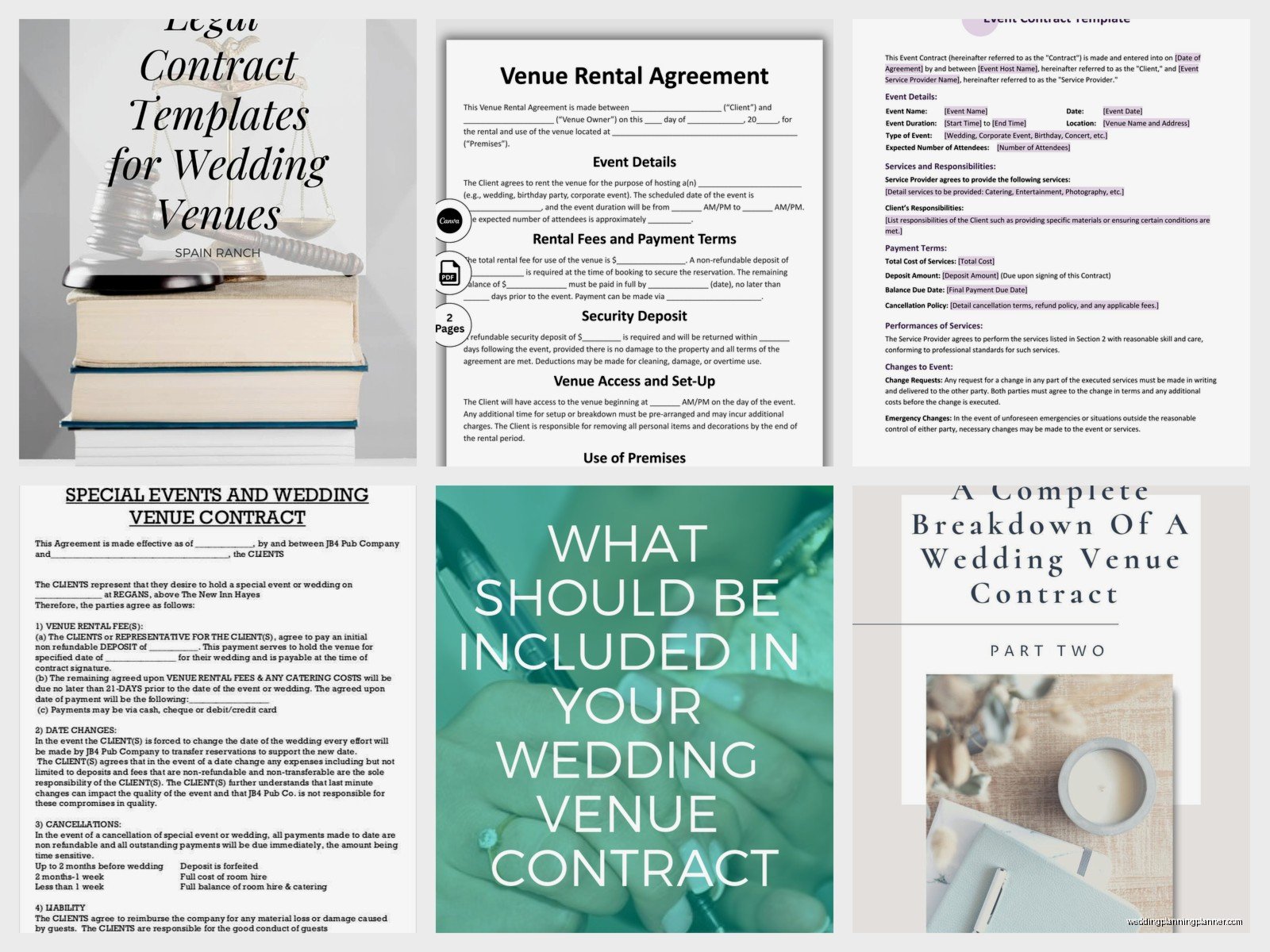
So here’s what you actually need in a venue contract template or location agreement form or whatever your venue calls it. I’m gonna break this down section by section because if you’re creating your own template or reviewing one from a venue, you need to know what’s standard and what’s sketchy.
The Basic Info Section (seems obvious but people mess this up)
First thing at the top should be the names of both parties. That means the couple getting married—both of your legal names, not like “The Smith Wedding” because that’s not legally binding—and the venue’s official business name. Not just “Riverside Barn” but “Riverside Barn LLC” or whatever their registered business entity is.
Then you need the date. The actual wedding date spelled out like “Saturday, October 14, 2024” not just “10/14/24” because I’ve seen mix-ups with European date formats and it’s just… anyway. Also include the backup rain date if you have one, though most venues won’t guarantee availability for a rain date without you basically booking two dates.
Time specifications matter too. You want “2:00 PM to 11:00 PM” not “afternoon to evening” because that’s how you end up fighting about when you gotta shut down the music. Include setup time if you’re allowed early access and breakdown time after.
Money Stuff (this is where it gets real)
The total cost needs to be crystal clear. Like “$8,500 venue rental fee” broken down into what’s included. Does that cover tables and chairs? Linens? Sound system? Parking attendant? I once reviewed a contract where the “venue fee” was just for the space and literally everything else was extra—chairs were $3 each, tables were $25 each, and the couple’s budget exploded.
Payment schedule is crucial. Most venues want something like 25% deposit to hold the date, another 25% at six months out, 25% at three months, and final 25% two weeks before. Make sure the due dates are specific calendar dates, not vague terms.
And here’s what annoys me SO MUCH—hidden fees. The contract should explicitly list any additional fees: service charges (usually 18-22%), sales tax (varies by state but usually 6-10%), overtime fees (often $200-500 per hour if you go past contracted time), corkage fees if you’re bringing your own alcohol, and cake cutting fees which are honestly ridiculous but venues charge them anyway.
Cancellation and Refund Policy
This section saved my butt during 2020-2021 when COVID was canceling everything. You need to know exactly what happens if you cancel and what happens if THEY cancel.
Standard cancellation terms usually look like: cancel more than 12 months out and you lose your deposit but get everything else back. Cancel 6-12 months out and you lose 50%. Cancel within 6 months and you lose everything. But get this in writing with specific dollar amounts, not percentages, because math gets fuzzy when people are upset.
Force majeure clause—fancy term for “act of God” stuff. This covers natural disasters, pandemics, government shutdowns, stuff neither party can control. After COVID every contract should have this updated because old contracts from like 2019 didn’t account for global pandemics and it was a mess. The clause should specify whether you get a refund, credit toward a future date, or what.
Also what happens if the venue goes out of business? Sounds dramatic but I’ve seen it happen. There should be language about where your deposit money is held (hopefully in escrow, not just their general operating account).
What’s Actually Included
This section needs to be like stupidly detailed because assumptions kill budgets. List every single thing the venue provides: number of chairs, type of chairs, number of tables, table sizes, linens and colors available, place settings, glassware, whether someone sets all this up or if that’s on you.
If they’re providing a coordinator, what exactly does that person do? Day-of coordination is different from month-of coordination is different from full planning. I need this spelled out because “coordination” means different things to different venues.
Parking—how many spots, is there an attendant, is parking free for guests or do they pay. Restroom facilities and how many. Climate control (heat/AC) and who controls the thermostat because you’d be surprised how many fights happen over temperature.
Kitchen access if you’re bringing in a caterer. Some venues have commercial kitchens, some have warming kitchens only, some have literally nothing. Your caterer needs to know this months in advance.
Vendor Restrictions and Requirements
Ugh this section can be tricky. Some venues have “preferred vendor lists” which is fine, but read carefully whether it’s preferred or REQUIRED. If they require you to use their catering, that needs to be stated with pricing. If they require you to use their bar service, same thing.
Insurance requirements—most venues now require your vendors to carry liability insurance and name the venue as additionally insured. This is normal. What’s not normal is requiring like $5 million in coverage for a tiny 50-person wedding; $1-2 million is standard.
Noise ordinances and curfews. If the venue is in a residential area there might be noise restrictions after 10 PM or whatever. This affects your DJ/band situation and you gotta know upfront.
Alcohol policies are huge. Can you bring your own? Is there a corkage fee? Do they provide bartenders or do you hire them? Who’s responsible for the liquor license? In some states the venue holds it, in others your caterer needs it. Who’s liable if someone overserves a guest? This stuff matters.
Damage and Liability
You need a clear damage deposit policy. Usually it’s like $500-1000 held separately and returned within 30 days if there’s no damage. Define what counts as “damage” versus normal wear and tear because dancing scratches on floors shouldn’t cost you your deposit but red wine on white carpet probably will.
Liability for guest injuries—the venue should carry their own liability insurance but you might need event insurance too. I always recommend couples get it anyway; it’s like $150-300 and covers so much potential disaster.
Who’s responsible for guest belongings? Usually nobody, but it should say that explicitly so there’s no confusion if Aunt Martha’s purse goes missing.
Ceremony and Reception Logistics
If you’re doing both ceremony and reception at the same venue, the contract needs to specify both spaces. Like “Garden area for ceremony 4:00-4:30 PM, Ballroom for reception 5:00-11:00 PM” with flip time built in.
Backup plan for outdoor ceremonies. Is there an indoor space included or is that extra? I worked with a venue once where the indoor backup space was an additional $1,200 and the couple didn’t know until it started raining the morning of their wedding. Not fun.
Load-in and load-out times for vendors. When can your florist access the space? When does everything need to be out? Some venues are strict about this—like everything out by midnight or you pay overtime fees.
Rules and Restrictions
This is where venues list all their “no” stuff. No glitter (super common now because it’s impossible to clean). No confetti. No rice or birdseed. No sparklers indoors. No candles unless they’re in enclosed hurricanes. No nails or tape on walls. No moving furniture.
Some of these are reasonable safety stuff and some are kinda annoying but you need to know them because your decorator needs to know them. I had a client who wanted to hang string lights and didn’t realize the venue prohibited any ceiling attachments—she’d already bought $400 worth of lights.
Guest count minimums and maximums. If the space holds 200 but requires a minimum of 100 guests, that affects your budget significantly. Also what happens if your final count is lower than you estimated—do you still pay for the higher number?
The Walkthrough and Final Details
Contract should guarantee you at least one walkthrough before the wedding, preferably during the same time of day/season as your actual wedding so you can see lighting and stuff. Some venues offer multiple walkthroughs, some charge for additional ones.
Final guest count deadline—usually due 7-14 days before the wedding. After that you’re locked in and paying for that number even if people don’t show. But also the venue should accommodate a small percentage over (usually 5%) without advance notice because people always bring unexpected plus-ones.
Rehearsal time if that’s included. Not all venues include a rehearsal slot and you might need to book it separately or pay extra.
The Fine Print Nobody Reads But Should
Dispute resolution clause—does the contract require mediation before lawsuit? Arbitration? What state’s laws govern the contract? This seems boring until you’re actually in a dispute and then it matters a lot.
Modification terms—how do you change the contract if something comes up? Needs to be in writing, both parties sign, etc. Verbal agreements don’t count even if the venue coordinator promises you something.
Severability clause basically says if one part of the contract is found invalid, the rest still stands. Standard legal stuff but should be there.
My cat just knocked over my coffee while I’m writing this so sorry if this gets scattered but umm where was I…
Special Provisions You Might Need
Right of first refusal if you want to book additional dates (like for an anniversary party). Some venues offer this to wedding couples.
Photo and video rights—can the venue use your wedding photos for their marketing? Do you have approval rights? Some couples don’t care, some really don’t want their wedding on the venue’s Instagram.
Exclusive use of space—are you the only event that day or could there be another wedding in a different area? This affects noise, parking, bathroom lines, all of it.
Overnight accommodations if the venue has rooms. How many rooms, what rate, is there a room block minimum, when’s the cutoff date for guests to book.
Early access for decorating—can you come in the day before to set up or only morning-of? This is huge for DIY couples who need time to set up all their stuff.
Red Flags to Watch For
If a venue won’t give you a written contract and wants to operate on a handshake, run. Just run.
If they won’t let you take the contract home to review and want you to sign immediately, that’s sketchy. Any legitimate venue will give you time to review, show your lawyer or wedding planner, whatever you need.
If the cancellation policy has NO refund possibility under any circumstance, that’s pretty harsh. Even non-refundable deposits usually have some wiggle room for extreme circumstances.
If there’s language about them being able to move you to a different space without your approval, nah. That’s not okay. They can suggest alternatives if something comes up but you should have final say.
Automatic renewal clauses don’t really apply to wedding venues but I’ve seen some weird event space contracts that have them, so just watch for any language about automatic anything.
Actually Getting Changes Made
Here’s the thing—venue contracts aren’t necessarily set in stone. You can negotiate, especially if you’re booking during their slow season or if you’re bringing a lot of business (like rehearsal dinner plus wedding plus brunch).
I’ve gotten payment schedules adjusted, gotten overtime fees reduced, gotten additional walkthrough visits added, all just by asking professionally. The worst they can say is no. Best case you save money or get better terms.
Strike through anything you disagree with, initial it, have them initial it. Add addendums for special agreements. Everything in writing, everything signed by both parties.
If something’s verbally promised but not in the contract, it doesn’t exist. I don’t care how nice the venue coordinator is or how much you trust them—people leave jobs, venues get sold, memories fade. Get it in writing.
The Signature and Date
Both parties need to sign and date. If you’re signing on behalf of someone else (like parents paying), make sure the contract specifies who’s financially responsible. Keep a copy—like multiple copies. One in your wedding binder, one digital copy in your email, maybe one with your planner if you have one.
Read it one more time before you sign because once you sign you’re committed and breaking the contract means losing money at minimum, lawsuit at worst.
Also super important—make sure the person signing for the venue has authority to do so. Not just any employee can legally bind the business. Should be an owner, manager, or someone with documented authority.
Alright so that’s basically everything you need to know about venue contracts and I know it seems like a lot but honestly spending two hours reading and understanding your contract can save you thousands of dollars and massive stress later, so just do it even though it’s boring and involves reading a bunch of legal language that makes your eyes cross.