Planning Guides, Style Guide
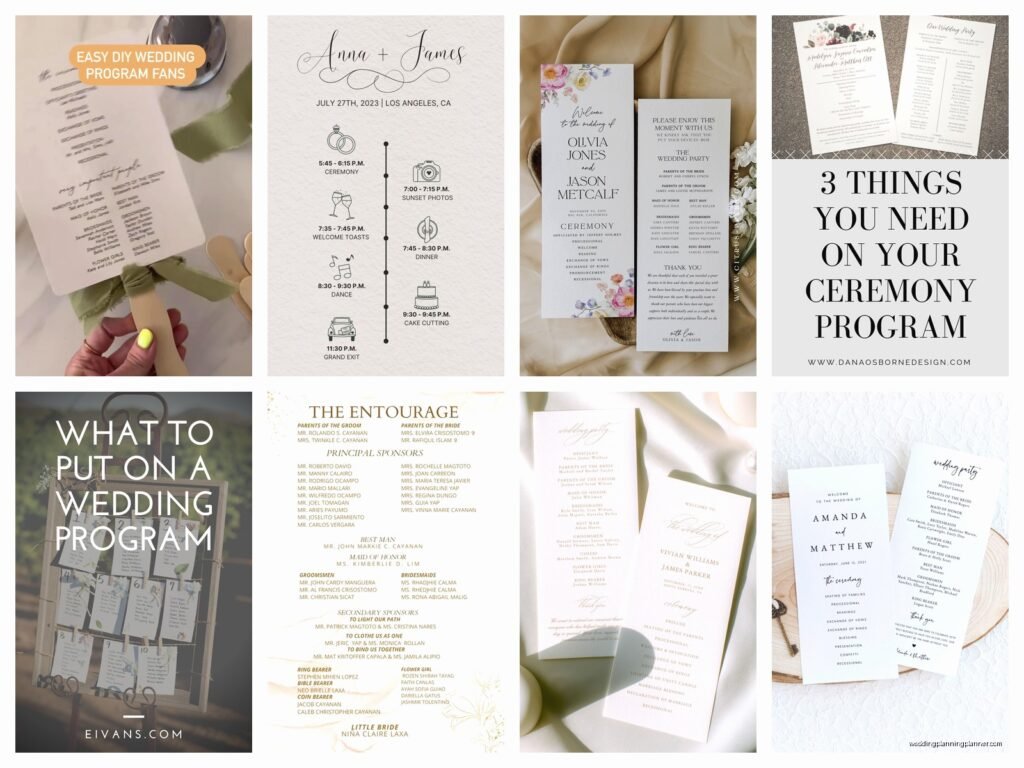
Sample Wedding Programs: Ceremony Order Examples
Mar
Okay so wedding programs and ceremony order
Right so the ceremony order is honestly one of those things that sounds super straightforward until you’re actually sitting there trying to figure out if the unity candle goes before or after the vows and then suddenly it’s 11pm and you’ve been staring at your laptop for two hours. I had this bride in spring 2023 who changed her ceremony order like six times because her mom kept insisting the readings had to come before the processional which like… that’s not even how it works but anyway.
The basic structure is gonna be your best friend here. Most ceremonies follow a pretty standard flow and you can customize from there without reinventing the wheel.
Traditional Ceremony Order (the foundation)
This is what I give every client as a starting point:
- Prelude (music while guests arrive)
- Processional
- Welcome/Opening remarks
- Invocation or opening prayer (if religious)
- Readings
- Officiant’s message or sermon
- Declaration of intent (“do you take…”)
- Vows
- Ring exchange
- Unity ceremony (optional)
- Pronouncement
- Kiss
- Presentation of the couple
- Recessional
That’s your skeleton. Everything else is just decorating the bones which sounds kinda morbid but you know what I mean.
Sample Program #1: Classic Religious Ceremony
Prelude
Canon in D – Johann Pachelbel
Air on G String – J.S. Bach
Processional
Bridal Party: Trumpet Voluntary – Jeremiah Clarke
Bride’s Entrance: Bridal Chorus – Richard Wagner
Welcome
Father Michael O’Brien
Opening Prayer
First Reading
1 Corinthians 13:4-8
Read by Sarah Mitchell, sister of the bride
Second Reading
“The Art of Marriage” by Wilferd Arlan Peterson
Read by James Cooper, brother of the groom
Homily
Father Michael O’Brien
Declaration of Intent
Exchange of Vows
Blessing and Exchange of Rings
Lighting of the Unity Candle
“The Prayer” – performed by the St. Mary’s Choir
The Lord’s Prayer
Pronouncement of Marriage
The Kiss
Presentation of Mr. and Mrs. Anderson
Recessional
Wedding March – Felix Mendelssohn
This format works for Catholic, Protestant, most Christian ceremonies really. You can see how it flows – music, people walk in, God stuff, promises, more God stuff, married, walk out. Simple.
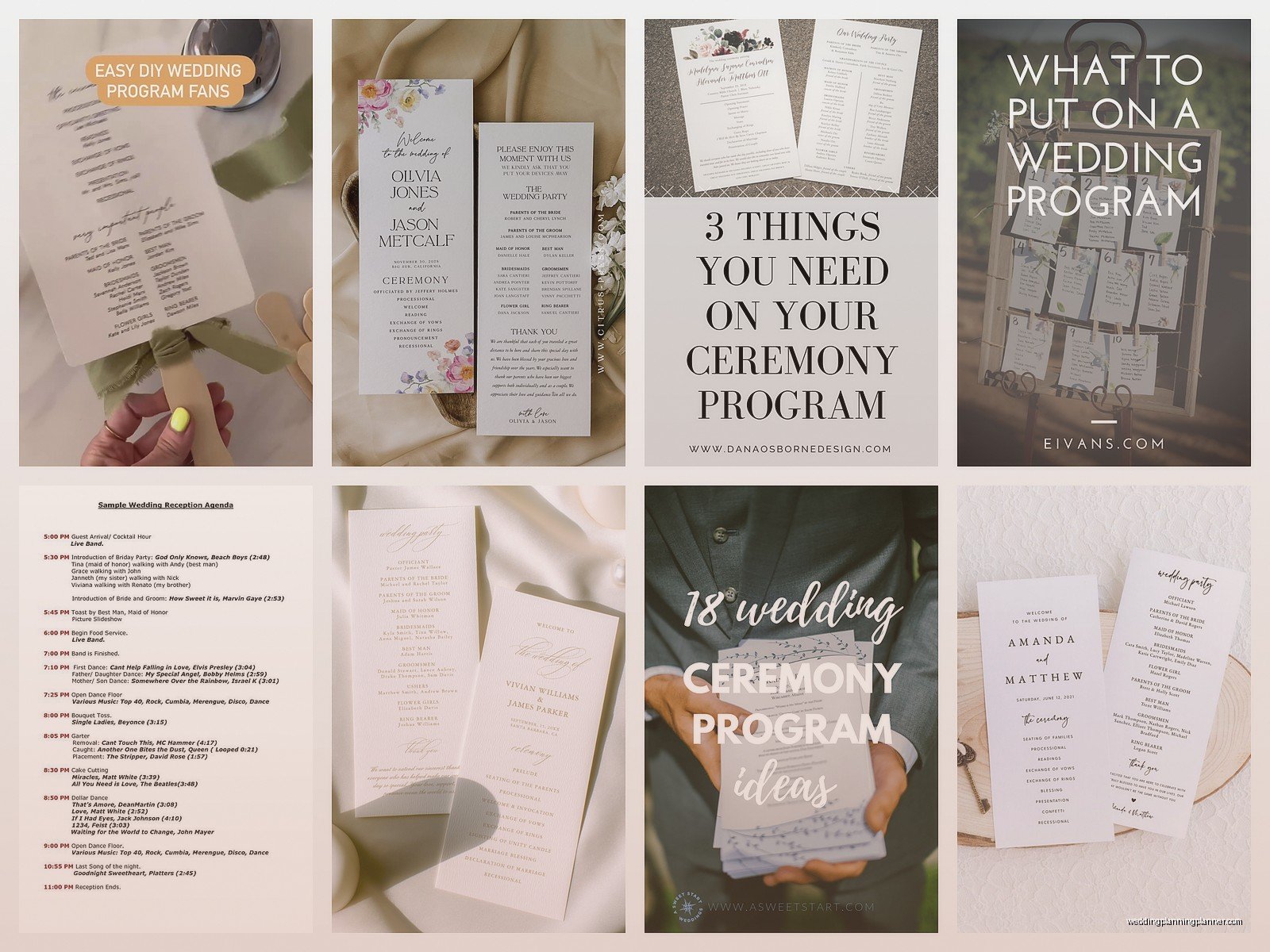
Sample Program #2: Secular/Non-Religious Ceremony
This is where you have more flexibility honestly because you’re not working around religious requirements or… okay so this is the thing that annoys me SO much – when couples want a completely secular ceremony but then their grandmother insists on a prayer and suddenly I’m mediating family drama at 9pm on a Tuesday. Just talk to your families early about this stuff I’m begging you.
Prelude
Acoustic guitar performed by Marcus Chen
Processional
“Marry You” – Bruno Mars (instrumental version)
Welcome and Opening Words
Jennifer Parks, friend and officiant
Reading
“Union” by Robert Fulghum
Read by Amanda Torres, maid of honor
Officiant’s Remarks on Love and Marriage
Declaration of Intent
Personal Vows
Ring Warming Ceremony
(Rings passed among guests during vow exchange)
Ring Exchange
Sand Ceremony
“A Thousand Years” – Christina Perri (instrumental)
Reading
“I Carry Your Heart” by E.E. Cummings
Read by David Kim, best man
Pronouncement
First Kiss as a Married Couple
Presentation
Recessional
“Signed, Sealed, Delivered” – Stevie Wonder
See how this one has more modern music choices? And the readings are poetry instead of scripture? That’s the main difference but the structure is basically the same.
Sample Program #3: Jewish Ceremony
Jewish ceremonies have some specific elements you gotta include. My cat literally walked across my keyboard while I was formatting one of these last month and somehow managed to delete an entire section so now I save compulsively.
Prelude
Selections from Fiddler on the Roof
Processional
“Erev Shel Shoshanim”
Circling (Hakafot)
Bride circles groom seven times
Welcome
Rabbi David Goldstein
Betrothal Blessings (Birkat Erusin)
First Cup of Wine
Ring Ceremony and Vows
Reading of the Ketubah
Read by Rebecca Stein, cousin of the bride
Seven Blessings (Sheva Brachot)
Recited by family members and friends
Second Cup of Wine
Breaking of the Glass
Pronouncement
Recessional
“Siman Tov u’Mazel Tov”
The circling part always looks so beautiful honestly and I love that multiple people participate in the seven blessings. Makes it feel really community-oriented.
Sample Program #4: Interfaith Ceremony
Okay these require the most planning because you’re basically trying to honor two different traditions without making the ceremony three hours long or accidentally offending anyone’s religious sensibilities which is like… it’s a delicate balance.
Prelude
Mixed selections of Christian hymns and Jewish melodies
Processional
Bride’s family: “Air” – J.S. Bach
Groom’s family: “Erev Shel Shoshanim”
Bride’s entrance: “Canon in D”
Welcome
Co-officiated by Rabbi Ellen Schwartz and Reverend Thomas Murphy
Opening Blessing
Non-denominational blessing acknowledging both traditions
Reading
Ecclesiastes 4:9-12 (Hebrew Bible/Old Testament)
Read by Michelle Goldberg, bride’s sister
Reading
“Love” by Roy Croft
Read by Patrick Murphy, groom’s brother
Officiant’s Message
Remarks on interfaith marriage and unity
Declaration of Intent
Exchange of Vows
Ring Exchange
With both Christian and Jewish blessings
Lighting of Unity Candle
Mothers of bride and groom light candles together
Wine Ceremony
Sharing of wine from Kiddush cup
Pronouncement
Breaking of the Glass
The Kiss
Presentation
Recessional
“Ode to Joy” – Beethoven
This one took me FOREVER to figure out the first time I did it. Summer 2021, outdoor wedding, it was like 95 degrees and I’m standing there with the bride and groom and both sets of parents trying to negotiate which traditions go where and I was sweating through my blouse but we got it done and honestly it was one of the most beautiful ceremonies I’ve ever seen.
Sample Program #5: Short and Sweet Ceremony
Some couples just want to get married without all the extras and that’s totally fine. This runs about 15-20 minutes.
Processional
“Can’t Help Falling in Love” – Elvis Presley
Welcome
Judge Patricia Morrison
Brief Remarks on Marriage
Declaration of Intent
Vows
Ring Exchange
Pronouncement
Kiss
Presentation
Recessional
“Marry Me” – Train
Boom. Done. Married. Sometimes less is more you know?
Things to Actually Include on Your Printed Program
Alright so beyond just listing the order of events, your program should have:
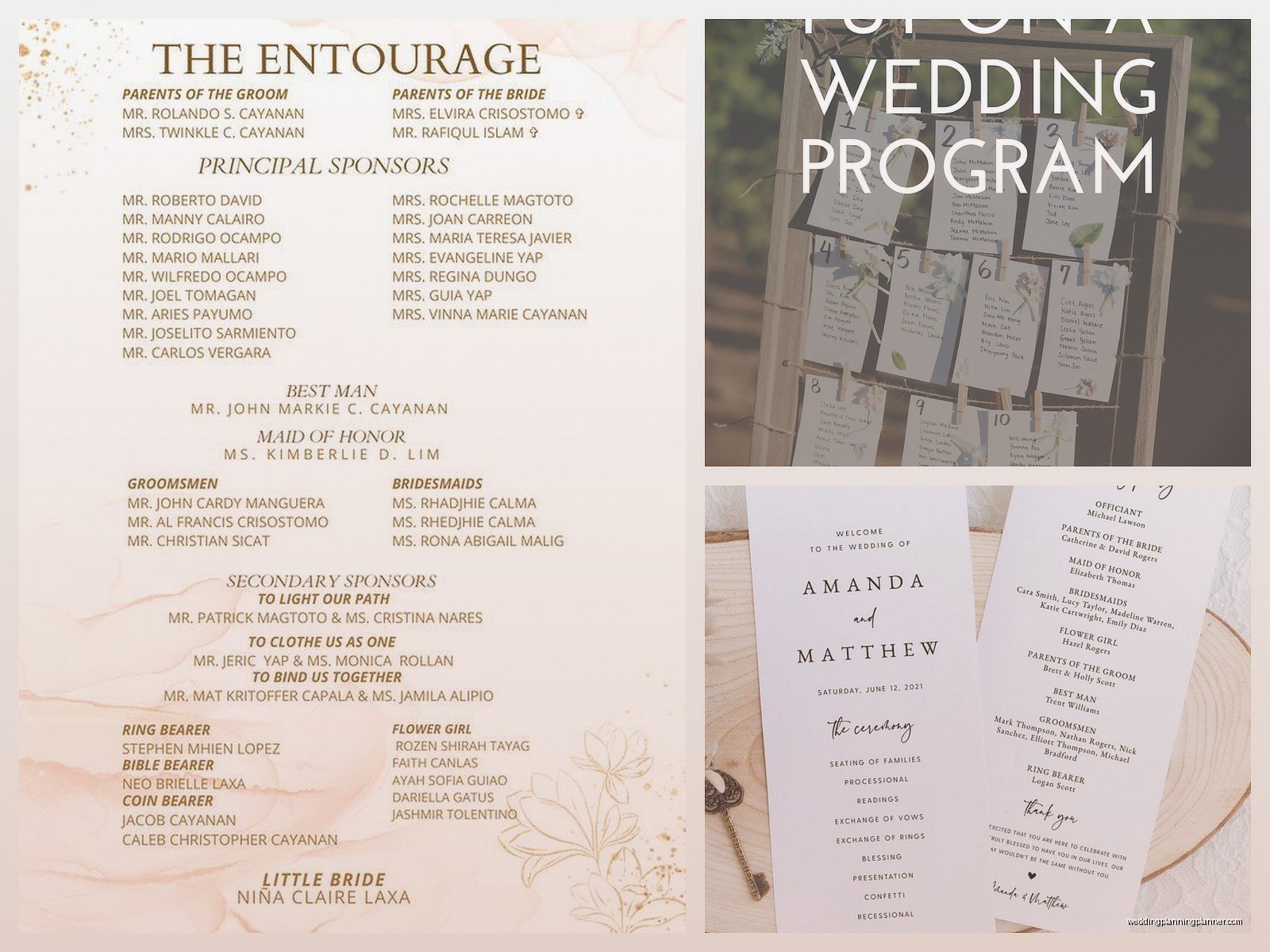
- Your names (obviously)
- The date
- The venue name and city
- Names of your wedding party with their relationship to you
- Names of readers and what they’re reading
- Musicians and song titles
- Special notes like “please silence cell phones” or “the bride will honor her late father by carrying his photo”
- Maybe a thank you to parents or note about reception location
You don’t need to print out every single word of every reading unless you really want to. Most people just list the title and who’s reading it.
Formatting Tips That’ll Make Your Life Easier
Use a simple layout. I’ve seen couples try to get too fancy with the design and then realize they can’t fit all the information or it’s hard to read. Standard paper sizes are 5×7 or 4×9 inches – the tall skinny ones are really popular right now.
Font size matters more than you think. If you’ve got older guests (and you probably do), go with at least 11-point font. Maybe 12-point. Nobody’s gonna complain that the text is too easy to read but they WILL complain if they can’t see it.
Leave white space. Don’t cram everything together. It looks cluttered and stressful and your wedding program shouldn’t stress people out before the ceremony even starts.
Special Ceremony Elements You Might Wanna Add
Unity ceremonies are super popular and there’s like a million options:
- Unity candle (classic)
- Sand ceremony (good for beach weddings or if you have kids participating)
- Wine ceremony (can be religious or secular)
- Handfasting (Celtic tradition, really pretty)
- Tree planting ceremony (umm this one’s tricky logistics-wise but meaningful)
- Love letter ceremony (you seal letters to each other to open on your first anniversary)
Rose ceremony is another one where the couple exchanges roses with each other and sometimes with their new in-laws. I had a couple do this and the groom’s mom started crying before they even got to the vows which was sweet but also we had to pause for like three minutes while everyone found tissues.
Cultural Traditions to Consider
Depending on your background, you might include:
- Filipino cord and veil ceremony
- Indian saptapadi (seven steps)
- Chinese tea ceremony
- African jumping the broom
- Greek stefana (crown exchange)
- Scottish quaich ceremony
These should be explained briefly in your program because a lot of guests probably won’t know what they’re watching. Just a sentence or two about the significance.
Music Selections and Timing
Your prelude should be at least 20-30 minutes of music because guests never arrive all at once and you need something playing while they’re settling in. Pick 4-6 songs.
Processional music can be all one song or you can switch it up – one song for the wedding party, different song for the bride’s entrance. Totally up to you but make sure your musicians know exactly when to switch.
Recessional should be upbeat and celebratory. This is when you’re married and happy and walking back down the aisle so like… “Pachelbel’s Canon” is gorgeous but it’s not really recessional energy if that makes sense.
Working With Your Officiant
Some officiants have a standard ceremony script they use and you can customize from there. Others will write something completely personalized. Either way you need to review the full script before the wedding because I’ve seen couples get surprised by things their officiant said during the ceremony and that’s awkward for everyone.
Make sure you’re clear about:
- How long they’ll talk (some officiants LOVE to hear themselves speak)
- Whether they’ll mention religion/God if you don’t want that
- If they’ll invite guests to participate in anything
- What they’ll say when they pronounce you married
Get the final order from them in writing at least two weeks before so you can finalize your programs.
Printing and Distribution
You need one program per person OR one per couple – both work. Per couple saves money and is more environmentally friendly. Per person means everyone gets their own keepsake.
Order extras. Someone will spill coffee on theirs, someone will forget theirs at the hotel, someone will want extras for family members who couldn’t come. Order at least 10-15% more than your guest count.
Programs can be handed out by ushers as guests arrive, or placed on chairs before the ceremony, or set up in baskets at the entrance. Whatever works for your venue setup.
If you’re having an outdoor ceremony and it might be windy, either skip programs entirely or make sure they’re weighted down somehow. I watched an entire basket of programs blow across a lawn once and guests were chasing them around which was honestly kinda funny but also not the vibe you want.
Digital Program Options
Some couples are doing digital programs now through their wedding website or a QR code. Saves money and paper which is great but also requires guests to have their phones out which you might not want during the ceremony? It’s a trade-off.
If you go digital make sure you have:
- Good wifi at the venue (or mobile data coverage)
- Signs with the QR code placed where guests can easily scan them
- A few printed versions for older guests who might not be comfortable with the technology
I had a couple do this last fall and it worked fine except the venue’s wifi crashed right before the ceremony and nobody could access the program so like… have a backup plan maybe.
What You Can Skip
Honestly? Programs aren’t required. If you’re having a super simple ceremony or a small intimate wedding, you might not need them at all. Guests will figure out what’s happening as it happens.
You also don’t need to explain every single thing. If your ceremony is pretty standard, people will follow along. The program is mostly helpful when you’re incorporating unusual elements or cultural traditions that guests might not recognize.
Random Details That Matter
Double-check name spellings. Triple-check them. I’ve seen programs printed with the bride’s name spelled wrong and it’s… it’s not great. Everyone notices.
If you’re having a bilingual ceremony, consider printing the program in both languages either side-by-side or back-to-back.
Proofread for typos but also for clarity. Does the order make sense? Can someone who’s never been to a wedding before understand what’s happening? Show it to a friend who’s