Planning Guides, Style Guide
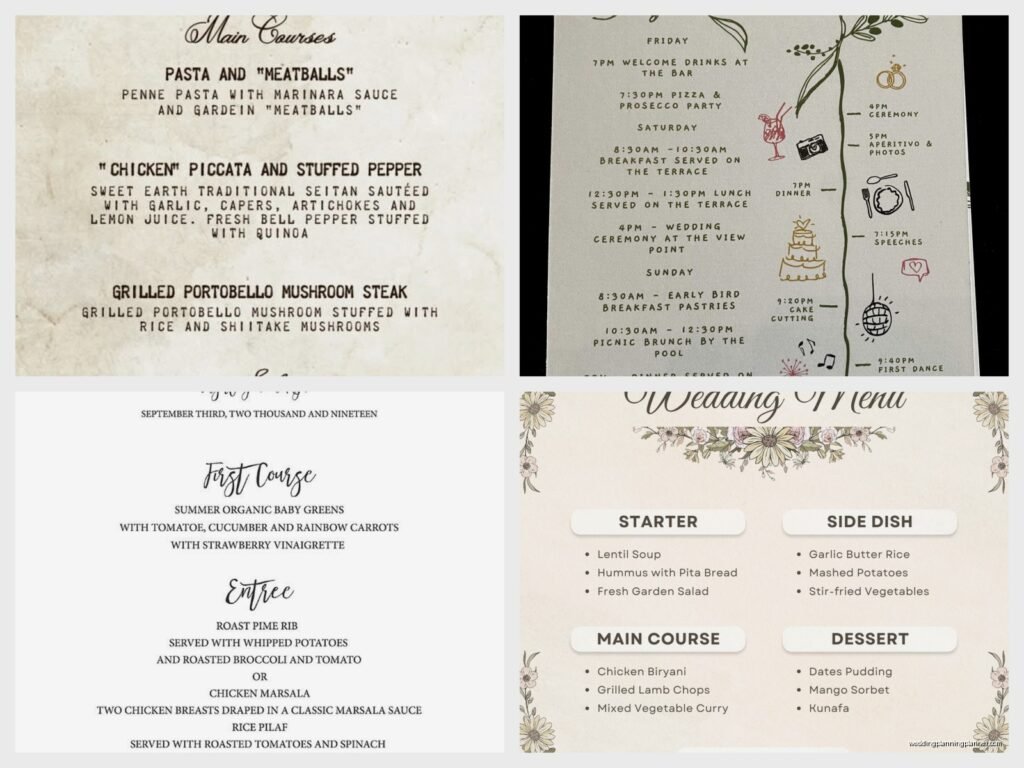
Wedding Menu Examples: Reception Dinner Card Samples
Mar
Reception Dinner Cards That Actually Work
Okay so menu cards are one of those things couples either obsess over or completely forget about until two weeks before the wedding and then I get a panicked text at 11pm asking if they really need them. The answer is kinda complicated but let me just dump everything I know about this.
First thing – you don’t technically need menu cards but they’re honestly super helpful for your caterer and your guests. Like in spring 2023 I had this couple who skipped them entirely because they wanted to “keep things simple” and we had SO many guests asking servers what was in each dish, whether things had nuts, if the chicken was gluten-free… it was a mess. The service got backed up by like 30 minutes because servers kept running back to the kitchen for answers.
The Basic Formats That Don’t Suck
There are basically three ways to do menu cards and I’m gonna break down when each one makes sense.
Individual place cards with menu: These go at each seat and they’re the fanciest option. You’re printing one for every single guest. Usually it’s like 4×6 or 5×7 inches. The guest’s name goes at the top, then the menu below. This is what you see at really formal weddings or when couples have that calligraphy budget that makes me lowkey jealous.
Table menu cards: One or two cards per table that everyone shares. Way more budget-friendly. You can prop these up in little stands or frames. I usually suggest one card for every 4-5 guests so people aren’t passing it around forever.
Display menu: One big sign near the entrance or bar area. Honestly this is my least favorite because people don’t read signs? Like they just don’t. But if you’re doing a buffet or stations this can work.
What Actually Goes On The Card
Here’s where people overthink it. You don’t need to list every ingredient or write a novel. Just give enough info that guests know what they’re eating and can flag allergies.
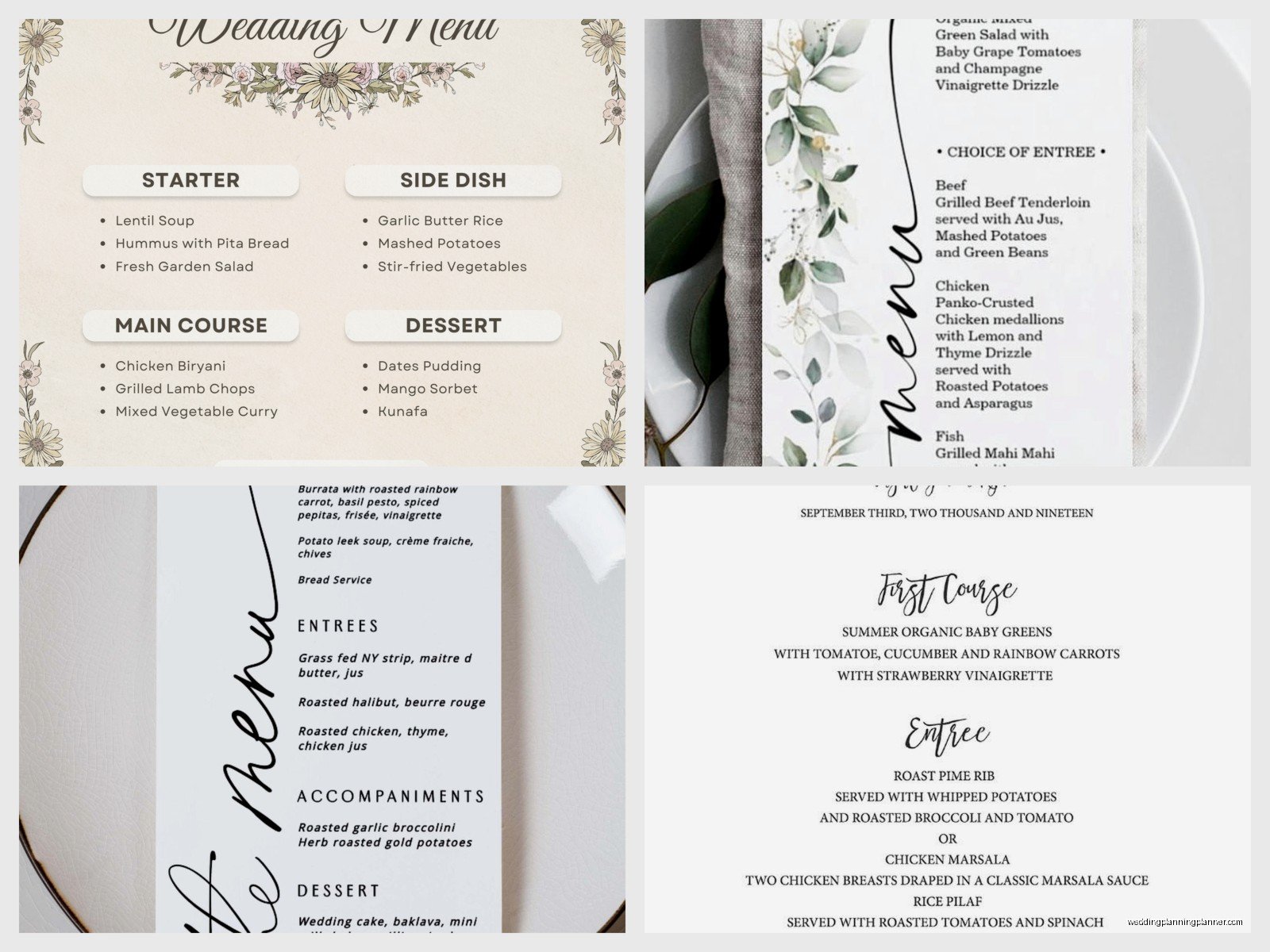
For a plated dinner you typically show:
- Appetizer or first course
- Salad (if separate from appetizer)
- Main course – and this is where you list the options if guests pre-selected
- Dessert
- Maybe drinks if you’re doing signature cocktails
The thing that annoyed me for YEARS is when couples don’t include allergen info or even basic descriptions. Your aunt with the shellfish allergy shouldn’t have to play detective with her food. Just write “contains nuts” or “gluten-free option available” – it takes two seconds.
Sample Layouts That I Actually Use
Classic Plated Dinner Menu
This is your standard three-course situation. Clean and simple:
First Course
Heirloom Tomato Salad
burrata, basil, aged balsamicEntrée
Herb-Crusted Chicken Breast
roasted fingerling potatoes, seasonal vegetables
or
Pan-Seared Salmon
lemon butter sauce, wild rice, asparagusDessert
Wedding Cake
vanilla bean with raspberry filling
See how that works? You’re not writing a cookbook. Just enough that people know what’s coming and it sounds appealing. The descriptions should make the food sound good but not pretentious.
Formal Multi-Course Menu
When you’ve got that bigger budget and doing like four or five courses, you can get more detailed. This is what I used for a wedding back in summer 2021 at this gorgeous vineyard venue:
Amuse-Bouche
Smoked Salmon CrostiniFirst Course
Butternut Squash Bisque
crème fraîche, toasted pepitasSecond Course
Baby Arugula & Pear Salad
candied walnuts, gorgonzola, champagne vinaigretteEntrée
Filet Mignon
truffle mashed potatoes, broccolini, red wine reduction
Vegetarian option: Mushroom WellingtonDessert
Trio of House-Made Sorbets
followed by wedding cake
With something this detailed you’re definitely doing individual cards because there’s just more info to display and… wait actually now that I think about it we did table cards for this one because the couple wanted to spend money on florals instead and honestly? It worked fine.
Casual Family-Style Menu
Family-style is having a moment and the menu cards can be way more relaxed. Like you’re literally just listing what’s coming to the table:
On the Table
Caesar Salad
Garlic Bread
Roasted Chicken
Grilled Vegetables
Penne Marinara
Mashed PotatoesSweet Ending
Tiramisu & Wedding Cake
This feels more like a dinner party which is kinda the vibe you want for family-style anyway. My cat literally just knocked over my coffee while I’m writing this so if this section seems scattered that’s why.
Buffet and Station Menus
Okay buffets are tricky because do you really need a menu card at each seat when people are gonna walk up and see the food? I usually say nah, just do good signage at the buffet itself. But if you want seat cards anyway here’s how:
Dinner Buffet
Salad Bar with Assorted Toppings
Carved Prime Rib
Herb-Roasted Chicken
Seasonal Vegetable Medley
Roasted Garlic Mashed Potatoes
Dinner Rolls with ButterDessert Table to Follow
Food stations are similar but you can get more creative with the descriptions since each station is its own thing.
Cocktail Reception Menu
If you’re doing heavy hors d’oeuvres instead of a sit-down dinner, you should still give people a heads up about what food is being passed or stationed. This prevents the “is there gonna be real food?” anxiety:
Passed Hors d’Oeuvres
Bacon-Wrapped Dates
Caprese Skewers
Coconut Shrimp
Mushroom Tartlets (v)Stationed
Artisan Cheese Display
Carving Station with Sliced Tenderloin
Mediterranean Mezze BarLate Night
Slider Bar
French Fries
Assorted Desserts
That little (v) notation? That’s for vegetarian. You can also use (gf) for gluten-free, (df) for dairy-free… whatever makes sense for your menu. Guests actually really appreciate this.
Design Stuff That Matters
The actual look of your menu card should match your wedding stationery obviously. If you had letterpress invitations don’t show up with menu cards printed on regular cardstock from Staples. Well you can but it’ll look weird.
Font choices: Keep it readable. I don’t care how pretty that script font is, if your 80-year-old grandmother can’t read it without her glasses it’s not the right choice. Use script for headers or names, regular fonts for the actual menu items.
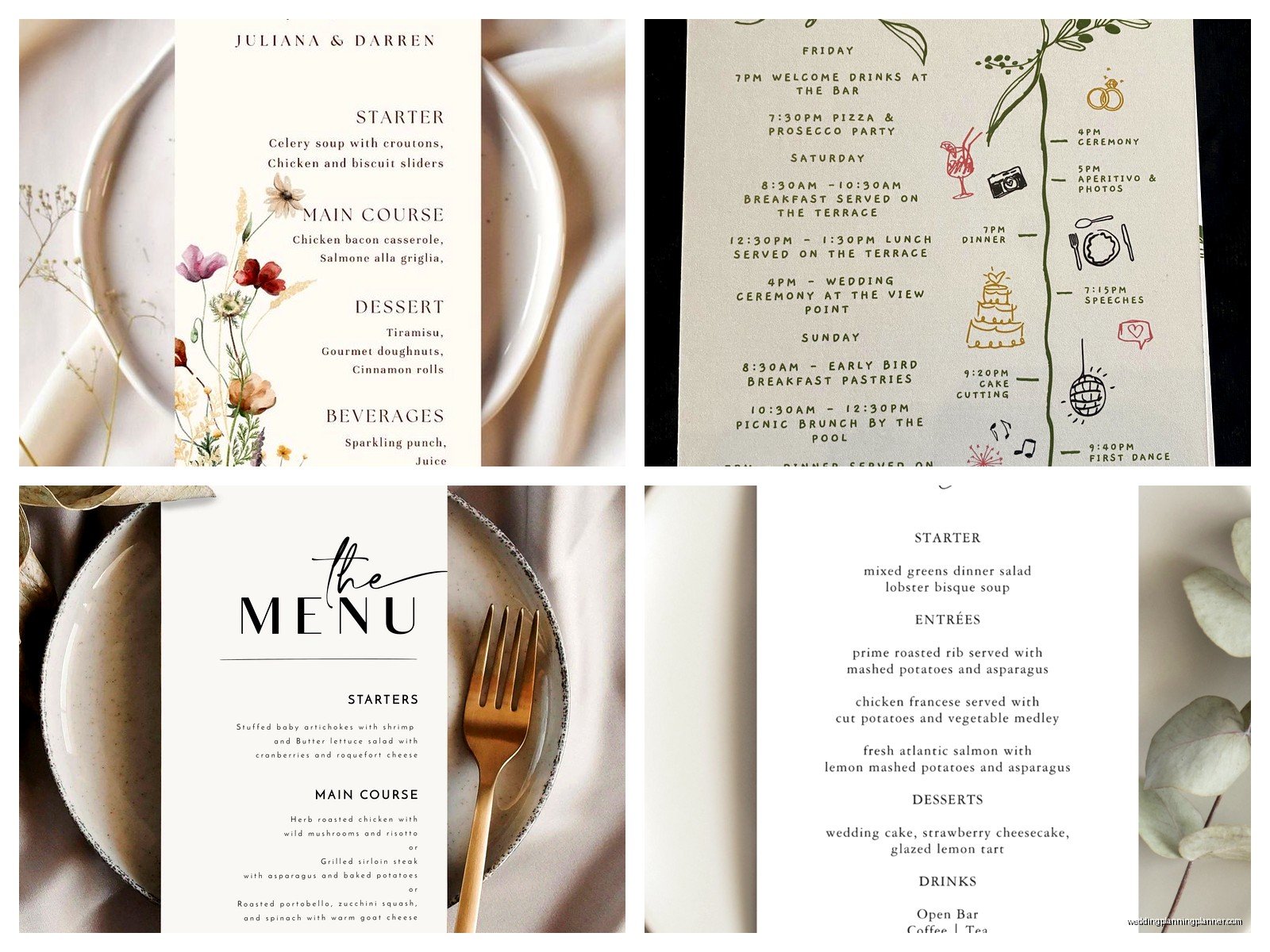
Paper quality: At minimum use 80lb cardstock. Those flimsy things that blow away in the breeze? Annoying for everyone. If you’re outside definitely go heavier or mount them on something sturdy.
Colors: Match your wedding colors but make sure there’s enough contrast that text is legible. I once had a couple do gray text on gray paper because it looked “elegant” and guests literally could not read it in the dim reception lighting.
DIY vs Professional Printing
Look if you’re crafty and have time, DIY can save you money. You can design these in Canva or even Word honestly. Print at home or use an online service like Minted or Zazzle. Just do a test print first because colors on screen never match printed versions exactly.
Professional printing makes sense when you want fancy finishes – foil stamping, letterpress, that thick cotton paper. Also if you’re doing like 150+ cards I’d just outsource it because your sanity is worth something.
Special Dietary Considerations
This is so important and couples forget about it constantly. If you collected meal preferences with your RSVPs you gotta indicate on the card which meal that guest is getting.
Some couples use subtle markers – a small icon next to the entrée choice, or they’ll have the server place the card with a certain side facing up. Other couples just straight up mark it like “You selected: Chicken” which is totally fine and actually clearer.
For guests with serious allergies you might wanna do custom cards. I had a wedding where three guests had severe allergies and we printed special menu cards for them listing their modified dishes. The kitchen appreciated knowing exactly who had which restriction.
Kids Meals
If you’re serving a separate kids menu don’t forget to make cards for that too. Usually something simple like:
For Our Younger Guests
Chicken Tenders
Mac and Cheese
Fresh Fruit
Cookies and Cake
Kids don’t care about fancy descriptions just tell them it’s chicken fingers and they’re good.
Timing and Logistics
Get your menu cards to the venue at least a day before, earlier if possible. They need to be placed at seats during setup and that’s usually happening the morning of or night before. Don’t be that couple who shows up with menu cards while guests are already arriving.
If you’re using table menus instead of individual ones, I usually bring a few extras. Someone’s gonna spill wine on one or the wind will blow one away if you’re outside or… I dunno, things happen.
Also coordinate with your caterer about the actual menu content. Sounds obvious but I’ve seen menu cards that didn’t match what was actually being served because there was a last-minute substitution nobody told the couple about. Confirm everything like a week before you print.
What You Can Skip
You don’t need to include drink options unless you’re doing specialty cocktails or a wine pairing. The bar menu can be separate or just… people will figure out what’s at the bar.
You also don’t need to explain every single side dish or garnish. “Served with seasonal vegetables” is fine. You’re not writing a restaurant menu where people are choosing based on descriptions.
And honestly if your wedding is super casual – like backyard BBQ vibes – you might not need menu cards at all. Sometimes it’s just not that kinda party and that’s totally alright.
One more thing – and this drives me nuts – don’t put “Dinner” as a header. We know it’s dinner. Just list the courses or jump straight to the food items. Every inch of space on that card matters especially if you’re doing the smaller sizes.
I think that covers most of what you need to know? The main thing is just making sure guests know what they’re eating, any allergen concerns are addressed, and the design doesn’t look like it came from a completely different wedding. Print samples, check them in different lighting, and get them done early enough that you’re not stressing about it the week of the wedding when you have 47 other things going wrong