Planning Guides, Style Guide
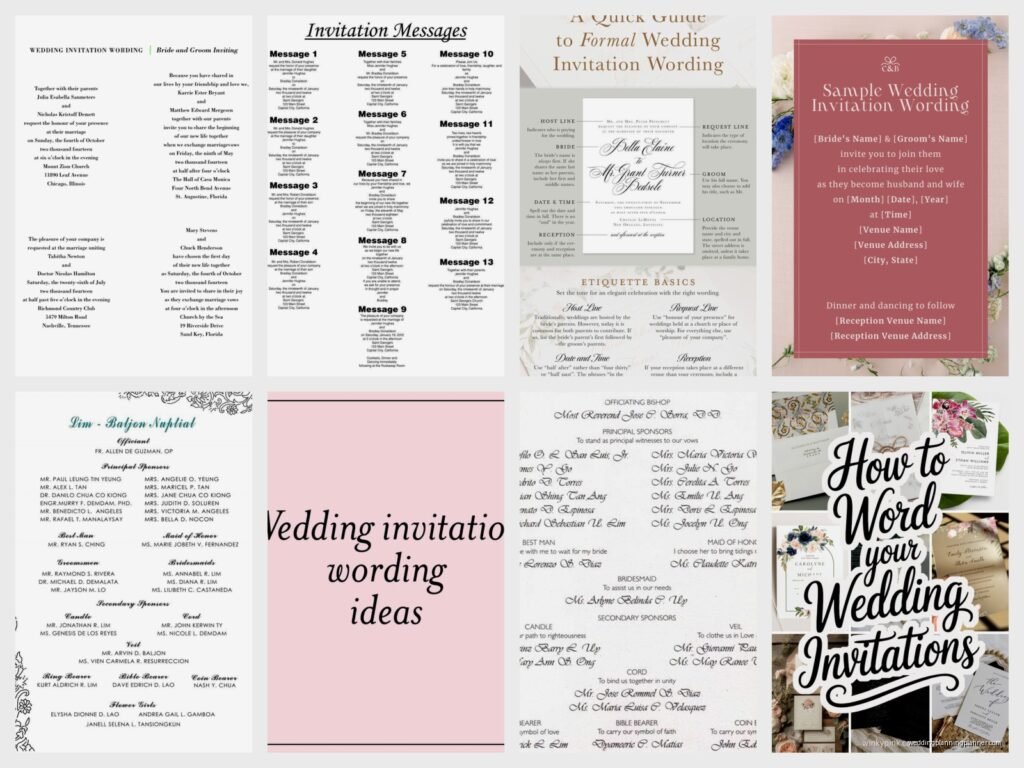
Sample Wedding Invitation Wording: Text Examples & Etiquette
Mar
The Basics That Nobody Tells You Until You’ve Already Ordered 150 Wrong Invitations
Okay so wedding invitation wording is one of those things that seems super straightforward until you actually sit down to write it and then suddenly you’re googling “do I need to spell out street” at 11pm on a Tuesday. I had this bride in spring 2023 who literally cried because she didn’t know if her stepdad’s name should go on the invitation and honestly that moment made me realize how much anxiety this causes people.
The traditional format goes like this: host line (who’s hosting), request line (the actual invitation part), couple’s names, date and time, location, reception details if needed. But here’s the thing—most people don’t follow traditional anymore and that’s totally fine.
When Both Sets of Parents Are Hosting
This is probably the most common situation I see now. Both families chip in, everyone wants recognition, and you’re trying to fit like six names on there without it looking like a phone book.
Mr. and Mrs. Jonathan Hart
and
Mr. and Mrs. Robert Chen
request the honor of your presence
at the marriage of their children
Olivia Marie
and
David James
Saturday, the fifteenth of June
two thousand twenty-five
at four o’clock in the afternoon
St. Mary’s Church
Charleston, South Carolina
You can also do “together with their families” if you wanna keep it simpler. I actually prefer that approach because it’s less of a mouthful.
Divorced Parents Hosting (This Gets Messy)
What really annoys me is when people act like divorce is this shameful secret that can’t be acknowledged on an invitation. It’s 2025, half of marriages end in divorce, we can handle putting both parents’ names on there separately.
Mrs. Patricia Hart
Mr. Jonathan Hart and Mrs. Lisa Hart
request the honor of your presence
at the marriage of their daughter
Olivia Marie Hart
The parent who raised the bride/groom typically goes first. If both parents remarried, you include step-parents’ names. If they didn’t remarry, you don’t add random plus-ones to the invitation just to balance it out—that would be weird.
One thing though… if the parents are hostile toward each other, sometimes it’s just easier to have the couple host it themselves. I’ve seen invitation drama derail entire wedding planning timelines and it’s just not worth it.
Couple Hosting Their Own Wedding
This is becoming more standard, especially for older couples or second marriages. Way less complicated:
Olivia Marie Hart
and
David James Chen
request the pleasure of your company
at their wedding
Saturday, June fifteenth
at four o’clock in the afternoon
The Grand Pavilion
Charleston, South Carolina
Notice you use “pleasure of your company” for non-religious venues and “honor of your presence” for religious ceremonies. I forget this rule constantly and have to look it up every single time.
The Annoying Details That Actually Matter
Numbers and Dates
Formal invitations spell everything out. No numerals. “Two thousand twenty-five” not “2025.” “Four o’clock” not “4:00pm.” The year is technically optional but I always include it because otherwise you’re gonna get that one aunt who swears the wedding is next year.
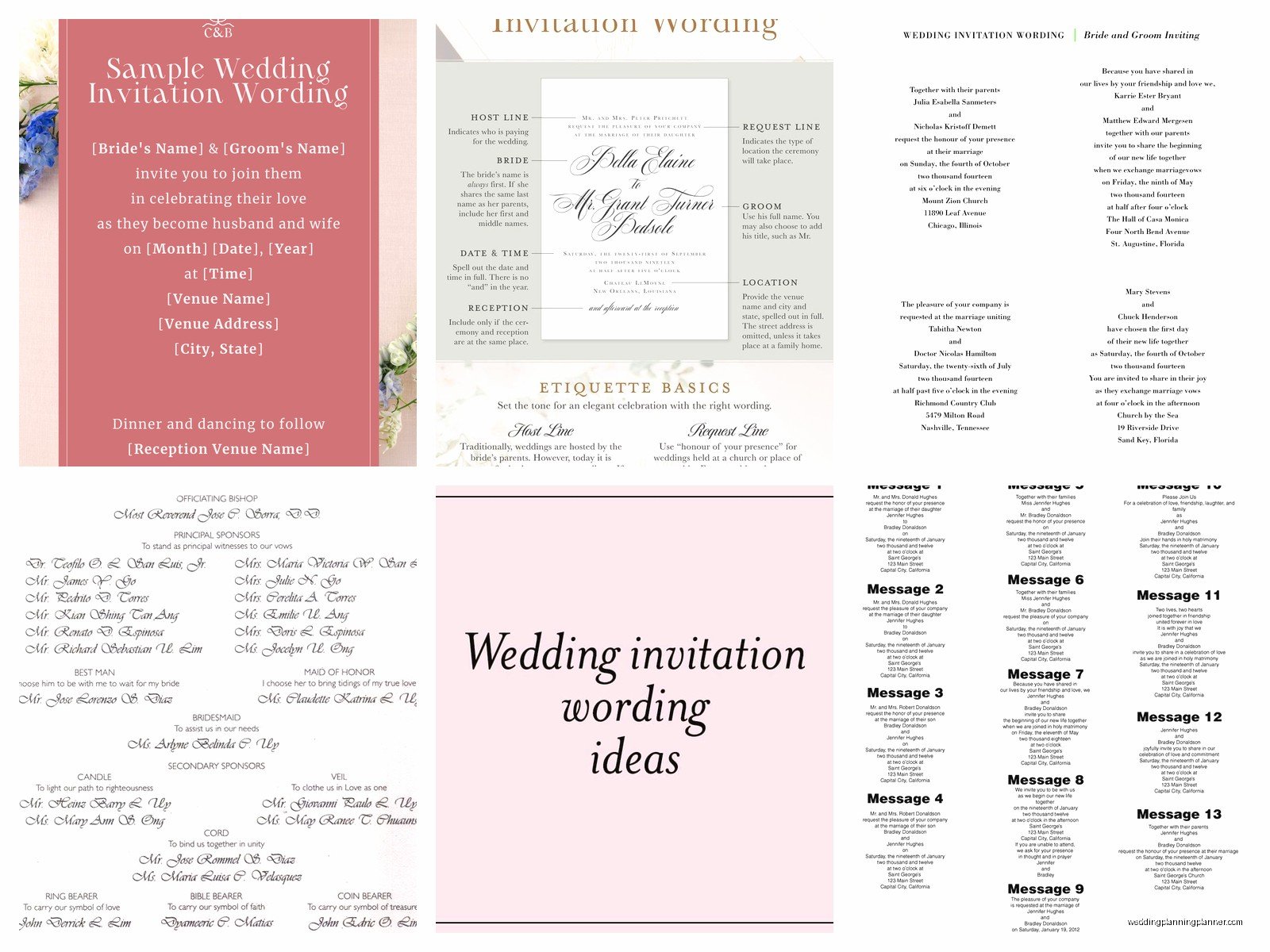
For casual weddings, you can absolutely use numbers. “Saturday, June 15, 2025 at 4:00 PM” is perfectly fine. Match the formality to your actual wedding vibe.
Dress Code Wording
You can put this on the invitation or on a separate details card. Common options:
- Black Tie (tuxes and formal gowns)
- Black Tie Optional (tuxes welcome but not required)
- Formal Attire (suits and cocktail dresses)
- Cocktail Attire (the most vague option honestly)
- Semi-Formal or Dressy Casual (good luck defining this)
- Beach Casual or Garden Attire (venue-specific)
I had a couple do “Barnyard Chic” once and half the guests showed up in actual overalls so… be specific if you’re getting creative.
Same-Sex Couples and Modern Family Situations
The beauty of same-sex wedding invitations is there’s no outdated etiquette about whose name goes first based on gender. You can go alphabetically, by who you’re closer to if families are hosting, or just by what sounds better when you say it out loud.
Michael James Rivera
and
Christopher Scott Murphy
invite you to celebrate their marriage
For families hosting, same rules apply as any other wedding. Both sets of parents, divorced parents, step-parents—all the same guidelines.
Religious Ceremony Wording
Different religions have different traditional phrasings and honestly this is where you might wanna consult with your officiant or ceremony site. Catholic weddings often use “request the honor of your presence at the Nuptial Mass” while Jewish ceremonies might say “at the marriage ceremony of their children” rather than “at the marriage of.”
My cat just knocked over my coffee while I’m writing this and I’m choosing to ignore it, but anyway—if you’re having a religious ceremony, the venue usually has sample wording they prefer. St. Patrick’s Cathedral is gonna have different expectations than your uncle who got ordained online.
Reception Card Wording
If reception is at a different location or significantly later, you need a separate reception card:
Reception immediately following
The Grand Pavilion
123 Harbor Street
Charleston, South Carolina
Or if it’s just at the same place: “Reception to follow” or “Dinner and dancing to follow”
The Tricky Situations Nobody Warns You About
Deceased Parents
You can honor a deceased parent by including them in the wording. It’s actually really touching:
Mrs. Patricia Hart
and the late Mr. Jonathan Hart
request the honor of your presence
Or: “Olivia Marie, daughter of Patricia Hart and the late Jonathan Hart”
Step-Parents Who Raised You
If your step-parent is more of a parent to you than your biological parent, put them on the invitation. This is your wedding, not some etiquette book from 1952.
Mrs. Patricia and Mr. Steven Morrison
request the honor of your presence
at the marriage of her daughter
Olivia Marie Hart
The “her daughter” or “his son” clarifies the relationship without getting complicated.
Adults-Only Weddings
Don’t put “adults only” on the invitation itself—that’s actually considered rude. Address the envelopes only to the adults (no “and family”) and include a note on your website or details card like “We respectfully request this be an adults-only celebration” or “While we love your little ones, this will be an adult evening.”
I’ve seen people try to be cute with this and say things like “leave the kiddos at home!” and it always comes across wrong, so just… keep it simple and direct.
Casual and Modern Wording Examples
Not every wedding needs to sound like you’re addressing the Queen. Here are some relaxed options that I actually love:
Let’s get married!
Olivia Hart & David Chen
are tying the knot
June 15, 2025 at 4:00 PM
Riverside Park, Charleston
Dinner, drinks, and dancing after
Or even simpler:
Join us for the wedding of
Olivia & David
Saturday, June 15, 2025
4:00 PM
The Boathouse
Charleston, SC
For a backyard wedding or casual beach ceremony, you can ditch most of the traditional structure. Just make sure people know who, what, when, where.
Destination Wedding Wording
Destination weddings need extra info upfront. I usually recommend:
Join us in Tulum, Mexico
as we exchange vows
Olivia Hart and David Chen
Saturday, June 15, 2025
Sunset Beach Resort
Details and travel information at [website]
You gotta include the website because people need accommodation info, travel details, itinerary, etc. Don’t try to cram all that onto the invitation.
What Goes on the Envelope
Outer envelope is formal: “Mr. and Mrs. Jonathan Hart” or “Ms. Olivia Hart”
Inner envelope (if you’re using one, which is optional now) is less formal: “Jonathan and Patricia” or “Olivia”
For unmarried couples living together, both names on separate lines. For same-sex couples, alphabetical or whoever you’re closer to first.
And please, please spell out “Street,” “Avenue,” “Apartment”—no abbreviations on formal invitations except for Mr., Mrs., Ms., and Dr.
Common Mistakes I See Constantly
Using “and guest” on the actual invitation—nah, that goes on the envelope or inner envelope only. The invitation itself doesn’t mention plus-ones.
Putting registry information on the invitation—absolutely not, that’s what websites and bridal shower invitations are for. It looks gift-grabby on the wedding invitation.
Forgetting the year—you’d be surprised how many people do this.
Inconsistent formality—if you spell out “Saturday” then spell out “four o’clock” too, don’t mix formal and casual formatting.
Including too much info—directions, accommodations, dress code details, schedule of events… all of that goes on separate cards or your website, not the main invitation. Keep the invitation itself clean.
There was this one time in summer 2021 where a groom insisted on including a full paragraph about their love story on the invitation and it was just… it was too much, you know? The invitation looked like a blog post. Sometimes less really is more, or at least less is more readable.
Timing and RSVP Details
Send invitations 6-8 weeks before the wedding (3-4 months for destination weddings). RSVP deadline should be 3-4 weeks before your wedding date so you can get final counts to your caterer.
RSVP card wording:
Kindly respond by May 15, 2025
M_________________
___ accepts with pleasure
___ declines with regret
Or more casual: “Please reply by May 15th” with checkboxes for attending or not.
Include a pre-stamped envelope because otherwise half your guests won’t respond. Just build the postage cost into your budget—it’s worth it.
These days a lot of couples do online RSVPs through their wedding website, which honestly makes tracking so much easier. You can still include a traditional RSVP card for older guests who aren’t comfortable with websites, or just put “Please RSVP at [website]” on a details card.