Planning Guides, Style Guide
Wedding Ceremony Program Examples: Order of Service Samples
Mar
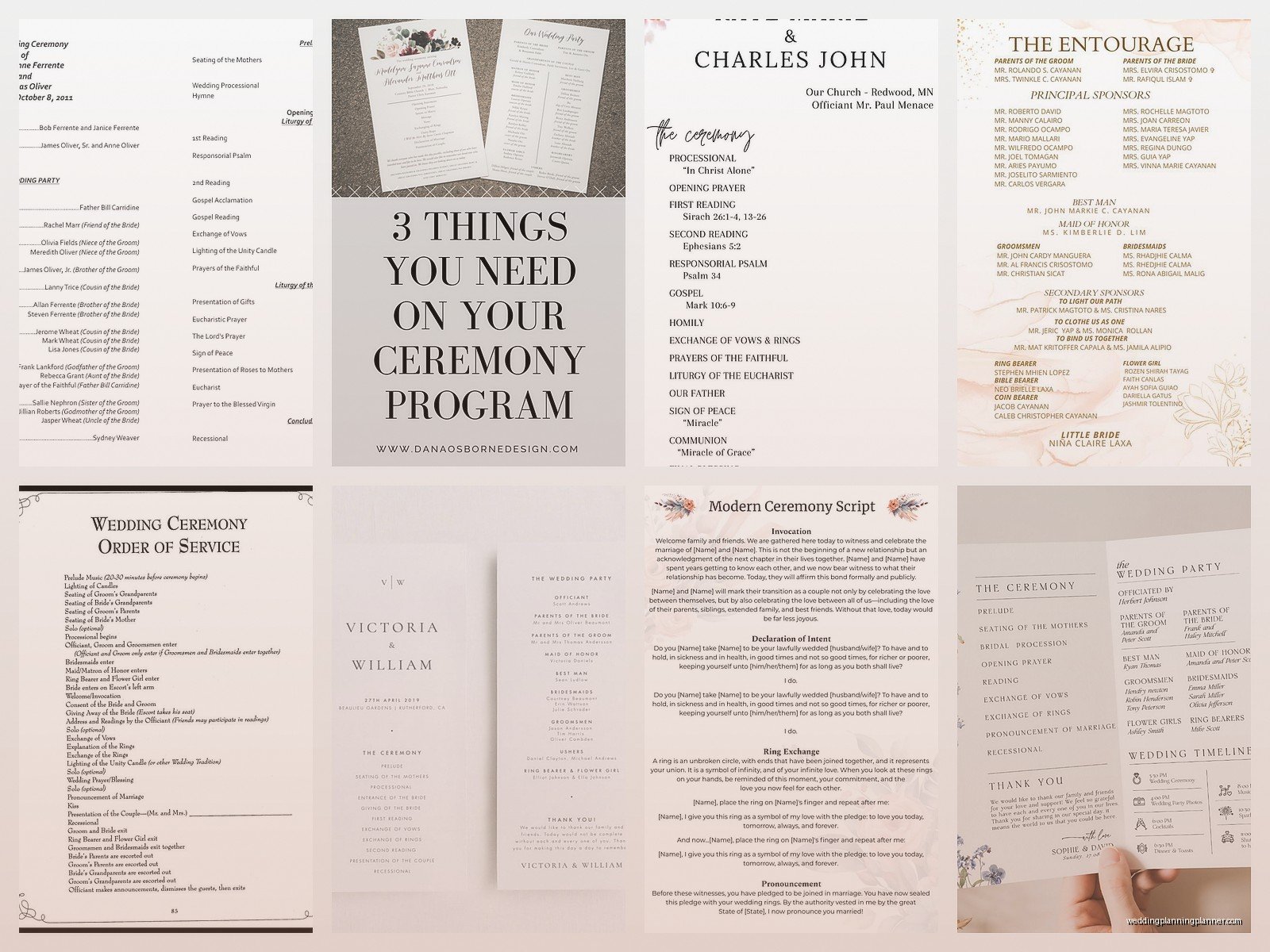
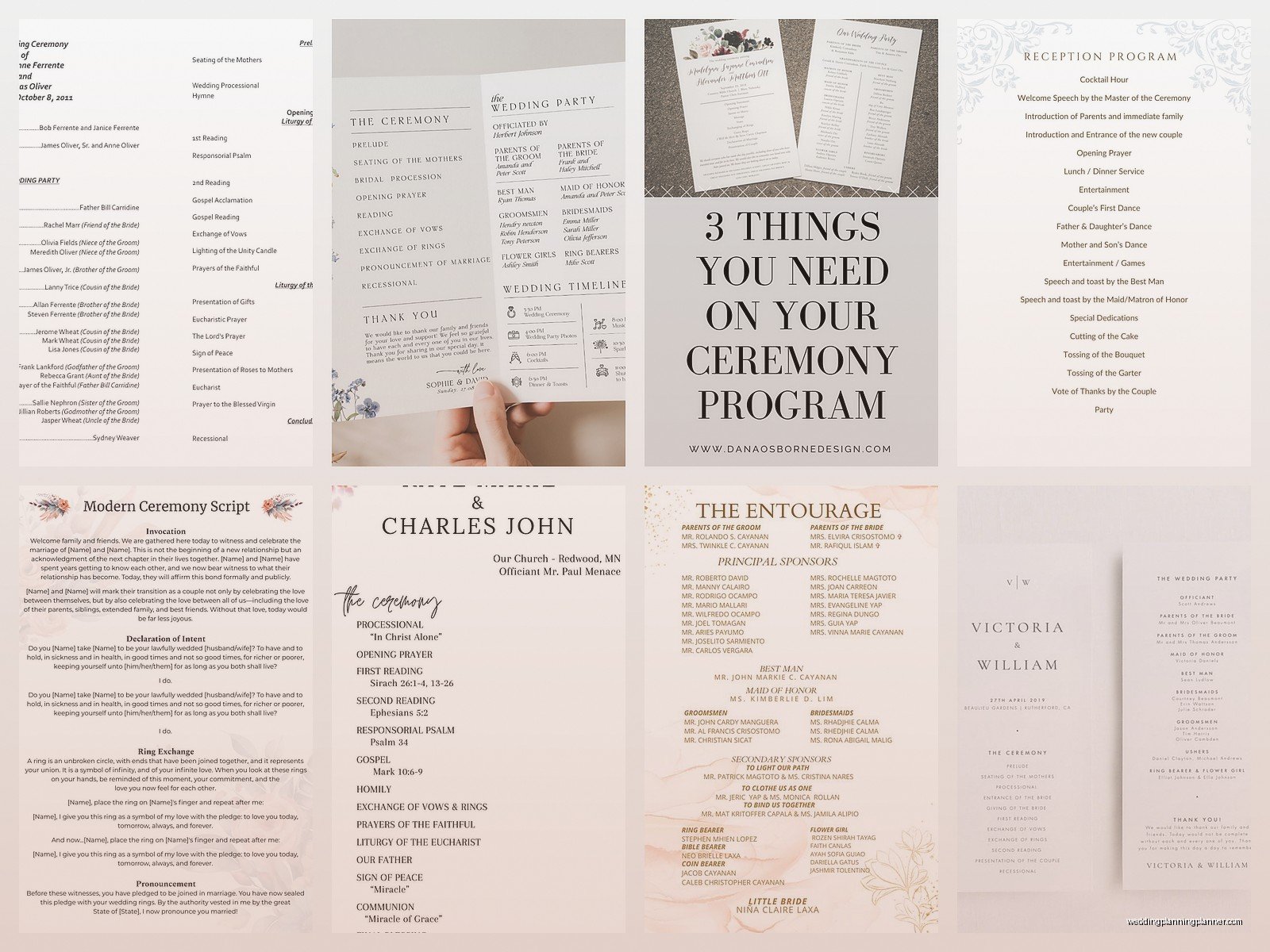
Okay so wedding ceremony programs are one of those things couples either obsess over or completely forget about until two weeks before the wedding and honestly both approaches kinda stress me out. The program is basically your guests’ roadmap to what’s happening during the ceremony, and I’ve seen so many variations over the years that I could probably write a book but let’s just focus on the actual order of service part because that’s what everyone gets confused about.
Traditional Religious Ceremony Programs
The most common format I see is the traditional religious ceremony, and these usually follow a pretty set structure. For a Catholic wedding, you’re gonna have something like this:
- Processional
- Opening Prayer
- Scripture Readings (usually two or three)
- Homily
- Exchange of Vows
- Blessing and Exchange of Rings
- Unity Candle or other symbolic ritual
- The Lord’s Prayer
- Nuptial Blessing
- Pronouncement of Marriage
- Recessional
Now here’s the thing that really annoyed me back in spring 2023 when I had this bride who wanted to list every single person’s name in the processional section with their relationship to her explained in detail. Like “Sarah Mitchell, my college roommate who introduced me to yoga and changed my life” and I had to gently explain that your program would be seventeen pages long and nobody’s reading all that.
For Protestant ceremonies, it’s usually simpler:
- Prelude Music
- Processional
- Welcome and Opening Prayer
- Declaration of Intent
- Scripture Reading
- Message from Officiant
- Exchange of Vows
- Ring Exchange
- Pronouncement of Marriage
- First Kiss
- Recessional
Jewish ceremonies are beautiful and I always love working with them because the structure is so meaningful. You’d list it something like:
- Processional
- Welcome
- Circling (Hakafot)
- Betrothal Blessings (Birchot Erusin)
- Ring Exchange and Vows
- Reading of Ketubah
- Seven Blessings (Sheva Brachot)
- Breaking of the Glass
- Recessional
Non-Religious and Secular Ceremonies
These are where you have the most flexibility and honestly where couples get the most creative or sometimes the most lost because there’s no template to follow. A basic secular ceremony program might look like:
- Processional
- Welcome and Introduction
- Reading or Poem (optional)
- Declaration of Intent
- Personal Vows
- Ring Exchange
- Unity Ceremony (sand, wine, handfasting, etc.)
- Pronouncement of Marriage
- The Kiss
- Recessional
I had a couple last summer who did a whole section called “The Part Where We Embarrass Ourselves” for their vows and honestly it was perfect for their vibe and their guests loved knowing what to expect.
What to Actually Include in Each Section
So here’s where I see people get confused – do you just list “Processional” or do you explain what’s happening? My recommendation is somewhere in the middle. Under processional, you can list the wedding party in order if you want:
Processional
- Officiant
- Groom with Parents
- Grandparents
- Wedding Party
- Maid of Honor
- Flower Girl and Ring Bearer
- Bride with Parents
Or you can keep it simple and just write “Processional – The wedding party enters” and be done with it. I’ve done both and guests seem fine either way.
For readings, definitely include the title and who’s reading it. Like:
First Reading
1 Corinthians 13:4-7
Read by Jennifer Martinez, sister of the bride
This helps guests follow along and also… okay so my cat just knocked over my coffee which is perfect timing because I need a break from thinking about the bride who insisted on including the entire text of every reading in her program and it ended up being 8 pages folded and nobody could figure out how to hold it.
Music Selections in Your Program
You don’t have to list every song but it’s nice to include the major ones. Something like:
Prelude Music
Canon in D – Pachelbel
Air on the G String – Bach
Processional
Trumpet Voluntary – Clarke
Recessional
Ode to Joy – Beethoven
People always ask me if they should include the performers’ names and honestly unless it’s like your best friend performing or a notable musician, you can probably skip that detail because the program is already getting crowded.
Cultural and Interfaith Ceremony Programs
These are where things get really interesting and where you definitely need a detailed program because guests might not be familiar with all the traditions. For a Hindu-Christian interfaith ceremony I worked on, the program looked like:
- Processional
- Welcome from Both Officiants
- Ganesh Puja (with brief explanation: “A prayer to Lord Ganesh to remove obstacles”)
- Christian Scripture Reading
- Hindu Scripture Reading
- Exchange of Garlands (Varmala)
- Seven Steps (Saptapadi) – explained what each step represents
- Christian Vows
- Ring Exchange
- Pronouncement of Marriage
- Recessional
The key with cultural ceremonies is giving just enough context so people understand what they’re witnessing without turning your program into an educational textbook. One or two sentences max for each tradition.
Modern Twists and Personal Touches
I’ve seen couples do some really creative things with the order of service section. One couple in 2021 did a “choose your own adventure” style program where different sections had little notes like “If you’re crying already, the tissues are under your seat” next to the vows section. It was cute and fit their personality.
Some couples include:
- A memory or tribute section for deceased family members
- Explanations of symbolic rituals they’re including
- Lyrics to songs if they want guests to sing along
- A timeline showing how they met and got engaged
- Thank you notes to parents and wedding party
But here’s my honest advice – don’t try to cram everything into the program. I see couples who want to include their love story, thank everyone individually, explain every single tradition, list all the music with composer backgrounds, and include photos and… it becomes this heavy booklet that costs a fortune to print and most people leave behind anyway.
Sample Order for a Blended Ceremony
If you’re mixing traditions or creating something totally unique, your program might look like:
Prelude
Instrumental selections as guests arrive
Processional
The wedding party and families take their places
Welcome and Opening Words
Officiant: Rev. Sarah Thompson
Blessing from the Four Directions
A Native American tradition honoring the elements
Love Letter Reading
Letters written by the couple to each other, read by close friends
Declaration of Intent
Ring Warming
Rings passed among guests for blessings
Personal Vows
Ring Exchange
Wine Ceremony
Blending of two wines symbolizing two lives becoming one
Pronouncement and First Kiss
Recessional
Quick Ceremony vs. Full Mass
If you’re doing a full Catholic Mass, your program is gonna be longer because you’re including the Liturgy of the Eucharist. That adds sections like:
- Offertory
- Holy Holy
- Memorial Acclamation
- Great Amen
- Our Father
- Sign of Peace
- Lamb of God
- Communion
And honestly you should probably include the responses in the program too because half your guests won’t be Catholic and will be completely lost otherwise. I learned this the hard way during a wedding where the bride’s family was very Catholic and the groom’s family was mostly non-religious and they just sat there looking confused during all the call-and-response parts.
Destination and Outdoor Ceremony Considerations
For beach or outdoor weddings, you might want to note things like:
Please remain seated during the processional (if you have limited standing room or elderly guests)
Unplugged ceremony – please put away phones and cameras (if that’s your preference)
Or include practical stuff like “In case of rain, ceremony will move to the pavilion” although that’s more of a general program note than order of service.
The level of detail really depends on your crowd. If you’re having a small wedding with 50 people who mostly know each other and your traditions, you can keep it simple. If you’re having 200 guests from different backgrounds and religions, more explanation helps everyone feel included and understand what they’re witnessing.
I always tell couples to think about their least-informed guest – maybe that cousin who’s never been to a wedding before or your coworker from another country – and make sure the program would help them follow along. But also don’t overthink it because truly, people are there to celebrate you and they’ll figure it out even if the program isn’t perfect.
One thing I always recommend including is the actual names of your wedding party with their role, because guests like knowing who everyone is. You can do this in the order of service section or have a separate “wedding party” section, but somewhere in that program should be “Best Man: Michael Rodriguez” and “Maid of Honor: Ashley Chen” and so on.
The format can be as simple or as detailed as you want, printed on a single card or folded into a booklet, but the main goal is helping your guests feel connected to what’s happening and understand the significance of each moment you’ve chosen to include in your ceremony.