Planning Guides, Style Guide
Wedding Ceremony Examples: Sample Ideas & Examples
Apr
Okay So Wedding Ceremony Examples
Right so you’re trying to figure out what your ceremony should actually look like and honestly this is where people get super stuck because most of us have only been to like traditional church weddings or maybe that one beach ceremony where the wind destroyed everything. Let me just dump everything I know about ceremony structures and examples because I’ve planned about 200+ weddings at this point and I’ve seen what works and what makes people cry (the good kind and the bad kind).
The Basic Traditional Religious Ceremony
This is your standard church wedding format and it goes something like processional music starts, wedding party walks down, bride walks down with dad or both parents, officiant does the welcome thing, maybe there’s a prayer or reading, then vows, ring exchange, pronouncement, kiss, recessional. Done. Takes about 30-45 minutes usually.
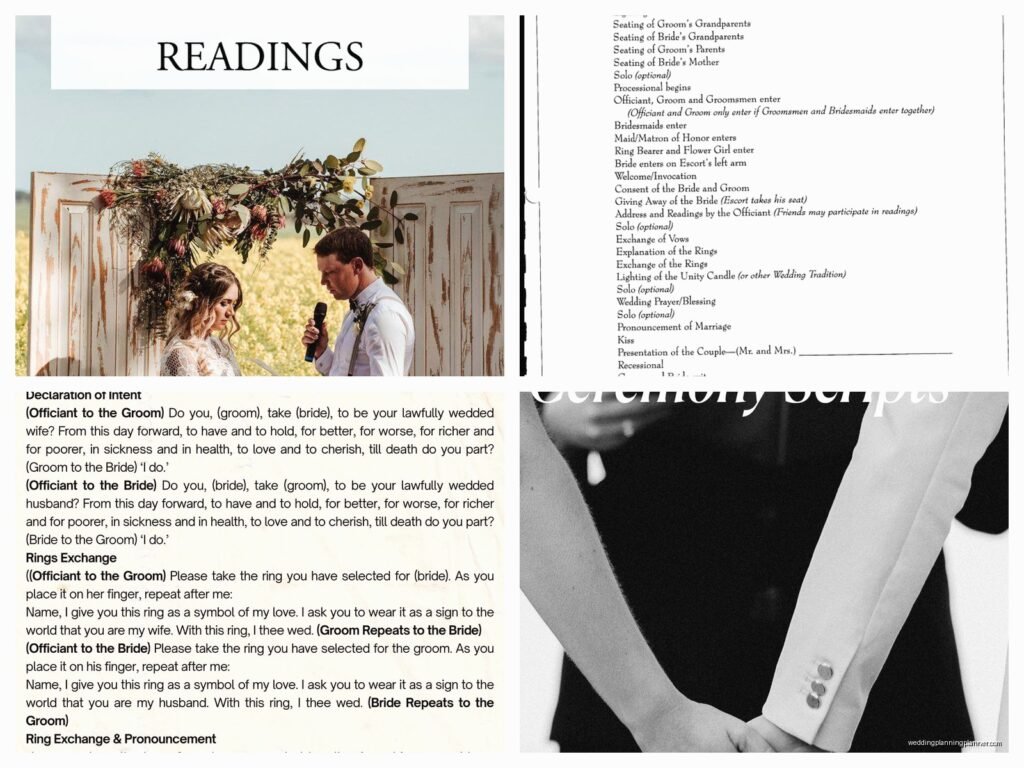
The order typically looks like:
- Prelude music while guests arrive
- Processional (grandparents, parents, wedding party, flower girl/ring bearer, bride)
- Welcome and opening prayer
- Scripture readings or religious texts
- Homily or sermon (this is where it can drag honestly)
- Declaration of intent (“do you take this person”)
- Vows
- Ring exchange
- Unity ceremony if you’re doing one
- Pronouncement
- The kiss
- Presentation of the couple
- Recessional
I had this couple in spring 2023 who wanted a Catholic ceremony and lemme tell you the requirements were intense. Full mass, communion, the works. It ended up being like 90 minutes and you could see some guests getting restless but the couple loved it so that’s what mattered I guess.
The Short and Sweet Civil Ceremony
If you’re doing a courthouse thing or just want something quick, civil ceremonies can be literally 10-15 minutes. You walk in, officiant says some legal stuff, you say “I do,” exchange rings, sign papers, done. Some people do this and then have a big party after which honestly is kinda genius because the ceremony pressure is off.
A basic civil ceremony example:
- Officiant welcomes everyone (like 2 minutes)
- Short reading about marriage or love
- Declaration of intent
- Vows (can be traditional or personal)
- Ring exchange
- Pronouncement
- Kiss and celebrate
The thing that annoys me about civil ceremonies is when people think they have to be boring or impersonal just because they’re not religious. Like nah, you can make a 15-minute ceremony feel incredibly meaningful if you put thought into the words.
The Personalized Non-Religious Ceremony
This is where I see the most creativity and also where people get the most overwhelmed because there’s no template to follow. You’re building it from scratch which means total freedom but also total responsibility to make it flow well.
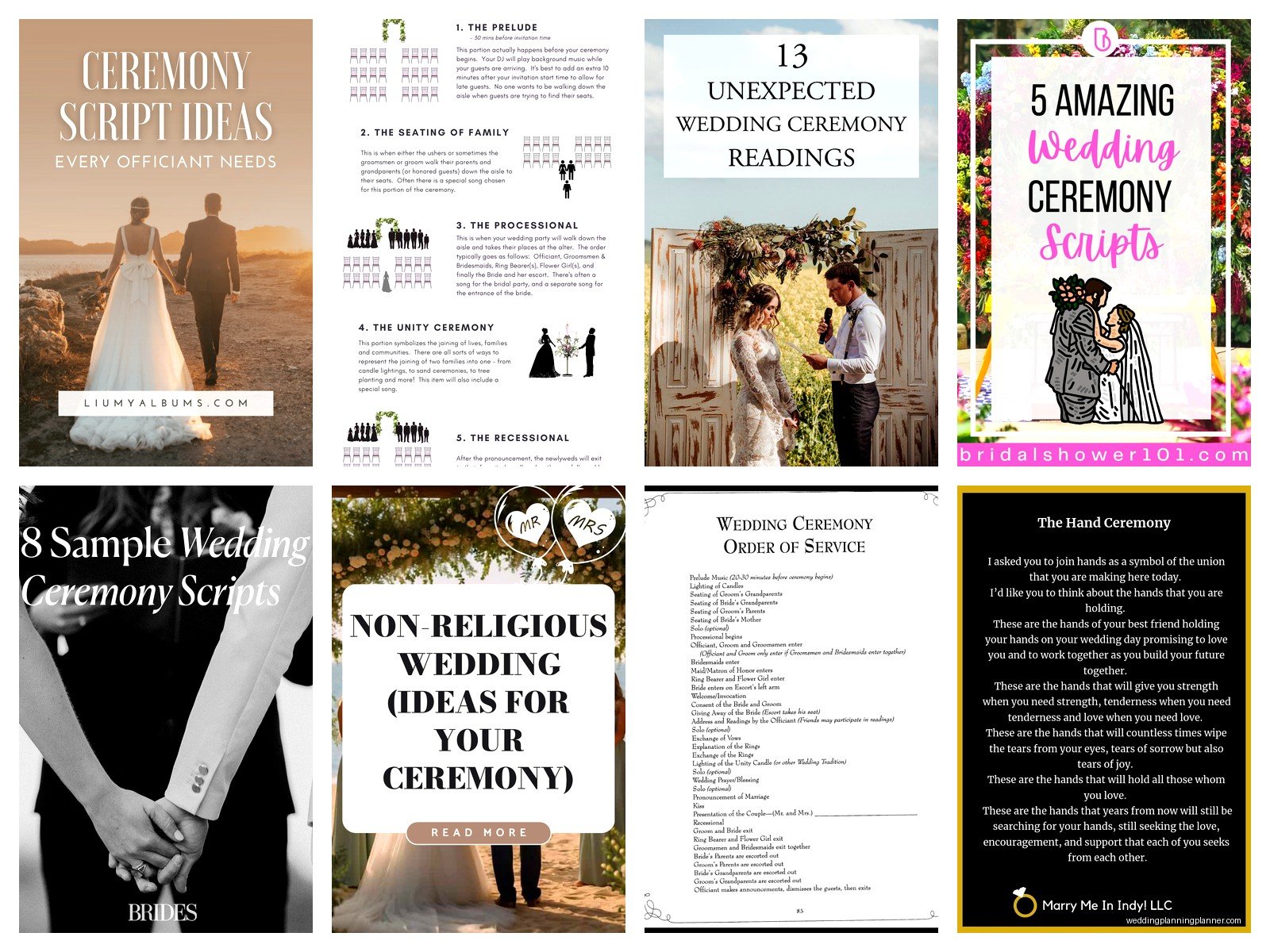
Here’s a structure that works really well:
- Processional (you can do whatever order you want here – both walk together, meet in the middle, walk with both parents, walk alone, whatever)
- Welcome from officiant that actually explains why everyone’s there and what marriage means to the couple
- A reading or two (poem, song lyrics, excerpt from a book you both love)
- The “story” section where officiant talks about how you met and your relationship
- Declaration of intent but worded however you want
- Personal vows (this is the crying part usually)
- Ring exchange with meaningful words about what the rings represent
- Maybe a unity ceremony if that’s your thing
- Pronouncement
- Kiss
- Recessional
I worked with this couple who met playing trivia at a bar and they had their officiant ask the guests trivia questions about their relationship throughout the ceremony. It was weird but also really them and everyone was laughing and engaged instead of just sitting there waiting for it to be over.
Cultural and Interfaith Ceremonies
Okay so this gets complicated but also beautiful. When you’re blending two religious traditions or incorporating cultural elements, you gotta think about how they weave together. I’ve done Jewish-Catholic weddings, Hindu-Christian ceremonies, and various combinations.
For a Jewish ceremony you might include:
- The chuppah (canopy you stand under)
- Ketubah signing before or during
- Seven blessings (Sheva Brachot)
- Wine sharing
- Breaking the glass at the end
For Hindu elements:
- Baraat (groom’s processional, usually very festive)
- Milni (meeting of families)
- Ganesh Puja (prayer to remove obstacles)
- Kanyadaan (giving away of bride)
- Saptapadi (seven steps around sacred fire)
The key with interfaith stuff is making sure both traditions get respected equally and that someone explains to guests what’s happening because otherwise half the room is gonna be confused. Actually that reminds me I need to feed my cat, she’s been yelling at me all morning… anyway.
Outdoor and Destination Ceremony Considerations
So outdoor ceremonies follow the same basic structures but you gotta account for the setting. Beach ceremonies should be shorter because sun and heat and wind are real factors. I cannot tell you how many times I’ve seen ceremonies where the officiant’s talking for like 30 minutes and everyone’s literally sweating through their clothes.
A good outdoor ceremony timeline:
- Keep it to 20-30 minutes max
- Have a backup plan for weather (this is non-negotiable)
- Consider sun position – you don’t want everyone squinting or the couple backlit
- Use a microphone even if you think you don’t need it
- Keep readings shorter because outdoor acoustics are weird
Summer 2021 I had a mountain wedding where the couple insisted they didn’t need a sound system because “it’s intimate, only 50 people” and then literally no one past the third row could hear anything and there was this awkward moment where people were like leaning forward and cupping their ears and it was just… not great.
Vow Examples Because Everyone Asks
Traditional vows are the “to have and to hold, from this day forward, for better or worse” thing which is fine and classic. But personal vows are where people really connect with the ceremony.
Personal vows usually follow this structure:
- What I love about you (specific things, not just “you’re nice”)
- What I’ve learned from you or our relationship
- Promises for the future (these should be realistic not like “I promise to never annoy you”)
- What marriage means to you
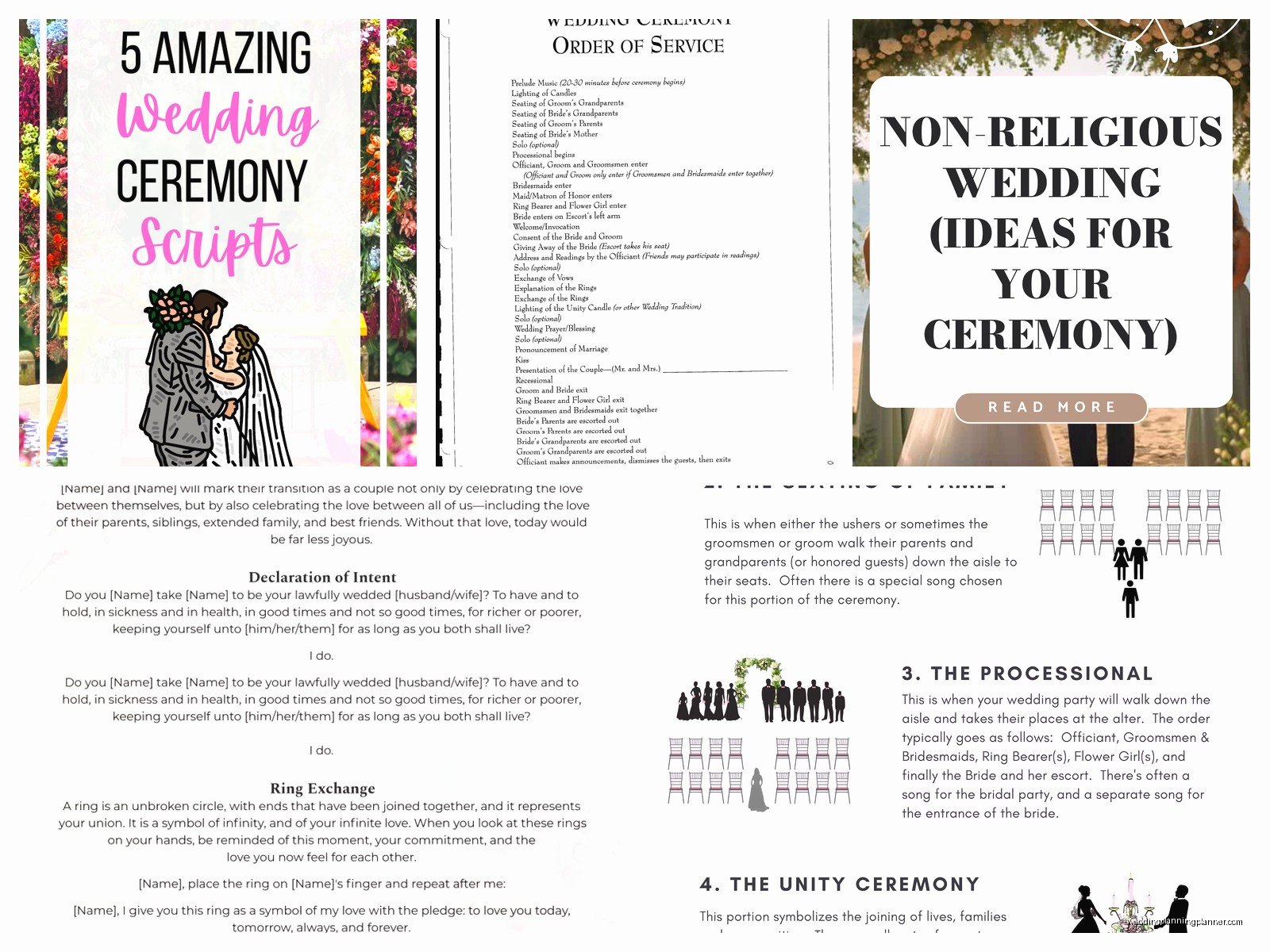
Good vow length is like 1-2 minutes each when spoken aloud. Anything longer and you lose people’s attention or you’re gonna be sobbing too hard to finish them.
Unity Ceremony Options
Unity ceremonies are those symbolic things couples do to represent joining their lives. Some examples:
Sand ceremony: You each pour different colored sand into one vessel. It’s pretty but honestly kinda played out at this point. Also sand gets everywhere.
Candle lighting: You each have a candle and you light one together. Classic, simple, works indoors. Don’t do this outside because wind.
Wine ceremony: You each pour wine from separate bottles into one glass and drink from it. I actually really like this one because then you can save that wine blend for your first anniversary.
Handfasting: Celtic tradition where your hands get tied together with ribbon or cord. Really beautiful visually and works for photos.
Tree planting: You plant a tree together which is meaningful but logistically weird during a ceremony. Better as a private thing later maybe.
Love letter ceremony: You write letters to each other, seal them in a box with a bottle of wine, and agree to open it on your fifth anniversary or during your first big fight. This one makes me emotional every time.
Processional and Recessional Orders
There’s no one right way to do this anymore which is great but also people stress about it. Here are some options that work:
Traditional processional order:
- Officiant takes position
- Groom and groomsmen enter from side
- Grandparents
- Groom’s parents
- Bride’s mother (last to be seated)
- Bridesmaids one by one
- Maid/Matron of Honor
- Ring bearer and/or flower girl
- Bride with father or both parents
Modern processional option:
- Everyone’s already at the altar
- Both partners walk down together
- Or both partners walk with both sets of parents
- Or wedding party walks in pairs (mixed gender)
For recessional, couple exits first, then wedding party in pairs, then parents, then guests are dismissed by rows. Easy.
Readings That Don’t Make People Cringe
Okay so readings can be hit or miss. You want something meaningful but not so cheesy that people are internally rolling their eyes. Stay away from “Love Is Patient” from Corinthians unless you’re really religious because it’s been done a million times.
Better options:
- Poetry by like Rumi, Pablo Neruda, or Mary Oliver
- Excerpts from books that mean something to you (The Princess Bride, Harry Potter, whatever)
- Song lyrics that aren’t obvious wedding songs
- Quotes about partnership and friendship
- Something funny if that matches your vibe
I had a couple use a reading from “The Velveteen Rabbit” about becoming real through love and there wasn’t a dry eye anywhere. Sometimes the unexpected stuff hits hardest.
Special Situations and Variations
Honoring deceased family members: You can do a moment of silence, light a memorial candle, save them a seat with their photo, have the officiant mention them by name. Just keep it brief or it gets really heavy.
Including children from previous relationships: Family medallion ceremony, sand ceremony with multiple colors, having them stand with you during vows, giving them a small gift during the ceremony. Make them feel included without making it awkward.
Surprise ceremony: Some people invite everyone to a party and surprise them with a wedding. This requires a really good officiant who can pivot quickly and explain what’s happening. Also maybe have someone warn elderly relatives because surprises and heart conditions don’t mix great.
Elopement style: Just you two and an officiant, maybe a photographer. Can be literally anywhere, super short, focus entirely on what you want to say to each other. This is becoming way more popular and I get it because wedding planning is exhausting.
Timing the Ceremony
Here’s what nobody tells you – ceremonies always run a few minutes behind. Always. Build that into your timeline.
If your invitation says ceremony starts at 4pm, actually start at 4:10pm because people are late and also there’s always some last-minute emergency with someone’s boutonniere or whatever. Your photographer needs time to get family photos after, cocktail hour should start when you said ceremony would end, not when it actually ends.
Also consider what time of day and how that affects everything. Late afternoon outdoor ceremonies in summer mean sun directly in someone’s eyes. Noon ceremonies mean everyone’s hungry. Evening ceremonies need good lighting setup. Morning ceremonies mean some people will be hungover from the night before, just being honest.
What Your Officiant Actually Needs From You
Your officiant needs to know like a month before the wedding:
- Ceremony structure you want to follow
- Any readings and who’s reading them
- Vows (personal or traditional)
- Ring exchange wording
- How to pronounce everyone’s names correctly
- Any special elements or cultural traditions
- If there are any family situations they should know about (divorced parents who hate each other, etc.)
- Music cues for when they should start
A good officiant will meet with you beforehand and walk through everything so there’s no surprises on the day. If your officiant won’t do a rehearsal, that’s kinda a red flag honestly.
Common Ceremony Mistakes I See
Making it too long – nobody wants to stand or sit through a 90-minute ceremony unless it’s culturally expected. Keep it tight.
Not using a microphone – I don’t care how small your wedding is, use amplification or half your guests won’t hear.
Forgetting about the weather – have a backup plan, have sunscreen available, have blankets if it’s cold, just think it through.
Choosing an officiant who doesn’t know you – your cousin who got ordained online is great and all but if they’ve never officiated before and they’re just reading from a generic script, it’s gonna feel impersonal.
Not practicing your vows out loud – you’ll cry more than you expect and also they might be way too long or too short and you won’t know until you say them aloud.
Blocking the view – if you’re standing on the same level as guests, people in back can’t see. Slight elevation helps. Also don’t put your wedding party in a line that blocks you… I’ve seen this happen and it’s like why are we watching the bridesmaids’ backs for 30 minutes.
Mix and Match to Make It Yours
The thing is there’s no perfect ceremony template that works for everyone. Take what resonates from traditional structures, add personal elements that matter to you, cut anything that feels obligatory or boring, and make sure it’s actually about you two and not about performing for your guests or meeting someone else’s expectations.
I’ve seen 10-minute ceremonies that were absolutely perfect and 2-hour ceremonies that were also perfect because they matched what the couple wanted. The best ceremonies are the ones where you can tell the couple actually thought about what they were saying and doing instead of just following a checklist.
Also remember that literally no one will remember if you mess up a line or if the flower girl refuses to walk or if someone’s phone goes off during the vows. They’ll remember how you looked at each other and if the ceremony felt authentic to who you are. That’s actually all that matters when you look back at it later, trust me on this because I’ve asked couples years later what they remember and it’s never the perfect execution of the timeline, it’s always the feeling of the moment or something funny that happened or how their partner’s voice cracked during the vows.
Just pick a structure that makes sense for your situation, add the personal touches that matter, practice it enough that everyone knows what they’re doing, and then let it unfold. It’s gonna be great even if it’s not perfect, and honestly the imperfect moments usually make the best stories anyway.