Planning Guides, Style Guide
Hindu Wedding Card Design: Design & Ordering Guide
Apr
Okay so Hindu wedding invitations are basically their own universe
The first thing you gotta understand is that Hindu wedding cards aren’t just “save the dates” or whatever. They’re like… announcements of a massive family event that involves multiple ceremonies over several days, and the card itself needs to communicate all of that without looking like a phone book. I learned this the hard way in summer 2021 when a bride’s mom called me literally crying because the printer had put the Mehndi ceremony timing in smaller font than the reception details and apparently that was a huge cultural misstep I should have caught.
The Ganesh symbol thing and religious iconography
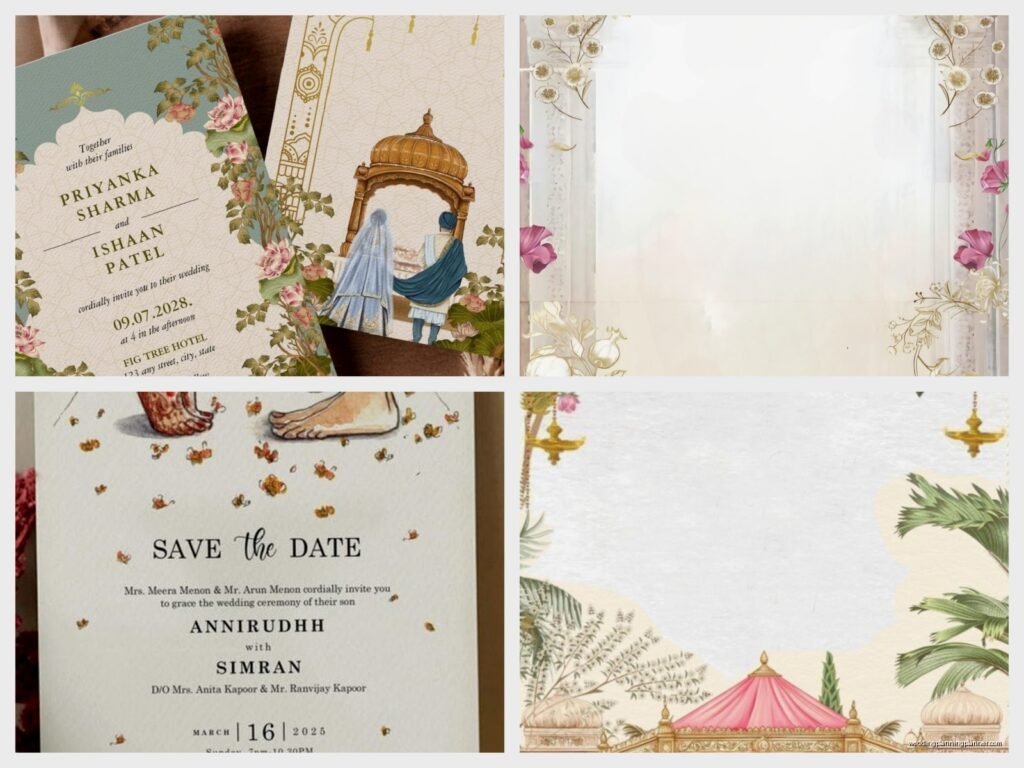
Most Hindu wedding cards will open with a Ganesh symbol or sometimes a swastika (the ancient Hindu symbol, not the… you know). Lord Ganesh is the remover of obstacles so he’s pretty much always included somewhere on the card. You’ll also see Om symbols, lotus flowers, peacocks, elephants – all of this means something specific. Don’t just slap them on there because they look pretty, which is what one of my couples tried to do after getting “inspiration” from Pinterest.
The thing that really annoyed me recently was when a printer told me they could “simplify” the design by removing some of the religious elements because it would “print cleaner.” Like no, Sharon, you can’t just delete someone’s religious symbols because your press doesn’t handle metallic ink well. Figure it out.
Color choices actually matter here
Red and gold are traditional but honestly I’ve been seeing a lot more variety lately. Maroon, orange, pink, purple – all fair game. What you want to avoid is black and white as primary colors because they’re associated with mourning in Hindu culture. You can use them as accent colors maybe, but leading with stark black and white is gonna raise some eyebrows with the older generation.
I had this couple in spring 2023 who wanted a “modern minimalist” look with grey and white, and we had to have like three conversations about how to make it feel celebratory enough for their parents’ friends while still matching their aesthetic. We ended up adding gold foiling and it saved the whole thing.
The actual information you need to include
This is where it gets complicated because you’re not just inviting people to one event. A typical Hindu wedding has the Mehndi ceremony, the Sangeet (music night), the actual wedding ceremony, and the reception. Some families also include the Haldi ceremony details. That’s potentially four or five different events with different dress codes, venues, and timings.
The wording format
Hindu wedding invitations traditionally start with a religious verse or blessing. Then you’ve got the parents’ names doing the inviting – and this is important, it’s usually both sets of parents listed as hosts, not just the bride’s family like in Western traditions. The format generally goes:
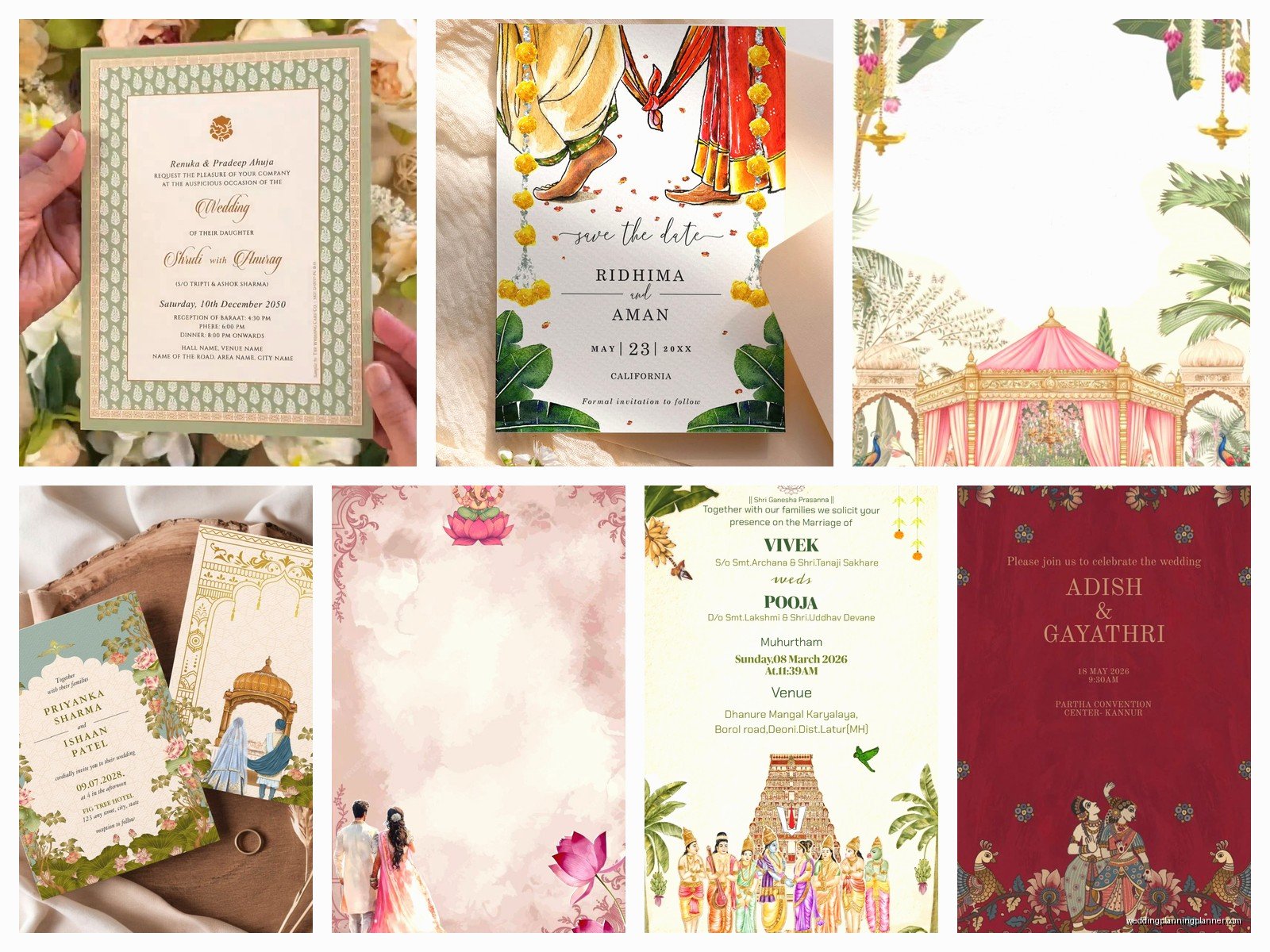
- Opening blessing or Ganesh shloka
- Parents’ names (bride’s family first, then groom’s family)
- Request line (“request the honor of your presence” etc.)
- Bride and groom names
- Ceremony details with dates, times, venues
- RSVP information
You’ll also want to include the actual Sanskrit ceremony name – like “Vivaah Sanskar” for the wedding ceremony itself. This adds the traditional touch that matters to a lot of families.
The insert card situation
Because there are so many events, most Hindu wedding invitations come with multiple insert cards. You might have a main invitation card for the wedding ceremony, then separate inserts for the Mehndi, Sangeet, and reception. Some people try to cram everything onto one card and it just looks… messy? Overwhelming? I always recommend separate inserts even though it increases printing costs.
My cat literally sat on a proof of insert cards once and I didn’t notice until I was on a video call with the client and they were like “is that a paw print on the PDF” and yes, yes it was.
Box invitations vs traditional folded cards
Okay so this is where budgets can really explode. Box invitations have become super popular – these are the ones that come in an actual decorative box with the cards nested inside, sometimes with fabric lining, dried flowers, little trinkets, whatever. They look AMAZING but you’re easily looking at $15-30 per invitation, sometimes more.
Traditional folded cards or booklet-style invitations are more budget-friendly, usually $3-8 per invite depending on the printing method and embellishments. They can still look incredibly elegant with the right paper stock and foiling.
Hard-bound booklet invitations are kinda the middle ground – they look substantial, can include all the ceremony details in an organized way, and run about $8-15 per piece.
Printing methods you should know about
Digital printing is the most affordable but it won’t give you that luxury feel. The colors are good, it’s cost-effective, but there’s no texture or dimension to it. Fine for casual weddings or if you’re working with a tight budget.
Offset printing is the classic choice – better quality than digital, good color accuracy, reasonable pricing for quantities over 100. This is what I recommend for most clients.
Letterpress creates that beautiful debossed impression in the paper and feels super high-end. It’s expensive though, and it doesn’t work well with Indian language scripts or very fine details.
Foil stamping is where you add metallic foil (gold, rose gold, silver, copper) to parts of the design. This is basically essential for Hindu wedding cards in my opinion because it gives that traditional richness. You can do foil stamping on digitally printed cards too.
Laser cutting for intricate borders or patterns – gorgeous but adds significantly to the cost and timeline. If you want laser-cut elements, you need to order like 4-5 months in advance minimum.
Working with Indian language text
A lot of families want some portion of the invitation in Hindi, Sanskrit, Gujarati, Tamil, or whatever their regional language is. This is totally doable but you need to make sure your printer can actually handle the fonts. Not all printing companies have experience with Devanagari or other Indian scripts, and I’ve seen some absolute disasters where the text came out garbled or with weird spacing.
Always, ALWAYS get a physical proof if you’re including text in Indian languages. What looks fine on screen can print completely wrong. And have someone who reads the language fluently check it because translation mistakes on wedding invitations are… well, they become family stories that get told forever.
The envelope addressing situation
Hindu wedding guest lists are typically huge. Like, 300-500 people is not uncommon. Some families invite 800+ guests. So when you’re thinking about your invitation design, also think about whether you’re gonna hand-address all those envelopes (nah, probably not), use a calligrapher (expensive for that quantity), or go with printed labels or direct envelope printing.
I usually recommend direct printing on the envelopes if the quantity is over 200 because it looks clean and professional without the huge cost of calligraphy.
Timeline for ordering because this always stresses people out
If you’re doing custom design with specialty printing techniques, you need to start the process 5-6 months before the wedding. That gives you time for design revisions, proofs, printing, and mailing.
For semi-custom designs (choosing from templates and personalizing), 3-4 months is usually enough.
Rush orders are possible but they’ll cost you extra and your options will be limited. Anything under 6 weeks is gonna be stressful and expensive.
Hindu weddings are often planned around auspicious dates determined by the Hindu calendar, which means you might have less flexibility with your timeline. I’ve had clients who found out their wedding date only 3 months in advance because that’s when the priest confirmed the auspicious time, and then we’re scrambling to get invitations done.
Budgeting realistically
For a decent quality Hindu wedding invitation with multiple inserts and some foiling, budget around $5-10 per invitation if you’re ordering 200+. That includes envelopes, all the insert cards, and basic embellishments.
If you want box invitations or extensive laser cutting or letterpress, you’re looking at $15-30+ per piece.
Don’t forget to factor in postage – these invitations are usually heavy because of multiple cards and embellishments, so you’ll need extra postage. Take a fully assembled invitation to the post office and have them weigh it before you buy stamps.
Working with designers and printers
Find someone who has specific experience with Hindu wedding invitations. The cultural elements matter, the traditional format matters, and you want someone who gets it rather than someone who’s gonna suggest removing important details for “cleaner design.”
Ask to see their portfolio of actual Hindu wedding work. Ask about their experience with Indian language printing. Ask about their revision policy because there will probably be revisions – family members will have opinions, trust me.
Get everything in writing – the price, what’s included, the timeline, the revision policy, the shipping arrangements. I’ve seen too many situations where assumptions led to problems.
Online vs local printers
There are tons of online companies now that specialize in Indian wedding invitations. They’re often more affordable and have lots of template options. The downside is you can’t see and touch paper samples in person, and if something goes wrong, you’re dealing with customer service emails instead of walking into a shop.
Local printers who know you, know your family, understand the cultural context – that relationship can be really valuable, especially if you need last-minute changes or have questions. But they might be more expensive.
I usually suggest getting quotes from both online and local options and comparing not just price but also what’s included and the level of service.
Common mistakes I see people make
Ordering the minimum quantity to save money, then realizing you needed 50 more invitations. Reprints are expensive and the color might not match exactly. Order at least 25-30 extra.
Not proofreading thoroughly – I mean like, having five different people read it carefully. Dates, times, venue addresses, names, everything. Once it’s printed, it’s printed.
Choosing a super intricate design that looks amazing on screen but is hard to read in person or… wait, I was gonna say something else but honestly the readability thing is huge. If your guests can’t easily figure out where and when to show up, your invitation has failed its primary job no matter how beautiful it is.
Not considering the older generation – your grandparents’ friends need to be able to read the important details without a magnifying glass. Font size matters.
Forgetting about the RSVP system – are you doing RSVP cards, a wedding website, phone calls? Make it clear and make it easy.
The save the date question
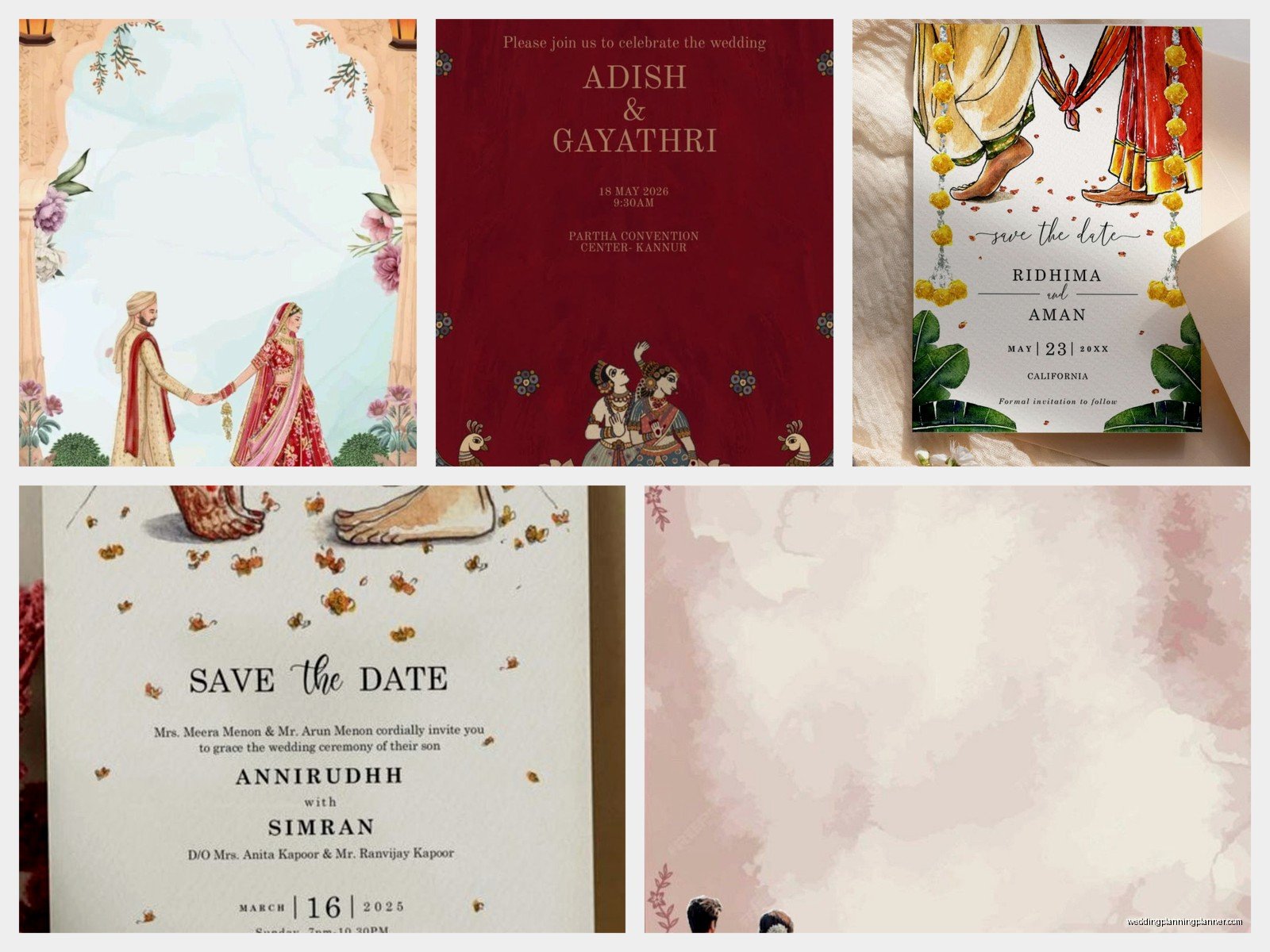
Some couples do save the dates for Hindu weddings, especially if they have a lot of out-of-town guests who need to plan travel. These can be much simpler and less expensive than the formal invitation – maybe a postcard or a digital save the date.
But honestly, in traditional Hindu wedding culture, save the dates aren’t really a thing. The formal invitation IS the announcement. So whether you do them depends on how traditional you’re going vs how many logistics considerations you have.
Assembling all the pieces
Once you get your invitations, you’ve gotta assemble them – main card, insert cards, RSVP card and envelope, maybe some decorative elements. This takes TIME. Like, way more time than you think. For 300 invitations, plan on spending several hours or rope in family members to help.
The order usually goes: largest card on bottom, then smaller inserts in order of importance, then any loose decorative elements. Everything goes into the inner envelope (if you’re using one), then into the outer envelope with the guest address visible.
Some people like to add a little extra touch – a small packet of kumkum and rice, a decorative ribbon, dried flowers. These are beautiful but they add weight (more postage) and assembly time.
Honestly the assembly part is kinda meditative once you get into a rhythm, but that first hour when you’re figuring out the best order and method is frustrating. I usually watch something mindless on Netflix during invitation assembly – recently burned through some reality show I can’t even remember the name of while putting together 400 invitations for a client.