Planning Guides, Style Guide
Wedding Program Designs: Complete Guide
Apr
okay so wedding programs are one of those things that seem simple until you’re actually designing one
The basic wedding program tells your guests what’s happening during the ceremony. That’s it. But somehow people overthink it constantly and I had this bride in summer 2021 who wanted to include her dog’s biography in the program and I was like… maybe we should focus on the actual ceremony first? Anyway.
Your program needs to cover the order of events, who’s who in the wedding party, and maybe some thank yous. Everything else is optional. I always start with the basics because you can add flourishes later but you gotta have the foundation right.
What Actually Goes In A Wedding Program
The cover should have your names, wedding date, and location. Some people do “The Wedding of Sarah and Michael” or just “Sarah & Michael” with the date underneath. You don’t need to overthink this part honestly.
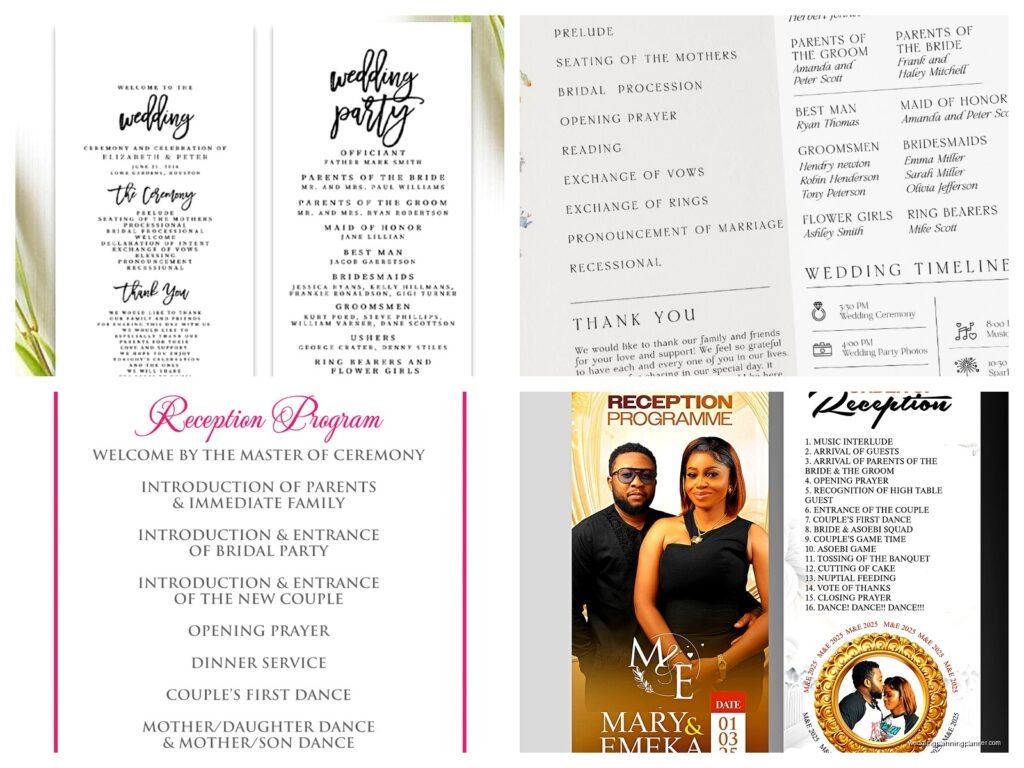
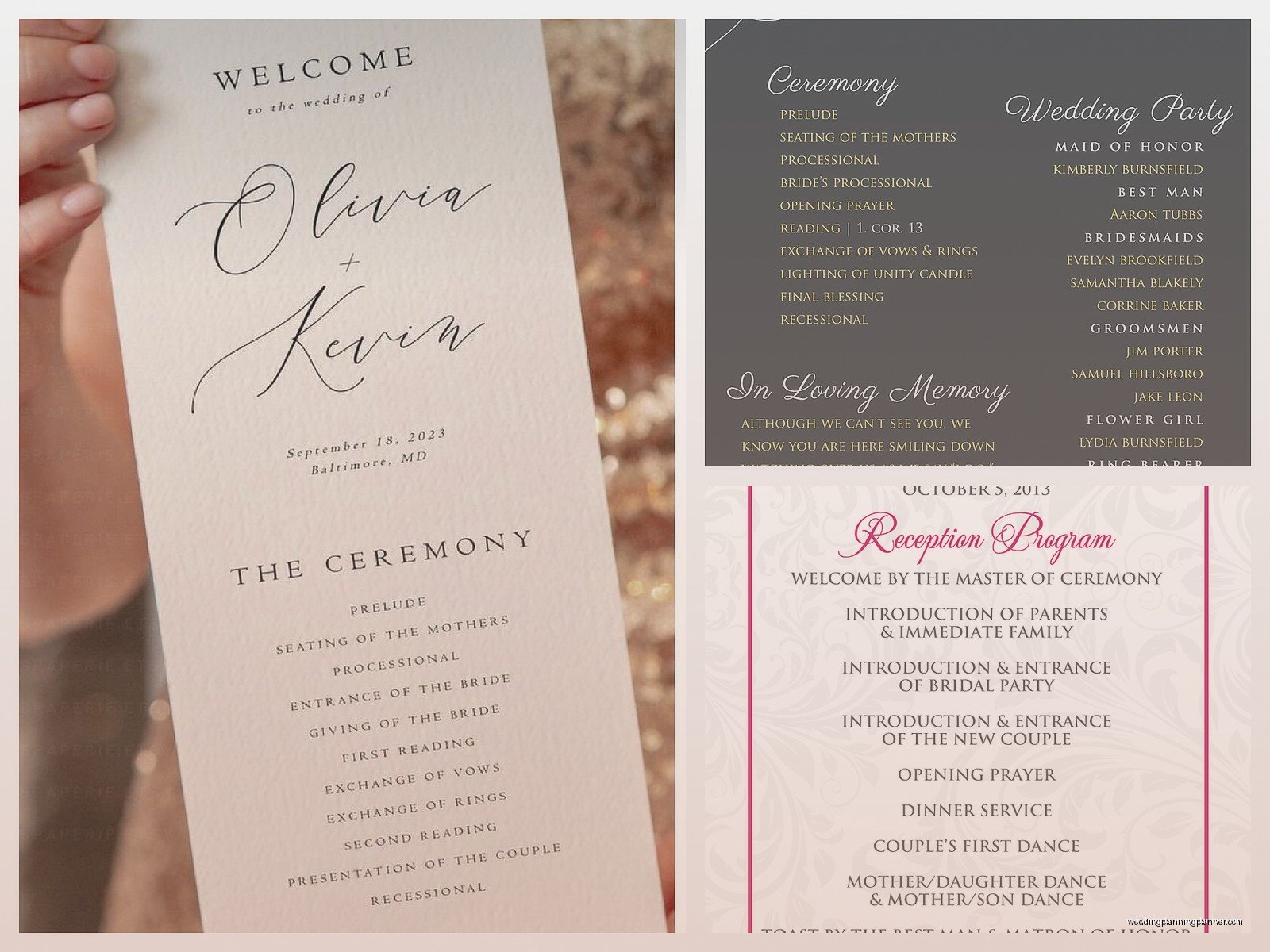
Inside you’ll want the ceremony order – like Processional, Welcome, Reading, Vows, Ring Exchange, Pronouncement, Recessional. Use whatever terms match your actual ceremony. If you’re having a religious ceremony there might be specific elements your officiant wants listed.
The wedding party section is where I list out who everyone is. “Maid of Honor: Jessica Smith, Sister of the Bride” or whatever. This helps guests put names to faces and understand relationships. It’s kinda nice actually because then Aunt Carol knows that the guy doing the reading is your college roommate and not some random person.
Thank you section is where you acknowledge parents, deceased relatives, or anyone who helped significantly. Keep it brief. One bride wanted to thank like 47 people individually and I had to gently suggest that maybe a blanket “thank you to our families and friends” would work better because nobody’s gonna read three paragraphs of names.
Format Options That Actually Work
Single sheet programs are the most budget-friendly. You print on one side or both sides of a nice cardstock. These work great for shorter ceremonies. I use these for beach weddings a lot because they don’t flap around in the wind as much as multi-page ones.
Bi-fold programs (one fold, four panels) are probably the most common. Front cover, two inside pages, back cover. This gives you enough room for everything without being excessive. Most ceremonies fit comfortably in this format.
Tri-fold programs have six panels and honestly unless you’re having like a full Catholic mass or a really elaborate ceremony, you probably don’t need this much space. But they look elegant if you want that extra fancy feel.
Booklet style programs are for when you’ve got a lot to say. Multiple pages, saddle-stitched or stapled. I did one in spring 2023 for a Indian-American fusion wedding where we needed to explain both ceremony traditions and it was absolutely necessary. Otherwise? Probably overkill.
Fan programs are genius for outdoor summer weddings. They serve double duty as programs AND cooling devices. Your guests will actually appreciate these. Just make sure the printing is on both sides so it looks good when they’re fanning themselves.
Size Considerations Because This Matters More Than You Think
Standard sizes work with most printers and are cheaper. 5×7 inches, 5.5×8.5 inches, 4×9 inches for bookmarks. These dimensions don’t waste paper and print shops have templates ready to go.
Custom sizes look unique but cost more and you’ll probably have paper waste. If budget isn’t a concern then go for it, but I always mention the price difference because some couples are surprised when their 6.2×8.7 inch custom program costs twice as much to print.
The thing that annoys me is when couples design programs that don’t fit in standard envelopes or holders. Like if you want programs in a basket at the ceremony entrance, make sure they’re sized appropriately. I once had programs that were so awkwardly sized they wouldn’t stand up in the display and kept falling over and it looked messy.
Paper Stock And Printing Methods
Cardstock is your standard choice. 80lb to 100lb cover weight works well. It’s sturdy enough to hold up but not so thick it’s awkward. You can print these at home if you have a decent printer or use an online service.
Linen or textured paper adds a nice touch. It photographs well and feels more expensive than it is. Just test your printer first because some textures don’t take ink evenly and you’ll end up with weird spotty printing.
Vellum overlays are pretty but kinda impractical? They’re that translucent paper that goes over the main program. They look elegant but they slip around and some guests don’t realize there’s information under the vellum layer. Use them if you love the look but know that functionality takes a hit.
Digital printing is fine for most weddings. It’s cost-effective and the quality is good enough that guests won’t notice it’s not letterpress. Online services like Minted, Vistaprint, or Zazzle make this easy.
Letterpress printing is gorgeous and expensive. If you’re doing letterpress invitations you might want matching programs but honestly most guests don’t scrutinize programs closely enough to justify the cost difference. But if it’s important to you aesthetically then budget for it.
Home printing works if you’re crafty and have time. Buy nice cardstock, use a good printer, and maybe do a test run first because I’ve seen so many smudged or misaligned programs from DIY attempts. Not saying don’t do it, just saying practice first.
Design Elements To Include Or Skip
Photos are nice but not necessary. Some couples put an engagement photo on the cover or back. It personalizes things but also increases printing costs if you’re doing color. Black and white photos can look really classy though.
Borders and frames keep things organized visually. A simple border prevents the design from looking too sparse. You don’t need anything elaborate – even a thin line works.
Icons or illustrations can represent different ceremony elements. Little graphics next to each section break up text nicely. I like using simple line drawings that match the wedding theme.
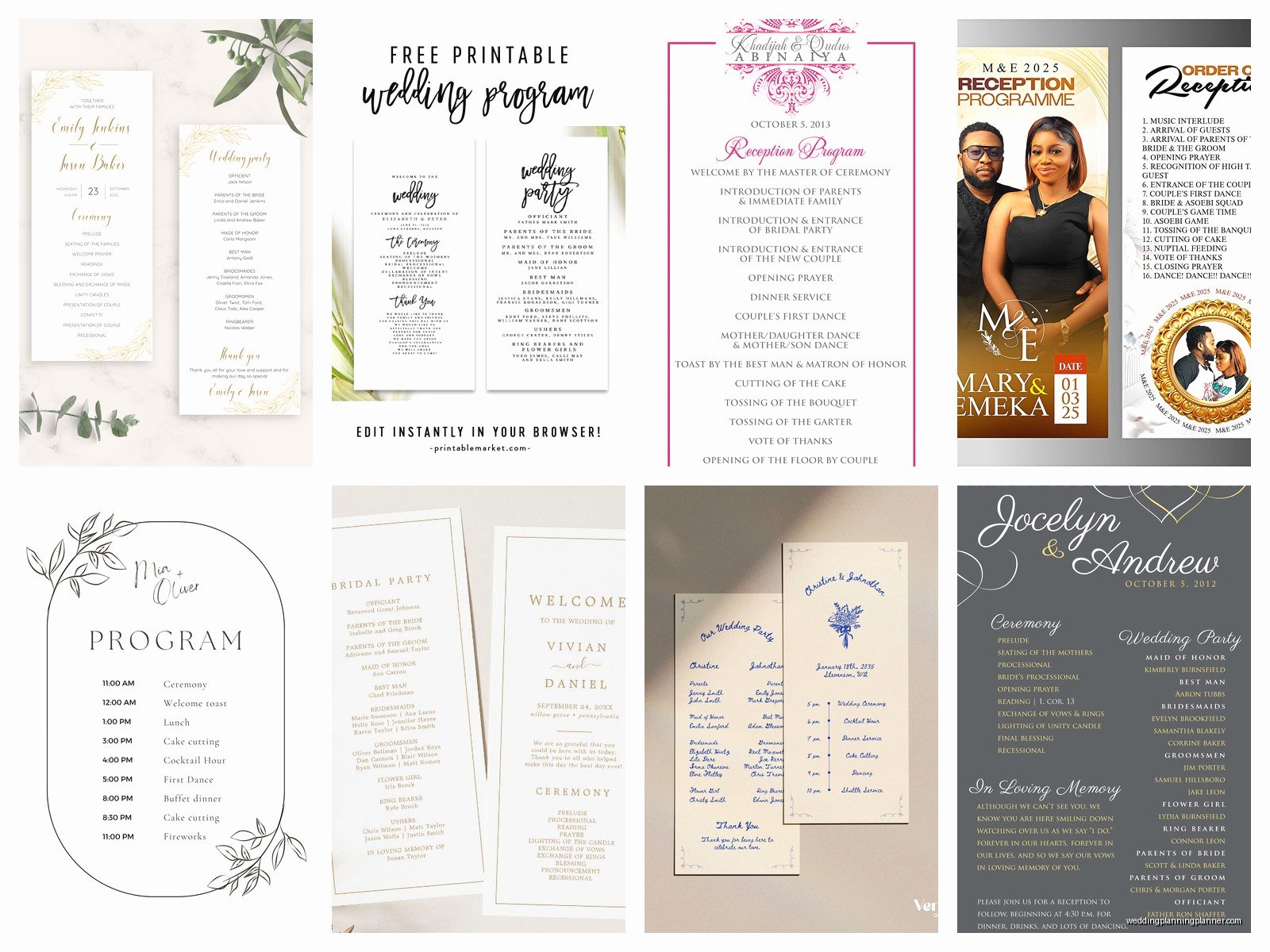
Color schemes should match your wedding colors obviously but remember that full color printing costs more than black and white or single color. You can do a lot with just black ink on colored paper actually.
Fonts matter more than people realize. Use readable fonts for the body text – save the fancy script for names or headings. I can’t tell you how many programs I’ve seen where the ceremony order is in some elaborate calligraphy font that’s basically illegible. Your grandma needs to be able to read this without squinting.
Special Ceremony Elements To Address
If you’re doing a unity ceremony – candle, sand, whatever – explain it briefly in the program. Guests appreciate understanding what they’re witnessing. Just a sentence or two.
Cultural traditions definitely need explanation. When I work with multicultural weddings we always include a little section describing traditions that might be unfamiliar to some guests. Like “The couple will participate in a tea ceremony honoring their parents” or whatever applies.
Religious elements should be noted especially if you’re having an interfaith ceremony. Help guests follow along and understand the significance of different parts.
Special music selections can be listed with the composer or artist if that’s important to you. Some couples really want guests to know they chose specific meaningful songs.
Practical Stuff Nobody Tells You
Print extras. Always. I tell couples to print at least 20% more than their guest count because people take them as keepsakes, some get damaged, and you’ll want some for your own records. My cat once knocked over a box of programs the morning of a wedding and we were so glad there were extras… although that was kinda stressful in the moment not gonna lie.
Timing for ordering matters. If you’re using a printing service, order at least 3-4 weeks before the wedding. Rush shipping exists but why pay extra? If you’re printing at home, do it at least a week ahead so you’re not frantically printing at midnight the night before.
Proofread everything multiple times. Have someone else proofread too. Typos in programs are permanent and embarrassing. Check all names, dates, times, locations. I once saw a program that had the wrong ceremony time printed and it caused confusion.
Distribution method needs planning. Are they in a basket at the entrance? Is someone handing them out? Do you need programs for both sides of the aisle? Think through the logistics before the day of.
Budget-Friendly Approaches
Single-sided printing on nice paper can look just as good as elaborate multi-page programs. Design one beautiful page with all the essentials.
Skip the programs entirely if your ceremony is short and straightforward. Real talk – if you’re having a 15-minute ceremony with no special elements, do you really need programs? Maybe put the information on a sign at the entrance instead.
Digital programs sent via email or wedding website work for tech-savvy crowds. Some couples create a PDF that guests can download. This is basically free and environmentally friendly but some older guests might not engage with it.
Simple templates from Canva or Template.net are free or cheap. You can customize them easily and print at home or through a budget printing service. Nobody needs to know you didn’t hire a designer.
When To Splurge On Programs
Long ceremonies justify nicer programs because guests will actually use them to follow along. If you’re having a full mass or elaborate cultural ceremony, invest in good programs that help guests understand what’s happening.
Destination weddings where programs double as keepsakes make sense to spend more on. Guests traveled far and might appreciate a beautiful memento.
When programs match high-end invitations it creates a cohesive look. If you spent serious money on letterpress invitations, budget programs might look… I mean they’ll look fine but there might be a disconnect aesthetically speaking.
Common Mistakes I See Constantly
Too much text. Nobody wants to read three paragraphs about how you met or detailed explanations of every single moment. Keep it concise or people won’t read it at all.
Fonts too small. If your program requires reading glasses to decipher, you’ve gone too small. Minimum 10pt for body text, bigger for older crowds.
Forgetting to include the ceremony location on the program itself seems obvious but I’ve seen it happen. People keep programs as mementos and later can’t remember where the wedding was.
Not accounting for weather. Outdoor weddings need programs that can handle wind, potential moisture, whatever. Cardstock holds up better than regular paper. Fans work great. Delicate vellum overlays? Not so much.
Over-designing to the point where information is hard to find. The program should be functional first, pretty second. If guests can’t quickly figure out what’s happening next because there’s too much decorative stuff in the way, you’ve missed the point.
Random Details That Might Help
Ribbon ties or belly bands look fancy but add labor. If you’re DIY-ing, consider whether you want to spend time tying ribbons on 150 programs. Sometimes simple is better.
Wax seals are having a moment but they’re time-consuming and can be tricky with programs. They work better on invitations honestly.
QR codes linking to your wedding website or a playlist are kinda cool and modern. Younger guests will scan them, older guests might ignore them, but it’s a nice option for additional info without cluttering the program.
Seasonal elements can be incorporated – fall leaves, winter snowflakes, spring flowers, summer beach themes. Just don’t go so heavy on theme that the program looks cartoonish unless that’s your vibe.
Programs don’t have to be serious. If you’re having a casual wedding, make the program casual too. Humor is allowed. One couple I worked with included a “what not to do during the ceremony” section that was actually pretty funny and guests loved it.