Planning Guides, Style Guide
Wedding Agenda Examples: Sample Ideas & Examples
Apr
Wedding Agenda Examples That Actually Work
Okay so wedding agendas are one of those things couples don’t think about until like three weeks before the wedding and then they’re panicking because nobody knows what’s happening when. I’ve seen this play out probably a hundred times at this point and honestly it’s kinda preventable if you just sit down and map it out early.
A wedding agenda is basically your timeline for the day – what’s happening, when it’s happening, who needs to be where. It’s different from your wedding timeline (which is more detailed and includes things like when the florist arrives) because the agenda is what you share with guests, your wedding party, and vendors so everyone’s on the same page.
The Basic Wedding Day Agenda Structure
Most wedding agendas follow a pretty standard flow but you can obviously tweak it. Here’s what I usually recommend:
- Ceremony start time
- Cocktail hour
- Reception entrance
- Dinner service
- Toasts and speeches
- First dance and special dances
- Cake cutting
- Open dancing
- Bouquet/garter toss (if you’re doing that)
- Last dance and send-off
But like, that’s just the skeleton. Let me show you what this actually looks like in practice.
Sample Wedding Agenda #1: Traditional Evening Wedding
5:00 PM – Ceremony begins (St. Mary’s Church, 123 Main Street)
5:30 PM – Ceremony concludes, guests proceed to The Garden Room for cocktail hour
6:30 PM – Reception doors open, guests find their seats
6:45 PM – Wedding party entrance and first dance
7:00 PM – Dinner is served
7:45 PM – Toasts (best man, maid of honor, parents)
8:15 PM – Parent dances and cake cutting
8:30 PM – Dance floor opens
10:30 PM – Last call at the bar
11:00 PM – Sparkler send-off and reception ends
This is your classic setup. Nothing fancy, just solid timing that keeps things moving without feeling rushed. I used this exact structure for a wedding in summer 2021 and the bride literally texted me the next day saying her aunt commented on how “smooth everything felt” which is basically the highest compliment you can get.
Sample Wedding Agenda #2: Afternoon Garden Wedding
2:00 PM – Guests arrive at Riverside Gardens
2:30 PM – Ceremony begins
3:00 PM – Ceremony concludes, cocktail hour on the lawn
4:00 PM – Reception begins, lunch is served family-style
4:45 PM – Toasts and speeches
5:15 PM – First dance and parent dances
5:30 PM – Cake cutting and dessert
6:00 PM – Open dancing
7:30 PM – Reception concludes
Afternoon weddings are tricky because you gotta work around that weird mid-day energy slump people get, but they’re also gorgeous for photos and usually less expensive for venues. The earlier end time also means your older guests won’t be falling asleep in their chairs which… yeah that happens more than you’d think.
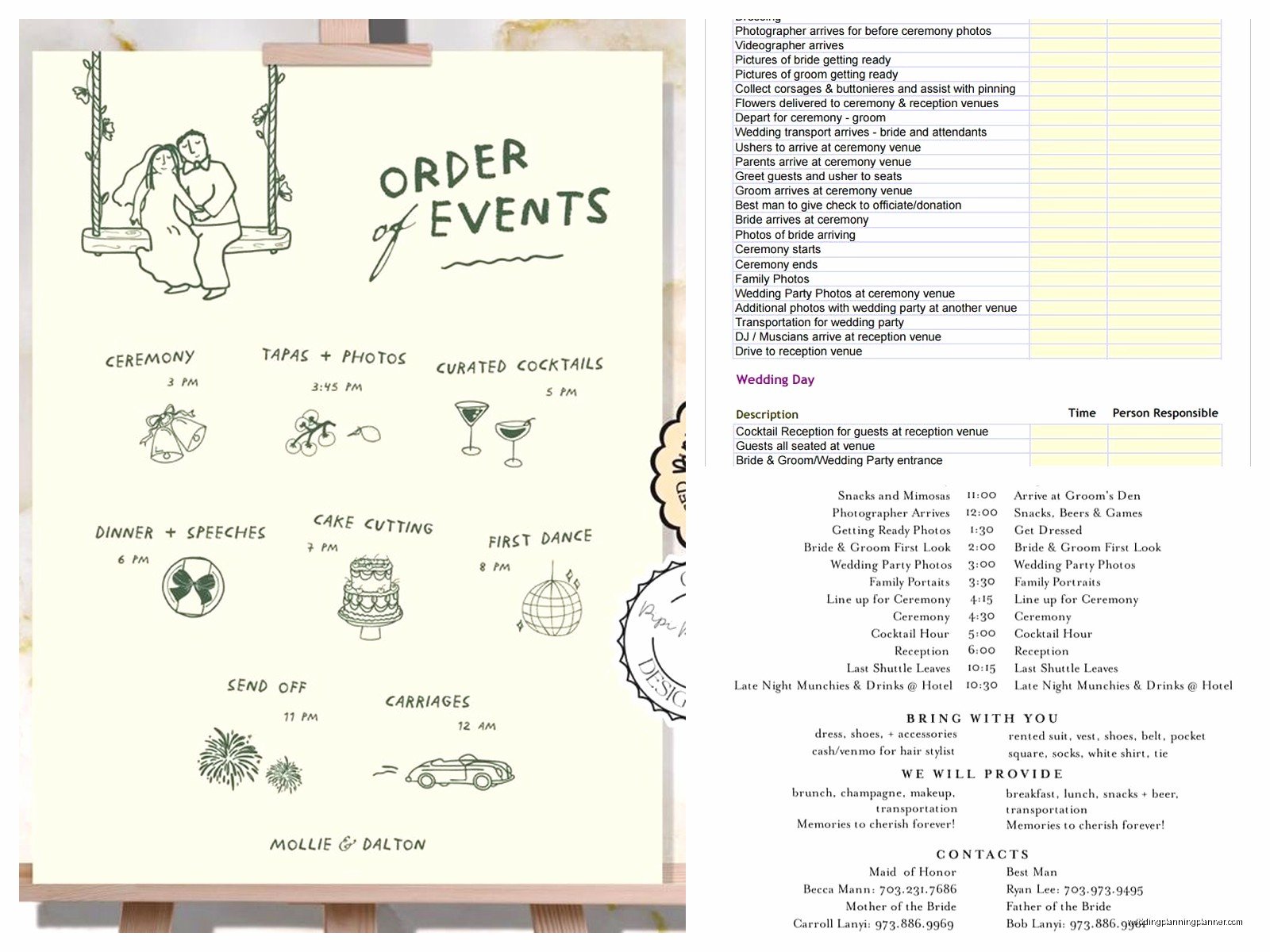
Sample Wedding Agenda #3: Casual Backyard BBQ Wedding
4:00 PM – Guests arrive, lawn games and mingling
4:30 PM – Ceremony under the oak tree
5:00 PM – BBQ buffet opens, grab your plate and find a seat
6:00 PM – Casual toasts (open mic style – anyone who wants to say something!)
6:30 PM – First dance
6:45 PM – Dance floor opens, dessert bar available
9:00 PM – Bonfire and s’mores
10:00 PM – Party winds down
I love these casual weddings because there’s less pressure on exact timing. People can kinda flow through the day more naturally. Just make sure you still have SOME structure or people will be asking “when are we eating?” every five minutes.
What Drives Me Crazy About Wedding Agendas
Okay can I just vent for a second? The thing that absolutely annoys me is when couples create these super detailed agendas with every tiny moment listed out and then they get stressed when things run 10 minutes behind. Like, Karen, nobody cares if the bouquet toss happens at 9:17 instead of 9:15. Your guests are having fun and drinking wine, they’re not checking their watches.
The agenda should guide the day, not control it. Build in buffer time. Assume things will run a little late because they always do.
Sample Wedding Agenda #4: Destination Beach Wedding
5:30 PM – Guests gather on the beach
6:00 PM – Sunset ceremony begins
6:30 PM – Cocktails on the terrace with steel drum music
7:30 PM – Reception begins in the pavilion
8:00 PM – Dinner service (stations style)
9:00 PM – First dance and parent dances
9:15 PM – Toasts
9:30 PM – Cake cutting
9:45 PM – Dancing begins
11:00 PM – Beach bonfire for anyone who wants to continue celebrating
Midnight – Official end time
Beach weddings have their own vibe entirely. You’re working with sunset timing which you can’t control, so you gotta be flexible. Also sand. So much sand. My cat tracked sand through my apartment for weeks after I got back from a beach wedding consultation in spring 2023 and I’m still finding it in random places.
How Detailed Should Your Agenda Be?
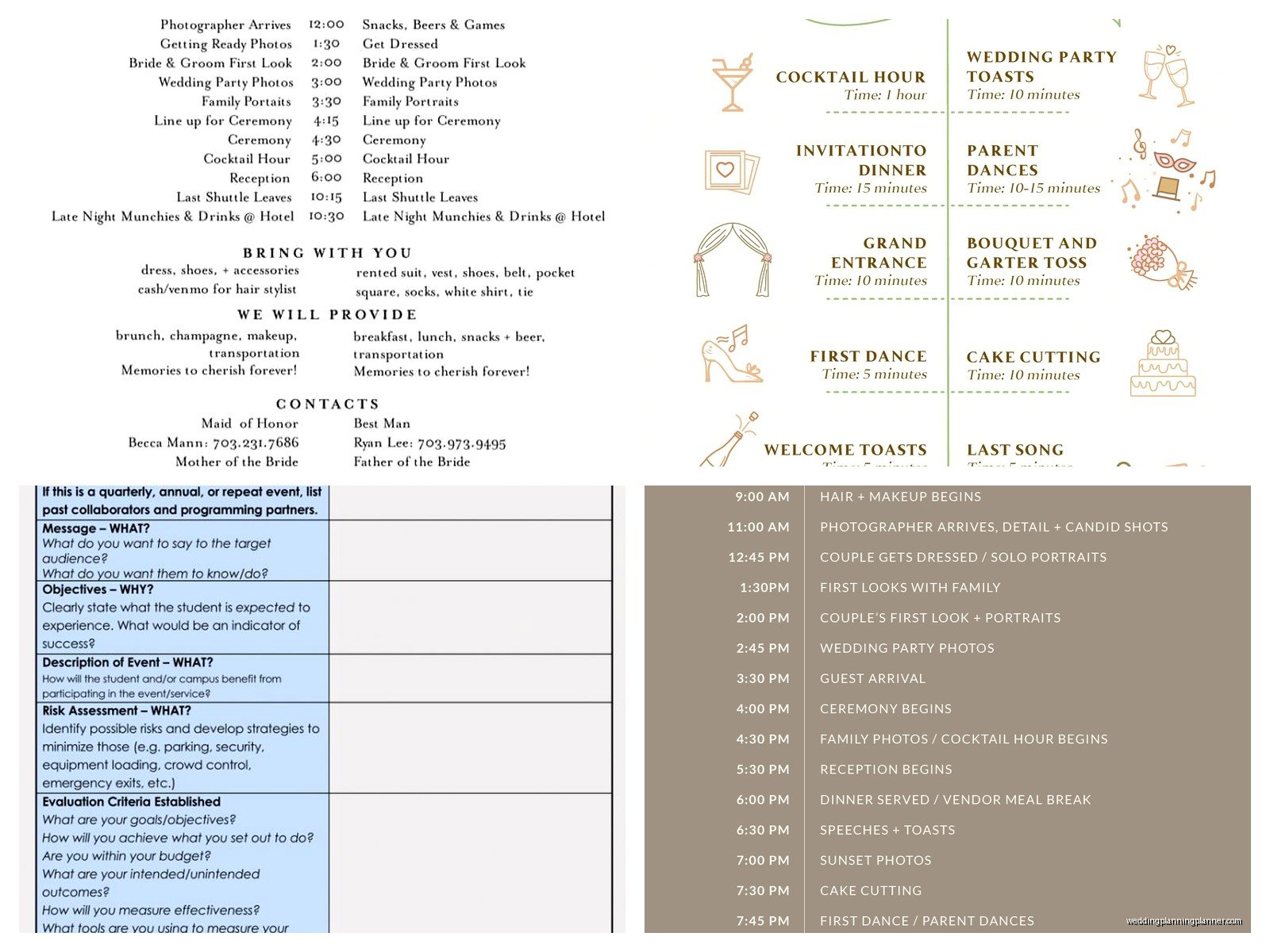
This depends on who you’re giving it to. For your guests, keep it simple – they don’t need to know that the photographer is doing family photos from 5:15-5:45. They just need to know ceremony at 5:00, cocktails after, dinner at 6:30.
For your wedding party and vendors, you want more detail. Include things like:
- When and where to arrive
- When photos are happening
- When they need to be in specific places
- Contact numbers for the coordinator or couple
- Backup plans if weather is bad
I usually create two versions – a guest version and a vendor/wedding party version. Saves a lot of confusion.
Sample Wedding Agenda #5: Brunch Wedding
10:00 AM – Guests arrive, coffee and pastries available
10:30 AM – Ceremony begins
11:00 AM – Ceremony ends, mimosa bar opens
11:30 AM – Brunch buffet service begins
12:15 PM – Toasts
12:30 PM – First dance
12:45 PM – Cake cutting (or donut wall, whatever you’re doing)
1:00 PM – Open dancing and lawn games
2:30 PM – Reception concludes
Brunch weddings are having a moment and honestly I get it. They’re budget-friendly, you don’t need a full bar, and everyone’s home by mid-afternoon. Plus pancakes at a wedding? Yes please.
Common Timing Mistakes I See
People always underestimate how long things take. Here’s what actually happens:
Cocktail hour: Should be at least 45 minutes, preferably an hour. Guests need time to get drinks, use the bathroom, and actually socialize. If you’re doing family photos during this time, you NEED the full hour.
Dinner service: Plan for 45 minutes to an hour depending on your service style. Buffets take longer than plated because people have to wait in line. I had this couple once who planned 30 minutes for a buffet dinner for 150 people and I was like… umm that’s gonna be a problem. We adjusted but it was stressful.
Toasts: Everyone says their toasts will be short. They’re lying. Plan for 20-30 minutes total if you have 3-4 people speaking. Some people ramble and you can’t really cut them off without being rude.
Dancing: You want at least 2-3 hours of open dancing time. Any less and it feels like the party just started when it’s time to leave.
Sample Wedding Agenda #6: City Wedding With Separate Ceremony and Reception Venues
3:00 PM – Ceremony at City Hall (238 guests attending)
3:45 PM – Ceremony concludes, transportation provided to reception venue
4:00-5:00 PM – Travel time (couple does photos around the city)
5:00 PM – Cocktail hour begins at The Metropolitan Room
6:00 PM – Couple arrives, reception begins
6:15 PM – Grand entrance and first dance
6:30 PM – Dinner service
7:30 PM – Toasts
8:00 PM – Parent dances and cake cutting
8:30 PM – Dancing
11:00 PM – Last dance and exit
When you have separate venues, you need to account for travel time and make it SUPER clear to guests how they’re getting from point A to point B. Provide transportation if possible or at least detailed directions and parking info.
Special Considerations For Your Agenda
Think about your specific situation. Are you having a religious ceremony with specific traditions? Build in time for those. Having a unity ceremony or special cultural rituals? Add them to the agenda.
Also consider your guests. If you have a lot of elderly guests or families with young kids, an 11 PM end time might not work. If you’re having a younger crowd who likes to party, ending at 9 PM will feel abrupt.
Weather matters too. If you’re planning an outdoor ceremony, have a rain plan clearly noted on the agenda. “In case of rain, ceremony will be held in the barn” or whatever your backup is.
How To Share Your Agenda
You’ve got options here. You can include a simplified version on your wedding website, print it on a sign at the venue, include it in your ceremony programs, or send it via email to key people. I usually recommend doing a few of these – not everyone checks the website and not everyone reads their programs.
For vendors and wedding party, send a detailed timeline via email about a week before and then have printed copies on the day of. People lose emails, their phones die, whatever. Paper backup is always smart.
Flexibility Is Key
Here’s the thing about wedding agendas – they’re guidelines, not laws. I’ve never seen a wedding that followed the timeline exactly. The ceremony runs long because the flower girl decides to pick flowers instead of walk down the aisle. Dinner takes an extra 15 minutes because the caterer had an oven issue. Someone’s toast goes way over time because they’re emotional and telling stories.
That’s all fine and normal. The agenda gives you a framework but the day will unfold how it unfolds. As long as the major moments happen – ceremony, dinner, dances, cake – you’re good. Your guests won’t notice if the cake cutting happened at 8:47 instead of 8:30, I promise.
What matters is that you have something in writing so your vendors know what’s expected, your wedding party knows where to be, and your guests have a general idea of how the day flows. That’s it. Don’t stress about making it perfect because perfect doesn’t exist in wedding planning or really anywhere in life if we’re being honest.
Just pick a structure that makes sense for your venue, your style, and your guests. Add in the specific timing that works for your vendors and meal service. Build in buffer time. Share it with the people who need it. And then let the day happen.