Planning Guides, Style Guide
Layout Wedding: Complete Guide
May
Start With Your Venue’s Actual Physical Space
Okay so the first thing you gotta do is actually visit your venue and bring a measuring tape. I know this sounds obvious but you’d be shocked how many couples try to plan their layout from a brochure photo. I had this wedding in spring 2023 where the couple insisted they could fit 12 round tables in their reception space because “it looked big in the pictures” and then we showed up for the walkthrough and nah, we could barely squeeze 9 comfortably. That was a fun conversation.
Walk the entire space and note where the permanent fixtures are. Columns, stages, bars, bathrooms, kitchen doors, emergency exits. These aren’t moving no matter how much you love symmetry, so you need to design around them. Take photos from different angles and actually pace out the dimensions if the venue can’t give you a proper floor plan.
Ceremony Layout Options
For the ceremony you’ve basically got a few standard setups. Rows facing forward is the classic and honestly works for most spaces. You can do straight rows or angle them slightly inward to create more of a semi-circle vibe which helps guests feel more included. I personally like the angled approach for smaller ceremonies under 80 people.
Then there’s theater-in-the-round where the couple stands in the middle and guests circle around them. Looks amazing in photos but lemme tell you, half your guests will be staring at your back during the vows. Only works if you’re comfortable with that or if you’re doing a super short ceremony.
Spiral or curved rows are gorgeous but require way more space than you think. The outer curves need to be pretty far back for people to actually see, so unless you’re in a ballroom or outdoor space, this might not be practical.
Aisle Width Matters More Than You Think
Make your aisle at least 4 feet wide, preferably 5-6 feet. I see couples constantly trying to squeeze in one more row of chairs and making the aisle like 3 feet wide and then the bride‘s dress gets caught on chair edges or the train drags across people’s feet. Also if you’re having a bridal party, they need room to walk without looking like they’re on a balance beam.
Oh and if you’re doing an outdoor ceremony, stake down or weight your aisle runner. Nothing kills the vibe faster than watching your officiant chase a runner down the lawn because of wind. Been there, filmed that, still cringe about it.
Reception Layout Is Where It Gets Complicated
Alright so reception layouts depend heavily on what you’re prioritizing. Dancing? Mingling? Sitting and eating? You can’t maximize all three so you gotta pick.
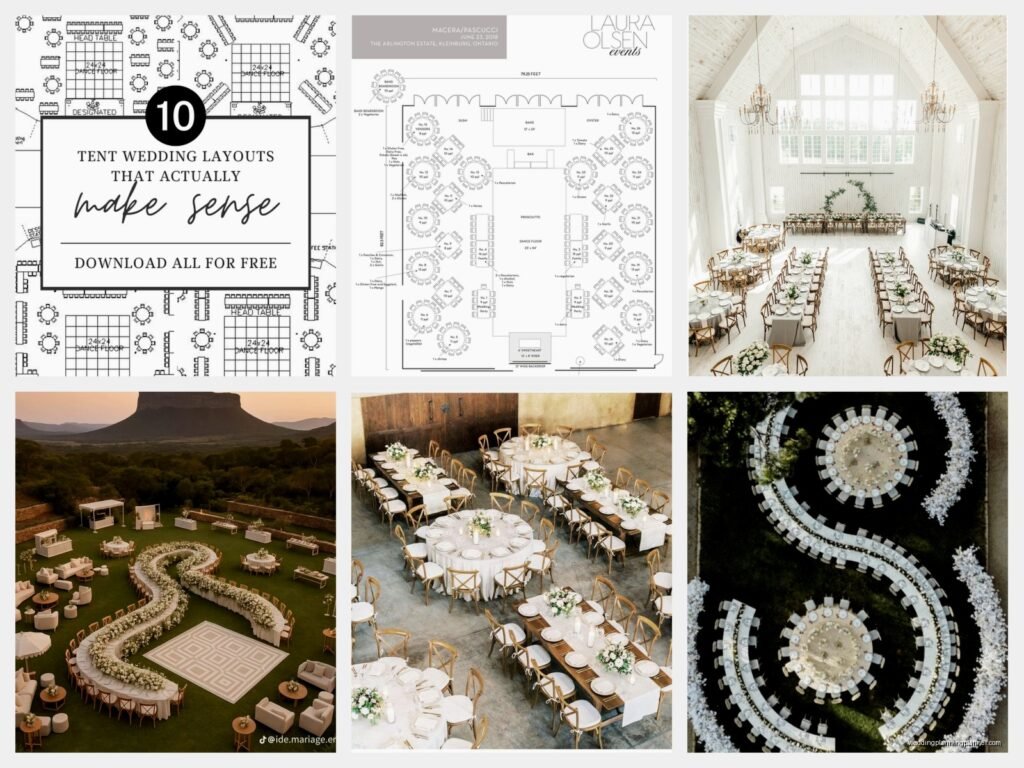
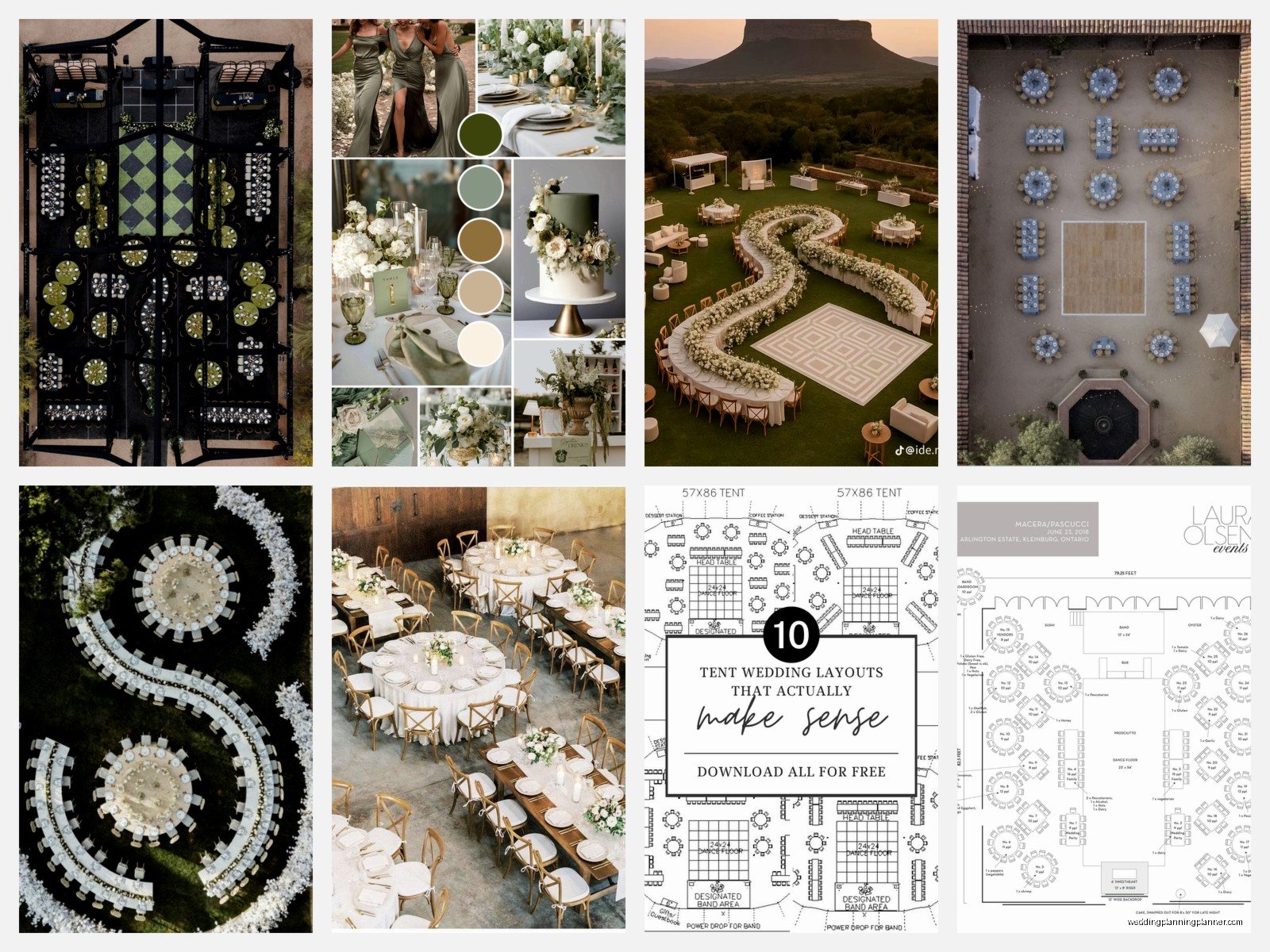
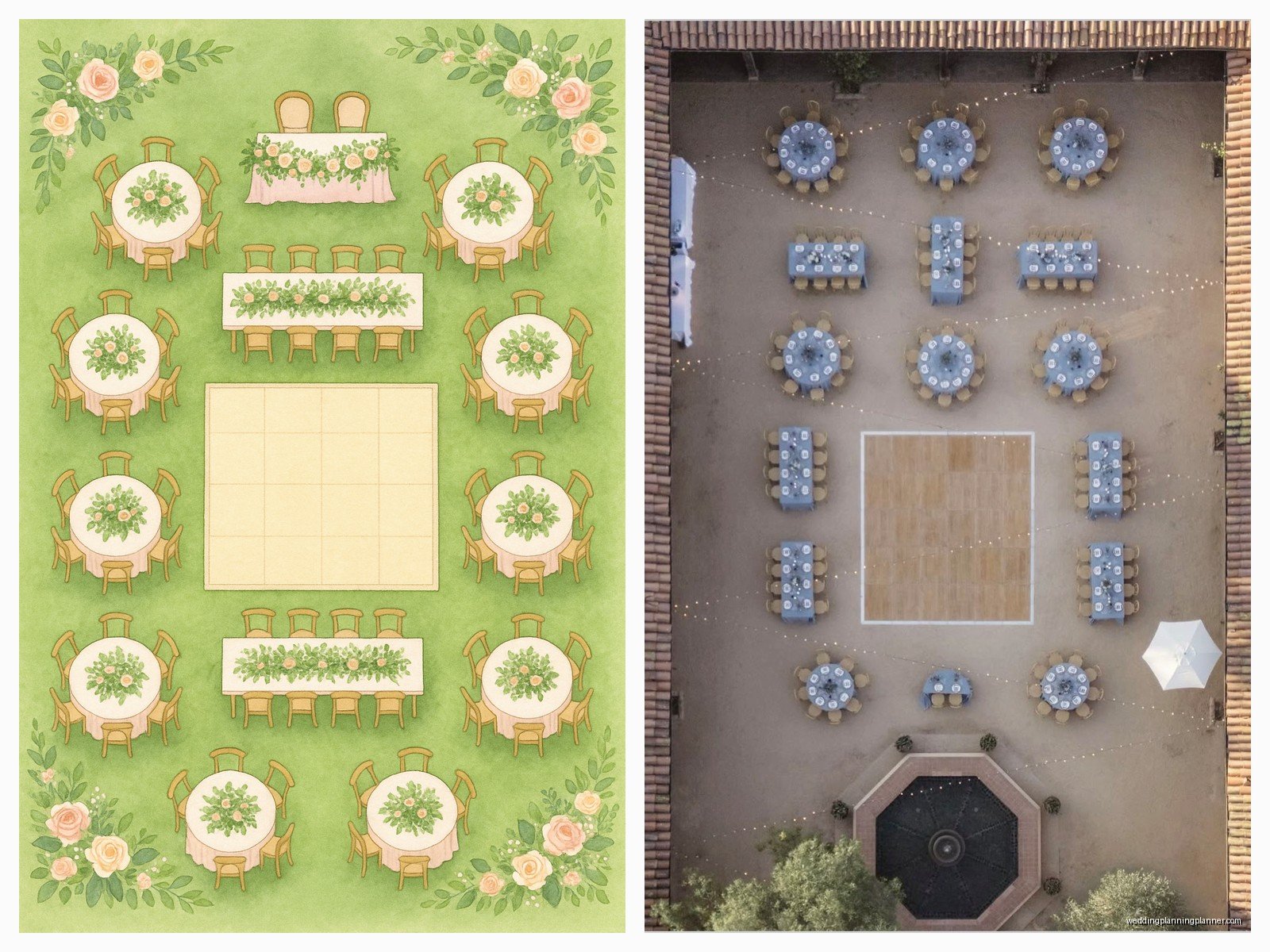
Round tables are standard for a reason—they’re great for conversation and you can fit them into weird spaces pretty easily. A 60-inch round seats 8 comfortably, 10 if you hate your guests. A 72-inch round seats 10-12. Don’t go bigger than 72 inches unless you want people shouting across the table to talk.
Long banquet tables create a more communal feel and honestly they photograph better for that Instagram-worthy reception look. But they take up more linear space and can feel awkward if you’ve got an odd number of guests. Like what do you do with 7 people? Seat them at a table for 8 and have one sad empty chair? Or squeeze them at a table for 6 and make everyone uncomfortable?
The Dance Floor Equation
Here’s the thing that annoyed me for years until I just made a standard formula—couples always underestimate dance floor size. You need about 3-4 square feet per person you expect to be dancing. So if you’ve got 150 guests and realistically maybe 50 people will dance at once, you need a 200 square foot dance floor minimum. That’s roughly 12×16 feet or 14×14 feet.
And place it strategically! Don’t shove it in a corner or behind columns. It should be visible from most tables and ideally near the band or DJ. I’ve seen dance floors placed so far from the action that they just became dead space all night.
Traffic Flow Is Unglamorous But Critical
Think about how people move through your space. They need clear paths to the bar, the bathrooms, the dance floor, and the exit. Leave at least 3-4 feet between table edges and walls or other furniture. If people have to do that awkward side-shuffle thing to get past chairs, your layout is too cramped.
The bar area is gonna create a bottleneck no matter what, so position it away from the entrance if possible. Otherwise you get this traffic jam situation where people arriving can’t get in because everyone’s clustered at the bar. Sometimes I’ll suggest two smaller bars on opposite sides instead of one large bar just to distribute the crowd.
My cat just knocked over my coffee while I’m writing this which is honestly perfect timing for a break but anyway—
Head Table Versus Sweetheart Table
This is mostly personal preference but it affects your whole layout. A head table with your entire bridal party takes up a ton of space and creates this long focal point that everything else has to work around. It’s traditional and works great if you have a big bridal party you actually want to sit with during dinner.
Sweetheart tables are just you and your partner and they’re way more flexible space-wise. You can tuck them almost anywhere and it gives your bridal party the chance to sit with their plus-ones or friends. I did a sweetheart table at my friend’s wedding last summer and honestly it was nice to not be on display the whole meal.
Some couples skip both and just sit at a regular guest table with family or close friends which is very low-key and… wait I’m supposed to be talking about layout not the social dynamics of wedding seating.
Cocktail Hour Layout
If you’re doing a separate cocktail hour space, you need a mix of high-top tables and some lower seating areas. Not everyone can stand for an hour, especially older guests. I’d say aim for seating for about 50-60% of your guests even though most people will be mingling.
Scatter the food stations around the perimeter rather than clumping them together. Creates better flow and prevents that one massive crowd around the appetizers. Bar should be easily accessible but again, not right at the entrance.
Lounge furniture looks amazing in cocktail hours but it’s a space hog. Those vintage couches and velvet chairs you’re pinning on Pinterest? They each take up the same footprint as a high-top table that seats 4 people. Budget your square footage accordingly.
Outdoor Layout Considerations
Outdoor weddings need backup plans for weather but also think about sun position throughout the day. I had this ceremony in summer 2021 where the couple positioned everything perfectly for their 4pm start time but then things ran late and by the time vows happened at 4:45, the sun was directly in everyone’s eyes. The photos were basically silhouettes and squinting.
You need more space outdoors than indoors for the same number of people because there’s no walls to define the space. It just feels more spread out. Also factor in ground surface—tables and chairs need level ground or you’re gonna have wobbling problems all night.
Tents add a whole other dimension. Pole tents have interior poles you have to layout around. Frame tents are open inside but cost more. Clear-top tents are gorgeous but show every bug and bird dropping so maybe not if you’re under trees.
Lighting Changes Everything
Your layout needs to account for lighting sources. Where are the outlets? Where will uplighting go? If you’re using string lights or chandeliers, what are they hanging from? I’ve seen beautiful layout plans fall apart because there was no infrastructure to support the lighting design.
Also think about natural light if you’re in a space with windows. That gorgeous sunset view? Make sure your guests are facing it, not sitting with their backs to it.
The Actual Planning Process
Get graph paper or use a digital floor plan tool. There’s free ones online like AllSeated or Wedding Mapper. Draw your space to scale and then add in your tables and other elements. This is where you realize that Pinterest inspiration photo was taken in a 10,000 square foot ballroom and you’ve got 1,200 square feet to work with.
Start with the non-negotiables: dance floor, head table or sweetheart table, DJ/band setup, cake table. Then add guest tables working outward from there. The tables closest to the dance floor and focal points are your “good” tables—that’s where you seat VIPs and family.
Leave buffer space. Your first layout attempt will always be too packed. Go back through and add breathing room. Can someone pull their chair out without hitting the person behind them? Can waitstaff navigate with trays? Can two people pass each other in the walkways?
Special Layout Elements
Photo booth, guestbook table, gift table, dessert bar—all these extras need homes. They shouldn’t be afterthoughts crammed into whatever corner is left. The guestbook table should be near the entrance so people actually see it. The photo booth needs space around it for the line that will form. The gift table should be visible but secure, preferably with someone keeping an eye on it.
Dessert bars and coffee stations work well as transition points between the dining area and dance floor. Gives people a reason to get up and move around which naturally migrates them toward the dancing space.
Accessibility Stuff You Can’t Ignore
You need wheelchair accessible pathways throughout your layout. That means no steps between areas if possible, and if there are steps, there better be a ramp option. Tables should have space for wheelchair users to pull up comfortably—you can’t just squeeze someone in between two chairs.
Keep aisles clear of decor that hangs low or sticks out. Your tall centerpieces might look amazing but if someone with mobility issues has to navigate around floral arrangements blocking their path, that’s a problem.
Working With Your Vendors On Layout
Your venue coordinator, caterer, and planner (if you have one) all have opinions on layout because they’ve seen what works and what creates operational nightmares. Listen to them when they say the cake table can’t go in a certain spot or the band needs more space.
The catering team especially needs clear paths from kitchen to tables. If they have to weave through the dance floor or squeeze between tightly packed tables, service will be slow and someone’s definitely gonna get bumped into.
Your DJ or band needs not just space for their equipment but also proximity to power sources and ideally a sight line to most of the room so they can read the energy and adjust. Don’t stick them facing a wall in the corner unless you want them to just play their predetermined playlist with no interaction.
Timeline Affects Layout
If you’re doing a flip where cocktail hour is in one space and then guests move to the reception space, your layout needs to account for that transition time. Usually 20-30 minutes for venue staff to finish setting up the reception room. But if you’re doing everything in one space, you might need to get creative with how the ceremony setup transforms into the reception setup.
Some couples do ceremony chairs that then get moved to create the dance floor space, which is fine but it takes time and coordination. Make sure your venue has staff to handle that or assign someone to oversee it because it won’t just magically happen.
The layout also changes throughout the night kinda naturally. After dinner you can have some tables cleared to open up more space. Some venues will remove the ceremony chairs during dinner service to expand the reception area. Just make sure everyone knows the plan.
Common Layout Mistakes
Putting the cake table in direct sunlight or near heating vents—your beautiful cake will melt or the frosting will sweat. Been there, watched it happen, it’s not pretty.
Forgetting to designate vendor meal space. Your photographer, DJ, and other vendors need to eat somewhere and it shouldn’t be in the middle of your guest area or blocking access to something important.
Over-decorating walkways. That flower petal aisle looks dreamy but it’s also a slipping hazard especially if your venue has smooth floors. And those lanterns lining the aisle? Someone will kick them over while dancing later.
Not having a designated spot for personal items. Where do bridesmaids put their clutches during the reception? Where does the groom’s jacket go when he takes it off? These small things need homes or they end up scattered randomly on tables.
Honestly the biggest mistake is not doing a walk-through with your actual layout plan. Stand where your guests will stand. Sit where they’ll sit. Can you see the couple from table 12? Can you hear the speeches from the back corner? Is there a pole blocking the view? Fix these things before the wedding day because you can’t move a column with 150 guests watching.