
Planning Guides, Style Guide
R Wedding Planning: Complete Guide
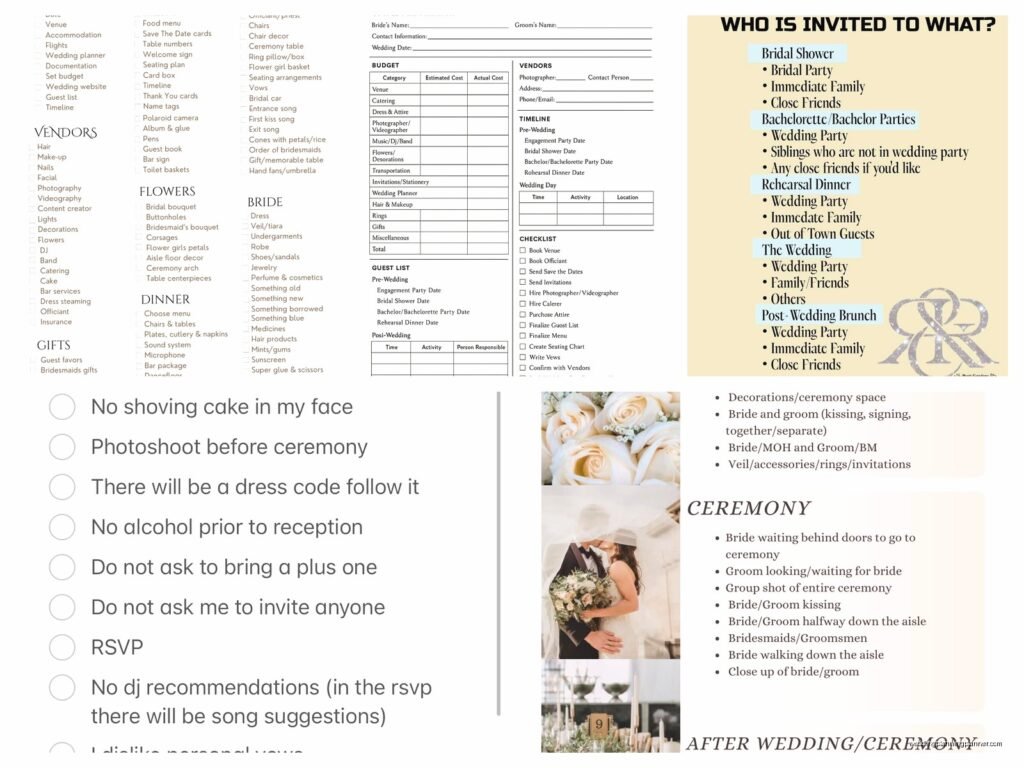
May
Okay so first thing about wedding planning timelines
You’re gonna want to start roughly 12-18 months out for a traditional wedding. I know everyone says that and it sounds excessive but honestly after Spring 2023 when I had a bride trying to pull together a 200-person wedding in four months I will literally tell anyone who listens that MORE time is better. She was stressed, vendors were limited, and we ended up with her third-choice venue because everything decent was booked.
The very first step isn’t picking colors or looking at dresses or anything fun. It’s budget and guest count. I know, boring, but these two numbers dictate literally everything else. Sit down with whoever’s contributing money and have the awkward conversation. Write down the actual number you have to work with, not the number you wish you had.
Breaking down your budget percentages
Here’s roughly how it should shake out, though this varies based on what matters to you:
- Venue and catering: 40-50% (this is your biggest chunk)
- Photography and videography: 10-15%
- Flowers and decor: 8-10%
- Attire: 8-10%
- Music/entertainment: 8-10%
- Invitations and stationery: 2-3%
- Miscellaneous: 5-8%
One thing that really annoys me is when couples don’t budget for tips and vendor meals. Like you’re gonna have 10-15 vendors working your wedding for 8+ hours and yeah, you need to feed them and tip them. Add another 5% for that or you’ll be scrambling.
Guest list drama because there’s always drama
Make your list in tiers. Tier one is must-invites, tier two is would-love-to-have, tier three is if-we-have-room. Your venue capacity and budget will determine where you cut off. And listen, you don’t have to invite your mom’s coworker’s daughter just because… actually you know what, I still struggle with this with my own family events so I can’t really give advice here that I follow myself.
Expect about 80% of local guests to attend and maybe 50% of out-of-town guests. Destination weddings are more like 30-40% attendance.
Booking vendors in the right order
Once you have budget and guest count nailed down:
Venue first. Everything else depends on your date and location. Most couples tour 3-5 venues before deciding. Look at what’s included – tables, chairs, linens, setup, cleanup, coordination. Some venues are all-inclusive, others are blank slates where you bring everything in.
Then book your photographer. Good photographers book up 12-18 months out, sometimes more for peak season. I had a groom in summer 2021 who waited until 6 months before his wedding and ended up with someone whose portfolio was… let’s just say not what they wanted. Photography is the one thing you can’t redo, so prioritize this.
Caterer if not included with venue. Food is important, people remember bad food forever.
Music/DJ/band. Also books up fast, especially for Saturday weddings in peak season.
Florist. You can book this later, like 6-8 months out, but don’t wait too long.
Hair and makeup. 3-6 months out is fine.
Cake or desserts. Same timeline as hair and makeup.
The day-of coordinator question
Get one. Seriously. Even if your venue includes coordination, that person is coordinating the venue’s logistics, not your whole wedding. A month before your wedding, you hand everything off to this person – your timeline, vendor contacts, family drama alerts, everything. Then on the day of, you’re not the one texting the florist about where to put the centerpieces or hunting down your uncle for photos.
I charge $1200-2000 for day-of coordination depending on wedding size and it’s worth every penny. My cat knocked over my coffee while I was writing that and now my desk is a mess, hang on.
Timeline working backwards from your wedding date
12-18 months before:
- Set budget and guest count
- Book venue
- Book photographer and videographer
- Book caterer if separate
- Book band or DJ
- Choose wedding party
- Start dress shopping
9-11 months before:
- Book florist
- Book cake baker
- Order wedding dress
- Book hotel room blocks
- Register for gifts
- Book officiant
- Start planning honeymoon
6-8 months before:
- Order invitations
- Book hair and makeup artists
- Book transportation if needed
- Order suits or tuxes
- Plan rehearsal dinner
- Book day-of coordinator if you don’t have one
4-6 months before:
- Have dress fittings
- Finalize menu with caterer
- Order wedding bands
- Finalize flower selections
- Send save-the-dates if you haven’t
- Buy wedding party gifts
2-3 months before:
- Mail invitations (8 weeks before is standard)
- Final dress alterations
- Apply for marriage license (check your state’s requirements for timing)
- Create seating chart as RSVPs come in
- Finalize timeline with all vendors
- Write vows if doing personal vows
1 month before:
- Final walk-through at venue
- Give final headcount to caterer
- Confirm all vendor arrival times
- Break in your shoes
- Pick up wedding dress
- Assign ceremony readings or other tasks
The parts people forget about or don’t think about until it’s almost too late
Marriage license requirements vary by state. Some have waiting periods, some don’t. Some expire after 30 days, others are good for 90 days. Look this up early and put a reminder in your phone for when to actually go get it.
Name change paperwork if you’re changing your name. Social security first, then driver’s license, then everything else. It’s gonna take months to fully complete.
Vendor meals. I mentioned this already but seriously, budget for this. Your caterer will charge you for vendor meals, usually a reduced rate.
A “getting ready” location if your venue doesn’t provide one or if your ceremony isn’t until later. You need somewhere for hair and makeup that has good lighting and space for your photographer to work.
Contingency plans for outdoor weddings. What’s your rain plan? When do you make the call to move things inside or under a tent? Who’s monitoring the weather?
Stationery timeline since that’s kinda my specialty
Save-the-dates go out 6-8 months before, or earlier for destination weddings. Invitations mail 8 weeks before. RSVP deadline should be 3-4 weeks before your wedding so you have time to track down the people who inevitably don’t respond (there are always some).
You’ll also need: programs for the ceremony, menu cards if you want them, place cards, table numbers, a seating chart display, cocktail napkins, and thank you cards. Don’t order everything at once or you’ll blow your stationery budget in one go. Prioritize save-the-dates and invitations first.
Managing the actual planning process without losing your mind
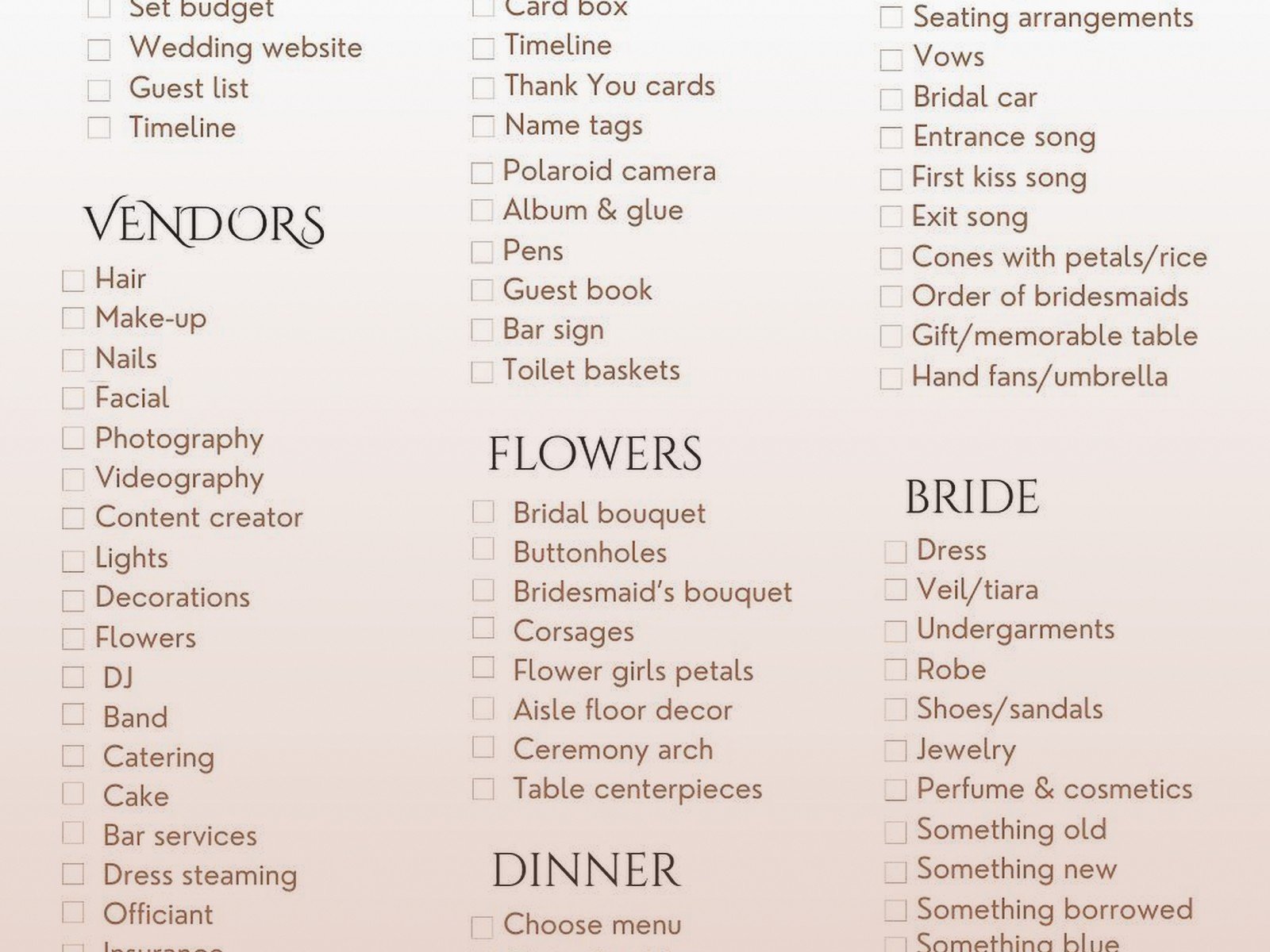
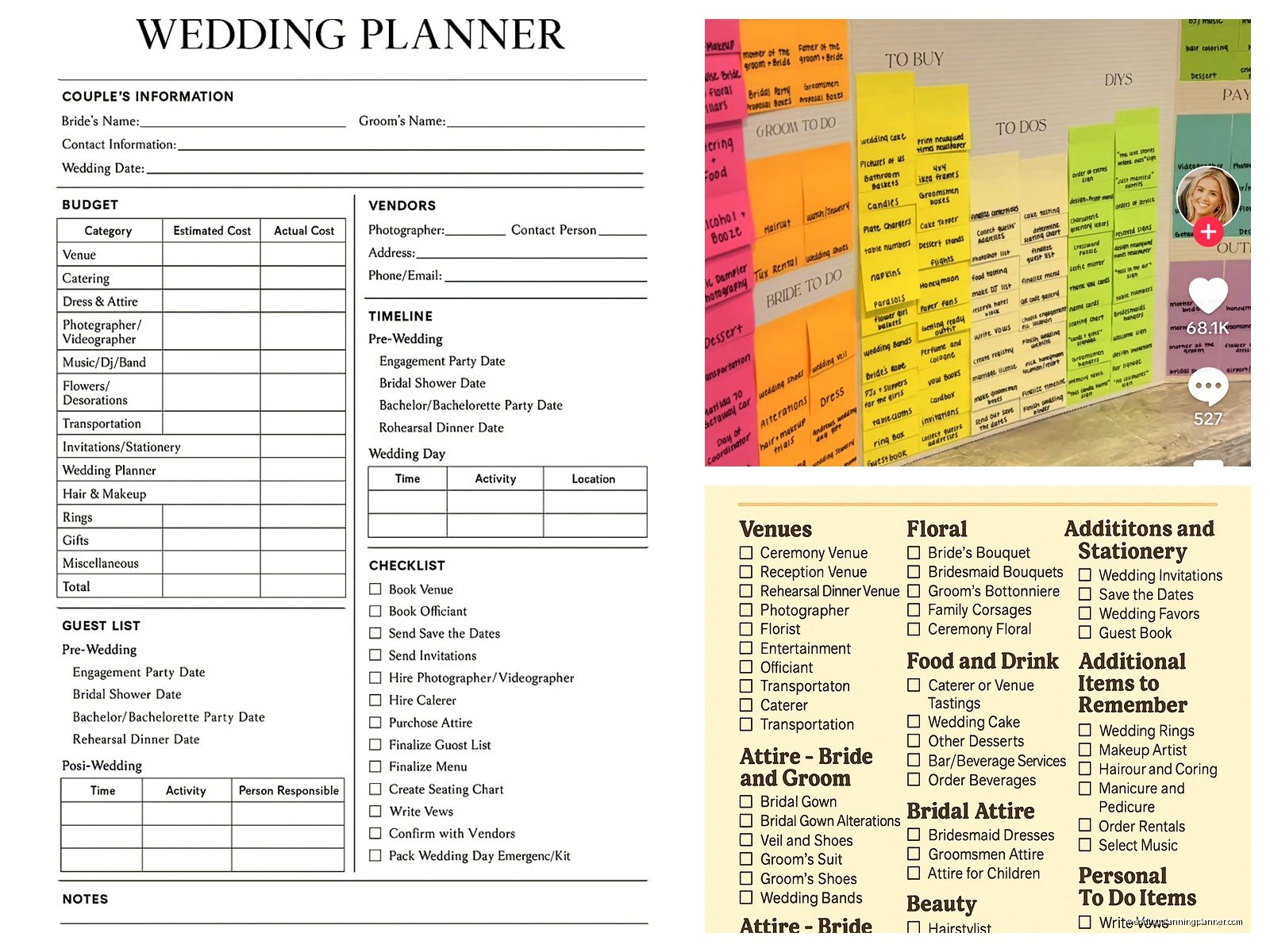
Use a spreadsheet or a planning app. I like spreadsheets because you can customize everything but apps like The Knot or WeddingWire have built-in checklists that are pretty comprehensive.
Track these things:
- Budget (what you’ve spent vs. what you have left)
- Guest list with addresses and meal choices
- Vendor contact info and payment schedules
- Your timeline for the wedding day
- To-do list with deadlines
Have a wedding email address separate from your regular email. Something like johnandjanewedding2025@gmail or whatever. Give this to all your vendors. It keeps everything in one place and you can both access it.
Schedule regular planning sessions with your partner. Like Sunday mornings or whatever works. Don’t try to plan 24/7 or you’ll burn out and start resenting the whole thing.
Common mistakes I see all the time
Not reading vendor contracts carefully. You need to know cancellation policies, what happens if a vendor no-shows, overtime rates, what’s included vs. what costs extra. I had a couple who didn’t realize their photographer’s package only included 6 hours and their wedding timeline was 8 hours… that was an expensive surprise.
Underestimating setup and breakdown time. If your ceremony is at 4pm, you can’t have vendors arriving at 3:45. Your florist needs at least 2-3 hours for setup, your DJ needs an hour, your caterer needs several hours.
Not feeding your vendors. I know I keep harping on this but it’s because people forget.
Forgetting to eat on your wedding day. You’ll be running on adrenaline but you need actual food. Eat breakfast, have snacks while getting ready, actually sit down and eat your reception meal.
Not having a point person for family drama. Designate someone who’s not in the wedding party to handle your difficult aunt or whoever. Don’t make it your maid of honor’s problem.
The week before
This is when you confirm final details with every single vendor. Call or email each one, verify arrival times, review what they’re providing, make sure everyone has the venue address and your day-of coordinator’s phone number.
Pack an emergency kit: safety pins, bobby pins, stain remover, band-aids, pain reliever, deodorant, breath mints, tissues, phone charger, the marriage license (don’t forget this!!!), vendor payments and tips in labeled envelopes.
Delegate the emergency kit to someone responsible. Not yourself – you’ll have enough to carry.
Do a final walk-through of your timeline. Like actually walk through it minute by minute. Does it make sense? Is there enough buffer time? Are you trying to do photos in 30 minutes when you really need 90?
Day-of timeline structure
Here’s a basic framework for a 4pm ceremony:
10am-12pm: Hair and makeup
12pm: Lunch (actually eat something)
1pm: Get dressed, detail photos
2pm: First look if you’re doing one, or wedding party photos
3pm: Guests start arriving
3:30pm: Everyone in place
4pm: Ceremony starts
4:30pm: Ceremony ends, cocktail hour begins
4:30-5:30pm: Family photos and wedding party photos if you didn’t do first look
5:30pm: Grand entrance into reception
5:45pm: First dance, parent dances
6pm: Dinner service
7pm: Toasts
7:30pm: Cake cutting
8pm: Open dancing
10pm: Last dance and exit
Build in 15-minute buffers because nothing ever runs exactly on time and that’s completely fine.
Working with difficult family members or situations
Set boundaries early. If your mom wants to invite 50 extra people and that doesn’t work with your budget or vision, say no clearly and early. The longer you wait, the harder it gets.
You don’t have to explain or justify your decisions. “That doesn’t work for us” is a complete sentence.
For divorced parents or family drama, have separate getting-ready locations if needed, seat people strategically, and brief your photographer on who shouldn’t be in photos together.
Assign a handler – someone who can run interference on your wedding day so you don’t have to deal with drama.
Cutting costs without your wedding looking cheap
Get married on a Friday or Sunday instead of Saturday. Venues and vendors often discount off-peak days.
Consider an off-season wedding. January through March (except Valentine’s Day) tends to be cheaper. November and early December before the holidays too.
Cut your guest list. Smaller wedding = less money on everything.
Skip the favors. Honestly most people leave them behind or don’t even notice them.
Do a cake and sheet cake combo. Display a small fancy cake for cutting, serve guests from sheet cakes in the back. Tastes the same, costs way less.
Digital invitations for some guests. Maybe not your grandma, but your college friends probably don’t care if they get a paper invite.
Limit bar options. Beer, wine, and maybe one signature cocktail instead of a full open bar.
Borrow or rent decor instead of buying.
What you shouldn’t cut: photographer, enough food for your guests, and a reasonable timeline that doesn’t rush everything.
