
Planning Guides, Style Guide
Planning An Indian Wedding: Complete Guide
May
Okay So Indian Weddings Are Basically Multiple Events Combined
First thing you gotta know is that planning an Indian wedding is not like planning one event. It’s like planning four or five events that happen over several days, sometimes a whole week. I had this client back in spring 2023 who came to me six months before her wedding and was like “I want a simple Indian wedding” and I just… I had to sit her down because there’s no such thing really. Even the “simple” ones have at least three major events.
The main ceremonies you’re looking at are the Mehndi (henna party), Sangeet (music and dance night), the actual wedding ceremony, and the reception. Some families also do a Haldi ceremony where everyone smears turmeric paste on the bride and groom. Depending on which part of India the family is from, you might have different names for these or additional ceremonies.
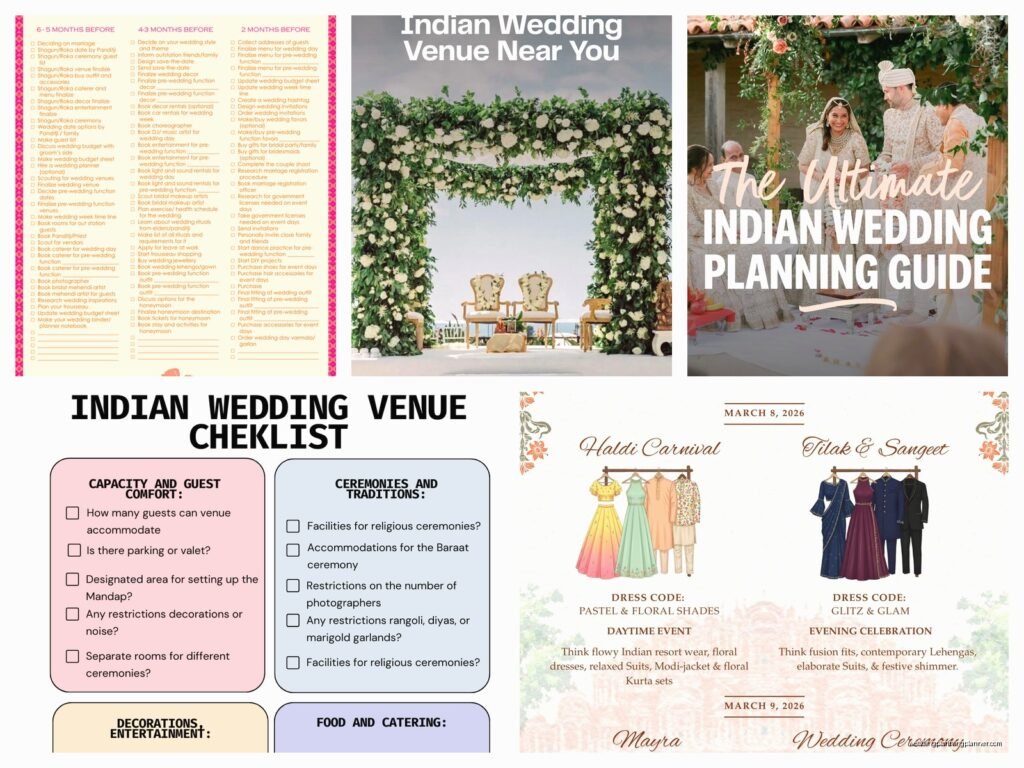
Timeline And When To Start Planning
You need at least 12-18 months for a proper Indian wedding. I know that sounds insane but trust me on this. The vendor availability alone will make you cry if you start too late. Especially for decorators who specialize in Indian weddings—there aren’t that many, and the good ones get booked solid.
Here’s roughly what your timeline should look like:
- 12-18 months out: Book your venue, caterer, and decorator
- 10-12 months out: Book your photographer, videographer, DJ/band
- 8-10 months out: Start looking at outfits (this deserves its own section honestly)
- 6-8 months out: Send save the dates, book hair/makeup artists, finalize menus
- 4-6 months out: Order invitations, book hotels for guests
- 2-4 months out: Final fittings, confirm all vendor details, create day-of timeline
- 1 month out: Final payments, rehearsal planning, last-minute guest count updates
The Venue Situation Is Complicated
You need to find a venue that can either host multiple events or you need multiple venues. Some hotels and banquet halls have packages specifically for Indian weddings which is super helpful. The thing that annoyed me so much last year was this one venue coordinator who kept insisting that “all wedding ceremonies are basically the same” and refused to understand that we needed the mandap setup for like 3 hours minimum and that yes, we really do need that many chairs.
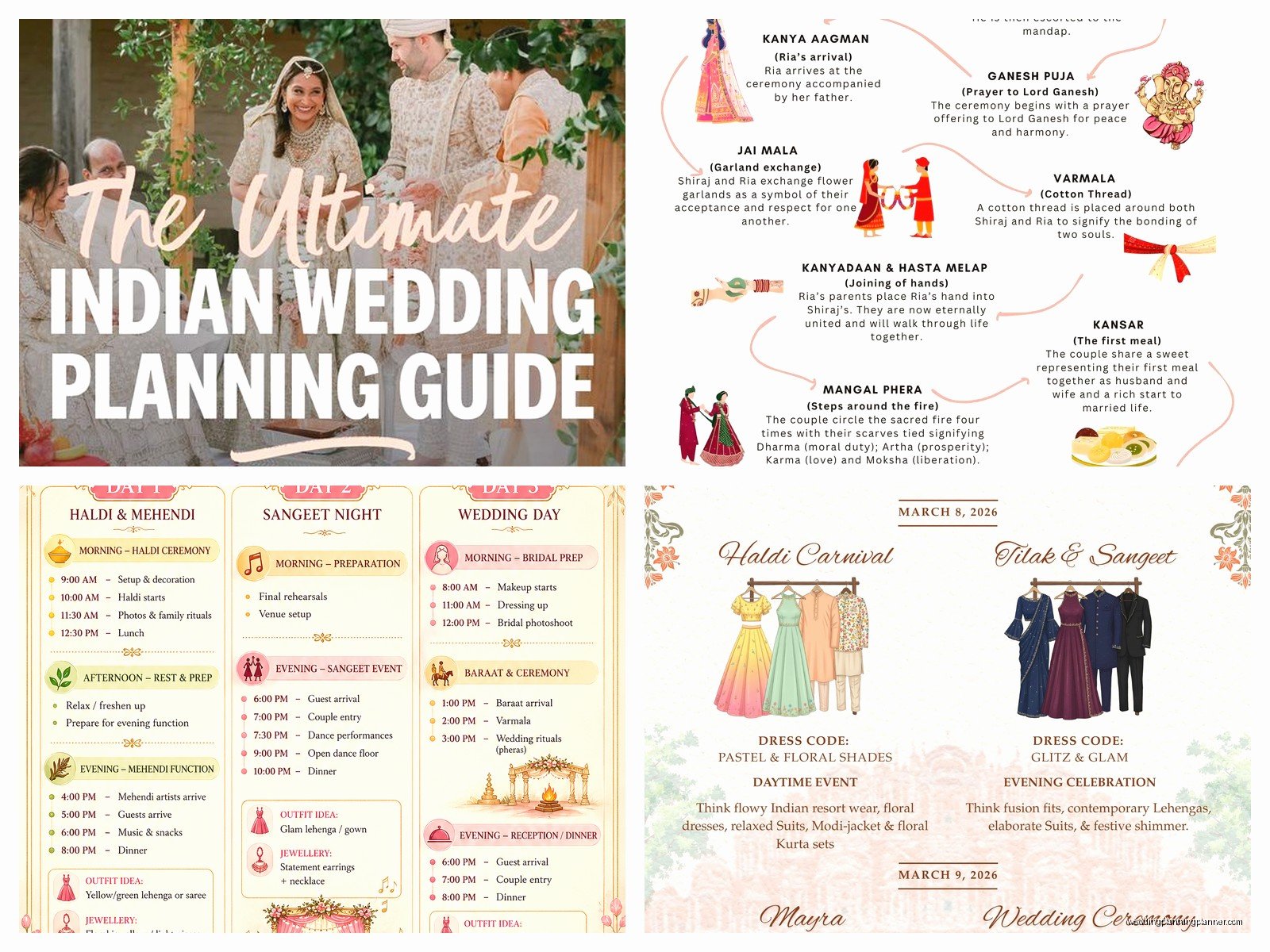
When you‘re touring venues, ask these questions:
- Can we have open flames? (Important for the ceremony)
- What’s the earliest we can access the space for decorator setup?
- Is there a separate bridal suite and groom’s room?
- Can we bring outside caterers if needed?
- What’s the noise ordinance situation for the Sangeet?
- Is there parking for 200+ guests because Indian weddings are huge?
Also you want a venue with good indoor and outdoor space options. Weather is always a wildcard and having a backup plan that doesn’t look like a backup plan is crucial.
Catering Is Gonna Be Your Biggest Budget Item Probably
Indian wedding food is not simple. You’re looking at multiple courses, vegetarian and non-vegetarian options, different regional cuisines depending on the family. A typical Indian wedding menu has like 15-20 items minimum. Some families want North Indian food, some want South Indian, some want both plus Chinese fusion because… actually I don’t know why but it’s super common.
For the Mehndi and Sangeet, you can do lighter fare—chaat stations, appetizers, maybe a dessert bar. But for the wedding day and reception, you need the full spread. Expect to pay $60-150 per person depending on your location and menu complexity. In major cities with large Indian populations, you’ll have more caterer options.
Do the tasting. I know it seems obvious but I’ve had clients skip it and then be shocked that the paneer tikka wasn’t what they expected. Bring your parents or future in-laws to the tasting because they will have opinions, trust me.
Outfits Are Their Own Full-Time Job
Okay so you need different outfits for each event. The bride typically wears a lehenga or sari for the wedding, something lighter for the Mehndi (maybe an Anarkali or another lehenga), and then another outfit for the Sangeet and reception. That’s minimum four outfits. The groom needs sherwanis, kurtas, maybe a suit for the reception.
You can buy in India (way cheaper but requires travel and shipping logistics), buy from Indian boutiques in the US (expensive but convenient), or order online (risky with sizing). I had a bride in summer 2021 who ordered her wedding lehenga online and it arrived three weeks before the wedding in completely the wrong color. We had to emergency fly her mom to India to pick up a new one. It was a whole thing.
Start shopping early. Like really early. Custom outfits from India can take 3-6 months. Even ready-made pieces need alterations and you want time for multiple fittings. Also remember that you need to coordinate colors with your bridal party and sometimes with the decor.
Jewelry And Accessories
Indian bridal jewelry is elaborate. You’re looking at necklaces, earrings, maang tikka (forehead piece), nath (nose ring), bangles, sometimes haath phool (hand jewelry). You can rent, buy, or use family pieces. Renting is actually pretty common now and way more affordable than buying. Just make sure you get insurance for the rental period.
Decor Will Make Or Break The Visual Impact
Indian wedding decor is all about color, flowers, and drama. The mandap (the structure where the ceremony happens) is the centerpiece. It can be simple or it can look like a Bollywood movie set. I’ve seen mandaps made of flowers, crystal, draped fabric, wood… the options are endless.
Each event should have its own vibe. The Mehndi is usually bright and colorful—think marigolds, low seating, cushions, maybe some swings. The Sangeet is more like a party setup with a stage for performances, dramatic lighting, maybe some sparkle. The wedding ceremony is traditionally more elegant and the reception can go either traditional or modern or fusion.
Budget-wise, decor can range from $5,000 to like… I’ve seen budgets over $100,000 for decor alone. It depends on your priorities. If you want that Instagram-worthy look, you’re gonna need to invest. But you can also do a lot with strategic focal points—go big on the mandap and stage, keep everything else simpler.
Invitations Need To Go Out Early And Be Detailed
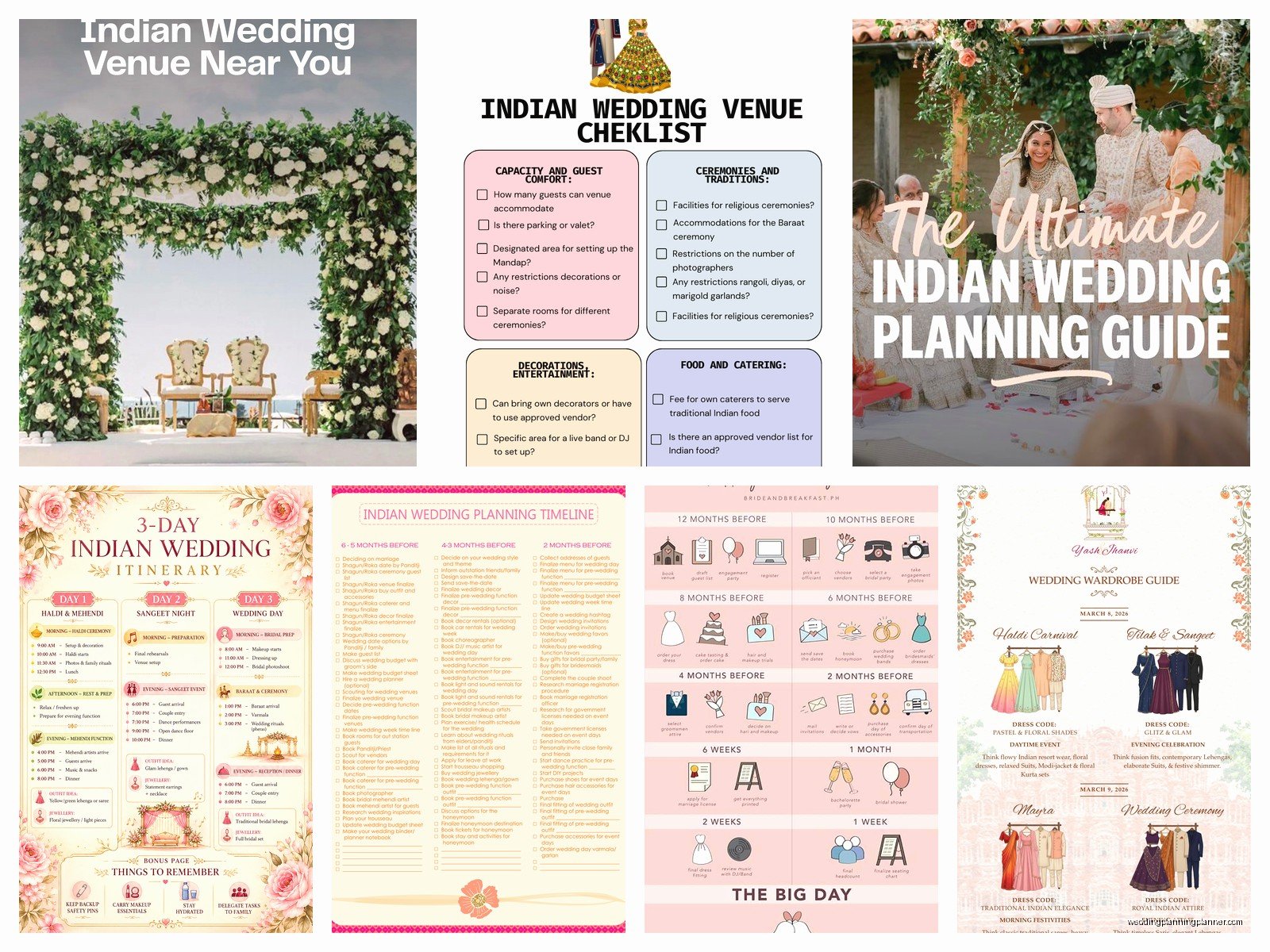
Indian wedding invitations are often like little booklets because there’s so much information to include. You need to list all the events, dress codes for each event, venue information, hotel blocks, maybe a schedule of the weekend. Some families still do the traditional boxed invitations with multiple inserts, sweets, and gifts inside.
Send save the dates 6-8 months out, especially if you have a lot of out-of-town guests. Formal invitations should go out 8-10 weeks before. I know that’s earlier than typical Western weddings but Indian weddings require more planning from guests—they need to book flights, hotels, potentially take more time off work, arrange outfits.
Also you need to include dress code guidance because your non-Indian guests will have no idea what to wear. Be specific—”colorful cocktail attire” or “traditional Indian attire welcome” or whatever makes sense for your events.
The Whole Guest List Thing Gets Messy
Indian weddings are big. Like 300-500 people is pretty standard. I’ve worked on weddings with 700+ guests. The guest list includes extended family, family friends, parents’ colleagues… it’s a lot. And there’s often negotiation between families about who gets how many guests.
Start your guest list early and be realistic about your budget per person. If you’re at 400 guests and your catering is $100 per person, that’s $40,000 just for food. The math adds up fast. Some couples do a smaller ceremony with just close family and a bigger reception, which can help manage costs.
You’ll probably need to create different tiers of guests—A-list who gets invited to everything, B-list who maybe just comes to reception, etc. It sounds harsh but it’s practical when you’re dealing with hundreds of people.
Entertainment And The Sangeet Specifically
The Sangeet is basically a talent show where family and friends perform dances for the couple. You need a good DJ or band who understands Indian music and can mix Bollywood with American top 40 if you want. The sound system needs to be solid because there will be performances.
You’ll want to coordinate the performances ahead of time—figure out who’s performing, what songs, create a running order. Some families hire a choreographer to teach everyone the dances. This is actually really helpful because otherwise you get chaos. My cat knocked over my coffee while I was creating a Sangeet schedule last month and I had to recreate the whole thing… anyway.
For the wedding ceremony itself, you might have live musicians—shehnai players, dhol players, etc. For the reception, a good DJ is crucial. They need to read the room and know when to play the bhangra music and when to switch to more contemporary stuff.
Photography And Videography Are Non-Negotiable
You need professionals who have experience with Indian weddings. The ceremonies have specific moments that need to be captured—the baraat (groom’s entrance), the phere (walking around the fire), the vidai (bride’s farewell). If your photographer doesn’t know these moments, they’ll miss them.
Budget for both photo and video. Indian families want that cinematic wedding video. Expect to pay $4,000-10,000+ for good photography and videography coverage of all events. Yes it’s expensive but you’re hiring them for multiple days and they’re capturing like 20+ hours of content.
Make sure they understand the lighting situations too—Indian ceremonies often happen in the evening with dramatic lighting, lots of movement, and… or wait, some ceremonies are during the day depending on the muhurat (auspicious time) so actually the lighting varies a lot.
The Ceremony Itself Has Specific Requirements
You’ll need a pandit (priest) to perform the ceremony. Some families have a family pandit, others need to hire one. The ceremony can last anywhere from 45 minutes to 3 hours depending on how traditional you want to go. Some couples do abbreviated versions.
You’ll need to arrange for the items required during the ceremony—sacred fire setup, flowers, rice, coconut, specific fabrics. Your pandit should give you a list. Some decorators handle this, some expect you to arrange it separately.
Also figure out seating. Traditional ceremonies have the couple and immediate family on the mandap, everyone else around it. Some modern setups have theater-style seating. Just make sure elderly guests have comfortable seating because these ceremonies can be long.
Coordination On The Day Is Critical
You absolutely need a coordinator or day-of planner. With multiple events, hundreds of guests, and complex setups, there’s no way to manage it all yourself. I’ve seen families try and it always becomes stressful.
The coordinator needs to manage the timeline, coordinate with all vendors, handle any emergencies, make sure the family gets fed (seriously, the couple and their parents often forget to eat), and keep everything running smoothly. Create a detailed timeline for each event and share it with all vendors and key family members.
Have a point person for each side of the family who can handle questions and issues. This way guests aren’t constantly bothering the couple or parents with “where’s the bathroom” or “what time does the Sangeet start” questions.
Budget Real Talk
Indian weddings are expensive. An average one in the US runs $65,000-100,000 but they can easily go higher. Like way higher. Here’s roughly how it breaks down:
- Venue and catering: 40-50% of budget
- Decor: 15-20%
- Photography/videography: 10-15%
- Outfits and jewelry: 10-15%
- Entertainment: 5-10%
- Invitations and favors: 3-5%
- Everything else: 5-10%
Figure out what matters most to you and allocate accordingly. Some couples spend more on decor, some on food, some on outfits. There’s no right answer but you gotta prioritize because you can’t have everything at the highest level unless you have an unlimited budget.
Managing Family Expectations Is Actually The Hardest Part
Look, the vendors and logistics are manageable. What’s hard is navigating family opinions, traditions, and expectations. Both families will have ideas about how things should be done. Some will be based on tradition, some on what they saw at their friend’s kid’s wedding.
Have conversations early about what’s important to each family. Maybe his family really cares about the Sangeet being elaborate but is flexible on the Mehndi. Maybe your family wants specific traditions included in the ceremony. Figure out the non-negotiables and then be willing to compromise on other stuff.
Also set boundaries about who makes final decisions. Too many cooks in the kitchen will drive you crazy. Decide if it’s just the couple, or if parents are involved in decisions, and make that clear to everyone.
Little Things That Matter
Hotel room blocks—book them early and get a good group rate. Your guests will appreciate it.
Transportation—if events are at different venues, consider arranging shuttles. Guests dealing with parking at multiple locations gets messy.
Welcome bags—if you have lots of out-of-town guests, welcome bags with snacks, water, itinerary, and maybe some Advil are super appreciated.
Bathroom baskets—stock them with safety pins, stain remover, deodorant, mints, Band-Aids. Indian outfits can be tricky and people will need emergency supplies.
Vendor meals—feed your vendors. They’re working long hours. Include it in your catering count.
Backup outfits—have a simpler outfit ready in case your main one is uncomfortable. I’ve had brides change partway through the reception because their lehenga was too heavy.