Planning Guides, Style Guide
U Shaped Wedding Table Plan: Complete Guide
May
Why U-Shaped Tables Are Actually Pretty Smart
So U-shaped seating is basically when you arrange your reception tables in a big U formation instead of having a bunch of round tables scattered everywhere. The wedding party and VIPs sit along the outside curve where everyone can see them, and guests fill in the sides. I had this bride in spring 2023 who was absolutely convinced she wanted round tables until we walked through her venue—a long, narrow barn—and I literally watched her face change when we sketched out a U-shape option instead.
The thing is, U-shaped layouts work best for smaller weddings, like 50-80 people max. You can technically push it to 100 but it starts getting weird and stretched out. The whole point is creating this intimate, everyone-can-see-everyone vibe that you just don’t get with traditional layouts.
Space Requirements You Gotta Consider
Your venue needs to be the right shape for this to work. Long rectangular rooms are perfect. Square rooms can work but you’ll have awkward empty corners. And honestly, if your venue is super wide, the U might end up looking more like a really flat horseshoe which isn’t… it’s not the same effect.
I measure everything at least twice because one time—okay this was back in summer 2021—I planned a whole U-shaped setup based on the venue’s floor plan they emailed me, and when we got there for setup, there was a support beam they “forgot” to mention that was right where the bottom of the U needed to go. Had to pivot the entire thing 45 degrees and it threw off the whole room flow.
Here’s what you need space-wise:
- At least 10-12 feet of clearance in the center of the U for servers to move and for that open, airy feeling
- Minimum 3 feet behind each chair for guests to push back and stand up without bumping the wall
- If you’re doing a dance floor, it usually goes in the center of the U, so factor that in
- Table width matters—standard 30-inch width is fine, but 36-inch gives you more room for centerpieces and food if you’re doing family-style service
The Head Table Situation
The base of the U is where you’ll sit with your wedding party or just the two of you or sometimes just immediate family. This is where it gets personal and there’s no one right answer which kinda drives some couples crazy but also gives you flexibility.
You can do a sweetheart table just for the couple at the center base of the U, then have wedding party scattered throughout the sides mixing with guests. Or you can do a traditional long head table with the whole wedding party. I’ve also seen couples skip a formal head table entirely and just sit among their guests along one arm of the U.
What annoys me is when people assume the head table HAS to be elevated. Unless your venue has weird sightlines, you don’t need a riser. Actually, risers often make things more awkward because then you’re literally looking down at your guests and it feels weirdly formal for what’s supposed to be an intimate setup.
Figuring Out Table Lengths and Chair Count
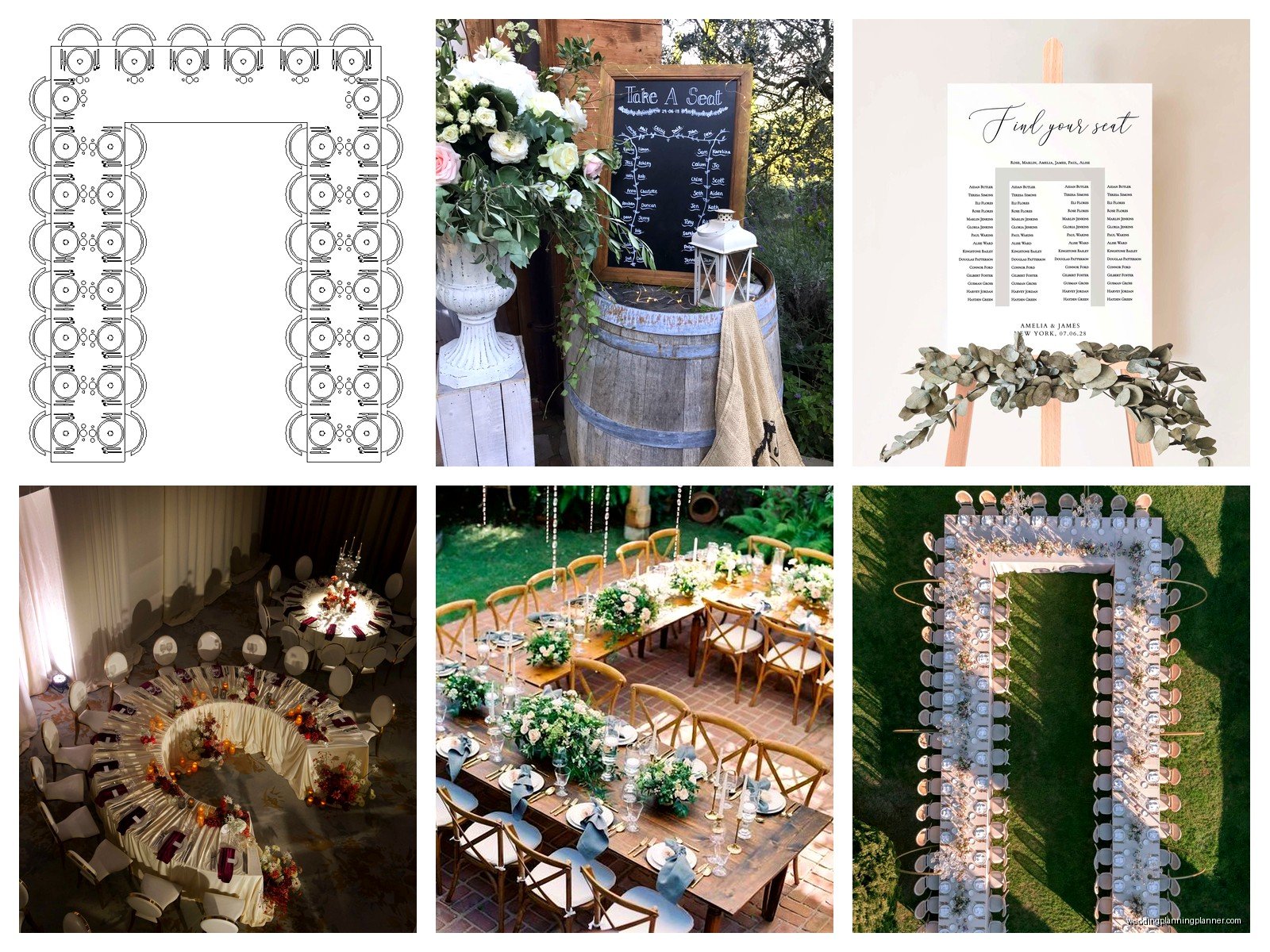
Standard banquet tables come in 6-foot or 8-foot lengths. You’ll probably rent these and connect them to form each arm of the U and the base. For a 60-person wedding, I usually plan something like:
- Two 8-foot tables for the base (head table): seats about 8-10 people on the outside only
- Each arm: four to five 8-foot tables, seating about 20-25 people per side
You seat people ONLY on the outside of the U. The inside stays empty. Some people try to double-up and seat both sides but then you lose the whole visual effect and people are staring at the backs of heads across from them.
Chair spacing is 24 inches per person minimum, but 30 inches is more comfortable especially if you have guests who need more room. I always tell couples to actually sit in the chairs at that spacing during a venue visit if possible because what looks fine on paper can feel cramped in real life.
The Practical Logistics Nobody Thinks About
Serving food with a U-shaped layout is either really easy or a complete disaster depending on how you plan it. Buffet style doesn’t really work well because you’d need to set it up inside the U which blocks sightlines, or outside the U which means guests have to awkwardly navigate around the tables.
Family-style service is actually perfect for this setup. Servers can move along the outside of the U easily, placing platters directly on the tables. Plated service also works great—servers have clear access to everyone without squeezing between tables.
My cat knocked over my coffee while I’m writing this and I just… anyway, you also need to think about:
- Where does the cake table go? Usually off to one side, near the base of the U
- Gift table placement—I usually put this near the entrance, not in the main reception space
- Bar location—either in the center of the U if there’s enough room, or outside the U entirely
- DJ or band setup—typically at the open end of the U facing inward, or sometimes in one corner
Decorating the U-Shaped Layout
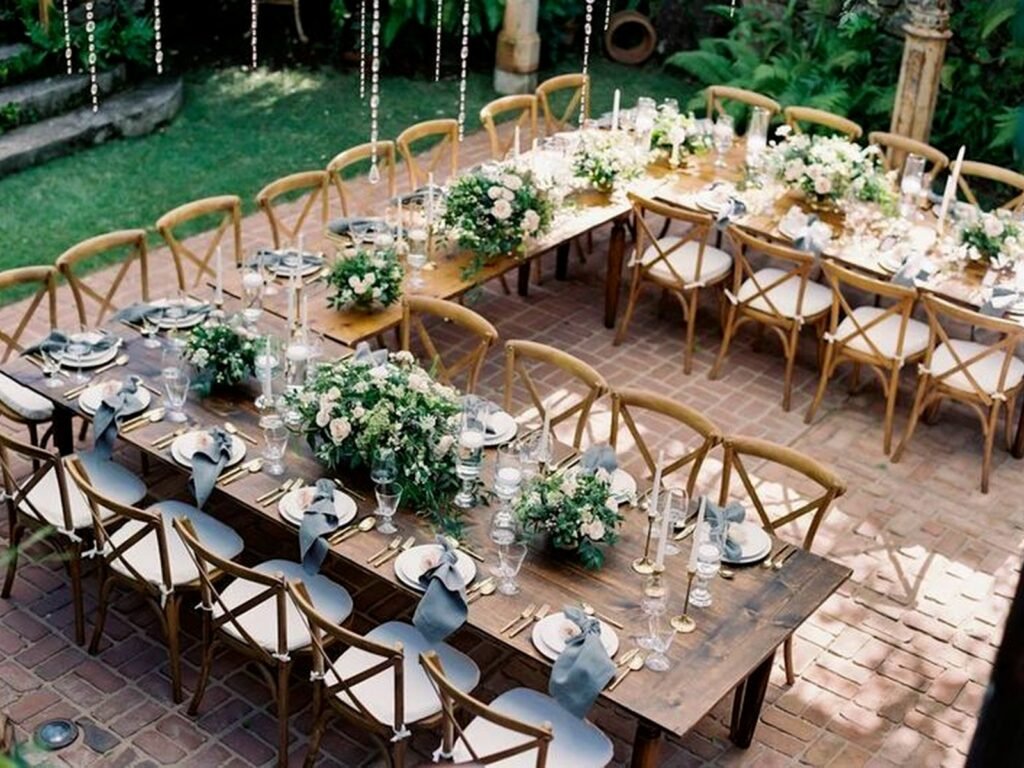
The cool thing about U-shaped tables is that your centerpieces become this continuous line of decor instead of scattered focal points. You can do a table runner that goes the entire length, low centerpieces every 3-4 feet, or even mix heights if your arrangements are thin enough that they don’t block views.
I’m a big fan of using varying heights along the arms but keeping the head table arrangements lower so you’re not hiding the couple behind a forest of flowers. Candles work really well—you can create this gorgeous candlelit pathway effect along the whole U.
String lights or greenery garlands can connect the whole setup visually. One bride did eucalyptus garland the entire length of the U with white taper candles every few feet and it was honestly stunning for like a fraction of the cost of traditional centerpieces.
Seating Chart Strategy
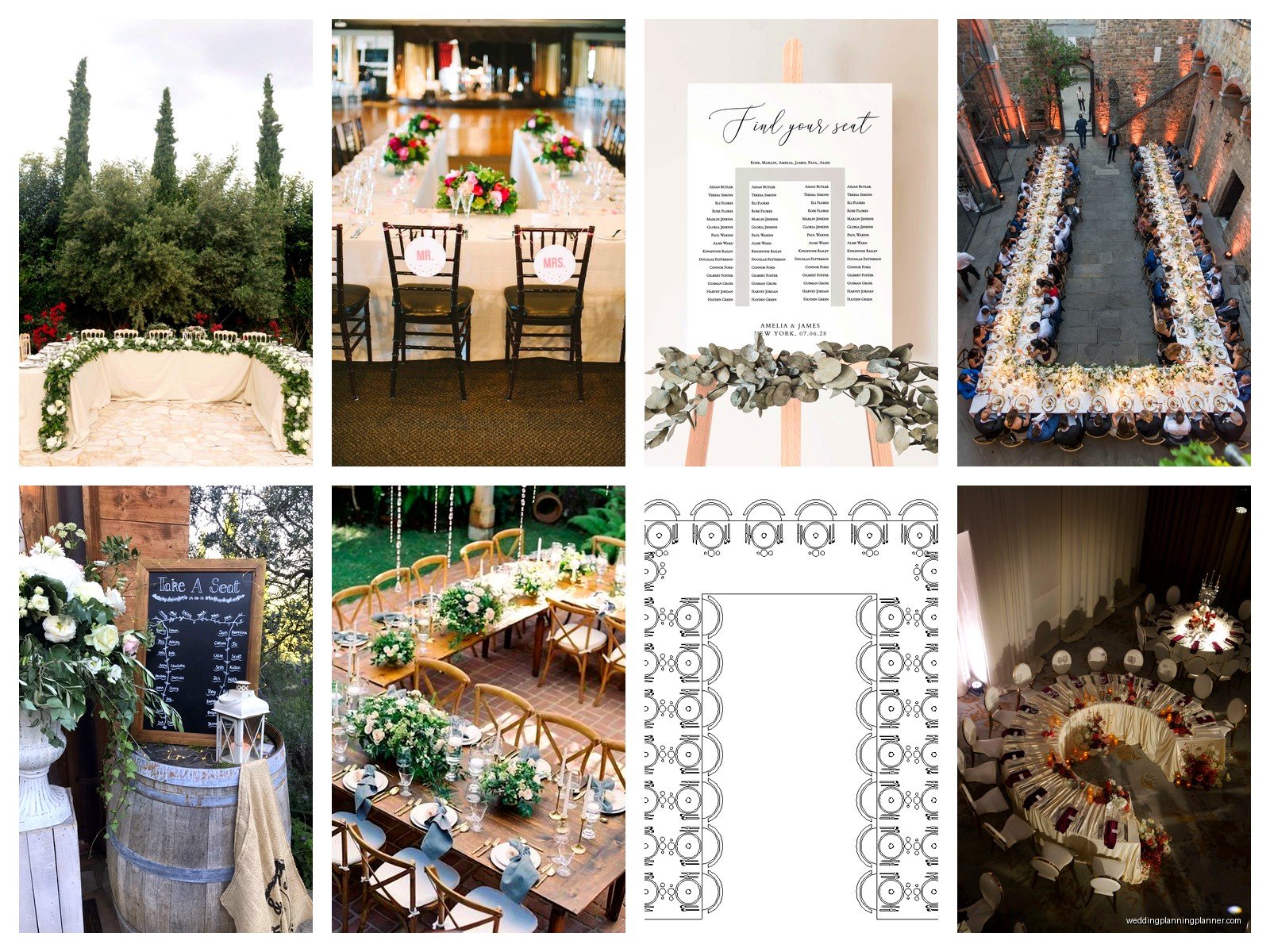
Creating the seating chart for a U-shape is different than rounds because you don’t have distinct “tables” in the traditional sense. Some couples number sections, some just do one continuous seating arrangement.
I usually suggest thinking of it in sections anyway for your own planning purposes. Like, left arm, right arm, and head table. Then within each arm, you can group people who know each other but they’re not isolated the way they would be at separate round tables.
The people at the corners of the U (where the base meets the arms) have the best seats honestly because they can see everything and talk to people on multiple sides. I put close friends or family there.
One thing you gotta be careful about is putting someone at the very end of one of the arms—they can feel a bit isolated since they only have one neighbor. I try to avoid that or make sure whoever’s there is super social and will turn around to chat with people.
What Works Better: U-Shape vs Traditional Rounds
Okay so when does a U-shape actually make more sense than just doing round tables? Here’s when I push for it:
- Smaller guest counts where you want everyone to feel connected
- When the couple wants to actually see and interact with all their guests during dinner, not just the 8 people at their table
- Venues with difficult layouts where rounds would create awkward traffic flow
- Couples who want a less formal, more communal vibe
- When you’re doing speeches or toasts and want everyone to have a clear view
But rounds are probably better if you have over 80 guests, if you want distinct family groupings, or if your venue is weirdly shaped and a U just won’t fit properly.
The Open End Debate
Some people leave the open end of the U completely empty, some put the dance floor there, some put the band or DJ there. There’s this ongoing debate in wedding planning circles about what’s “correct” and honestly… there’s no correct answer and that’s sorta the beauty of it?
If you’re having a band or DJ, putting them at the open end facing in means they’re performing TO your guests which creates good energy. But it also means they’re between you and your guests if you’re seated at the head table.
If you put the dance floor in the center of the U, it’s super intimate and everyone surrounds the dancers, but it can feel crowded and you lose that open space. I’ve done it both ways and both work depending on the vibe you want.
Timeline Considerations
Setup takes longer than rounds because you’re connecting multiple tables and making sure they’re aligned properly. The tables have to form smooth curves at the corners or it looks sloppy. I always build in an extra 30-45 minutes for setup compared to a traditional layout.
Linens are trickier too because you need longer runners or multiple cloths that connect seamlessly. Pin them underneath so they don’t shift during the reception because I’ve seen tablecloths gradually migrate throughout the night and by cake cutting everything’s crooked.
Hybrid Options That Sometimes Work Better
If a full U doesn’t work for your space or guest count, there are variations. A C-shape is slightly more open and works in wider venues. Double U-shapes for larger weddings—basically two separate U setups. Or a T-shape with the head table as the top of the T and long tables forming the stem.
I had a couple do a modified U where the base was actually curved using specialty tables instead of straight banquet tables, and it created this really elegant look but cost more in rentals. Worth considering if budget allows.
You can also do a U-shape for the main wedding party and immediate family, then add a few round tables behind the arms for additional guests. This works when you’re at like 90-100 people and a full U would be too stretched out but you still want that connected feeling for your VIPs.
Common Mistakes I See All The Time
People forget about electrical outlets when they’re planning the layout. If your DJ or band is in the center of the U, how are they getting power? You might need to run cables under the tables or rent battery-powered equipment.
Not accounting for the actual dimensions of chairs with people sitting in them—everyone draws their layout with just table measurements and then chairs stick out way farther than expected.
Trying to squeeze too many people into the U because they’re committed to the layout even when the guest count has grown. If you need to pivot to a different setup, pivot. A cramped U-shape is worse than well-planned rounds.
Working With Your Venue and Vendors
Some venues have never done a U-shaped setup and might push back or seem confused. Bring pictures, bring a detailed floor plan with measurements, bring examples from real weddings. I’ve learned to just show up with everything documented because explaining it verbally never works as well.
Your caterer needs to understand the serving logistics. Walk through it with them. Your florist needs to know they’re designing for a continuous line rather than individual centerpieces. Your rental company needs exact table counts and placement.
And definitely do a walkthrough where you physically place tape on the floor in the U-shape before the wedding day. I cannot stress this enough. What looks perfect on paper might have issues in the actual space that you won’t notice until you’re standing there looking at it.