Planning Guides, Style Guide
25th Wedding Anniversary Invitation Card: Design & Ordering Guide
Jun
Getting Your 25th Anniversary Invitations Right
Okay so first thing you gotta know about 25th anniversary invitations is that people are gonna expect silver. Like, I had this couple in spring 2023 who wanted everything in coral and turquoise because those were their wedding colors and I had to basically talk them off a ledge because their guests would be SO confused. The silver anniversary is literally called that for a reason, and while you don’t have to go overboard, at least nod to it somewhere in the design.
The timeline matters way more than you think. I usually tell people to order invitations about 3-4 months before the event, which gives you time to address them, deal with any printing errors (and trust me, there will be something), and get them in the mail 6-8 weeks before the party. If you’re doing a destination thing or holiday weekend, bump that mailing timeline to 10 weeks.
Design Elements That Actually Matter
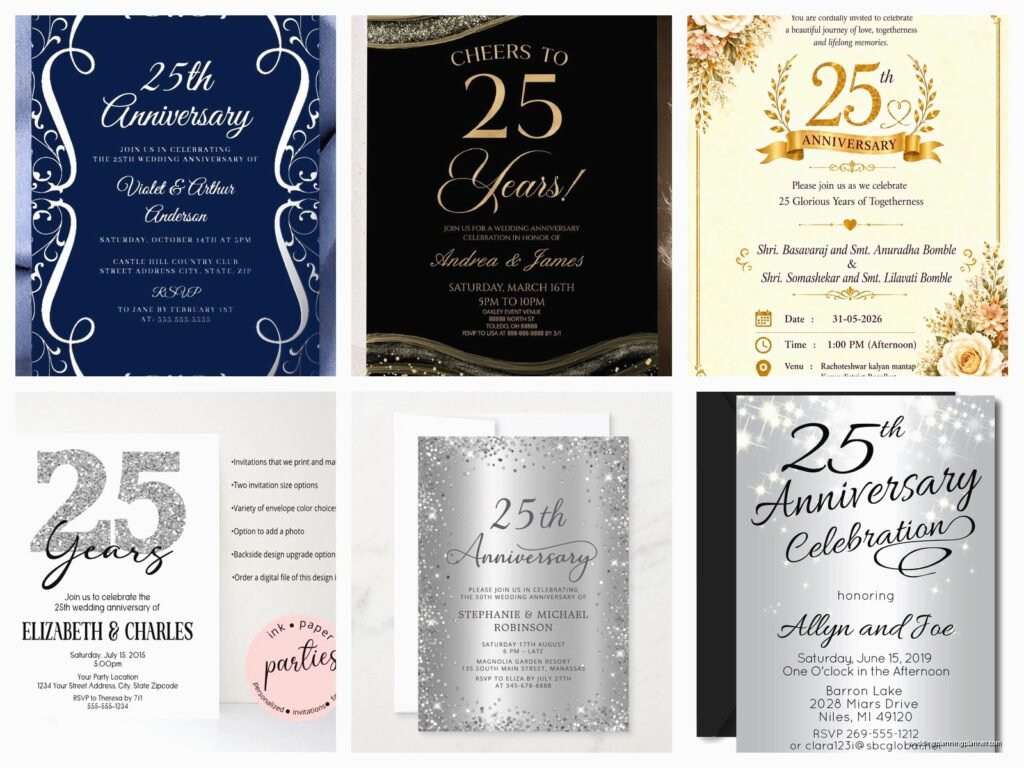
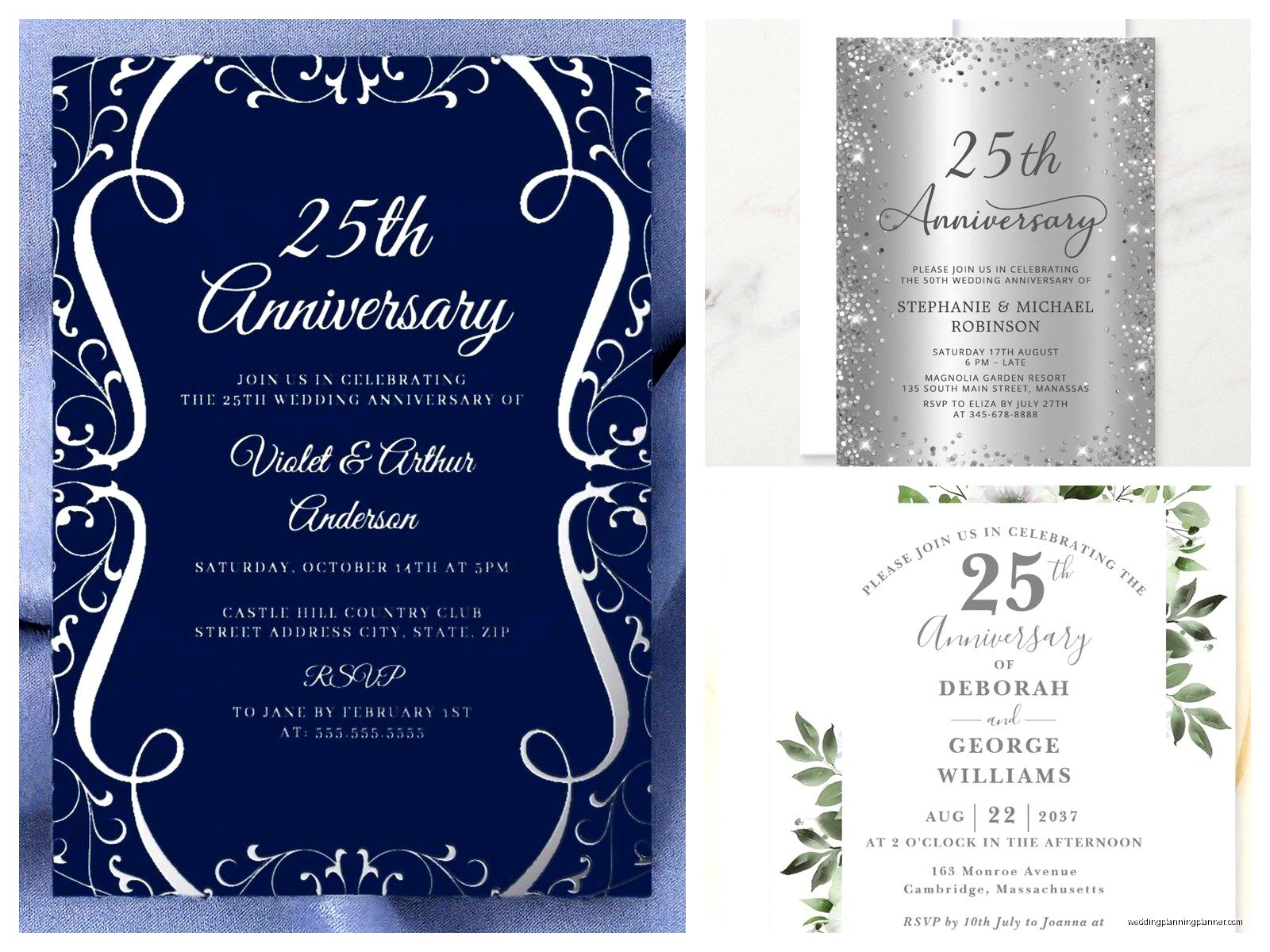
The metallic element is kinda non-negotiable but you have options. You can do silver foil stamping, which looks expensive and classy, or metallic ink which is cheaper but still catches the light nicely. I’ve also seen people do silver envelopes with regular printing on the card itself and that works too. What annoys me though is when people try to do “silver” with just gray ink on white paper – nah, that’s not it. It looks like you printed it on your home printer even if you didn’t.
For the actual design style, you’re not locked into anything traditional. I’ve done modern geometric designs with silver accents, vintage-inspired layouts with old photos from the original wedding, elegant script-heavy designs, and even fun illustrated ones. The key is matching it to the vibe of your party. Formal sit-down dinner? Go elegant. Backyard barbecue celebration? You can be more casual and playful.
Photo or no photo is always the question. Including a wedding photo from 25 years ago is super popular and honestly gets a great reaction. People love seeing how everyone looked back then. You can do a “then and now” with a current photo too, which is sweet but also takes up more real estate on the card. If you go this route, make sure you have high-resolution scans of old photos. I cannot tell you how many times… like, blurry pixelated photos from 1999 that someone took a picture of with their phone just look terrible when printed.
Wording That Doesn’t Sound Weird
The wording is where people get tripped up. Unlike a wedding invitation which has all these traditional formats, anniversary invitations are kinda whatever you want. You can have the couple host it themselves, or adult children can host it for their parents, or it can be a group thing with family and friends.
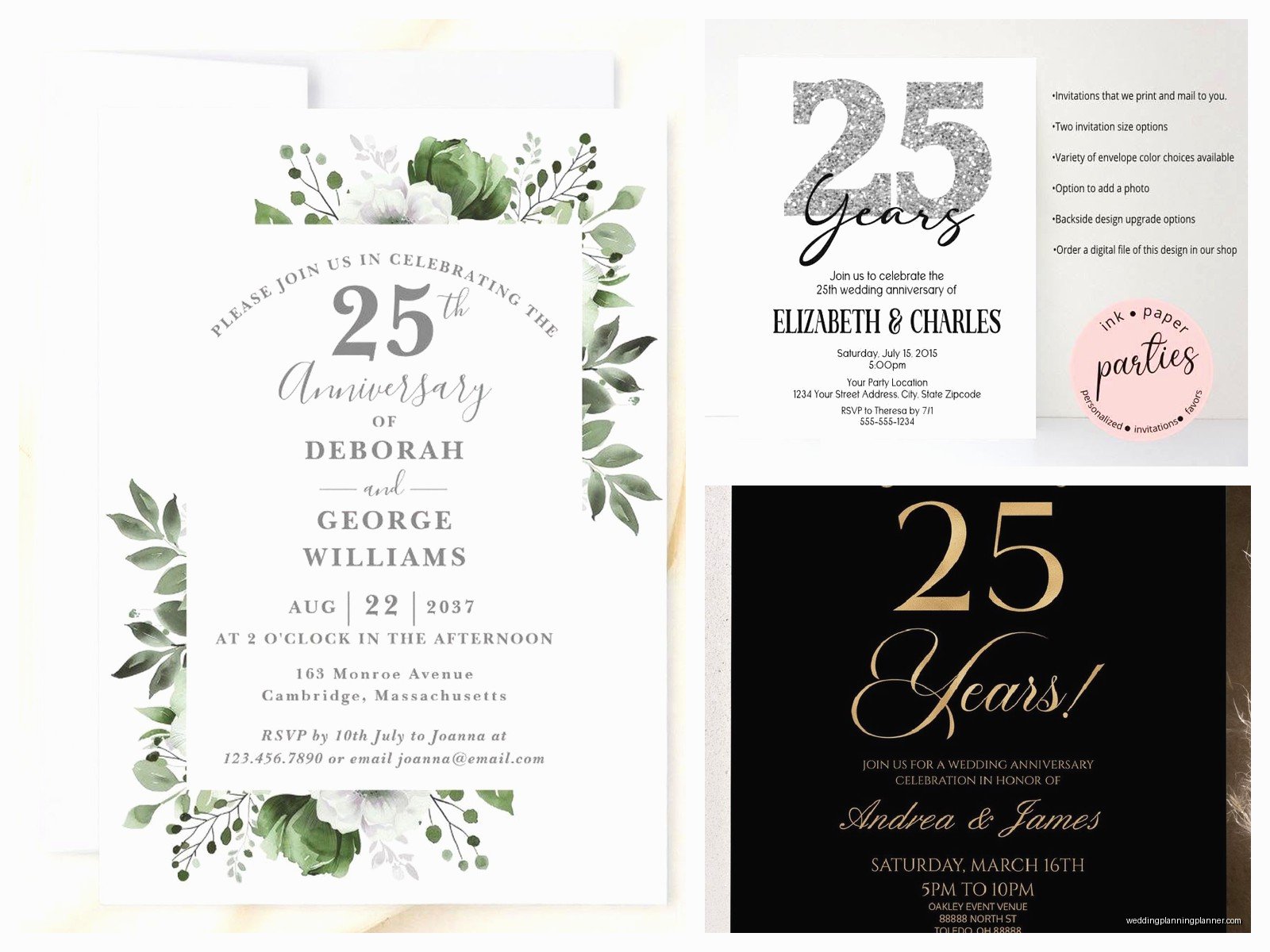
If the couple is hosting: “Please join us as we celebrate 25 years of marriage” or “Join us for a Silver Anniversary celebration in honor of our 25 years together” – keep it simple and clear.
If kids are hosting: “Please join us in celebrating the 25th Wedding Anniversary of [Parent Names]” works perfectly fine. You don’t need to get flowery unless that’s your style.
Include all the important details obviously – date, time, location, dress code if there is one, and RSVP info. I see people forget the dress code thing and then guests show up in jeans to a formal event or vice versa. Also, be specific about the address. “The Smith Residence” means nothing to people who’ve never been there – include the actual street address.
Ordering Options and What They Actually Cost
You’ve got basically four routes: online printing services, local print shops, stationery designers, or DIY. Each has its place and I’ve used all of them depending on the situation and budget.
Online services like Minted, Shutterfly, Zazzle – these are gonna run you anywhere from $1.50 to $4 per invitation depending on what you add. They have templates you can customize, which makes it easy, and the quality is generally pretty good. The foil options cost more, usually adding $1-2 per card. You can usually order samples before committing which I always recommend. Shipping takes about 2-3 weeks typically.
Local print shops can do custom work and the pricing varies wildly. I’ve seen quotes from $3 to $10 per invitation depending on paper quality, printing method, and design complexity. The advantage is you can see paper samples in person and make changes more easily. During a really stressful situation in summer 2021, I had a client whose online order got completely messed up two weeks before their event, and a local printer saved us by rushing a new order in 5 days.
Hiring a stationery designer gets you something completely custom and unique, but you’re looking at $8-15+ per invitation suite. This includes the designer’s time creating something from scratch, premium papers, and usually hand assembly. Worth it if you want something really special and have the budget.
DIY is cheapest obviously but requires time and some design skills. You can buy pre-designed templates on Etsy for like $10-30, customize them, and print at home or take files to a print shop. Just make sure you know what you’re doing with the file formats and… actually my cat just knocked over my coffee but anyway, make sure the printer can handle the paper weight you want to use.
Paper and Printing Technical Stuff
Paper weight matters more than you think. Standard cardstock is 80lb cover, which is fine and sturdy enough. If you want something that feels more substantial, go for 100lb or 110lb cover. Anything heavier and you might need extra postage which people forget about.
Printing methods: digital printing is the most common and affordable. It works for most designs and looks good. Letterpress is beautiful and has that pressed-in texture but costs significantly more. Foil stamping adds that metallic shine and can be done with digital printing underneath. Thermography creates raised print and has a classic formal look.
Envelope options are a whole thing too. You can do basic white or cream, colored envelopes (silver obviously works great), lined envelopes which look fancy when people open them, or even clear envelopes to show off the invitation design. Envelope liners add about $0.50-1.50 per invite but they do look really nice.
The Actual Ordering Process
Once you’ve picked your design and vendor, here’s what you need to finalize: exact wording, font choices if you’re customizing, any photos you’re including, color selections, quantity (always order 10-15 extra for keepsakes and mistakes), and envelope addressing style.
Speaking of addressing, you can handwrite them which is traditional and personal but time-consuming. Print directly on envelopes if your printer can handle it. Order printed addresses from the printing company for usually $0.50-1.00 each. Or use address labels which is the most casual option but honestly for anniversary invitations I’d avoid labels – they look kinda cheap.
Proofreading is critical and you need to do it multiple times. Check dates, times, addresses, names, spelling. Have someone else look at it too. I once caught a client’s invitation that said “25th Anniversary” but had the wrong year listed, which would’ve been embarrassing.
Matching Items You Might Want
If you’re doing a bigger celebration, you might want matching items. Save the dates if you’re planning far in advance and want to make sure people hold the date – send these 4-6 months out. Thank you cards for after the event. Program cards if you’re having any sort of ceremony or formal program. Menu cards for seated dinners. Table numbers or place cards.
Most printing companies offer these as add-ons and you get a discount when ordering together. The design stays consistent which looks professional and pulled-together. But don’t go overboard – you don’t need every possible paper item unless you’re doing a really formal event.
Common Mistakes to Actually Avoid
Ordering too late is the biggest one. Rush shipping costs a fortune and you’re stressed the whole time worrying if they’ll arrive.
Not ordering enough is another issue. Count your guest list carefully, add extras for keepsakes and unexpected additions, and round up. Running out and having to reorder is annoying and expensive.
Forgetting about postage – weigh your invitation suite at the post office before you buy stamps. Square invitations cost more to mail. Anything over 1 ounce needs extra postage. Those little details add up when you’re mailing 100 invitations.
Choosing fonts that are too small or too decorative. People need to actually read the information. If your aunt needs reading glasses, she shouldn’t need a magnifying glass too. Keep important details in readable sizes, usually 10-12 point minimum.
Not considering your guest list age range – if you’re inviting mostly older guests, higher contrast and larger text helps. Super modern minimalist designs with gray text on white might look chic but can be hard to read.
Digital vs Print Invitations
Okay so digital invitations are becoming more acceptable even for milestone events. They’re obviously cheaper, faster, and easier to track RSVPs. Services like Paperless Post, Greenvelope, or even Evite have elegant designs that don’t look tacky.
But here’s the thing – for a 25th anniversary, I still lean toward printed invitations for the main guest list. It feels more special and commemorative. You can always do digital for out-of-town guests who you know prefer it, or as save-the-dates, and then send printed invitations closer to the event.
Some couples do a hybrid approach – printed invitations to close family and friends, digital to extended guests and acquaintances. That works fine and nobody’s gonna be offended as long as they’re invited.
Special Touches Worth Considering
Wax seals on envelopes look fancy and are easier than you’d think. You can get custom stamps with initials or a design, and metallic silver wax is perfect for this occasion. They do add thickness so check postage.
Belly bands or ribbon wraps hold invitation suites together and add elegance. You can DIY these pretty easily with ribbon from craft stores.
Custom postage stamps with your photo are available through several services and add a personal touch. They cost more than regular stamps but look really special.
Vellum overlays with printed details over the main invitation create a layered, formal look. These are trendy right now and photograph really well.
The envelope return address can be printed on the back flap, which looks more formal than the upper left corner. Some people do custom return address stamps which you can reuse.
RSVP cards should include a pre-addressed and stamped envelope if you’re doing physical RSVPs. Makes it easier for guests and you’ll get better response rates. Or include a wedding website or email for digital responses, which most people actually prefer now because it’s faster