
Planning Guides, Style Guide
Telugu Wedding Invitation: Design & Ordering Guide
Jun
Telugu Wedding Invitations Are Their Own Category, Trust Me
So Telugu wedding invitations are completely different from what most people think of when they picture Indian wedding cards. I learned this the hard way back in spring 2023 when a client’s mother-in-law literally called me crying because the invitation didn’t have the right deity illustration on it. Like, we’re talking about specific iconography that matters SO much to families, and if you get it wrong, you’re gonna hear about it.
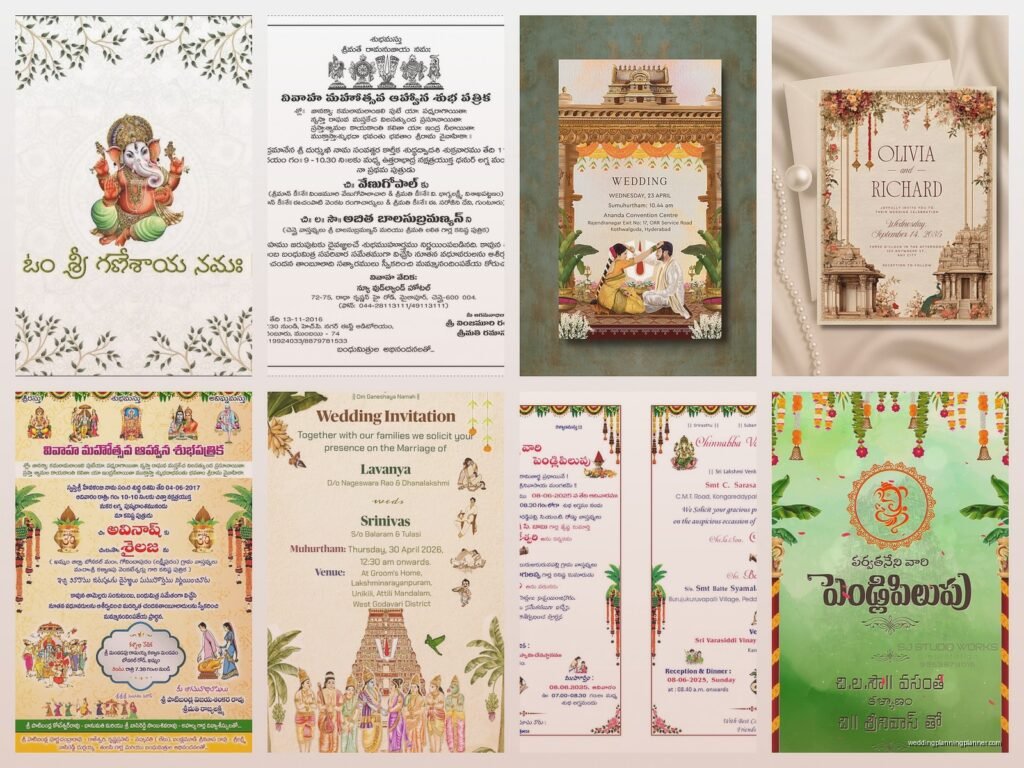
First thing you gotta know is that Telugu invitations typically feature Lord Venkateswara or Goddess Padmavathi because those are the deities associated with marriage and prosperity in Telugu culture. Some families prefer Ganesha, but honestly, just ask the family elders first. Don’t assume. I made that mistake exactly once and never again.
The Design Elements That Actually Matter
Traditional Telugu wedding cards have this very specific aesthetic. You’ll see a lot of red and gold, obviously, but also this deep maroon color that’s kinda signature. The borders usually have intricate paisley or mango designs – which represent fertility and prosperity, not just pretty decoration.
Here’s what needs to be on there design-wise:
- The deity illustration at the top center (this is non-negotiable for most families)
- Traditional kalash or holy pot symbols
- Peacock motifs if the family is from Andhra Pradesh region
- Swastika symbols for auspiciousness (yes, it’s a sacred Hindu symbol, completely different context)
- Floral borders, usually jasmine or marigold patterns
The thing that annoyed me most about Telugu invitation design is that every printer claims they “specialize” in South Indian weddings but then they send you samples that are clearly just generic Indian designs with different text. You need someone who actually understands the cultural specifics.
Text Layout and Language Requirements
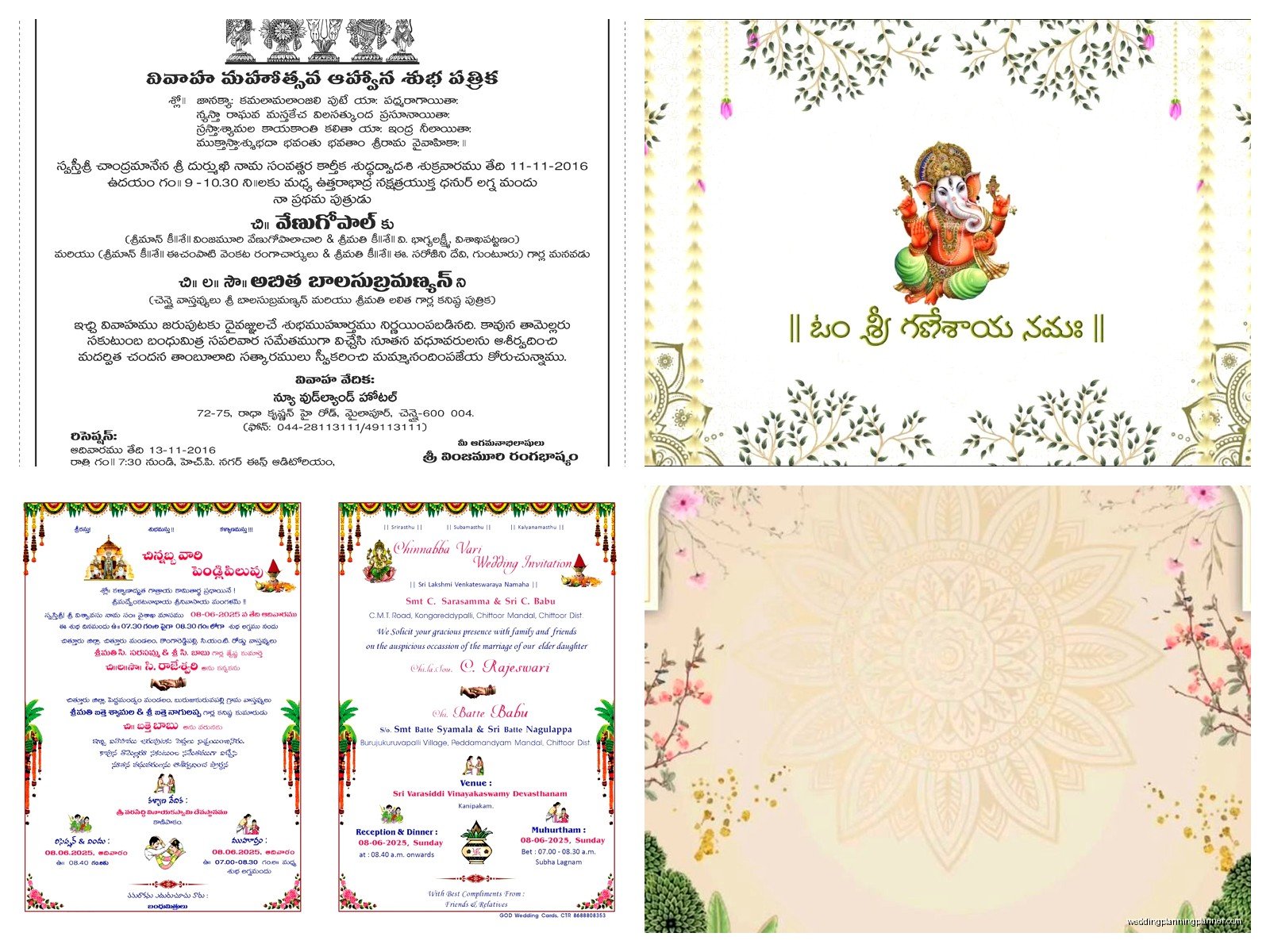
Okay so this is where it gets complicated. Most Telugu families want the invitation in both Telugu script and English. Some want three languages – Telugu, English, and Hindi. The Telugu text isn’t just a translation either, it follows very specific traditional phrasing that’s been used for generations.
The traditional Telugu invitation starts with a mangala shlokam (auspicious verse), then lists the family lineage. And I mean like, they’ll mention grandparents’ names, great-grandparents sometimes. It’s not just “Mr. and Mrs. Sharma request your presence” – it’s a whole family tree situation.
You’ll need to include:
- The bride’s full name with gotra (family lineage)
- The groom’s full name with gotra
- Both sets of parents’ names
- Specific ceremony times for muhurtham (the auspicious wedding moment)
- Details for multiple events – mehendi, sangeet, pellikuthuru, snatakam
Pro tip: get someone who actually reads Telugu to proofread it. Translation apps are gonna mess this up spectacularly. I once had invitations go to print with a typo in the Telugu that accidentally said the wedding was a “funeral celebration” instead of “marriage celebration” and… yeah, that was a $3000 reprint situation.
Choosing Your Card Style
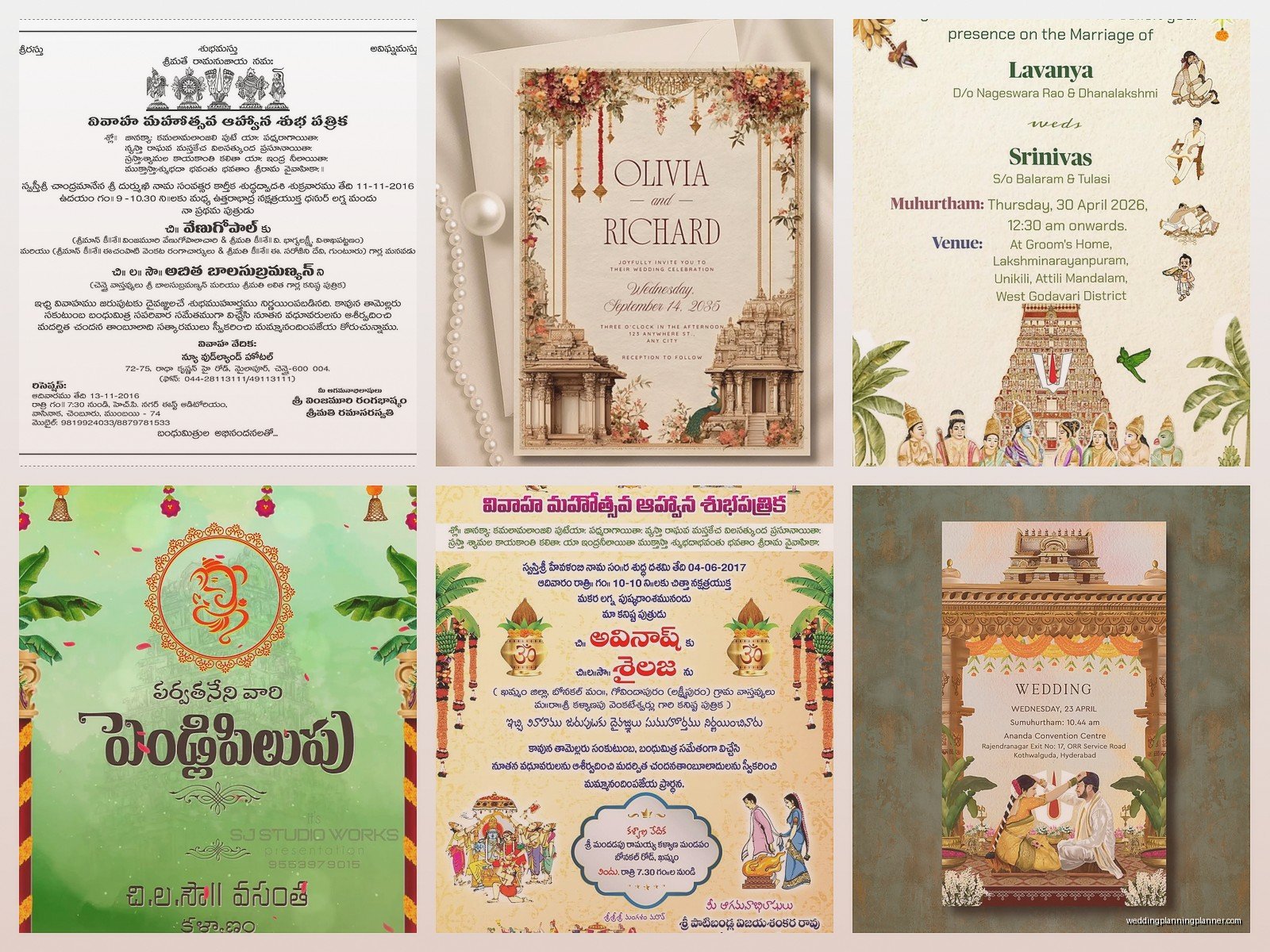
There are basically a few categories of Telugu wedding invitations you’ll see. The traditional hardbound cards are still super popular – these are like actual books, sometimes 8-12 pages, with different sections for different ceremonies. They’re heavy, they’re fancy, and they cost more but families love them.
Then you have scroll invitations, which are having a moment right now. These come in decorative boxes or tubes and unroll to reveal the invitation. Very dramatic, very Instagram-friendly, but also kinda impractical if you’re mailing them because the shipping costs are insane.
Laser-cut invitations are trending too. The card has intricate cutout designs, usually of temples or peacocks or mandala patterns. They’re gorgeous but here’s the thing – they’re delicate. I had a batch get destroyed in shipping once because the postal service just… doesn’t care about your delicate laser-cut masterpiece, apparently.
Single-card invitations are simpler and more modern. Some younger Telugu couples are going this route, especially if they’re having a smaller wedding or a destination situation. These can still be traditional in design but less elaborate in format.
What About Digital Invitations Though
Okay so I know everyone’s doing digital invites now, and yes, you can do Telugu wedding e-vites. But here’s the reality – for most Telugu families, especially the older generation, physical invitations are still expected. Like, it’s a respect thing. My cat literally knocked over a stack of sample invitations while I was writing this and I had a moment of panic before remembering they were samples, but anyway…
What I tell clients is do both. Send the fancy physical cards to elders and close family, then use digital invitations for friends and extended relatives who are more scattered geographically. There are some really good platforms now that do animated Telugu wedding invites with proper script and traditional music.
The Ordering Process and Timeline
Alright, so you need to start this process like 4-5 months before the wedding. I know that sounds early but there’s gonna be back-and-forth on design, multiple rounds of proofing, printing time, and then you need to actually mail them 6-8 weeks before the wedding.
Here’s how the timeline usually breaks down:
- Research and shortlist designers/printers (2-3 weeks)
- Initial consultations and getting quotes (1 week)
- Finalizing design concept and layout (2-3 weeks because families will have OPINIONS)
- Text finalization in all languages (1-2 weeks)
- Proofing rounds (plan for at least 2-3 rounds, 1-2 weeks)
- Printing (2-3 weeks depending on quantity and complexity)
- Assembly if there are multiple inserts (1 week)
- Addressing and mailing (1-2 weeks)
The number one mistake I see is people underestimating the proofing stage. You’re gonna have the bride’s mom want changes, then the groom’s dad will have different opinions, then someone’s aunt who “knows Telugu better” will point out something, and suddenly you’re on proof round seven.
Finding the Right Printer or Designer
Look for printers who specifically mention Telugu or South Indian wedding expertise. Some good questions to ask:
- Do you have Telugu-speaking staff who can verify the text?
- Can I see actual samples of Telugu invitations you’ve done, not just generic ones?
- What’s your minimum order quantity? (Usually 100-200 cards)
- Do you provide digital proofs or physical proofs? (Get physical if possible)
- What’s included in the price – envelopes, inserts, RSVP cards?
- Can you do custom illustrations or are you working from templates?
I’ve worked with printers in Hyderabad, Chennai, and even some U.S.-based ones that specialize in Indian weddings. The India-based ones are usually cheaper and have more authentic designs, but shipping can be tricky and expensive. U.S.-based printers are pricier but easier to communicate with and faster turnaround if you need rush orders.
Cost Breakdown Because Everyone Asks
Telugu wedding invitations are not cheap, let’s just get that out there. You’re looking at anywhere from $3 to $15+ per invitation depending on what you choose.
Budget options ($3-5 per card): Simple single-page or folded cards, standard designs, digital printing, basic paper quality. These are fine if you’re having a smaller wedding or trying to save money.
Mid-range ($6-10 per card): Multi-page cards, better paper quality, some customization, maybe foil stamping or embossing. This is where most families end up.
Luxury range ($11-20+ per card): Hardbound books, extensive customization, hand-painted elements, silk fabric covers, elaborate packaging, gold foiling, gemstone embellishments. I’ve seen cards go up to $50 each for really elaborate designs with silver or gold plating.
Don’t forget to factor in costs for:
- Guest addressing (calligraphy or printing)
- Postage (these cards are heavy, you’ll need extra stamps)
- RSVP cards and return envelopes
- Extra cards for last-minute additions (order at least 10-15% more)
- International shipping if you have overseas guests
Common Insert Cards You’ll Need
Telugu weddings have multiple events, so you’ll probably need separate insert cards or at least detailed information for each ceremony. Here’s what typically goes in the invitation package:
Main invitation card: This is for the actual wedding ceremony (muhurtham). Lists the date, time, venue, and family details.
Reception card: Separate event, usually the evening after the wedding or sometimes a different day entirely. Different dress code often.
Mehendi/Sangeet card: For the pre-wedding celebrations. These can be more colorful and fun in design.
Pellikuthuru and Snatakam card: These are specific Telugu pre-wedding rituals. Pellikuthuru is for the bride (similar to haldi), Snatakam is for the groom.
Accommodation card: Hotel blocks, guest house information, especially important for destination weddings.
RSVP card: Though honestly, in my experience, Telugu wedding guests rarely send these back and just call instead, but you should include them anyway.
Direction/map card: Because not everyone trusts GPS, apparently.
The Envelope Situation
You need good quality envelopes that can handle the weight of these cards. Standard envelopes are gonna rip or look cheap. Most Telugu invitation packages come with matching decorative envelopes, sometimes with the same design elements or deity symbols.
Some families do the whole addressing in both languages thing on the envelope too, which looks beautiful but is expensive if you’re hiring a calligrapher. I usually suggest printed addressing that matches the card design – it’s cleaner and more cost-effective.
Wording and Etiquette Stuff
The traditional Telugu invitation wording is pretty formal and follows a set structure. It’s not like Western invitations where you can be creative with the phrasing. There’s an expected format that includes blessings, family lineage, and formal language.
The English portion can be slightly more flexible, but you still want to maintain that formal respectful tone. Here’s sorta what the structure looks like:
Opening with a religious verse or blessing, then “With the blessings of elders and the grace of Lord Venkateswara…” type language. Then you list the parents: “Sri/Smt. [Father’s name] and Smt. [Mother’s name] request the honor of your presence at the marriage of their daughter [bride’s name] with [groom’s name], son of Sri/Smt. [groom’s father] and Smt. [groom’s mother].”
The muhurtham time is super specific – like “at 10:47 AM” not just “11:00 AM” because it’s astrologically determined. You gotta get that exact time from the priest and include it.
What I Wish Someone Had Told Me
Order samples from multiple printers before committing. Like actual physical samples that you can touch and feel, not just looking at pictures online. The quality difference can be huge and you won’t know until you see it in person.
Build in buffer time for everything. I had a situation in summer 2021 where COVID delays meant invitations arrived literally one week before the wedding and we had to hand-deliver most of them. It was chaos.
Get everything in writing – pricing, timeline, what’s included, revision policy. I’ve seen too many situations where “I thought that was included” turned into surprise charges.
Keep digital copies of everything – the final design files, the text in all languages, the proof you approved. You might need to reprint something or order more cards later, and having everything saved makes it so much easier.
Don’t let too many people have input on the design. Seriously, limit it to like 4-5 key decision makers max, otherwise you’ll be making changes forever and the card will end up being designed by committee, which never looks good.
Consider the weight when choosing your design because postage costs add up fast when you’re mailing 200-300 heavy invitations. Sometimes a slightly simpler design saves you hundreds in shipping.
And just… breathe through the process because it’s gonna be stressful and everyone will have opinions but in the end, it’s a beautiful invitation welcoming people to celebrate a marriage and that’s what matters most, even if the paisley design isn’t exactly the shade of gold someone’s grandmother remembered from her own wedding forty years ago