Planning Guides, Style Guide
Wedding Invitation Response: Design & Ordering Guide
Jun
Response Cards Are Not Optional (Seriously)
Okay so response cards are the thing everyone forgets about until like two months before the wedding and then panics because they already ordered their invitations without them. I’ve seen this happen at least thirty times, and it’s always the same shocked face when couples realize they have no way to track who’s actually coming to their $15,000 reception.
Response cards—sometimes called RSVP cards or reply cards—are basically how you’re gonna get a headcount. Without them, you’re stuck chasing people down via text message three weeks before your wedding, and trust me, that gets old fast. I had this happen in spring 2023 with a client who thought “people will just text us” and then we spent literally hours tracking down 47 guests who just… never responded. Her mother-in-law ended up calling people during her lunch breaks. It was a whole thing.
What Actually Goes On A Response Card
The basic format is pretty straightforward but you’d be surprised how many people overcomplicate this. You need:
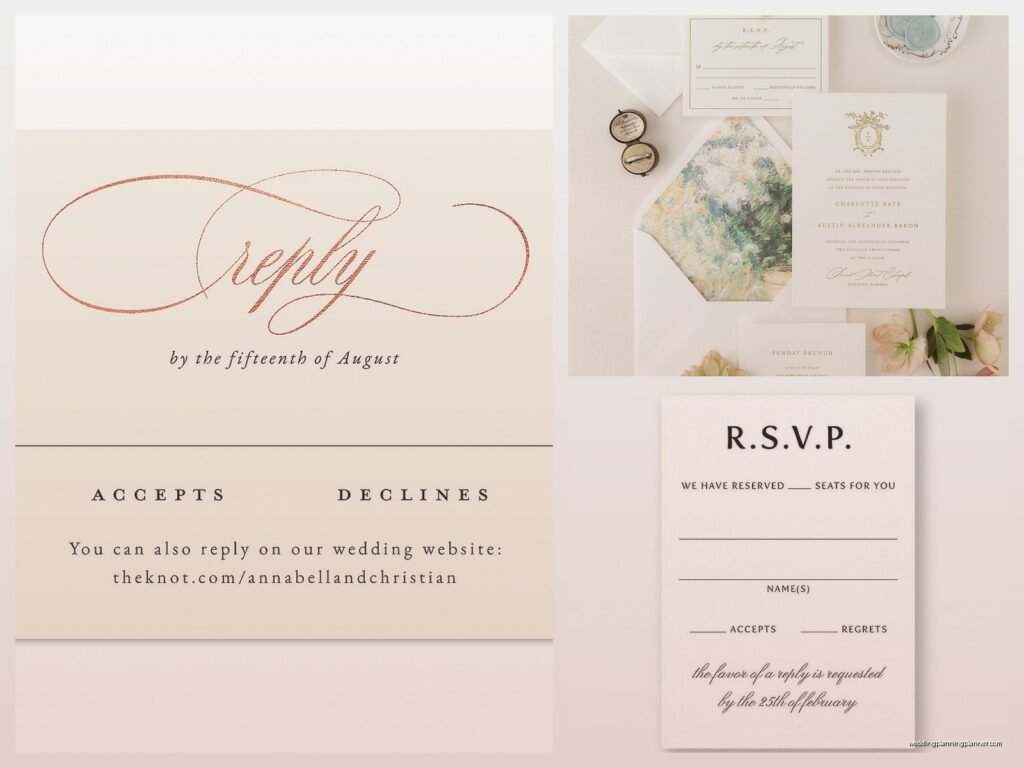
- A line that says “M___________” where guests write their names (the M is for Mr./Mrs./Ms.)
- Accept or decline checkboxes or a fill-in-the-blank like “_____ accepts with pleasure / _____ declines with regret”
- Number of guests attending (write it as “number attending _____” or you’ll get weird answers)
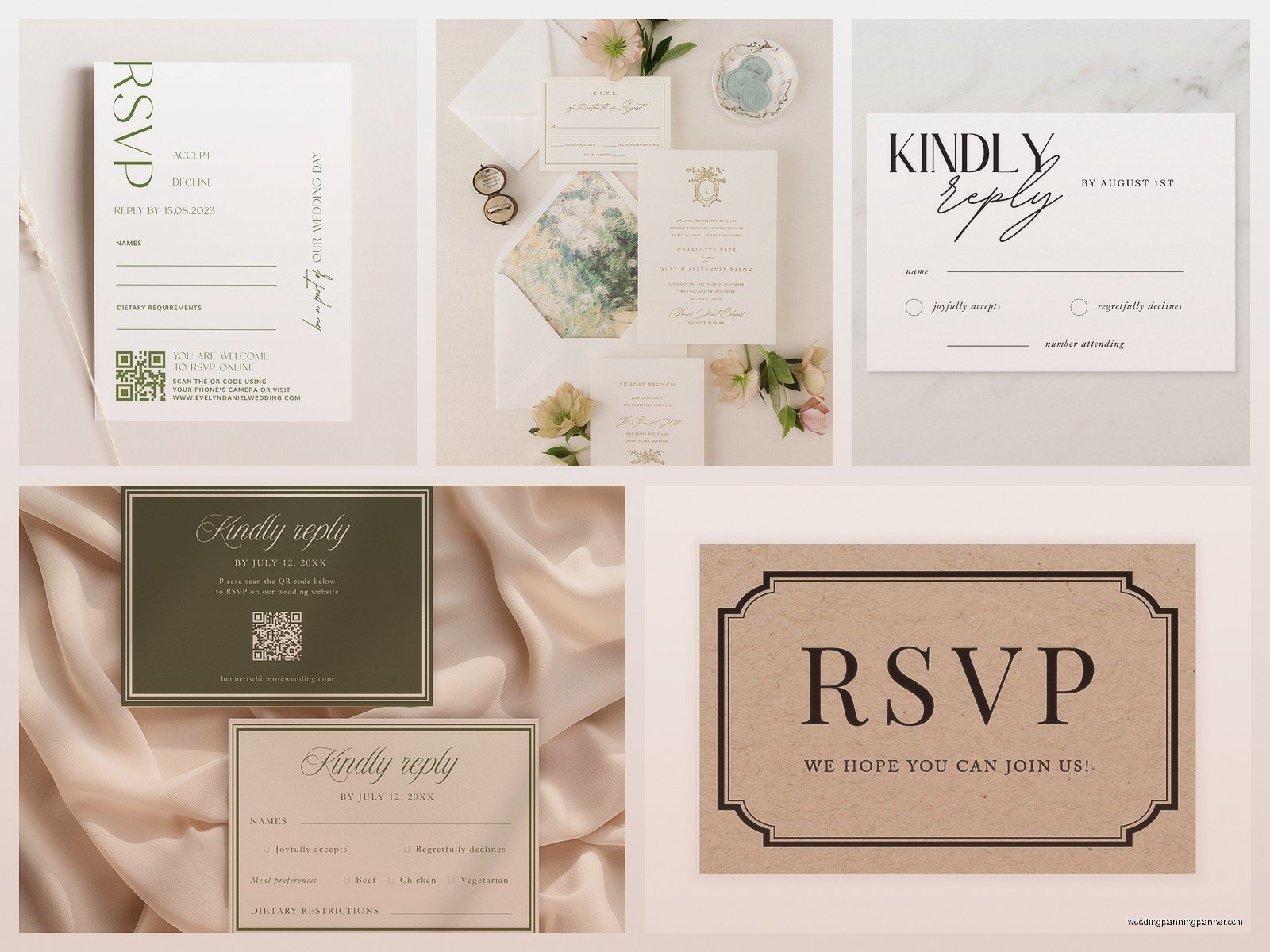
- Meal choices if you’re doing a plated dinner
- A response deadline date
That M___ thing kinda confuses people sometimes, not gonna lie. I’ve gotten back cards where people just wrote their first names or even “The Smith Family” which doesn’t help when you have three Smith families invited. Some couples skip the M entirely now and just write “Name(s)” which is probably smarter honestly.
The Meal Choice Situation
If you’re doing a plated dinner with options, you gotta include meal selections on the response card. This is where things get messy because you need to be specific enough that your caterer knows what’s happening, but not so detailed that the card looks like a restaurant menu.
I usually recommend something like:
- _____ Filet Mignon
- _____ Herb Roasted Chicken
- _____ Vegetarian Pasta
And then have a spot where they initial next to each meal choice if multiple people are on one card. So like “Filet Mignon (MJ) Chicken (KJ)” or whatever. Otherwise you get cards back that just say “2 chickens” and you’re like… okay but which two people?
The thing that really annoyed me last year was when a venue insisted on super complicated meal descriptions on the response cards—like “Pan-Seared Atlantic Salmon with Lemon Beurre Blanc and Seasonal Vegetables”—and it took up so much space we had to use a bigger card size which threw off the whole invitation suite dimensions. Just call it salmon, people know what salmon is.
Designing Response Cards That Match Your Suite
Your response card should obviously match your invitation suite, but it doesn’t need to be identical. I usually go with the same paper stock and color palette, maybe pull in one design element from the main invitation like a border or a monogram.
Standard response card size is 4.25″ x 5.5″ (A2) or 5″ x 3.5″, which fits nicely in an A2 or A6 envelope. The smaller size is fine if you don’t have meal choices or a lot of info to include. Bigger cards just mean more postage usually.
You can do:
- Flat cards (most common, easiest to print)
- Folded cards (if you need more space or want to get fancy)
- Postcards (no envelope needed, saves on postage, but less formal)
Postcard response cards are honestly underrated. Your guests just drop them in the mail, you’ve already put the stamp on there, done. But some people think they look cheap or too casual for a formal wedding, so… it depends on your vibe.
Pre-Addressing and Stamping (Do It)
Always—and I mean always—include a pre-addressed, pre-stamped envelope with your response cards. If you make people find an envelope and a stamp, like half of them won’t send it back. People are lazy, myself included. My cat knocked over my coffee this morning and I just left it there for three hours because I didn’t feel like dealing with it, so like, I get it.
The response envelope should have YOUR address on it (or whoever’s collecting RSVPs). I usually recommend the couple’s address unless they’re still living separately or something. Print or write the address clearly. You can do calligraphy if you want it to look fancy, but honestly printed labels are fine and way more legible.
And yes, you need to put a stamp on it. Not your guests’ responsibility. Get pretty stamps from USPS if you want—they have tons of designs that might coordinate with your wedding theme. Love stamps, vintage stamps, floral stamps, whatever.
Response Deadline Date
Set your response deadline for at least 3-4 weeks before your wedding. This gives you time to chase down the people who inevitably don’t respond (because there will be people who don’t respond, I promise you this). Your caterer needs final numbers usually 1-2 weeks before the event, so build in that buffer.
Write the date clearly on the card: “Kindly respond by July 15th” or “Please reply by the fifteenth of July” if you’re being formal about it. Don’t just write “Please respond 3 weeks before the wedding” because people will forget when your wedding is and then you’re answering questions.
Digital vs. Printed Response Cards
Okay so there’s this whole debate about using a wedding website for RSVPs instead of physical response cards. It’s definitely cheaper and easier to track, I’ll give you that. You can see responses in real-time, send reminders, all that stuff.
But here’s the thing—if you’re sending printed invitations, including a response card just makes sense. It feels complete. When you skip the response card and just put a website URL, it kinda feels like you’re asking people to do extra work? Like they have to go find their phone or computer, navigate to your website, create an account maybe, blah blah blah.
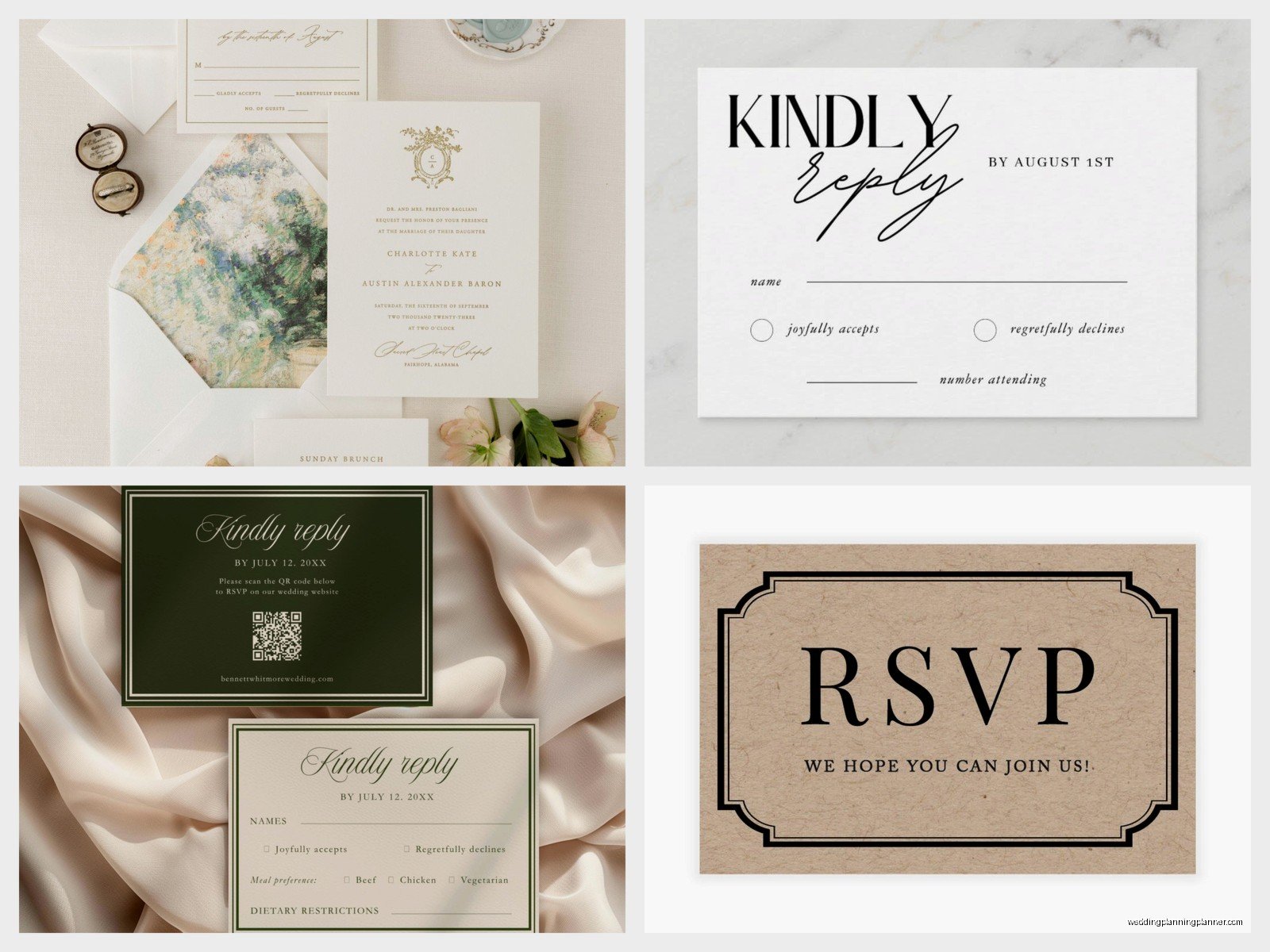
I usually tell couples to do both. Include a response card for people who prefer paper (mostly older guests), but also mention your wedding website where people can RSVP online if they want. Something like “You may also reply online at yourweddingwebsite.com” in small text at the bottom.
Ordering Timeline and Quantities
Order your response cards at the same time as your invitations—they’re part of your suite, and most printers give you a better deal when you order everything together. Plus everything will match perfectly in terms of paper and color.
For quantities, order one response card per household/family unit, not per guest. So if you’re inviting the Johnson family of four, they get one invitation suite with one response card. This is where your guest list organization really matters because you need to know exactly how many households you’re inviting.
I always recommend ordering 10-15 extra response cards beyond your exact count. Cards get messed up, you might need to send a replacement, whatever. They’re not expensive enough to stress about having a few extras.
Timeline-wise, you want to order your full invitation suite (including response cards) about 4-6 months before your wedding. Mail them 6-8 weeks before the wedding. So you’re looking at ordering around the 6-month mark if you want time for proofing, printing, and assembly.
Where To Order Response Cards
You’ve got a bunch of options depending on your budget and style preferences. I work with different vendors depending on what the couple wants, but here’s the rundown:
Online printing companies like Minted, Zazzle, Shutterfly, Vistaprint—these are solid for budget-friendly options. Templates are easy to customize, quality is usually pretty good, and turnaround is fast. Minted especially has really stepped up their game in the last few years. Prices range from like $0.80 to $3 per card depending on what you choose.
Etsy sellers—great for custom designs or if you want something unique. You can often get printable files and take them to a local printer, or the seller will print and ship for you. Quality varies a lot though, so read reviews carefully. I’ve had clients get absolutely gorgeous stuff from Etsy and others who got… less gorgeous stuff.
Local print shops and stationers—this is my preference when budget allows. You can see paper samples in person, get actual advice from someone who knows what they’re doing, and usually the quality is top-notch. More expensive, but you’re paying for expertise and customization. Expect $3-8 per card or more for fancy techniques like letterpress or foil.
DIY—if you’re crafty and have time, you can design and print response cards yourself. Get good cardstock (110lb cover weight minimum), use a high-quality printer, and maybe invest in a paper cutter. This works better for smaller weddings because printing 150 cards at home gets tedious real fast. I watched a bride have a full breakdown trying to print 200 response cards on her home printer in summer 2021 and the printer kept jamming and she was crying and eating ice cream at 2am and it was just… not worth the $200 she saved, you know?
Fancy Printing Techniques
If you want your response cards to match an elevated invitation design, you might consider special printing methods:
Letterpress—pressed into thick cotton paper, super tactile and beautiful. Expensive though, like $5-15 per card expensive. Worth it if your whole suite is letterpress.
Foil stamping—metallic foil in gold, silver, rose gold, whatever. Adds shimmer and elegance. Usually $3-8 per card.
Thermography—raised printing that mimics engraving but costs way less. Looks fancy, feels slightly raised. Maybe $2-4 per card.
Digital printing—flat printing, most affordable, totally fine for most weddings. Don’t let anyone make you feel bad about digital printing, it looks great.
You don’t have to go as fancy on response cards as you do on the main invitation, honestly. Like if your invitation is letterpress, your response card can be digital or thermography and it’ll still look cohesive.
Common Response Card Mistakes
Let me just rapid-fire some things I see people mess up constantly:
- Not numbering your guest list—seriously, number your list and put a tiny number on the back of each response card so when someone sends back a card with just “The Smiths” written on it, you know which Smiths they are
- Making the deadline too close to the wedding—you need that buffer time, I’m telling you
- Forgetting to include response envelopes—people will not send back a loose card, they just won’t
- Not indicating if kids are invited—if you don’t want kids at your wedding, don’t put “and family” on the envelope, and consider adding “We have reserved _____ seats in your honor” on the response card so people know exactly how many guests they can bring
- Using confusing wording—keep it simple and clear
What About Extra Enclosures
Response cards are usually part of a bigger invitation suite that might include like… a bunch of other cards. Details cards, accommodation cards, weekend event schedules, whatever. All of this goes in the invitation envelope together.
Standard assembly order (from back to front) is: invitation on bottom, then tissue paper or vellum overlay if you’re using it, then reception card if separate from invitation, then response card and envelope, then any other enclosure cards. The response envelope goes face-down with the flap showing, tucked under the response card.
Or you can do pocket invitations where everything slides into a pocket, which honestly makes assembly easier but costs more because you’re buying pocket folders.
Tracking Responses
Once response cards start coming back, you need a system. I use spreadsheets—just a simple Google Sheet with columns for guest names, number attending, meal choices, any notes. Update it as cards arrive.
That numbering system I mentioned earlier? Super helpful here. When you get a card back with illegible handwriting (which happens all the time), you can check the number on the back and figure out who it’s from.
Start following up with people who haven’t responded about a week after your deadline. A friendly text is fine: “Hey! We haven’t gotten your RSVP yet and need to give final numbers to our caterer—can you let me know if you’re able to make it?” Most people are just forgetful, not rude.
Wording Examples
If you’re stuck on what to actually write on your response card, here are some formats that work:
Formal:
M_____________________
_____ accepts with pleasure
_____ declines with regret
Kindly respond by the twentieth of June
Semi-Formal:
Name(s) _______________
_____ Joyfully accepts
_____ Regretfully declines
Please reply by June 20th
Casual:
_____ Will be there with bells on!
_____ Can’t make it, but celebrate extra for me
Number of guests _____
Reply by June 20th
You can obviously adjust the wording to match your personality and wedding vibe. Just make sure the important information—name, accept/decline, number of guests, deadline—is clear.
International Guests
If you have international guests, consider giving them the option to RSVP via email or your wedding website instead of mailing back a card. International postage is expensive and complicated, and cards might not arrive back in time anyway.
You can note this on their response card: “Please respond via email at youremail@whatever.com or online at yourwebsite.com by June 20th” or just skip the response card entirely for those guests and include a details card with RSVP instructions.
Plus-Ones and Kids
This is where response cards can get tricky. If someone gets a plus-one, address the envelope to “Sarah Johnson and Guest” and on the response card write “We have reserved 2 seats in your honor” or have a fill-in: “_____ of 2 guests will attend.”
If someone doesn’t get a plus-one, address the envelope to just them and write “We have reserved 1 seat in your honor.” This makes it crystal clear without being rude about it.
Same thing with kids—if the Johnson family’s kids are invited, address it to “The Johnson Family” and reserve however many seats. If kids aren’t invited, address it to “Mr. and Mrs. Johnson” only and reserve 2 seats. People will still try to bring their kids sometimes but at least you were clear from the start.