
Planning Guides, Style Guide
Chinese Wedding Invitation: Traditional Cultural Designs
Nov
The Double Happiness Symbol Is Basically Everything
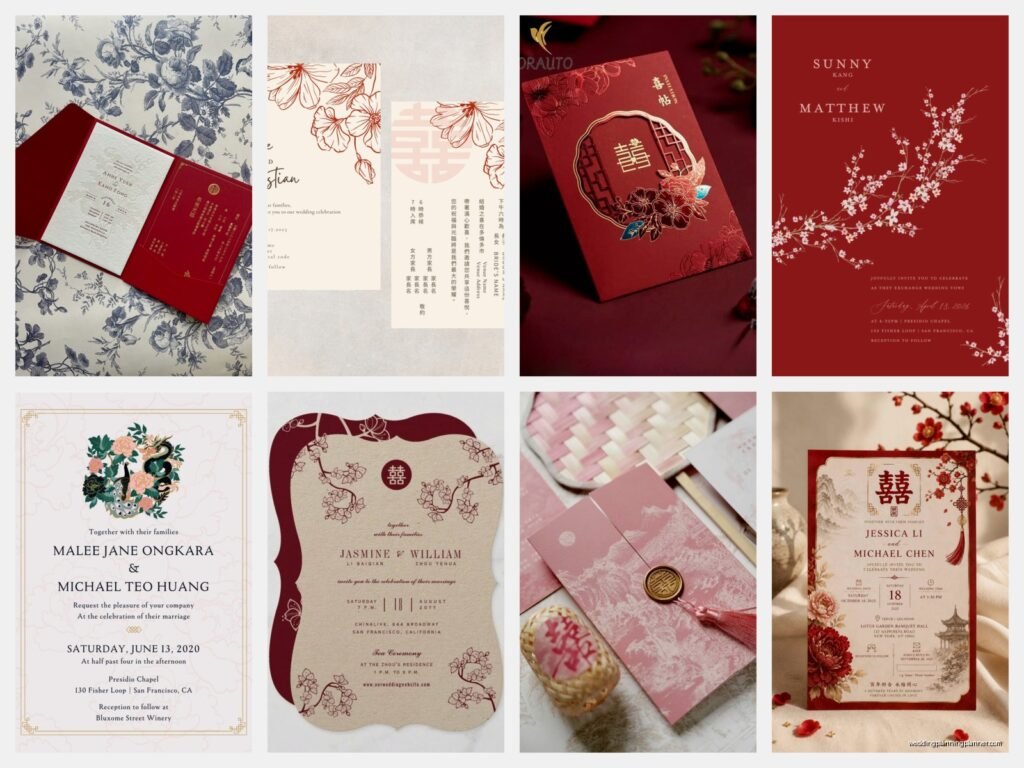
So the first thing you gotta know about Chinese wedding invitations is that the double happiness symbol (囍) is like… everywhere. And honestly, when I started working with Chinese couples back in 2019, I didn’t realize just how MUCH this symbol matters. It’s not just decorative—it’s literally the centerpiece of most traditional designs. You’ll see it embossed on the cover, printed in gold foil, cut into the paper as a window, or sitting right at the top of the invitation text.
The character is actually two 喜 characters merged together, which means happiness or joy. When you double it up, it represents marital happiness and good fortune for the couple. I remember this one bride in spring 2023 who wanted to modernize everything about her invitation except this symbol—she was like “I don’t care what else changes, but that stays.” And you know what, she was right because when her grandmother saw the invitations, that’s the first thing she looked for.
You can incorporate the double happiness in so many ways. Traditional red paper with gold foil stamping is classic. Laser-cut versions where the symbol becomes a window showing the inner card. Embroidered onto silk fabric covers. Honestly the possibilities are kinda endless once you start looking.
Red and Gold Are Non-Negotiable (Usually)
Okay so red is THE color for Chinese weddings. It symbolizes luck, prosperity, celebration, all the good stuff. Gold represents wealth and fortune. Together? Chef’s kiss for traditional wedding invitations. Most of the Chinese wedding invitations I’ve designed or sourced use red as the primary color with gold accents, or sometimes a deep burgundy if the couple wants something slightly less vibrant.
But here’s what annoys me—when people assume you HAVE to use bright fire-engine red. Like, there’s actually a whole spectrum of reds that work beautifully. Wine red, crimson, scarlet, even a deep rose can work if you’re blending traditional with modern. I had this couple once who wanted dusty rose and everyone kept telling them it wasn’t “Chinese enough” which was so frustrating because…
The symbolism matters more than the exact shade, you know? That said, if you’re going for authentic traditional designs, stick with the brighter reds. Your older relatives will appreciate it, and photographs of traditional red invitations against dark wood or gold accents are genuinely stunning.
Dragon and Phoenix Motifs Tell a Story
The dragon (representing the groom) and phoenix (representing the bride) are another huge design element in traditional Chinese wedding stationery. These aren’t just pretty pictures—they symbolize the balance of yin and yang, power and grace, the perfect union of masculine and feminine energies.
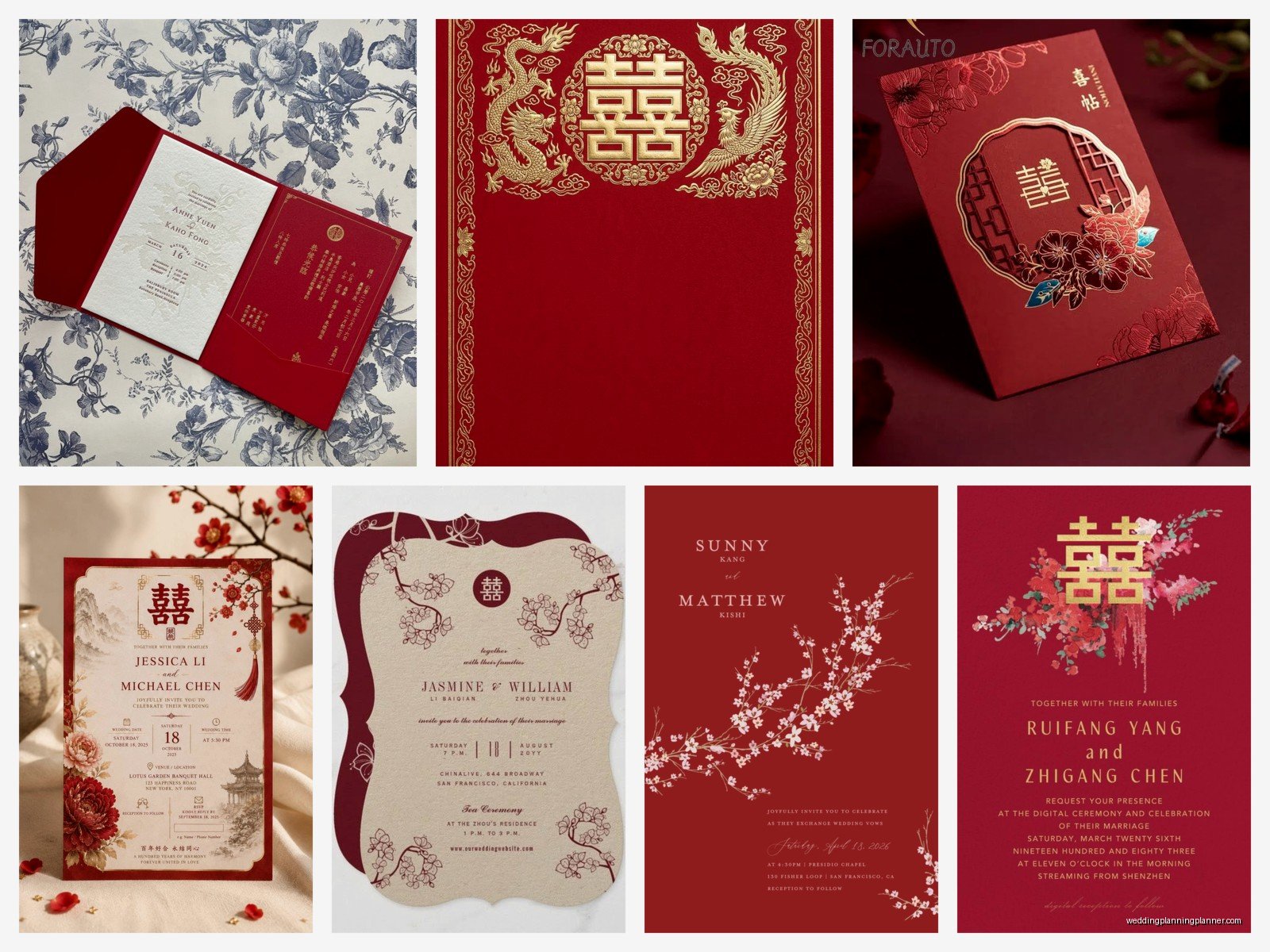
You’ll typically see them facing each other or intertwined in some way. Sometimes they’re subtle, like a watermark pattern in the background. Other times they’re bold and front-and-center, especially on the envelope or outer folder of a more elaborate invitation suite. I’ve worked with invitations where the dragon and phoenix were embossed so you could feel them under your fingertips, and others where they were painted in traditional ink-wash style.
One thing I learned is that the phoenix used in Chinese weddings is different from the Western phoenix concept. The Chinese fenghuang is specifically associated with the empress and feminine virtue, whereas the dragon is associated with the emperor. Together they represent a harmonious marriage between equals, which is kinda beautiful when you think about it.
Other Traditional Symbols You’ll See
There are so many symbols that can appear on Chinese wedding invitations, and each one means something specific. Peonies represent prosperity and honor—they’re called the “king of flowers” in Chinese culture. Lotus flowers symbolize purity and enlightenment. Mandarin ducks (yuanyang) represent lifelong devotion because they mate for life.
You might also see traditional Chinese knots, which are decorative and symbolic. The endless knot represents eternal love with no beginning or end. Cherry blossoms or plum blossoms can represent beauty and perseverance. Sometimes couples incorporate the zodiac animals if they share one or if there’s significance to their birth years.
My cat knocked over an entire stack of invitation samples once that had these intricate peony designs and I almost cried because they were prototypes that took forever to get shipped from the printer in Hong Kong, but anyway—
Gate-Fold and Booklet Styles Are Super Traditional
Traditional Chinese wedding invitations often come in more elaborate formats than your standard Western card. Gate-fold designs where two panels open from the center are really popular. You’ll also see booklet-style invitations that unfold to reveal multiple panels with information, or accordion-fold designs that extend out.
The reason for this is partly practical (there’s often a lot of information to include) and partly aesthetic. Chinese design often emphasizes layers and the concept of revealing information gradually, which these formats support beautifully. Plus they just feel more luxurious and ceremonial, which is appropriate for such an important occasion.
I worked on this invitation suite in summer 2021 during that super stressful time when everything was uncertain and this couple wanted a tri-fold invitation with a separate details card, RSVP card, and a small red envelope for monetary gifts—which is traditional because guests typically give money rather than gifts from a registry. Getting all those pieces to coordinate while meeting their budget was… let’s just say I earned my fee on that one.
The Wording Follows Specific Conventions
So here’s where it gets interesting—traditional Chinese wedding invitation wording is pretty formal and follows certain conventions. The invitation is typically issued by both sets of parents, not by the couple themselves. This reflects the cultural importance of family and the joining of two families, not just two individuals.
You’ll often see the parents’ names listed first, then the couple’s names. The wording emphasizes respect and formality. Phrases like “respectfully request the honor of your presence” are common. Dates are sometimes written using the lunar calendar alongside the Gregorian calendar, which can be important for older relatives.
The text might be in Chinese characters only, bilingual with English, or even include multiple Chinese dialects depending on the families involved. I’ve done invitations with Mandarin, Cantonese, and English all on the same suite. The layout for Chinese characters usually reads top to bottom, right to left in traditional format, though modern designs sometimes go left to right horizontally.
Bilingual Invitations Are Getting More Common
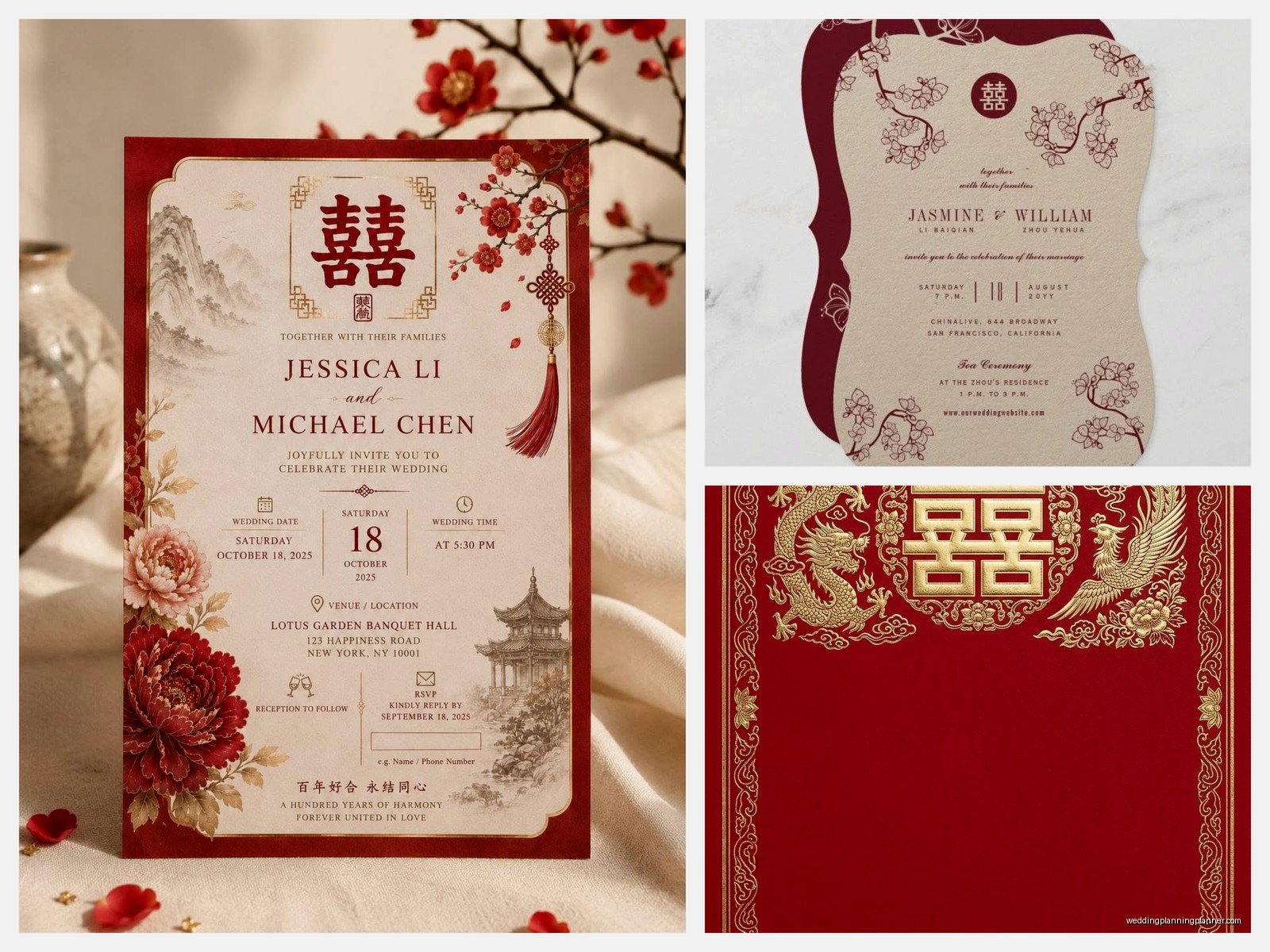
Most of my clients with Chinese heritage who are getting married in Western countries opt for bilingual invitations. This honors their cultural background while making sure all their guests can understand the details. The trick is balancing the two languages visually so one doesn’t overpower the other.
Some couples do separate inserts—one card in Chinese, one in English. Others integrate both languages on the same panel with Chinese on top and English below, or vice versa. You gotta think about your guest list honestly. If most guests read English but you want to honor your grandparents who primarily read Chinese, you might emphasize English but include Chinese in key spots.
Paper Quality and Embellishments Matter A LOT
Traditional Chinese wedding invitations are not the place to cheap out on paper quality. I’m talking thick cardstock, often with a slight texture. Silk or fabric covers are traditional for very formal weddings. The paper might have a subtle sheen or pearl finish.
Embellishments are where things get really fancy. Gold foil stamping is probably the most common—used for text, borders, and symbols. Embossing creates raised designs you can feel. Laser cutting creates intricate patterns and windows in the paper. Some invitations include tassels in red or gold thread. Others have ribbon closures or are tied with traditional Chinese knotted cord.
I’ve seen invitations with actual jade or crystal embellishments embedded in them, though those obviously increase the cost significantly. But even something simple like a red silk ribbon or a gold wax seal can elevate the whole look and make it feel more ceremonial and special.
Red Envelopes Are Part of the Package
So you can’t really talk about Chinese wedding invitations without mentioning red envelopes (hongbao). These aren’t just for holding the invitation—they’re symbolic in themselves. Red envelopes represent good luck and are traditionally used for monetary gifts, so including them with your invitation suite is both practical and traditional.
The outer envelope might be red with gold printing or decorative elements. Some couples include a smaller red envelope inside for guests to use when giving monetary gifts at the wedding. The envelopes themselves often feature the double happiness symbol, floral patterns, or other auspicious designs.
One thing that’s kinda tricky is addressing red envelopes. Traditional etiquette says you should hand-write addresses in black or gold ink, never red (red ink has negative connotations in Chinese culture when writing names). But modern couples sometimes print addresses, which is fine—just know that handwritten is considered more respectful and traditional.
Modern Twists on Traditional Designs
Okay so not every couple wants super traditional invitations even if they want to incorporate cultural elements. I get that. You can absolutely modernize these designs while keeping the symbolic elements that matter.
Minimalist designs with just the double happiness symbol in gold on a simple red background. Watercolor interpretations of traditional motifs like peonies or phoenixes. Modern typography for the text while keeping traditional symbols. Unexpected color combinations like navy and gold or blush and copper while still including traditional elements.
Some couples do a traditional Chinese invitation for older relatives and a separate modern English version for friends. Others create one invitation that blends both aesthetics. There’s no wrong answer as long as you’re honoring what matters to you and your families.
Where to Source These Invitations
Finding authentic traditional Chinese wedding invitations can be challenging depending on where you live. Major cities with significant Chinese populations will have stationery shops that specialize in this. You can also order from suppliers in Hong Kong, Taiwan, or mainland China, though shipping times and costs can be significant.
Etsy has become a surprisingly good source for both traditional and modern Chinese-inspired designs. Many independent designers create beautiful bilingual invitations with traditional elements. Just make sure you’re ordering samples first because photos can be deceiving.
If you’re working with a stationer or designer, bring reference images of what you like. Screenshots from Pinterest, photos from friends’ weddings, anything that shows the style and elements you want. Communication is key because there are so many variations of “traditional Chinese wedding invitation” that you need to be specific.
Timing and Quantity Considerations
Chinese wedding invitations are typically sent out further in advance than Western invitations—sometimes 2-3 months before the wedding. This is partly because weddings are huge events that guests need to plan for, and partly because it shows respect to give people plenty of notice.
You’ll probably need more invitations than you think. Chinese weddings tend to have larger guest lists because extended family and family friends are typically included. Plus it’s common to invite colleagues and business associates of both sets of parents. I’ve worked on weddings with 300+ guests where Western weddings for similar couples might have 150.
Order extras. Seriously. Between mistakes in addressing, last-minute additions to the guest list, and people who want to keep the invitation as a keepsake, you’ll be glad you have backups. Most printers offer discounts when you order in larger quantities anyway.
The lead time for custom or semi-custom traditional invitations can be long—8-12 weeks isn’t unusual, especially if you’re ordering from overseas or having custom embellishments done. If you’re on a tight timeline, look for ready-made designs that you can personalize with your details rather than starting from scratch.
