
Planning Guides, Style Guide
Chinese Wedding Card: Design & Ordering Guide
Jun
The Basics You Gotta Know First
Chinese wedding cards are completely different from Western ones and honestly back in summer 2021 I had a bride tell me she wanted “red invitations with some gold dragons” and I almost cried because that’s like saying you want “a white dress” for your wedding—there’s SO much more to it. The symbolism matters, the colors matter, even the number of words in certain phrases matters.
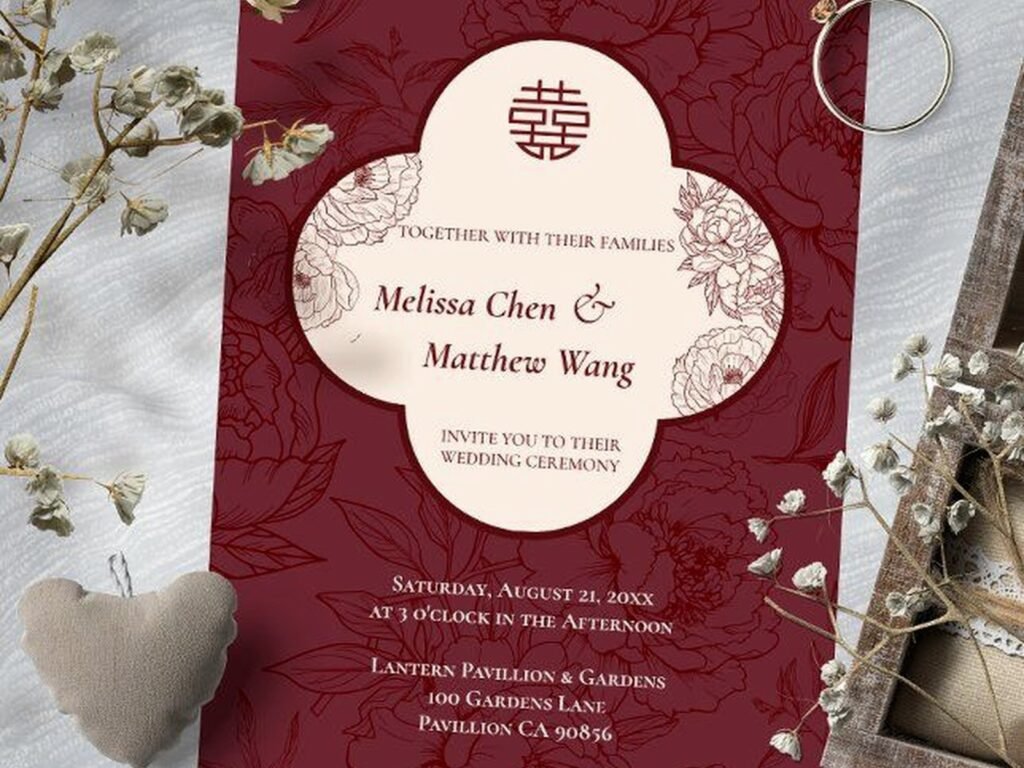
So first thing: traditional Chinese wedding invitations are almost always red or gold. Red symbolizes happiness, good fortune, and joy. Gold represents wealth and prosperity. You’ll also see combinations of these, plus sometimes pink for modern couples who want something softer. I’ve seen couples try to do navy blue or emerald green because they wanted something “different” but then the older relatives were kinda confused about whether it was actually a wedding invitation.
The Chinese characters and symbols you use are probably the most important part. Double happiness (囍) is the big one—it’s literally everywhere on Chinese wedding stuff. You’ll also see dragons and phoenixes together (dragon represents the groom, phoenix represents the bride), peonies for romance and prosperity, and lotus flowers for purity.
Wording and Language Stuff That Gets Tricky
Okay so here’s where it gets complicated and where I see couples mess up constantly. Traditional Chinese wedding invitations are written from the parents’ perspective, not the couple’s. Like, the parents are “hosting” and “inviting” guests to witness their children’s marriage. This is different from Western invites where the couple often hosts their own wedding.
You need to decide if you’re doing bilingual cards (Chinese and English) or separate cards for different guest groups. Most of my clients do bilingual because it’s just easier, but you gotta make sure the translation actually matches. I had this situation in spring 2023 where the English side said “cocktail attire” but the Chinese side basically translated to “formal dress required” and half the guests showed up in completely different dress codes and the bride was so stressed.
The formal Chinese wording includes specific terms for the relationship between the hosts and the couple. If the groom’s parents are hosting, they refer to their son differently than if the bride’s parents are hosting. There are also traditional phrases about “respectfully inviting” guests and specific ways to write dates and times that follow the lunar calendar sometimes.
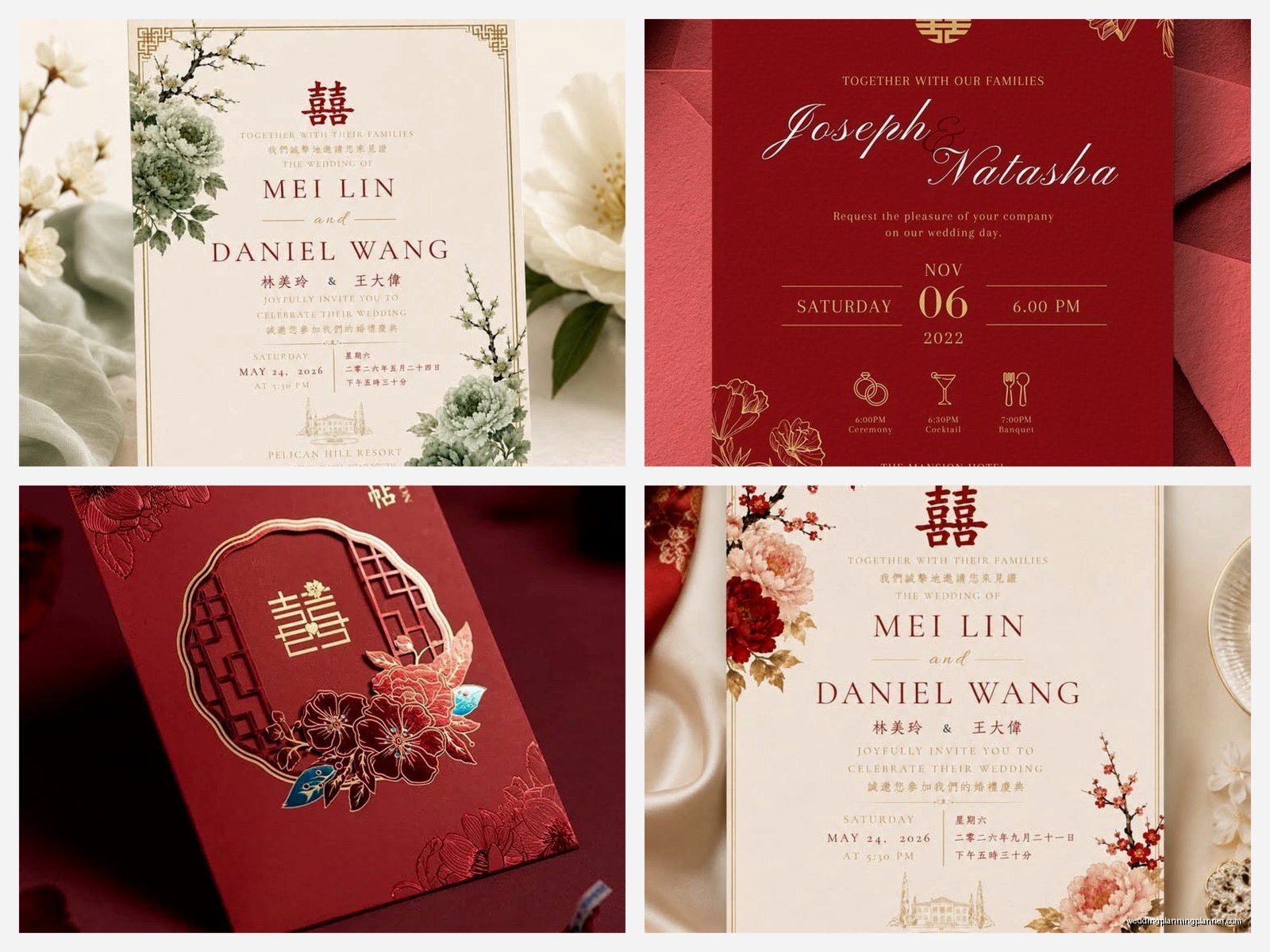
What really annoyed me is when print companies don’t tell couples that certain Chinese characters look terrible in certain fonts. Like you’ll pick a beautiful script font and then the Chinese characters are barely readable or they’re in a completely different style that clashes. Always ask for a proof with the actual Chinese text, not just the English.
Date and Time Formatting
You might need to include both the Western calendar date and the Chinese lunar calendar date, especially if you have older relatives attending. Some families care a LOT about this. The lunar calendar date shows you picked an auspicious day (which you hopefully did—that’s a whole other thing about consulting the Chinese almanac).
Time is usually written in both 12-hour and 24-hour format. And honestly, be super clear about whether you’re doing a tea ceremony before the banquet because some guests need to know if they’re invited to both or just the evening reception.
Design Elements That Actually Matter
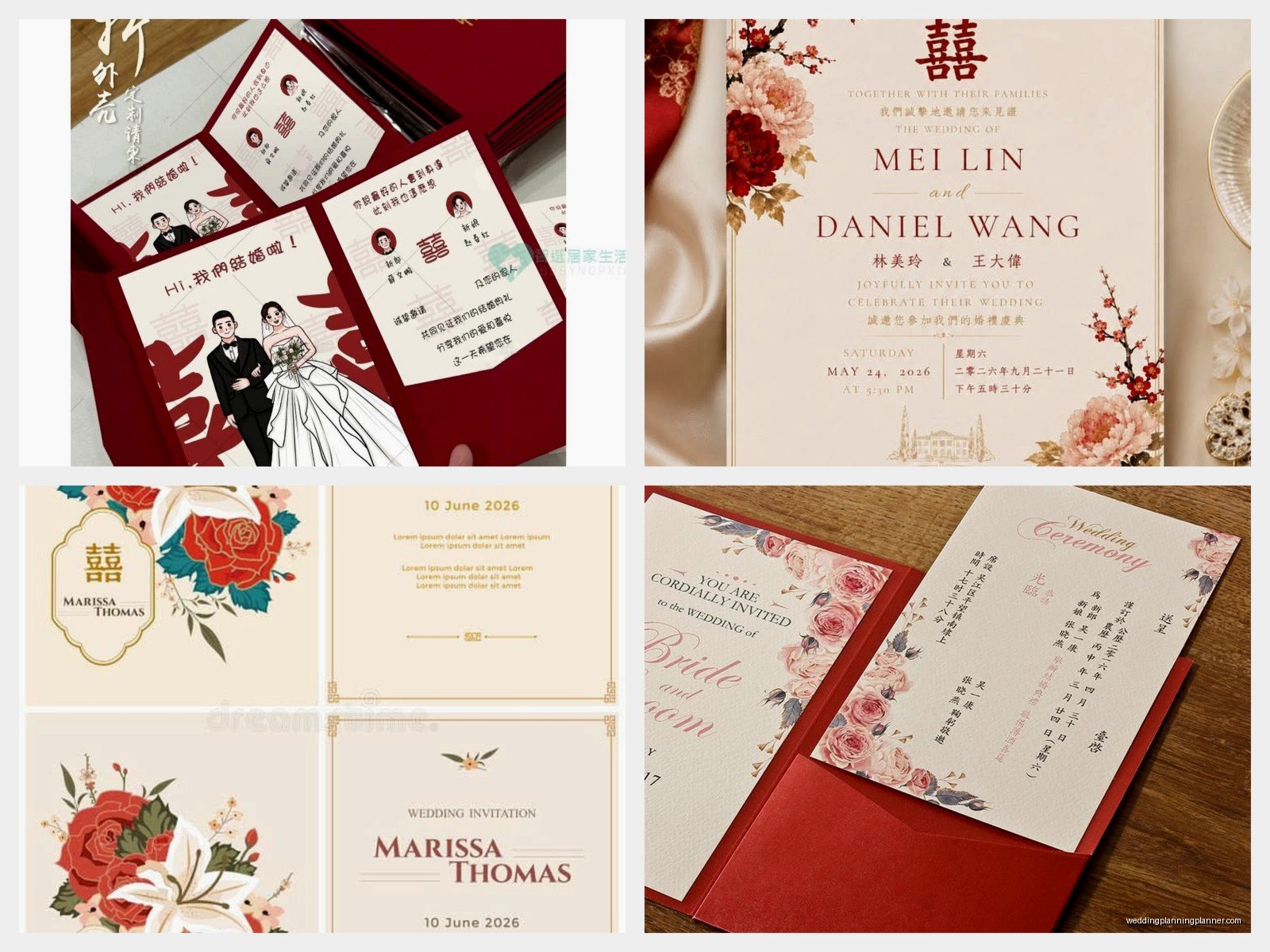
Traditional Chinese wedding cards have a specific structure. There’s usually a front cover with decorative elements, then you open it to see the actual invitation text. Some fold once, some fold twice, some are like little booklets. The really traditional ones come in a red envelope too, which adds another layer of design you need to think about.
Modern couples are mixing it up though. I’ve seen laser-cut designs with intricate patterns, acrylic invitations with gold foil Chinese characters, even video invitations sent via WeChat (though older relatives usually still want a physical card). But if you’re going modern, you still gotta include those key symbols somewhere or it doesn’t feel like a Chinese wedding invitation.
The layout needs to accommodate Chinese text reading top-to-bottom, right-to-left traditionally, though modern designs often do left-to-right horizontal text. If you’re doing bilingual, you need to figure out how to balance both languages so neither looks like an afterthought. Sometimes the Chinese is on one panel and English on another, sometimes they’re stacked.
Color Combinations That Work
Red and gold is classic and you can’t go wrong. Deep red with gold foil stamping looks expensive and traditional. But there are other options:
- Red and pink for a softer, more romantic feel
- Gold and cream for elegant and understated (though some people think cream is too close to white which is funeral colors, so be careful)
- Red and black for modern dramatic look—but check with parents first because black can be iffy
- Burgundy and rose gold for contemporary couples
- Orange-red (vermillion) which is super traditional and auspicious
My cat literally knocked over my coffee onto a sample set of burgundy invitations once and the couple ended up loving how the stain looked darker in one corner so we actually incorporated an ombre effect into their final design, which was completely unplanned but worked out.
What Info You Actually Need to Include
Beyond the obvious date, time, and location, Chinese wedding invitations typically include:
Names of both sets of parents (and sometimes grandparents if they’re alive and involved). The order matters—traditionally the groom’s family is listed first, but modern couples sometimes list both equally or do bride’s family first if they’re hosting.
Full names of the bride and groom, including Chinese names if you have them. Some couples use their English names on the English side and Chinese names on the Chinese side.
Specific venue information including the room name or floor, not just the building address. Chinese banquets are often in huge restaurants with multiple dining rooms, so guests need to know exactly where to go.
RSVP information, though traditionally Chinese weddings didn’t really do RSVPs the same way—you kinda just showed up or you didn’t. But modern couples need headcounts for catering so you gotta include this.
Dress code if you have one, though this is more of a Western addition.
Some couples include information about the tea ceremony timing if guests are invited to that portion. Or they’ll mention if there’s a church ceremony before the banquet.
Ordering Timeline and Quantities
Order your invitations like 4-6 months before the wedding, maybe even earlier if you’re doing heavy customization or ordering from overseas. Chinese wedding stationery companies in China or Hong Kong often have gorgeous options at better prices than US-based designers, but shipping takes forever and you need time for revisions.
For quantities, order more than you think you need. Chinese wedding etiquette is different—sometimes you’re inviting entire extended families, and sometimes you send invitations to people you know won’t come but you’re inviting them out of respect. I usually tell couples to order 20-30% more than their expected guest count.
Also factor in that traditional Chinese wedding invitations are often hand-delivered by the couple or their parents to close relatives and important guests, which is a whole thing that takes time to coordinate.
Where to Actually Order These Things
You’ve got several options and honestly each has pros and cons:
Online Chinese stationery companies: Sites like Taobao or specialized wedding card companies based in China/Hong Kong have incredible selection and prices. But you need to navigate language barriers, shipping costs, and longer timelines. Also quality control can be hit or miss.
Local Chinese wedding vendors: If you’re in a city with a significant Chinese population, there are probably local shops that specialize in this. They understand the cultural requirements and can guide you, but prices are higher.
General online stationers with Chinese options: Minted, Zazzle, etc. have some Chinese-inspired designs. These are convenient and you can preview everything easily, but the designs are often more Americanized and might not feel authentic to traditional families.
Custom designers: Hiring a designer who specializes in Chinese wedding stationery gives you exactly what you want but costs way more. Good option if you’re doing a fusion wedding and need something really specific.
Etsy shops: There are sellers who do beautiful customizable Chinese wedding invitations, often at mid-range prices. Read reviews carefully though because quality varies a lot.
Printing Techniques Worth the Money
Foil stamping in gold or rose gold makes Chinese characters look amazing and adds that luxury feel. It catches the light and photographs beautifully. Totally worth the upcharge if your budget allows.
Embossing or letterpress can work well too, especially for the double happiness symbol or other design elements. Creates nice texture and dimension.
Laser cutting is gorgeous for creating intricate patterns—I’ve seen designs with cut-out peonies or geometric patterns inspired by Chinese lattice work that are just stunning. But it’s pricey and you need to order early because production takes longer.
Red envelope liners add a nice touch and aren’t too expensive. Even just a patterned liner in gold or a contrasting color elevates the whole presentation.
UV spot coating can make certain elements pop—like making the gold parts extra shiny while keeping the rest matte. It’s kinda subtle but looks really polished.
Common Mistakes to Avoid
Don’t use white as your main color unless you want to give traditional Chinese relatives a heart attack. White is for funerals. Even cream or ivory can be questionable depending on how traditional your families are.
Don’t forget to check your Chinese character translations with someone who actually reads Chinese fluently. Google Translate is not your friend here. I’ve seen invitations with characters that were technically correct but phrased so awkwardly that native speakers were confused about what was being said.
Don’t order without seeing a physical proof if you’re doing anything with special printing techniques. Colors look different on screen versus paper, and you need to see how the foiling or embossing actually looks.
Don’t skip the envelope etiquette. There are traditional ways to address envelopes to married couples, unmarried individuals, families with children, etc. The Chinese side needs proper titles and forms of address.
Don’t assume all your guests read Chinese. Even if you’re having a Chinese wedding, some guests might be Chinese-American or non-Chinese friends who need the English text to be just as complete and clear.
The Actual Ordering Process
First you need to finalize your guest list or at least have a solid estimate. Then work out all your wording with both families because everyone’s gonna have opinions about how things should be phrased, especially in Chinese.
Pick your design style and narrow down to 2-3 options. Order samples if possible—most companies will send you sample packs for like $20-30 and it’s so worth it to see paper quality and colors in person.
Once you’ve chosen your design, you’ll usually go back and forth with proofs. Pay attention to spacing, alignment, character sizing… Chinese characters often need to be slightly larger than English text to be equally readable. And make sure any symbols or decorative elements aren’t accidentally offensive or positioned weirdly.
Approve the final proof only when everything is perfect because changes after printing are either impossible or crazy expensive. I learned this the hard way when a client approved their proof without noticing the date was wrong and we had to rush-order a whole new batch.
Place your order with buffer time for shipping delays, production issues, or needing to reorder if something goes wrong. Then when they arrive, check everything immediately—count the quantity, look for printing errors, make sure any assembly is done correctly if they came pre-assembled.
Assembly and Extras
Depending on what you ordered, you might need to do assembly yourself. Stuffing envelopes, adding belly bands, tucking in RSVP cards and pre-stamped envelopes, maybe adding a wax seal or sticker to close everything.
Some couples include additional insert cards with hotel information, wedding website details, or explanations of Chinese wedding customs for non-Chinese guests (which is actually really thoughtful). Just don’t overload the invitation with too many pieces or it becomes overwhelming.
If you’re doing a traditional red envelope, there might be specific etiquette about how to seal it or whether to include certain auspicious items inside. Some families include small red packets with candy or chocolate coins as a symbolic gesture.
Addressing can take forever, especially if you’re doing calligraphy or need to write Chinese characters by hand. Budget time for this or hire it out if your handwriting isn’t great. There are also services that will print directly on envelopes which looks clean and professional.
Mail timing matters too—send invitations 6-8 weeks before the wedding, maybe earlier if you have a lot of international guests. But some couples hand-deliver to local VIP guests first as a sign of respect, then mail the rest.