
Planning Guides, Style Guide
Korean Wedding Invitation: Design & Ordering Guide
Jun
Getting Started with Korean Wedding Invitations
So Korean wedding invitations are honestly one of my favorite things to work on because they’re so different from Western ones but also there’s like this whole cultural protocol thing you gotta navigate. I remember back in spring 2023 I had this couple who wanted to blend traditional Korean elements with modern design and the groom’s mom was NOT happy with their first draft because they’d accidentally put the bride’s family name first and… yeah, that was a whole thing.
The basic structure is completely different from what most Western couples are used to. Korean invitations typically list both sets of parents prominently because the wedding isn’t just about the couple – it’s about two families coming together. You’ll see the parents’ names right there at the top, sometimes even before the couple’s names, which feels weird if you’re not expecting it.
The Text Layout and Wording
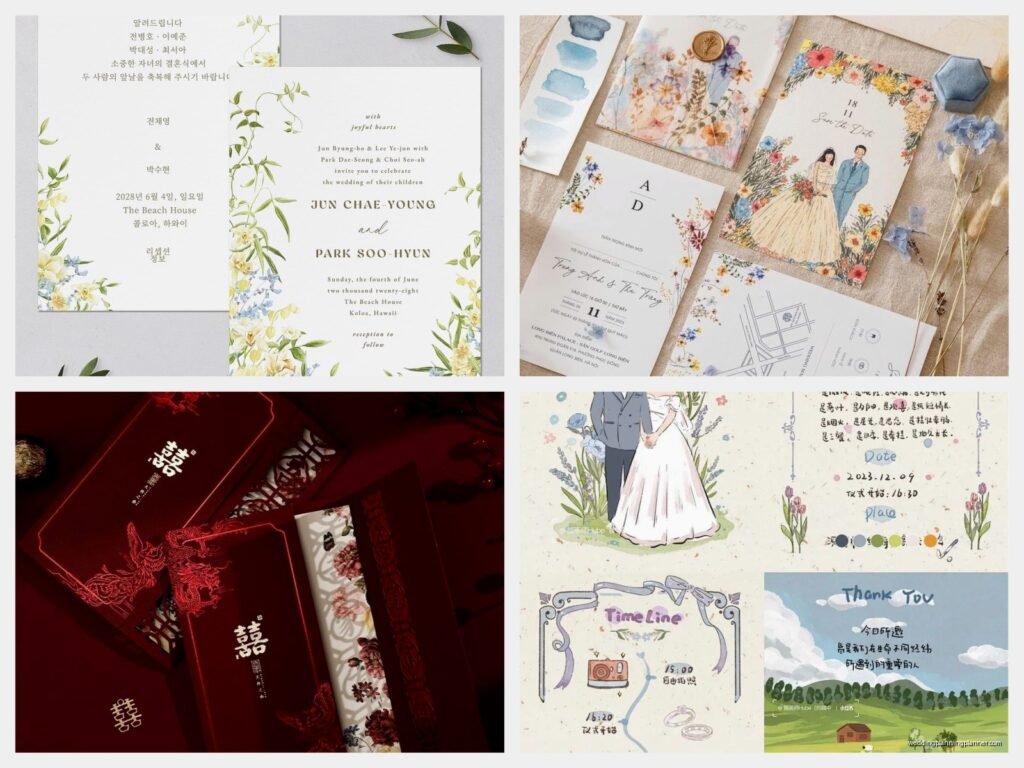
Korean invitations follow a pretty specific format. You’re gonna start with the parents’ names, then the couple’s names, then the wedding details. The traditional wording is formal and includes phrases like “청첩장” (wedding invitation) at the top and often includes something about the two families becoming one.
What really annoyed me when I first started working with Korean invitations was that there’s no single “correct” template that everyone agrees on. Different regions in Korea have slightly different conventions, and families who’ve been in the US for generations might do things differently than recent immigrants. I spent like three hours once trying to figure out whether to use the formal “모시고자 합니다” or the slightly less formal version for a couple’s invitation.
The bilingual aspect is usually necessary unless literally everyone at your wedding reads Korean fluently, which… probably not if you’re reading this. Most couples do Korean on one side and English on the other, or Korean at the top with English below. I’ve seen it work both ways.
Design Elements That Actually Matter
Traditional Korean wedding invitations use specific colors and symbols. Red and gold are classic choices because they represent luck and prosperity. You’ll also see designs with cranes (they mate for life, very symbolic), peonies (representing honor and wealth), or traditional Korean knots called “maedeup.”
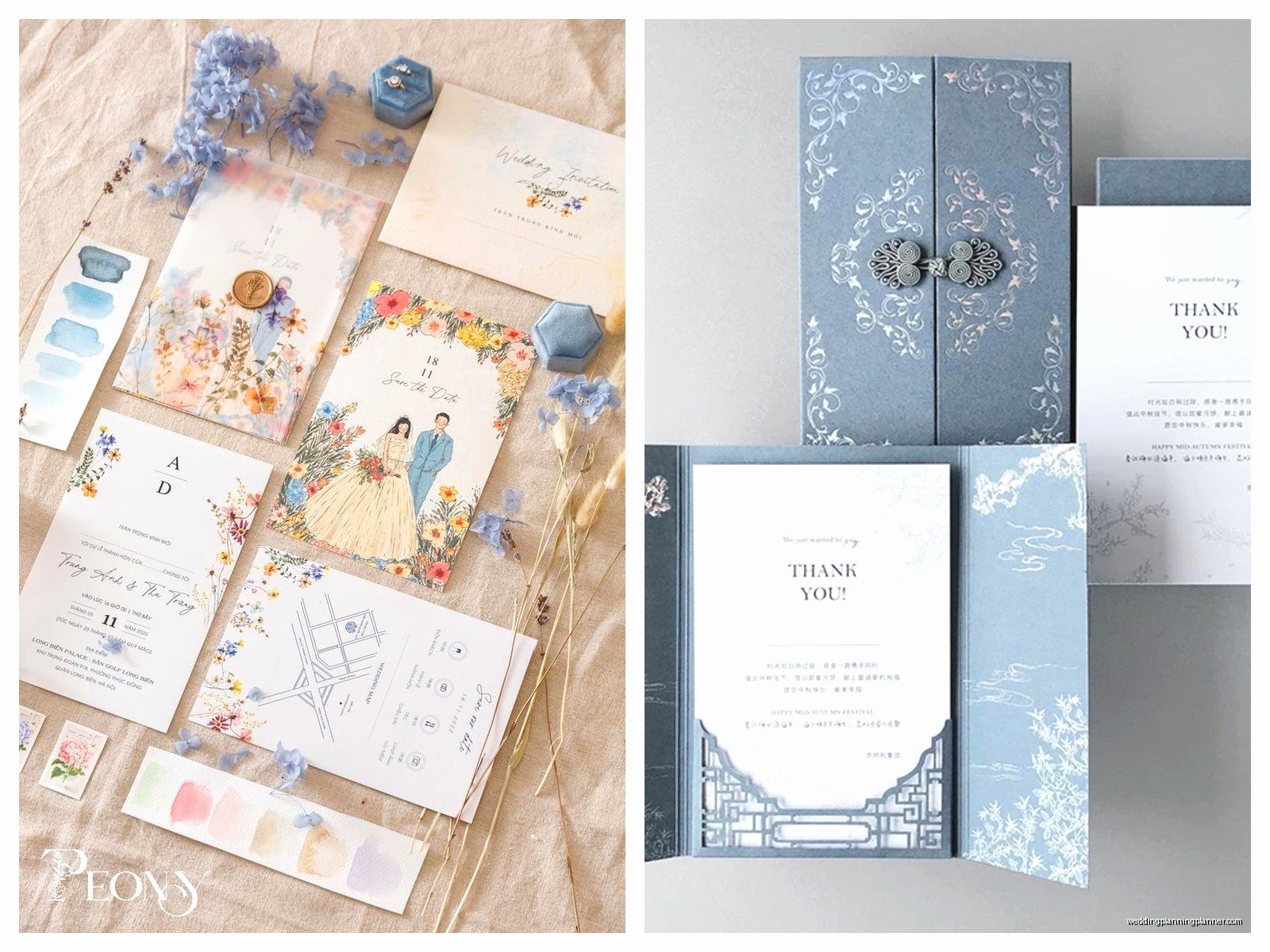
But here’s the thing – you don’t HAVE to go full traditional. I worked with a couple last year who did a minimalist design with just a subtle Korean knot pattern in the corner and it was gorgeous. The key is figuring out what level of traditional you want.
Modern Korean invitations might include:
- Hanbok-inspired color combinations (jewel tones, pastels)
- Korean calligraphy for names or key phrases
- Geometric patterns inspired by traditional architecture
- Illustrations of hanbok or traditional wedding elements
- Modern minimalist layouts with Korean text
The paper quality matters more in Korean invitations than you might think. There’s this expectation of… I don’t know how to explain it exactly, but like a certain weight and formality to the invitation because it’s representing both families. Flimsy cardstock isn’t gonna cut it.
The Parent Name Situation
This is where things get specific and you really need to pay attention. In Korean culture, the order of names matters A LOT. Traditionally, the groom’s family is listed first, then the bride’s family. Each parent is listed with their full name, and sometimes titles are included.
The format usually looks something like:
- Groom’s father’s name + mother’s name
- Their son (groom’s name)
- Bride’s father’s name + mother’s name
- Their daughter (bride’s name)
But wait, it gets more complicated. If a parent has passed away, you might write “故” (late) before their name, or you might handle it differently depending on family preference. Some families want deceased parents included, some don’t. You absolutely have to ask.
I had a situation where a bride’s father had remarried and she wanted both her biological mother (deceased) and stepmother on the invitation and we had to figure out wording that honored everyone appropriately. It took like five rounds of edits and multiple family phone calls.
Finding a Designer or Template
Alright so for actually getting these made, you have options. If you’re in a city with a significant Korean population, there are probably printing shops that specialize in Korean wedding invitations. They’ll know exactly what they’re doing and can walk you through the wording and etiquette stuff.
Places to look:
- Korean-specific stationery shops (search for “청첩장” plus your city)
- Etsy has sellers who specialize in Korean wedding invitations
- Minted and similar sites now have some Korean-inspired designs
- Local print shops in Korean neighborhoods
The Korean stationery shops will have books and books of sample designs. Like, physical books you flip through. It’s kinda old-school but honestly really helpful because you can see the actual paper quality and printing.
If you’re going the online route, make sure the designer understands Korean invitation etiquette. I’ve seen Etsy sellers who make “Korean-inspired” invitations that are beautiful but get the cultural elements wrong. Read reviews from other Korean couples.
Bilingual Design Challenges
Okay so making Korean and English look good together on the same invitation is actually harder than it sounds. Korean text and English text have different visual weights and spacing requirements. Korean characters are generally more compact and uniform, while English is all over the place with ascending and descending letters.
Some layouts that work well:
- Korean on the left panel, English on the right (for folded invitations)
- Korean on front, English on back
- Korean at top, English below with clear visual separation
- Two separate insert cards, one in each language
What doesn’t usually work is trying to cram both languages into the same small space with the same font size. It ends up looking cluttered and neither language gets the respect it deserves.
The Hanbok Photo Insert Thing
Many Korean wedding invitations include a photo of the couple in hanbok (traditional Korean clothing). This isn’t required but it’s super common. If you’re doing this, you’ll want to book a hanbok photo session separately – there are studios that specialize in this, especially in K-towns.
The photos are usually formal, elegant shots. Not like… candid laughing photos. More like you’re posing for a portrait painting. My cat actually photobombed one couple’s hanbok shoot once because they did it at a garden and he somehow got loose from my car and I was mortified but they thought it was hilarious and wanted to keep one of those shots.
If you include a photo, it’s typically on a separate insert card or on the front of the invitation. The quality needs to be professional – no iPhone selfies in borrowed hanbok from your cousin.
Practical Ordering Details
Timeline for Ordering
Korean wedding invitations traditionally go out about 3-4 weeks before the wedding, which is way shorter than the Western 6-8 weeks. But you still need to start the design process early because there’s gonna be multiple rounds of approval, especially if parents are involved in the decision-making.
My recommended timeline:
- 3-4 months before wedding: Start looking at designs and designers
- 2-3 months before: Finalize design and wording, get family approval
- 6-8 weeks before: Place order
- 4-5 weeks before: Receive invitations, address them
- 3-4 weeks before: Mail them out
The family approval step is not optional, by the way. I’ve had couples try to skip this and then their parents see the final printed invitation and there’s drama about the wording or the name order or… just don’t skip it. Save yourself the stress.
Quantity and Extras
Order extras. Like, more extras than you think you need. Korean weddings often have unexpected guests because the family culture is more communal – your parents might invite their friends or distant relatives and you kinda just roll with it.
I usually tell couples to order 20-25% more than their initial guest count. Yes it costs more, but running out of invitations or having to do a second print run is worse.
You’ll also want to keep a few perfect copies for:
- Your own keepsake
- Parents’ keepsakes
- Wedding album or shadow box
- Any last-minute additions to guest list
Envelope Addressing
For Korean wedding invitations, the envelope addressing can be bilingual too, but it doesn’t have to be. If you’re mailing in the US, the postal service needs to be able to read the address, so English is necessary for that part at least.
Some couples do the guest names in Korean if the recipients read Korean, with the mailing address in English. Some do everything in English. There’s no wrong answer here, it’s really about your specific guest list.
Hand calligraphy is less common for Korean invitations than for Western ones, but you can do it if you want. Just make sure the calligrapher can do Korean characters if you’re going that route, because not all calligraphers can – it’s a completely different writing system with different brush stroke requirements and…
Digital Invitations
Okay so digital Korean wedding invitations are becoming more common, especially for younger couples or smaller weddings. There are Korean websites that specialize in mobile wedding invitations (모바일 청첩장) that are really popular in Korea itself.
The advantage is they’re cheaper, faster, and can include features like:
- Interactive RSVP buttons
- Google Maps links to the venue
- Photo galleries
- Music (often traditional Korean wedding music)
- Easy sharing via KakaoTalk or text
The disadvantage is that older family members might find them too informal. This is really a know-your-audience situation. If your families are traditional, stick with printed invitations. If everyone’s tech-savvy and modern, digital could work.
Cultural Considerations You Can’t Skip
The Gift Money Mention
Korean weddings traditionally involve giving money as a gift rather than registry items. Some invitations include subtle references to this, though it’s not always explicitly stated. There might be a line about “your presence is the greatest gift” but guests familiar with Korean wedding customs will know to bring a monetary gift in a special envelope.
You don’t usually put registry information on Korean wedding invitations the way you might on Western ones. It’s just not done. If people ask, you can tell them separately, but the invitation itself stays focused on the celebration and family unity.
Multiple Ceremonies
If you’re having both a traditional Korean ceremony (Pyebaek) and a Western-style ceremony, you need to figure out what information goes on the invitation. Usually the main ceremony is listed prominently, and the Pyebaek might be mentioned as a private family ceremony or not mentioned at all since it’s typically just immediate family.
Some couples do two separate invitations if the guest lists are really different. Like, a traditional Korean invitation for the Korean ceremony and family, and a Western-style invitation for the reception. This is totally fine but it costs more obviously.
Venue Names and Addresses
Make sure the venue name and address are clear in both languages if you’re doing bilingual invitations. I’ve seen invitations where the English venue name was listed but not the Korean, and older Korean-speaking guests got confused about where to go.
Also include parking information if possible – Korean wedding guests often travel in family groups and parking logistics matter. This might be on a separate details card rather than the main invitation.
Cost Breakdown
Korean wedding invitations can range wildly in price depending on what you choose. Here’s roughly what to expect:
- Budget option (template-based, standard printing): $1.50-$3 per invitation
- Mid-range (some customization, better paper): $3-$6 per invitation
- High-end (custom design, premium paper, special printing): $6-$15 per invitation
- Luxury (letterpress, hand calligraphy, silk boxes): $15+ per invitation
The Korean stationery shops in K-towns often have package deals that include the invitation, envelopes, thank you cards, and sometimes even table numbers or programs. These packages can be good value if you need everything.
Don’t forget to budget for postage – if your invitations are thick or include multiple inserts, they might require extra postage. Take a complete assembled invitation to the post office and have them weigh it before you buy stamps. I had a client who bought 150 stamps and then found out each invitation needed two stamps and she was so mad at herself.
What Actually Drives Up Cost
The expensive parts are usually: custom design work, premium paper (especially textured or handmade papers), specialty printing techniques like letterpress or foil stamping, and anything involving hand work like calligraphy or hand-tied silk cords.
If you’re on a budget, you can save money by using a template design, choosing standard cardstock, and doing digital printing. You’ll still get a beautiful invitation, it just won’t have all the fancy extras.
Working With Parents and Family Input
This deserves its own section because it’s honestly the trickiest part of Korean wedding invitations. The invitation represents both families, so both sets of parents often want input. And sometimes their vision doesn’t match yours. And sometimes the two sets of parents don’t agree with each other and you’re stuck in the middle trying to make everyone happy.
My advice: show them 2-3 pre-selected options rather than asking open-ended “what do you think?” questions. It’s easier for everyone to choose between specific options than to start from scratch. Also, pick your battles. If your mom feels strongly about the wording of one line and you don’t really care, just let her have that one.
The thing that saved me in spring 2023 with that couple I mentioned earlier was having the designer explain the cultural reasoning behind name order directly to the parents. Sometimes hearing it from an “expert” carries more weight than hearing it from your kid who’s getting married.