
Planning Guides, Style Guide
Good Wedding Budget: Complete Guide
May
Okay so wedding budgets are basically where everyone loses their minds
Look the first thing you gotta know is that average wedding costs are kinda meaningless because they’re skewed by people spending $80k in major cities. In 2023 the “average” was around $30k but I’ve planned gorgeous weddings for $8k and seen people blow $60k and still be stressed about money so like… it’s all relative to what you actually have and what matters to you.
Start with what you actually have. Not what you wish you had or what your parents might contribute or what you could maybe save if everything goes perfectly for the next year. Actual money that exists right now or will definitely exist. I had this couple in spring 2023 who kept telling me their budget was $25k but turned out they had $8k in savings and were just hoping her parents would chip in the rest and honestly that was such a mess to untangle later.
The breakdown everyone uses (but you can totally ignore)
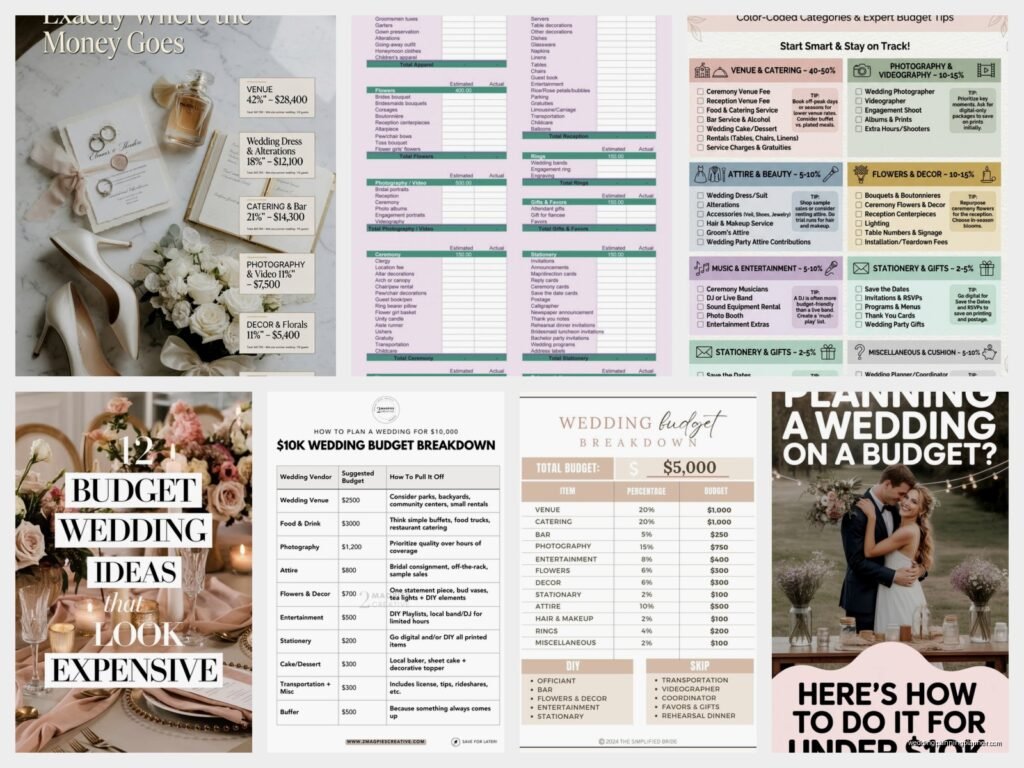
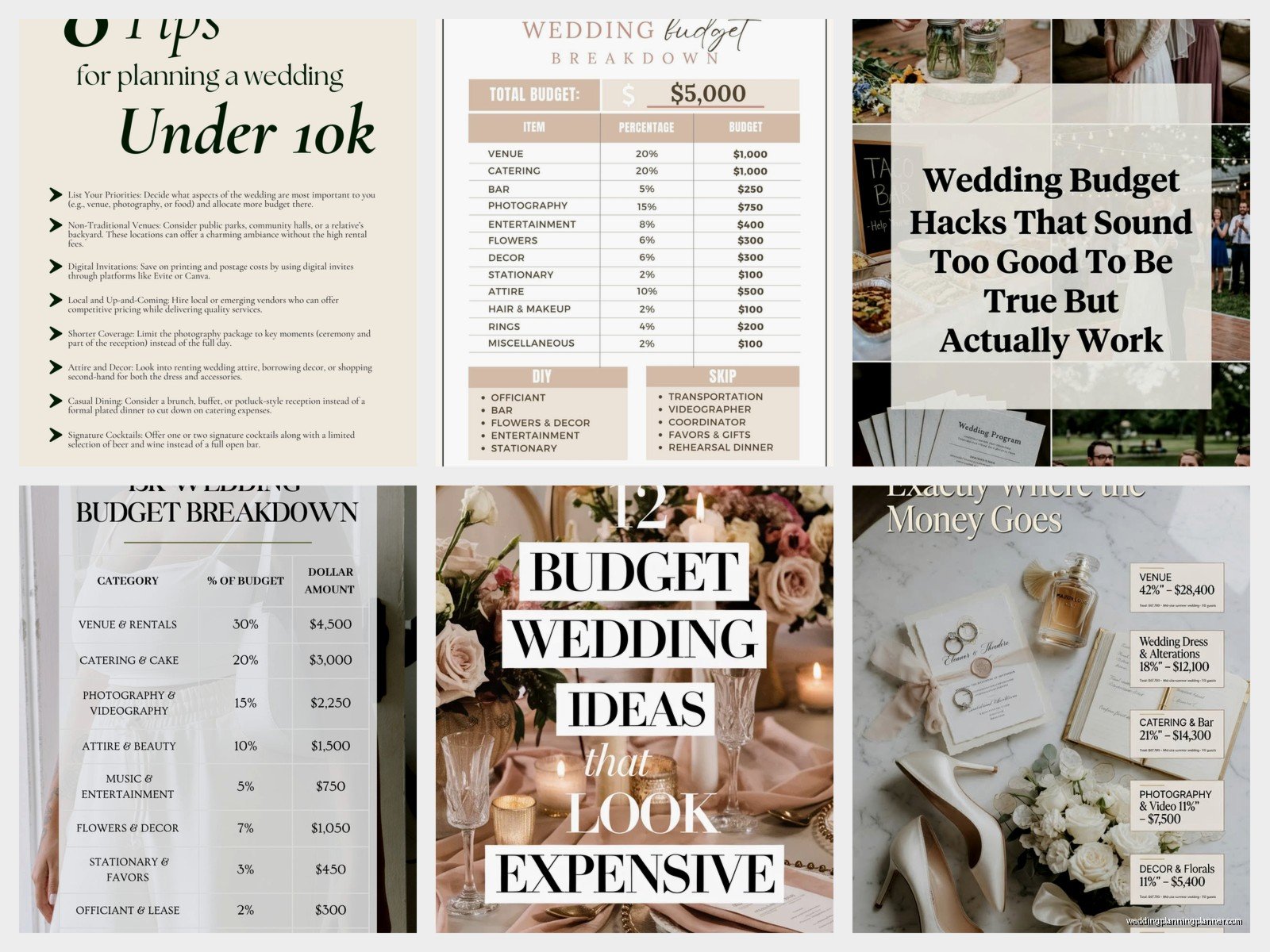
So there’s this standard percentage breakdown that gets passed around and it’s not terrible as a starting point but it annoyed me for years because it assumes everyone wants the same wedding. But here it is:
- Venue and catering: 45-50%
- Photography and videography: 10-15%
- Music/entertainment: 8-10%
- Flowers and decor: 8-10%
- Dress and attire: 5-8%
- Invitations and stationery: 2-3%
- Miscellaneous (favors, transportation, etc): 5-8%
- Buffer for unexpected stuff: 5-10%
But real talk? If you don’t care about flowers, don’t spend 10% on them. If photography is everything to you, maybe that’s 20% of your budget. I’ve seen people do 60% on venue and catering because they wanted an incredible meal at a fancy location and then DIY’d almost everything else.
Starting with your actual numbers
Write down every single dollar you have access to. Your savings. Their savings. Any family contributions that are CONFIRMED not just hinted at. I cannot stress this enough because my cat knocked over my coffee this morning and it was less of a mess than couples who assume money that never materializes.
Then figure out your guest count because this is gonna drive literally everything else. You can have 50 people at a nice restaurant for way less than 150 people anywhere. Every single person you invite costs money for food, drinks, chairs, invitations, favors if you’re doing those.
Here’s the thing nobody wants to hear—you probably need to invite fewer people than you want to. A $15k budget with 150 guests means $100 per person. A $15k budget with 75 guests means $200 per person. That’s the difference between heavy appetizers and a full plated dinner with bar service.
The big ticket items you need to lock down first
Venue and catering is usually your biggest expense so start there. Some venues include catering, some let you bring your own, some require you use their preferred vendors list. This affects everything else in your timeline and budget.
I had a bride in summer 2021 (remember when everything was weird with COVID restrictions?) who fell in love with this barn venue that was $3k to rent but required outside catering and the only caterers who would travel there started at $85 per person and suddenly her $12k budget was already at $9k just for venue and food for 70 people.
Photography is the other one you should book early because good photographers get booked 12-18 months out. Prices range wildly from like $1500 to $10k+ depending on your market and experience level. You’re gonna have these photos forever so… I usually tell people this isn’t where you wanna cut corners but also you don’t need the most expensive person either.
Ways to actually save money that work
Off-season weddings are cheaper. November through March (except holidays) usually gets you better rates. Friday or Sunday weddings instead of Saturday can save you hundreds or thousands on venue costs.
Brunch or lunch weddings cost less than dinner. The food is cheaper, people drink less, and you can do a shorter event. I know everyone dreams of an evening reception but a 11am ceremony with lunch reception ending at 3pm can be really lovely and like 30% cheaper.
Limit your bar options. Open bar with premium liquor gets expensive fast. Beer, wine, and one signature cocktail is totally acceptable and way more affordable. Or do beer and wine only. Or—and this might be controversial but whatever—cash bar for premium spirits but free beer and wine.
Flowers are where you can save SO much money. You don’t need floral centerpieces on every table. Candles, greenery, lanterns, books, photos… there are so many centerpiece options. Keep flowers for your bouquet, maybe boutonnieres, and perhaps some ceremony arrangements. That’s it.
Your dress doesn’t have to be from a bridal salon. I’ve seen stunning brides in dresses from department stores, online retailers, even Rent the Runway. A $2000 dress that you wear once is kinda wild when you think about it.
Where you should NOT cheap out
Food. Do not serve your guests terrible food. You don’t need filet mignon but you need something decent and enough of it. Hungry guests are unhappy guests and they’ll remember that.
Music or entertainment. Whether it’s a DJ or a band or even a really good playlist, the music makes or breaks the reception energy. A bad DJ can ruin the vibe even if everything else is perfect.
Photography if it matters to you. This is personal preference but most people really regret skimping on photos.
Liability insurance. Most venues require it anyway but even if they don’t, get event insurance. It’s like $200 and covers you if something goes wrong.
The actual planning spreadsheet you need
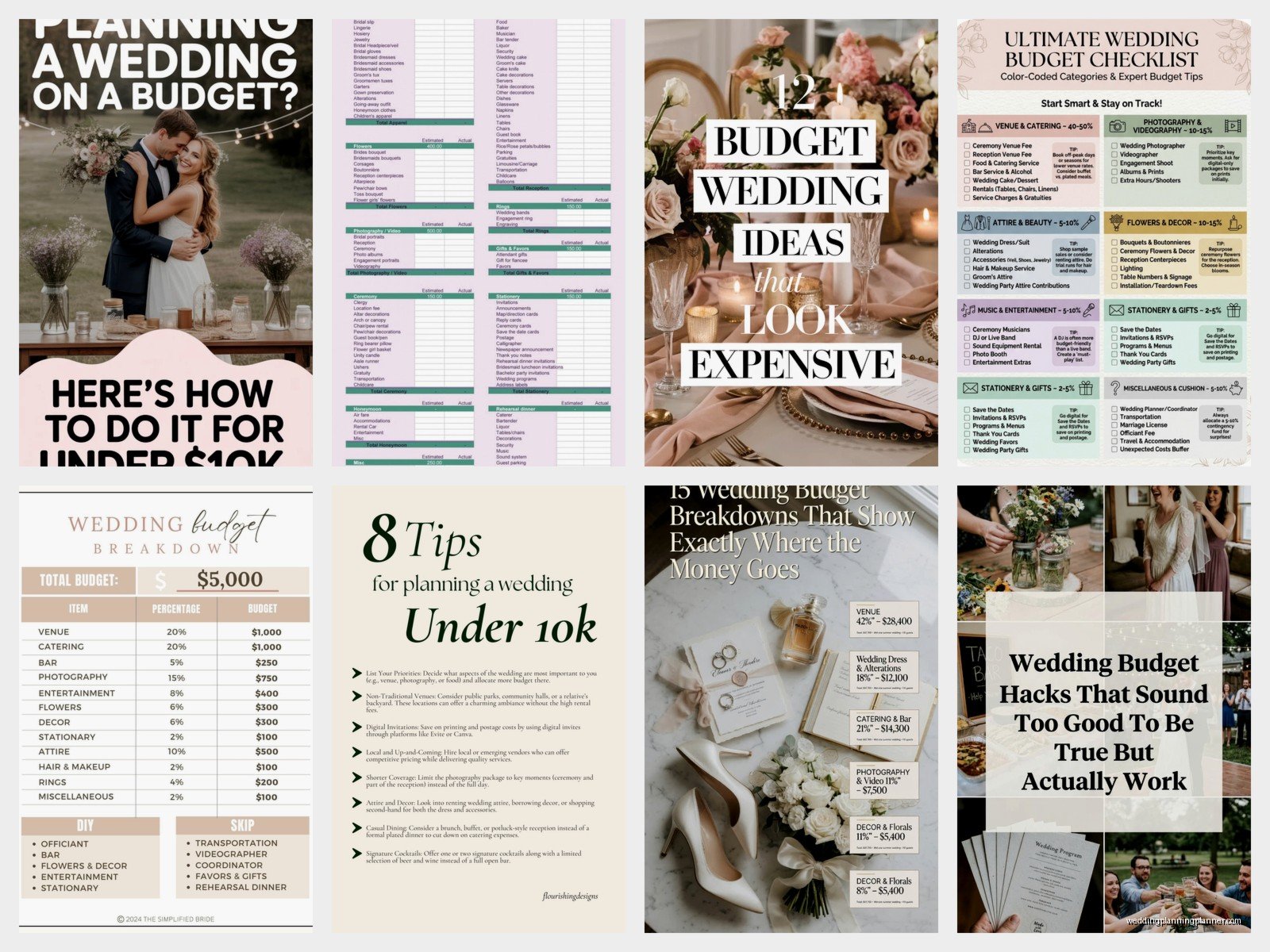
Make a spreadsheet with these columns: Category, Item, Estimated Cost, Actual Cost, Deposit Paid, Balance Due, Due Date, Paid in Full. Update it obsessively. I’m serious this is the only way to track everything.
Put every single expense in there including the little stuff. Postage stamps, makeup trial, marriage license, tip for vendors. Those $20 and $50 purchases add up to hundreds real quick.
Build in a buffer of at least 10% for things that will definitely come up. You’ll forget something. A vendor will cost more than quoted. You’ll decide you want uplighting at the last minute. Something will happen.
The stuff people forget to budget for
Alterations for your dress—usually $200-500. Tuxedo rentals or suit purchases for the groom and groomsmen. Hair and makeup trials and day-of services. Marriage license fee. Postage for invitations which is more than regular stamps if they’re heavy or oddly shaped. Tips for vendors which is usually 15-20% for some vendors. Hotel room for the wedding night. Breakfast the next morning. Rehearsal dinner. Welcome bags if you’re doing those.
Transportation if your ceremony and reception are at different locations. Parking fees or valet service. Cake cutting fee if your venue charges one (yes this is a thing and it’s annoying). Overtime fees if your reception runs long.
I once had a couple who budgeted perfectly for everything and then realized the week before that they needed to pay for parking validation for all their guests at the urban venue and that was an extra $800 they didn’t have.
Handling family contributions without losing your mind
If family is contributing money, get clear on expectations BEFORE you accept it. Some parents think money equals decision-making power. Some have specific things they want that money spent on. Some have opinions about the guest list.
Have an actual conversation about: Is this a gift or a loan? Are there strings attached? Do you expect input on decisions? What happens if we go over budget?
Get it in writing if it’s a large amount. I know that sounds unromantic but I’ve seen family drama derail weddings when promised money doesn’t show up or comes with unexpected conditions.
DIY what makes sense, skip what doesn’t
DIY can save money but it can also cost you in time and stress and sometimes ends up not even being cheaper. Do the math on supplies plus your time.
Good DIY projects: simple centerpieces, welcome signs, table numbers, favors if you’re crafty, playlist for cocktail hour, photo displays, ceremony programs.
Bad DIY projects: your own wedding cake (please don’t), complex floral arrangements unless you really know what you’re doing, invitations if you’re not experienced with design and printing, anything that requires specialized equipment.
I watched a bride try to DIY her invitations and after buying cardstock and a paper cutter and fancy envelopes and spending like 20 hours assembling everything, she spent almost as much as a professional would have charged and they looked… not great. Sometimes you just gotta pay someone who knows what they’re doing.
When to book what
This affects your budget because some vendors require deposits way in advance and some you book closer to the date.
12+ months out: venue, caterer, photographer, band or DJ. These are the vendors that book up first and you need them secured to plan everything else around.
8-10 months out: florist, videographer, cake, dress shopping, invitations, hotel room blocks.
6 months out: rehearsal dinner venue, transportation, rentals, hair and makeup artists.
3-4 months out: finalizing details with all vendors, ordering wedding favors, booking honeymoon.
2 months out: final dress fitting, applying for marriage license, sending invitations.
The reason this matters for budget is that you’ll be paying deposits at different times and need to have cash flow planned out. You’re not paying for everything at once but you need to know when each chunk of money needs to be available.
Tracking payments and deposits
Most vendors want 25-50% deposit when you book and then the balance 1-2 weeks before the wedding. Some want payment in full months ahead. Read every contract carefully for the payment schedule.
Set reminders for when payments are due because missing a payment deadline can mean losing your vendor or paying late fees. I use my phone calendar with alerts set for one week before each due date.
Keep all your contracts and receipts in one place—either a physical folder or a digital one. You’ll need to reference them and also you might need them for insurance purposes or if there’s any dispute.
What to do when you’re going over budget
Because you will probably go over budget at some point and that’s normal. First figure out where the overage is happening. Is it one category or everything creeping up?
Options: cut guest list, find cheaper alternatives for some vendors, eliminate some nice-to-have items, ask family if they can contribute more, extend your engagement to save more money, get a side hustle for extra wedding funds.
What you should NOT do: put it all on credit cards without a plan to pay them off, borrow money you can’t afford to pay back, sacrifice your emergency fund for wedding expenses.
Starting your marriage in debt because of one party is gonna cause way more stress than having a smaller wedding would have. I know it’s hard to scale back your vision but like… the marriage is more important than the wedding and that’s not just something people say to make you feel better about a budget wedding, it’s actually true.
Free and cheap things that make a difference
Mood lighting transforms a space and you can rent uplights pretty cheap or sometimes your DJ includes them. Candles are inexpensive and romantic. A well-made Spotify playlist costs nothing. Asking talented friends to contribute their skills as a gift—if they genuinely offer. String lights make everything pretty and you can buy them cheap.
Natural venue beauty means you need less decor. A garden or a space with exposed brick or a room with great windows needs way less decorating. Sometimes the venue itself is the decor.
Seasonal flowers are cheaper than out-of-season ones. Local flowers are cheaper than imported ones. Greenery is cheaper than blooms and looks elegant.
Buffet or family-style service is usually cheaper than plated dinner and honestly more fun anyway. Food trucks are trendy and can be affordable. Brunch food is cheaper than dinner food.
The goal isn’t to have the cheapest wedding possible, it’s to have the wedding you can afford without going into debt or causing financial stress. There’s a wedding for every budget and they can all be beautiful and meaningful and fun. You just gotta be realistic about what your numbers allow and creative about how you work within them.