Planning Guides, Style Guide
Informal Wedding Invitation: Design & Ordering Guide
Jun
Start with What “Informal” Actually Means
Okay so informal wedding invitations are kinda my favorite thing to work on because there’s so much more room to play around. When people say informal, they usually mean one of three things: the wedding itself is casual (think backyard BBQ or beach ceremony), the couple’s personality is super laid-back, or they just don’t want that stuffy traditional vibe. Sometimes it’s all three.
The thing that drives me absolutely nuts though is when couples say they want “informal” but then freak out about every little design detail like it’s a black-tie affair. I had this happen in spring 2023 with a couple who wanted “chill vibes” but sent me literally 47 emails about font kerning. Like… if you’re worried about kerning, we’re not doing informal anymore, we’re doing something else entirely.
Design Elements That Actually Work
For informal invites, you’ve got way more freedom than traditional ones. I always tell people to think about what actually represents them as a couple instead of what Pinterest says they should do.
Color Choices
Forget the rule about “wedding colors” needing to be pastels or neutrals. Informal invites look great in bright colors, weird color combos, even black and neon if that’s your thing. I’ve done invitations in mustard yellow and terracotta, navy and coral, even this amazing sage green with burnt orange that shouldn’t have worked but totally did.
You can also do kraft paper backgrounds which automatically make things feel more relaxed. Or go with a white background but use playful colors for the text and accents.
Typography That Doesn’t Feel Stuffy
This is where you can really lean into the informal vibe. Skip the calligraphy fonts unless you genuinely love them – there’s no rule that says wedding invites need swoopy script. Some of my favorite informal designs use:
- Clean sans-serif fonts that feel modern and approachable
- Hand-lettered styles that look actually handwritten (not fancy calligraphy)
- Mix of typewriter-style fonts with casual scripts
- Bold blocky fonts for a fun retro feel
Just make sure whatever you pick is actually readable. I’ve seen couples fall in love with these super artistic fonts where you literally cannot tell if it says “ceremony” or “ceremony” or like… I don’t even know what. Your guests shouldn’t need a decoder ring.
Layout and Format
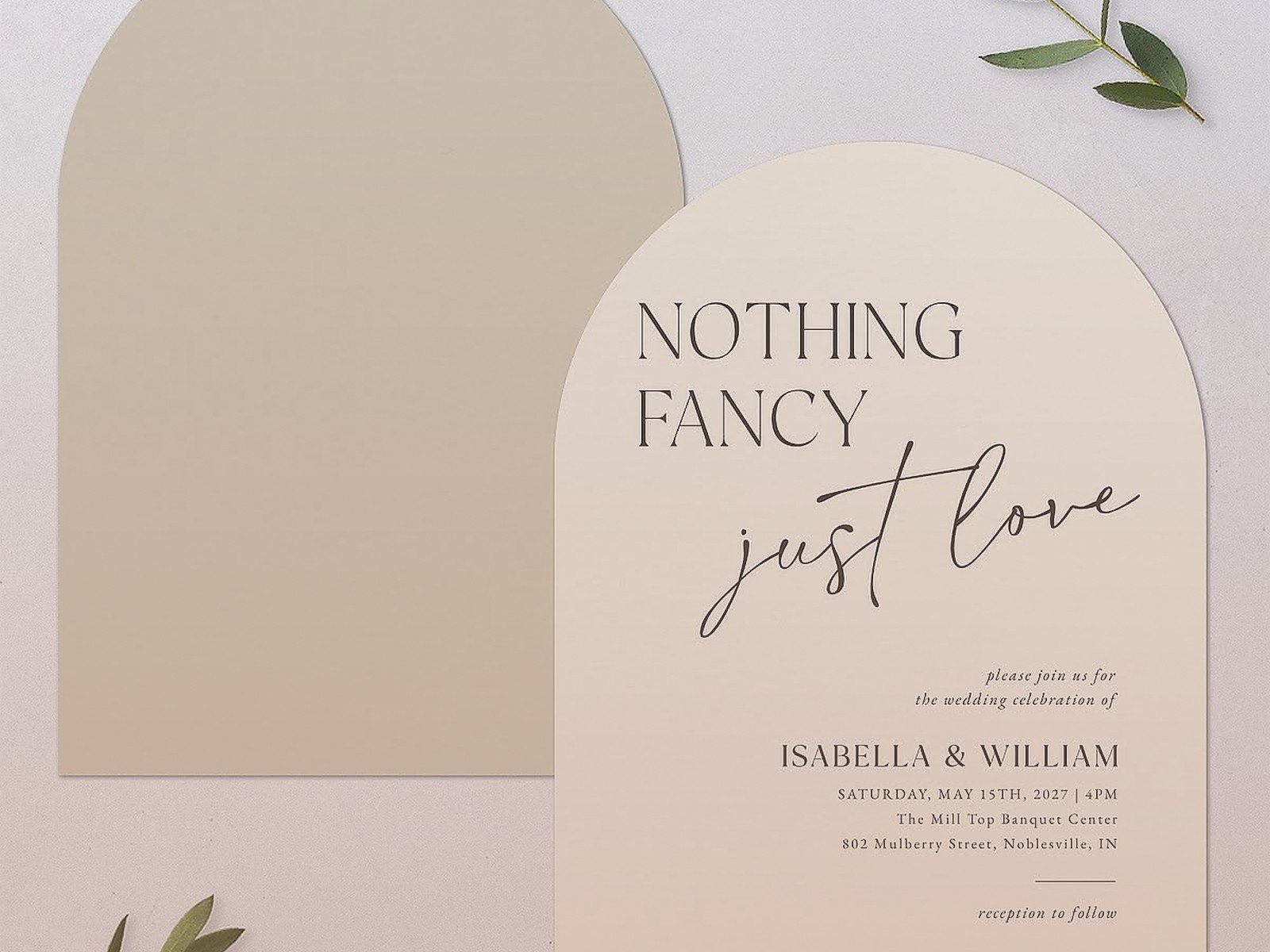
Traditional invites have this whole hierarchy thing going on with centered text and specific ordering of information. For informal? Nah. You can do asymmetrical layouts, put things in boxes, use circular text, whatever feels right.
Some couples do postcard-style invitations which I love because they’re practical and different. Others do a single flat card instead of the traditional folded style. I’ve also seen people do informal invites that look like concert tickets or festival passes, especially for music-loving couples.
One thing though – even if the design is playful, you still gotta include all the actual information people need. Date, time, location, RSVP details. I’ve had to fix so many designs where couples got so creative they forgot to mention what time the wedding starts.
Wording That Sounds Like You
This is where informal invites really shine because you can drop all that “request the honour of your presence” stuff and just… talk like a normal human?
Instead of formal wording, you might say:
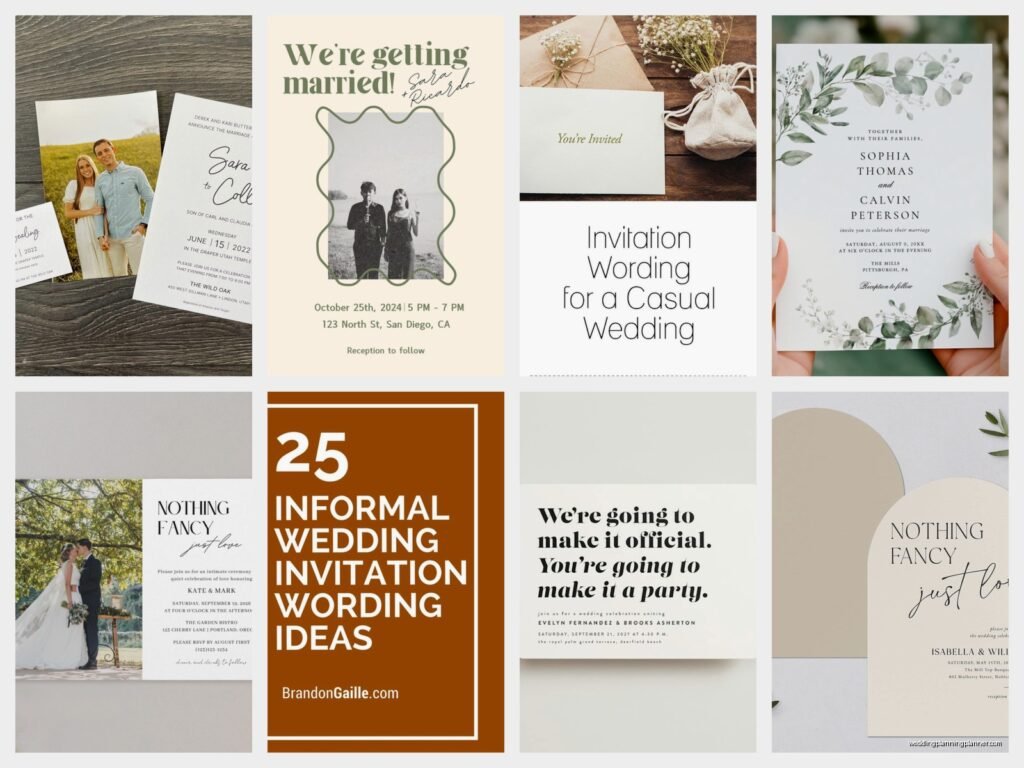
- “We’re getting married! Come celebrate with us”
- “Join us for good food, cold drinks, and watching us promise not to annoy each other forever”
- “Let’s party! [Names] are tying the knot”
- “We’re making it official – be there or miss out on cake”
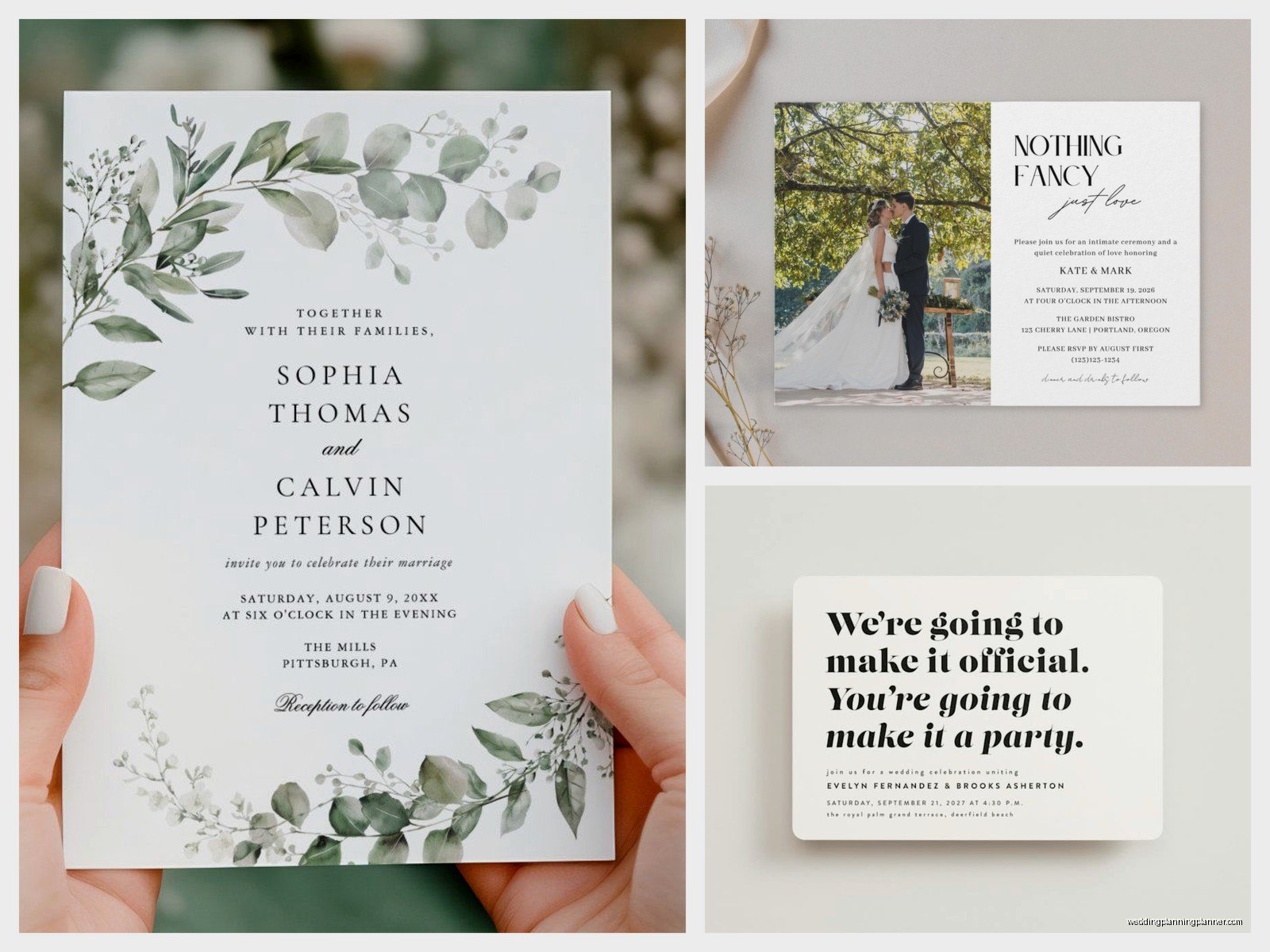
You can mention your parents if you want (“Together with our families, we invite you…”) or skip that entirely. It’s your call. The whole “Mr. and Mrs. John Smith request the honor” thing feels really outdated for most informal weddings anyway.
My cat just knocked over my coffee which is apparently her opinion on formal wedding etiquette, so there’s that.
Dress Code Wording
For informal weddings, you definitely want to tell people what to wear because otherwise half your guests will show up in suits and the other half in shorts. Be specific but keep it casual:
- “Casual attire – we’re talking sundresses and button-ups, not ball gowns”
- “Come comfortable – it’s gonna be hot and we’re outdoors”
- “Dressy casual – think garden party, not prom”
- “Wear whatever makes you happy (but maybe not a white dress, thanks)”
Design Software and DIY Options
Alright so if you’re designing these yourself, you’ve got options. Canva is the obvious choice and honestly it’s pretty good for informal invites. They have tons of templates you can customize, and the free version works fine for most people. The paid version gives you more fonts and the ability to resize designs easily, which is helpful if you want matching save-the-dates or whatever.
Other options I’ve seen work well:
- Adobe Spark (now called Adobe Express) – similar to Canva, free version is decent
- PicMonkey – good if you want photo-heavy designs
- Good old Microsoft Word or Pages if you want something super simple
- Photoshop or Illustrator if you actually know how to use them (most people don’t and that’s fine)
The thing about DIY is you need to actually understand print specifications. Your design needs to be high resolution (300 DPI minimum), and you need to set it up with the right dimensions including bleed if your printer requires it. This is where people usually mess up and then blame the printing company when their invites look pixelated.
Working with a Designer
If design isn’t your thing, hiring someone is gonna save you so much stress. For informal invites, you don’t necessarily need some fancy stationery designer – lots of graphic designers can handle this and might charge less.
Where to find designers:
- Etsy has tons of designers who offer semi-custom templates or full custom design
- Local graphic designers (check Instagram for your city)
- Minted, Zola, and similar sites have designers on staff
- Wedding-specific marketplaces like Creative Market
Expect to pay anywhere from $200 to $1000+ depending on how custom you’re going and how many pieces you need (invites, RSVP cards, details cards, etc.). For just informal invites without a lot of extras, you should be on the lower end of that range.
Printing Options That Won’t Break the Bank
So you’ve got your design – now what? Printing is where costs can really add up or stay totally reasonable depending on your choices.
Digital Printing
This is your most affordable option and it looks great for informal invites. Digital printing works well for designs with lots of colors, photos, or gradients. Turnaround time is usually quick – like 3-5 business days after you approve the proof.
Good digital printing companies:
- Catprint – crazy affordable, good quality, I use them for client samples all the time
- Vistaprint – people love to hate on them but honestly their quality has improved a lot
- Moo – pricier but really nice quality and unique paper options
- Local print shops – sometimes cheaper, sometimes not, but you can see samples in person
Letterpress and Foil Stamping
These are fancier printing methods that can still work for informal weddings if you use them in a playful way. Like a letterpress invite on kraft paper with a simple design feels informal but special. Or foil stamping in unexpected colors (copper, rose gold, even holographic) can be fun without being formal.
Just know these methods cost significantly more – usually starting around $600-800 for 100 invitations. And the turnaround time is longer, like 2-3 weeks minimum.
Home Printing
Look, I’m gonna be real with you – home printing rarely looks as good as you think it will. If you’re doing like 20 invitations for a tiny wedding, sure, go for it. But for anything more than that, the cost of good cardstock plus ink plus your time usually means you should just… order them printed.
If you do print at home, invest in decent cardstock (at least 80lb cover weight), make sure your printer can handle it, and do test prints. So many test prints. What looks good on your screen will not look the same printed.
Paper Stock and Finish Options
Paper choice matters more than people think. For informal invites, I actually like when couples choose interesting paper textures instead of just standard smooth white cardstock.
Options that work well:
- Kraft or recycled paper for eco-friendly/rustic vibes
- Linen or felt texture for something tactile and interesting
- Matte finish instead of glossy (feels more sophisticated)
- Colored cardstock in your wedding colors
- Textured watercolor paper if your design has painted elements
Weight-wise, you want at least 80lb cover (216gsm) so it doesn’t feel flimsy. I usually recommend 100lb cover (271gsm) as the sweet spot – feels substantial without being too thick to mail easily.
Ordering Timeline and Quantities
So here’s where I see people mess up constantly – they wait too long to order or they order way too many or too few.
Timeline should look like:
- 6-8 months before wedding: finalize guest list numbers (roughly)
- 5-6 months before: design your invitations
- 4 months before: order printed invitations
- 3 months before: mail them out
For informal weddings you can compress this a bit – like if you’re ordering digital printing, you could do the whole thing in 2-3 months. But don’t cut it too close because you need time for people to actually RSVP and then you need to do seating charts and all that fun stuff.
How Many to Order
Order one invitation per household, not per guest. So if you’re inviting a family of four, that’s one invitation. If you’re inviting a couple, one invitation.
Then add about 10-15 extras for:
- Mistakes (you will mess up addressing at least a few)
- Last-minute additions to the guest list
- Keepsakes for yourselves and parents
- That one invitation that definitely gets lost in the mail
Most printing companies have price breaks at certain quantities (like 50, 100, 150), so sometimes it makes sense to round up to the next tier. Do the math though – sometimes that “deal” isn’t actually saving you money.
Envelope Situations
Envelopes are weirdly complicated for something so simple. For informal invites, you’ve got options beyond the standard white envelope.
I love colored envelopes for informal weddings – they immediately signal “this isn’t your grandma’s wedding” when people see them in the mail. You can match your wedding colors or go with kraft envelopes for rustic vibes or even patterned envelopes if you can find them.
Size-wise, make sure you order envelopes that actually fit your invitations with a little room to spare. Standard sizes are A7 (5×7 invites) or A6 (4.5×6.25 invites). If you’re doing a weird custom size… well, good luck finding envelopes. You’ll probably need to order custom ones which adds cost and time.
Addressing
For informal weddings, I think handwritten addresses look great and keep that personal casual feel. But if your handwriting looks like a doctor’s prescription, maybe consider:
- Printing addresses directly on envelopes (most online printers offer this)
- Using clear labels with a nice font
- Hiring a calligrapher but asking for a more casual style
- Using a Cricut or similar machine if you have one
That whole “inner and outer envelope” thing? Skip it for informal invites. It’s outdated and wasteful and nobody under 60 expects it anymore.
Insert Cards and Extra Details
You might need additional cards for:
- RSVP cards (though honestly a lot of people do online RSVPs now)
- Details card with hotel info, website, directions, whatever
- Reception card if ceremony and reception are at different locations or different times
For informal invites, you can often fit most of this info on the main invitation or direct people to your wedding website. The fewer pieces you have, the cheaper printing is and the easier assembly is, so think about what you actually need versus what you think you’re supposed to include.
I had this couple last summer 2021 who wanted to include a card about their dog who was the ring bearer, a card about their love story, a card about their favorite restaurants in the area… and I was like, that’s what your wedding website is for. We condensed everything down to just the invitation and a details card and it was so much better.
Postage and Mailing
Don’t forget to factor in postage costs. A standard invitation in a standard envelope with one insert is usually fine with a regular stamp. But if your invitation is thick, oversized, or square-shaped, you’ll need extra postage.
Take a fully assembled invitation to the post office and have them weigh it before you buy 100 stamps. Square envelopes cost extra because they can’t go through the sorting machine. Wax seals also add weight and thickness. That fancy ribbon you want to tie around it? Probably gonna require hand-canceling which means extra postage.
Also mail them at least 6-8 weeks before your wedding for informal events (you can do 8-12 weeks for formal, but informal weddings can be a bit more compressed). And mail yourself one first to make sure everything arrives intact and looking good.
Common Mistakes to Actually Avoid
Since I’ve been doing this for years, I’ve seen every possible mistake. Here are the ones that happen most with informal invites specifically:
Being too casual with important info. Your invitation can have a playful tone but still needs to clearly communicate the date, time, and location. I’ve seen invites that were so cutesy you couldn’t tell when the wedding actually started.
Forgetting RSVP deadline. Put a specific date, not just “please RSVP” because people will wait until the day before your wedding otherwise. Make it at least 3-4 weeks before the wedding so you have time to finalize numbers with your caterer.
Using photos that don’t print well. That cute engagement photo from your phone? Probably too low resolution. You need high-quality images for printing or they’ll look blurry and pixelated.
Not proofreading enough. Have at least three different people read your invitation before you order. You will miss your own typos every single time. I once approved an invite that said “Saturday, June 32nd” which is… not a date that exists.
Ordering too close to your mail date. Give yourself buffer time. Printers sometimes mess up, shipments get delayed, you might hate how they look in person and need to reorder. Don’t put yourself in a position where you’re assembling invitations at midnight the day before they need to be mailed.
Making It Personal Without Making It Weird
The best informal invitations feel like they came from actual humans who have personalities. But there’s a line between personal and trying too hard or being so inside-joke-y that guests are confused.
Good personal touches: incorporating your hobbies or interests in subtle ways, using colors that actually mean something to you, including a favorite quote or song lyric that isn’t too cheesy, mentioning your dog if your dog is genuinely part of the ceremony.
Weird personal touches: inside jokes only five people will understand, photos of you as babies for no reason, excessively long love stories on the invitation itself, trying to make “fetch” happen with some couple nickname that nobody uses.
When in doubt, ask yourself: will my guests understand this reference and will they care? If the answer is no, save it for something else or just… don’t.