Planning Guides, Style Guide
Long Table Wedding Seating Plan: Complete Guide
May
Why Long Tables Are Actually Kind of a Big Deal
Okay so long table seating plans are having this massive moment right now and honestly they’re so different from traditional round tables that you need to approach the whole planning thing completely differently. I had this bride in spring 2023 who was SO set on long tables because she saw them on Pinterest, and she had no idea how much the seating chart would need to change. Like, we basically had to scrap everything we’d planned and start over.
The thing with long tables is they create this communal vibe that round tables just don’t have. Everyone‘s sitting in a row, facing each other across the table, and it changes the whole dynamic of conversation and flow. You’re gonna notice that guests interact differently – they talk more with the people directly across from them and immediately next to them, but it’s harder to chat with someone five seats down compared to a round table where everyone’s kinda equally accessible.
Measuring Your Space First (Don’t Skip This Part)
Before you get all excited about long tables, you need to actually measure your venue space. I cannot stress this enough. Long tables take up space in a totally different way than rounds. You need at least 3 feet between tables for people to walk comfortably, and honestly 3.5 to 4 feet is better if you’ve got servers carrying plates.
Standard long tables (the 8-foot banquet tables you can rent) seat about 8-10 people comfortably – that’s 4-5 on each side. Some venues have 6-foot tables which fit 6-8 people. If you’re doing farm tables or something fancier, they might be different widths too. Most banquet tables are about 30 inches wide, which is perfect for a centerpiece and place settings.
Draw it out on graph paper or use one of those online room planners. Seriously. I’ve seen too many couples just assume it’ll work and then day-of we’re scrambling because the tables don’t actually fit with enough walkway space.
The Head Table Situation
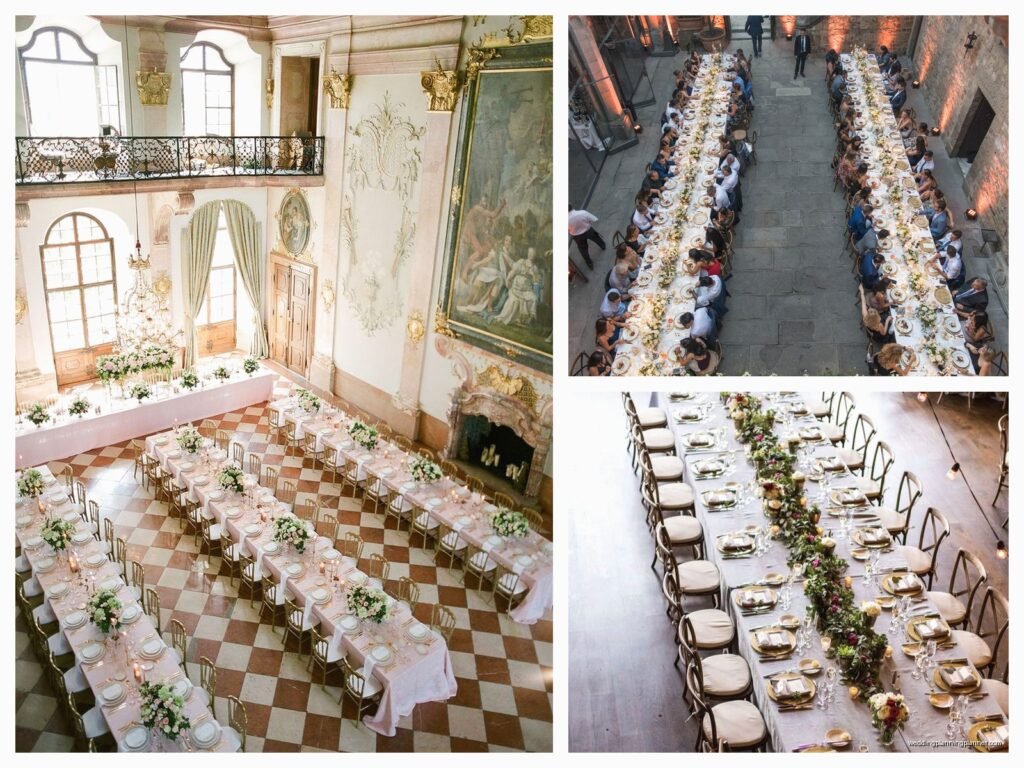
So here’s where it gets interesting. With long tables, a lot of couples do one long head table for the wedding party, and it looks AMAZING in photos. Everyone’s facing out toward the guests, which is different from a traditional head table setup.
But here’s what annoys me – and I mean really annoys me – when couples don’t think about their wedding party’s partners. If you’ve got a long head table with just the wedding party, where do their spouses and dates sit? I’ve seen this cause so much drama. You can’t just stick them at a random table away from their person for the entire dinner. Some options: do a long head table with partners included (it’ll be really long but whatever), or skip the head table entirely and do a sweetheart table just for you two, then seat your wedding party with their partners at regular guest tables.
We did this wedding in summer 2021 where the bride wanted the aesthetic of a long head table but also didn’t want to separate couples, so we ended up doing TWO long head tables parallel to each other – wedding party on one, their partners on the other facing them. It actually worked really well and looked intentional.
How to Actually Assign the Seats
This is where long tables get tricky. With round tables, you can kinda just assign people to a table and let them figure out exactly where they sit. With long tables… you really need to assign specific seats or at least give people better guidance.
Think about it – if you just say “Table 3” and Table 3 is a 40-foot-long table seating 30 people, guests are gonna awkwardly hover trying to figure out where to sit. They’ll probably all cluster at one end and leave the other end weird and empty until someone brave sits down there.
I usually do one of two things: either assign specific seats with place cards at each spot, or divide the long tables into sections. Like, you can put “Table 3A” and “Table 3B” on escort cards and then have subtle markers (different centerpiece styles, small table numbers) that show where 3A ends and 3B begins on the same long table.
The Mix-and-Match Approach
You don’t have to do ALL long tables, by the way. A lot of my couples do a mix – long tables for the wedding party and maybe family, then round tables for other guests. Or all long tables but different lengths. The variety can actually make the room look more interesting and gives you flexibility if your guest list is… you know how guest lists are, never quite the perfect number.
Who Sits Where (The Actual Strategy)
Okay so when you’re planning who goes where on long tables, you need to think about conversation flow differently. At a round table, one awkward person doesn’t ruin the whole table because others can talk around them. At a long table? If you put someone super quiet or antisocial in the middle of a row, they’re kinda stuck and so are the people next to them.
Here’s what I usually suggest:
- Put your most social, outgoing friends at the ends of tables and sprinkled throughout – they’ll help keep conversation going
- Seat couples across from each other rather than next to each other – I know this sounds weird but it actually works better for long tables because they can talk to each other AND their neighbors
- Think about who will actually talk to each other – you want people who have something in common near each other
- Don’t put all the quiet people together or all the loud people together, mix it up
- Consider age ranges – long tables can work well for mixing ages actually, but you don’t want like one 80-year-old surrounded by rowdy college friends
The Kids Table Question
If you’ve got kids at your wedding, long tables can actually be perfect for a kids table. You can fit more kids at one long table than you could at multiple rounds, and it’s easier for parents to keep an eye on them if they’re all in one spot. Just maybe put the kids table closer to an exit so when they inevitably get loud and restless, parents can take them out without disrupting everyone.
My cat knocked over my coffee while I was working on a seating chart last week and I had to redo the whole thing, but anyway – where was I… right, kids tables.
Some couples do a separate kids table, some integrate kids with their parents. With long tables, integrating families is actually easier because you can just seat families in sections along the table.
The Practical Logistics Nobody Tells You
Long tables mean your servers need to think differently about service. Make sure your caterer knows the layout ahead of time because serving a long table is different than serving rounds. Usually they’ll serve from both sides of the table to make it faster.
Also, bathroom access – sounds random but think about it. If you have long tables running the length of the room, you need to make sure people can actually GET to the bathroom without climbing over tables or doing an awkward shuffle past everyone’s chairs. Leave gaps or aisles.
Centerpieces and Sightlines
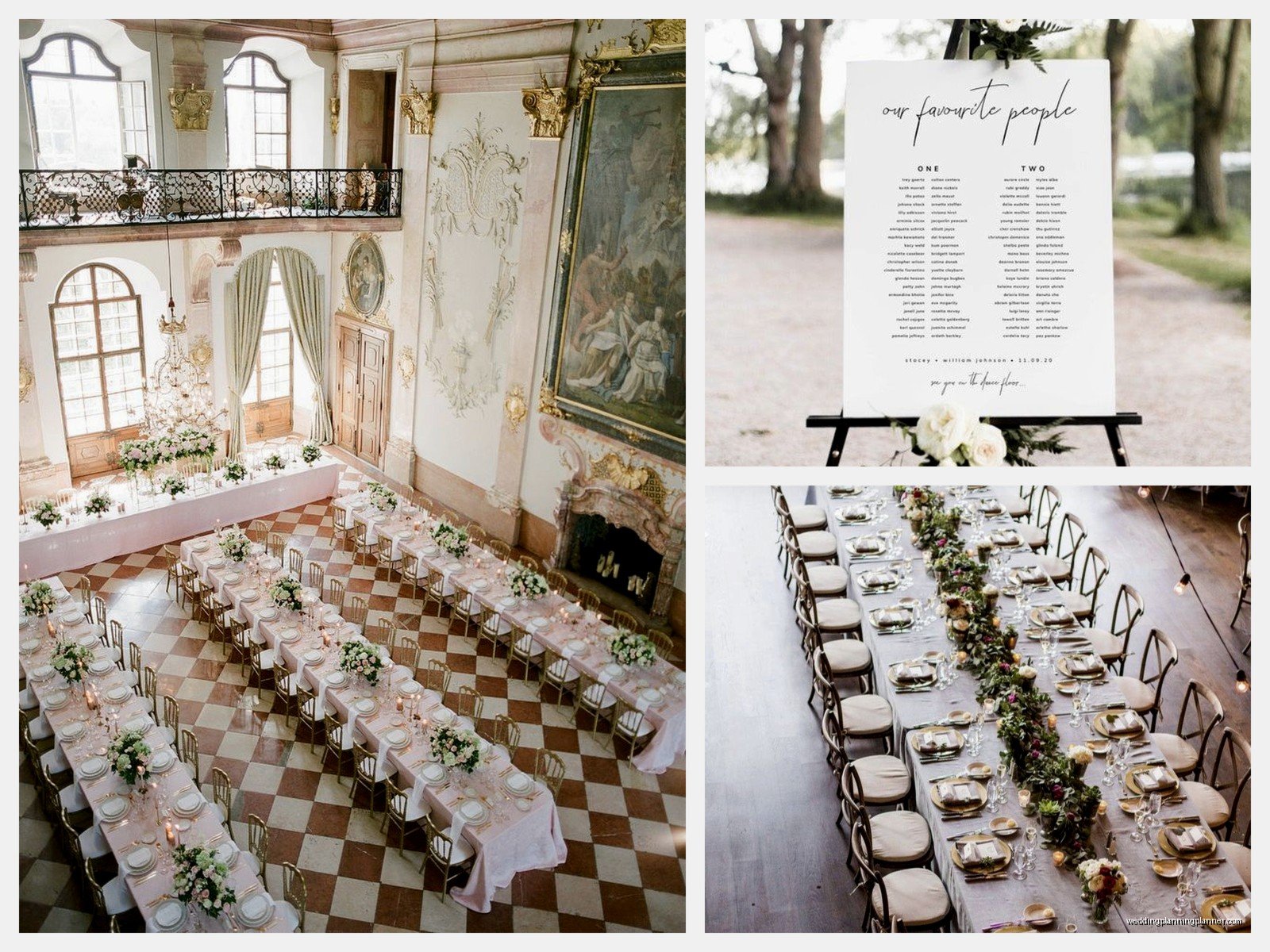
With long tables you can do these gorgeous long centerpiece runners with candles and flowers and it looks incredible. But – and this is important – keep them low or keep them REALLY tall. Nothing in between. If your centerpieces are medium height (like 12-18 inches), people across the table literally can’t see each other and conversation dies.
Low means under 12 inches, so people can see over them easily. Or go with tall dramatic arrangements that are up high so people can see underneath. The venue coordinator at this barn venue I work with a lot is super strict about this and honestly she’s right.
Dealing With Difficult Family Dynamics
So here’s where long tables can either be your best friend or your worst nightmare. If you’ve got divorced parents who can’t be near each other, long tables give you more flexibility – you can seat them at opposite ends of a long table (if it’s like a 40-person table) or on completely different tables obviously.
But if you’re trying to do a family table and there’s drama… it’s harder to separate people at a long table than at rounds where you can strategically place people around the circle. At a long table, everyone’s kinda locked into their spot and the person across from them.
I usually handle this by creating very strategic buffer zones – putting neutral family members or friends between people who might clash. And honestly? Sometimes you just gotta put difficult people at different tables entirely. It’s not worth the stress.
Making Your Seating Chart Visual
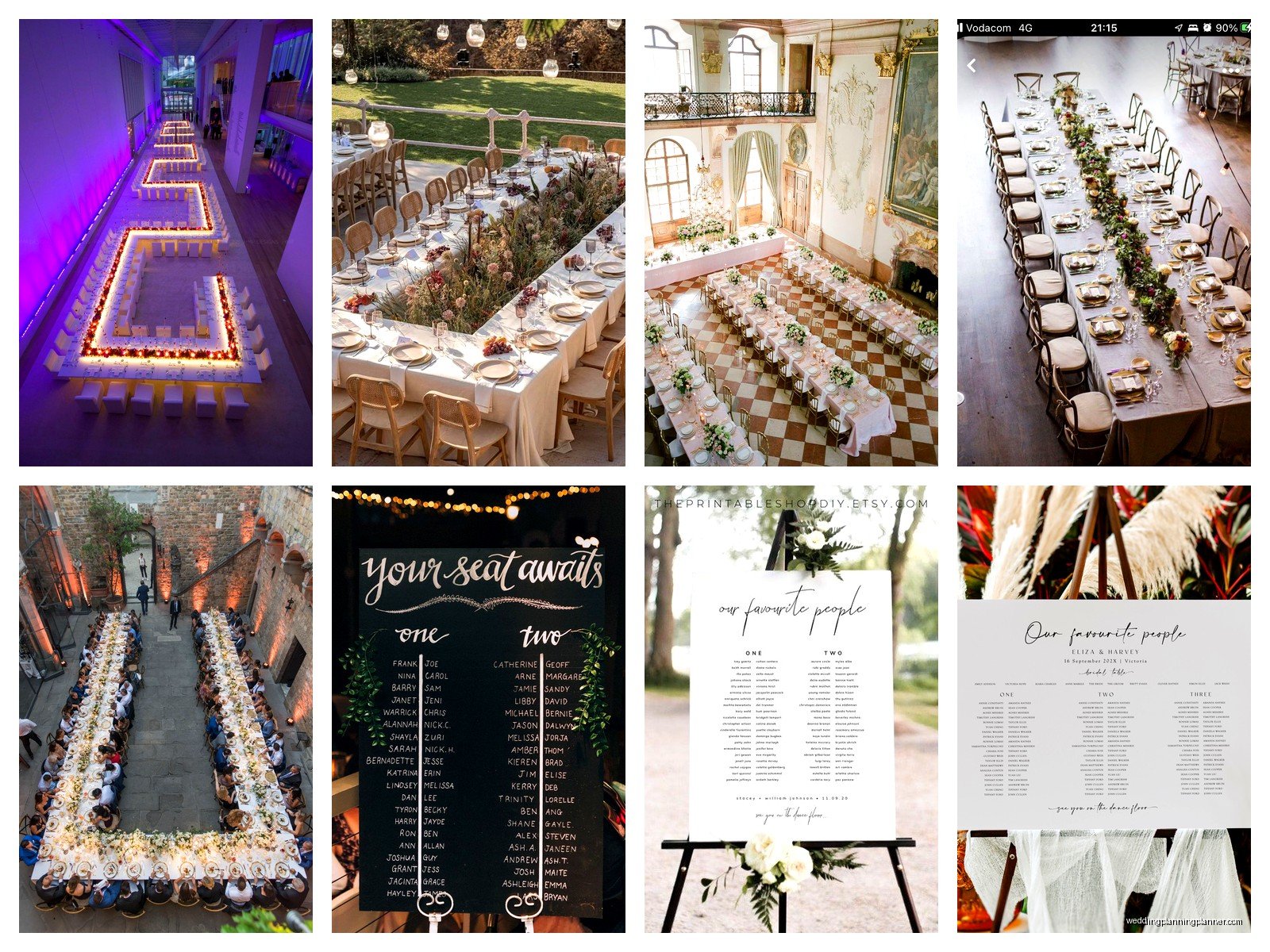
When you’re creating your seating chart to display at the wedding, long tables need to be represented clearly. I see a lot of couples use those cute calligraphy seating charts, but make sure it’s OBVIOUS which table is which. Number them clearly, or name them if you’re doing named tables.
Some ideas for displaying long table seating:
- A large board with table layouts drawn out and names written in each seat
- Individual cards organized by table number/name
- A mirror or acrylic board with the layout
- Multiple smaller signs if you’ve got a lot of guests – easier to read than one huge crowded sign
And please, PLEASE make sure your table numbers are visible on the actual tables. I’ve been at weddings where people are wandering around lost because they can’t find their table number anywhere.
The Timing Thing
One thing about long tables – they take longer to seat. Everyone can’t just pull their chair out at once like with round tables because… well, it’s a long line of people. This matters for your timeline. Budget a few extra minutes for guests to find their seats and get settled, especially if you’re doing assigned seats rather than just assigned tables.
Mix of Table Sizes
If your guest count doesn’t divide evenly into long tables, don’t stress. You can do different length tables – some seating 10, some seating 8, some seating 12. It’s actually fine and can make the room layout more interesting. Just make sure the tables are similar in style (all farm tables, all banquet tables with the same linens, whatever) so it looks intentional.
Or like I mentioned earlier, throw in a few round tables. Your venue might charge differently for different table types, so check on that.
The Reality of Plus-Ones
Plus-ones are always complicated but with long tables you need to be extra thoughtful. If someone’s bringing a date that nobody else knows, don’t stick them in the middle of a long table where they’ll feel trapped. Put them near an end where they can at least feel like they have an escape route, or… actually maybe this is where round tables are better for people who don’t know anyone.
But if you’re committed to long tables, just make sure each plus-one is seated near at least one or two friendly people who will include them in conversation. Your college roommate’s new boyfriend shouldn’t be stuck between your great-aunts who only speak to each other.
Backup Plans
Always have a backup plan for last-minute changes. Someone will inevitably RSVP yes and then not show up, or bring a date you didn’t know about, or whatever. With long tables, you can usually squeeze in one more chair if needed, or remove a place setting pretty easily. It’s actually more flexible than rounds in some ways because you’re not locked into “this table fits exactly 8 people.”
I keep a spreadsheet with the seating chart and bring a printed copy to every wedding. When things change last minute (and they will), you can adjust quickly. Mark down where the flex spots are – places where you could add or remove a seat if absolutely necessary.
What Your Venue Needs to Know
Give your venue the final seating chart at least a week before the wedding, earlier if possible. They need to know the exact table layout so they can set up the room correctly. Include measurements if you have them, and definitely include notes about any special requirements – like if you need extra space between certain tables, or if one table needs to be positioned specifically for sight lines to the dance floor or whatever.
Some venues are super experienced with long tables, others mostly do rounds and might need more guidance. Don’t assume they’ll just figure it out. Be specific about what you want and make sure you’re on the same page during your final walkthrough.